Loading... Please wait...


- Home
- Saab Models
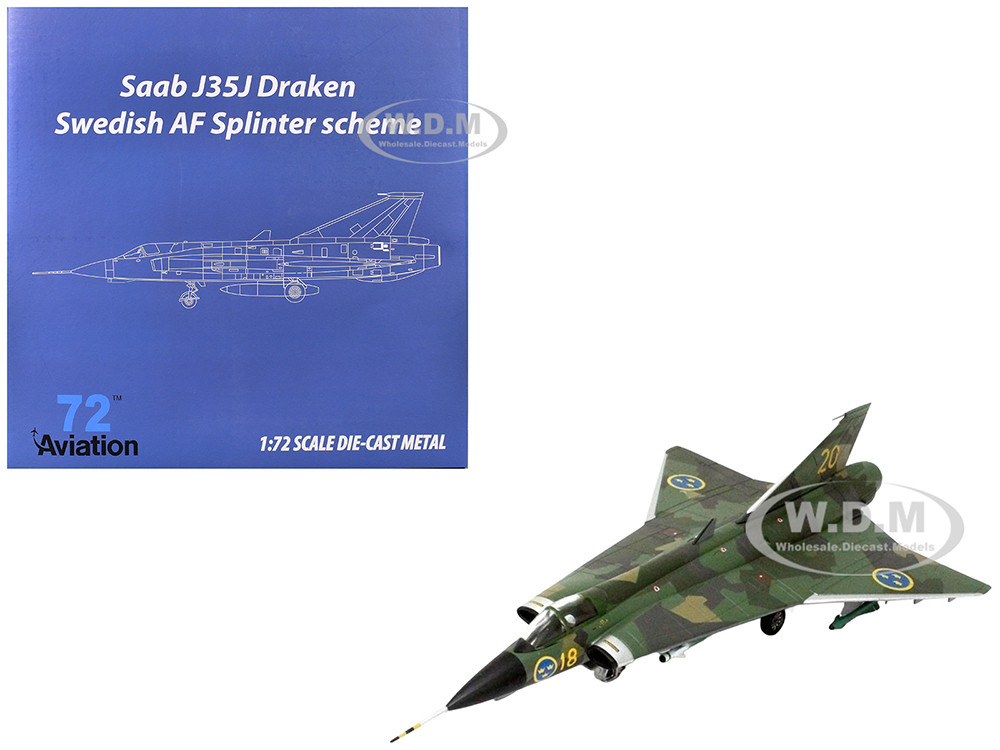
- Saab J35J Draken Fighter Aircraft "Splinter Camouflage Scheme, F 18 Sodertorn Wing" (1972) Swedish Air Force 1/72 Diecast Model Airplane by Aviation 72


 Swedish Air Force 1/72 Diecast Model Airplane by Aviation 72, $148.99 (https://www.diecastmodelswholesale.com/saab-j35j-draken-fighter-aircraft-splinter-camouflage-scheme-f-18-sodertorn-wing-1972-swedish-air-force-1-72-diecast-model-airplane-by-aviation-72/))
Saab J35J Draken Fighter Aircraft "Splinter Camouflage Scheme, F 18 Sodertorn Wing" (1972) Swedish Air Force 1/72 Diecast Model Airplane by Aviation 72
Product Description
- Brand new 1/72 scale diecast airplane model of Saab J35J Draken Fighter Aircraft "Splinter Camouflage Scheme, F 18 Sodertorn Wing" (1972) Swedish Air Force die cast model by Aviation 72.
- Detailed exterior.
- True-to-scale detail.
- Comes with a display stand.
- This model does not have any openings.
- Manufacturer's original unopened packaging.
- Made of diecast metal with some plastic parts.
- Dimensions approximately Length- 8.25, Wingspan- 5.
- Diecast metal and plastic construction for durability and a heavy, realistic feel.
- It is a highly detailed and accurate model, perfect for collectors and enthusiasts of military history.
- Realistic panel lines, antennas, access panels, and surface details for an authentic representation of the real-life airplane.
HISTORY ASPECTS:
The Saab J35 Draken was one of Sweden’s most distinctive Cold War fighters, designed and produced by Saab AB to meet the demanding requirements of high-speed interception and dispersed operations. Entering service in the late 1950s, the double-delta wing Draken combined supersonic performance with short takeoff capability, allowing operations from Sweden’s Bas 60 and later Bas 90 road-base systems. By the early 1970s, improved variants of the aircraft were serving with multiple wings of the Swedish Air Force, including F 18 Södertörn Wing, which operated the fighter primarily in the air defense role protecting the approaches to Stockholm and the Baltic Sea region.
During 1972, aircraft from F 18 participated in camouflage research intended to enhance survivability against visual detection and reconnaissance. Sweden’s experimentation with the now-famous splinter camouflage pattern began as part of broader efforts to counter evolving reconnaissance methods and precision strike threats. The disruptive geometric pattern applied to selected J35 Draken airframes represented one of the earliest operational trials of the scheme that would later become iconic on Swedish aircraft. These tests evaluated concealment effectiveness across forested terrain, road bases, and dispersal sites, reflecting Sweden’s doctrine of survivability through mobility and concealment during a potential large-scale European conflict.
Although the J35 Draken did not participate directly in combat conflicts while serving with Sweden due to the country’s policy of armed neutrality, the aircraft played an essential role throughout the Cold War in intercept missions, rapid reaction alerts, and sovereignty patrols. Drakens regularly intercepted and shadowed foreign reconnaissance aircraft operating near Swedish airspace, particularly over the Baltic region during periods of heightened East–West tension. The aircraft’s readiness and deterrent value contributed to Sweden’s defense posture during crises such as the Cold War Baltic incidents and periods of intensified military activity in Northern Europe, ensuring the protection of national airspace without direct involvement in war.
This 1:72 scale model in splinter camouflage test markings offers collectors a striking representation of one of the earliest applications of Sweden’s legendary camouflage pattern, combining Cold War interceptor heritage with visually distinctive experimental markings that stand out in any modern jet collection.
Other Details
Related Products
-
$34.99$31.99 -
$26.95
-
$49.95
-
$39.99$35.99 -
$184.99$164.99