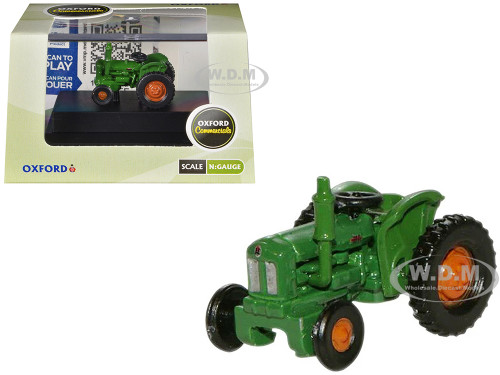
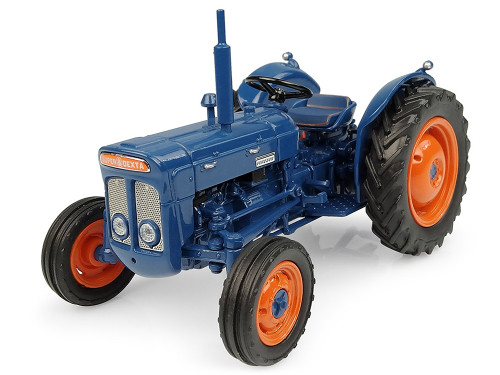
Fordson diecast tractor models represent an important chapter in the history of agricultural machinery and the Ford brand. Introduced by Henry Ford and his son through Henry Ford & Son, the Fordson name became associated with compact, mass-produced tractors that helped accelerate the mechanization of farming during the early 20th century. For collectors, Fordson models offer an opportunity to explore everything from the pioneering Fordson Model F to the later Major, Power Major, Super Major, Dexta, and Super Dexta tractors.
The Fordson category is especially appealing to collectors of vintage tractors, farm machinery, agricultural equipment, Ford models, and historical diecast vehicles. Depending on the individual product, shoppers may find detailed scale replicas representing different Fordson generations, configurations, colors, and equipment.
The History of Fordson Tractors
The Fordson story began during a period when farmers were increasingly looking for practical alternatives to animal-powered agriculture. Henry Ford had a long-standing interest in agricultural machinery, and the Fordson tractor was developed with the same emphasis on relatively simple construction, mass production, and affordability that had helped make Ford automobiles successful.
The first Fordson Model F tractors entered production in 1917. Production initially took place in Dearborn, Michigan, with additional production beginning in Cork, Ireland. The Model F remained in production through 1928 and became one of the most influential early mass-produced tractors. Its compact design and relatively low cost helped make tractor ownership more accessible to farmers.
After American production ended, Fordson tractor production continued in Europe. The Fordson name became particularly associated with Ford's British tractor operations, with production eventually centered at Dagenham, England. Fordson tractors continued to evolve through the 1920s, 1930s, 1940s, 1950s, and early 1960s.
The Fordson name was used through 1964, after which Ford consolidated its tractor branding under the Ford name.
Fordson Model F and Model N
The Fordson Model F is one of the most historically significant tractors associated with the Fordson name. Produced from 1917 to 1928, the Model F used a four-cylinder engine and a relatively lightweight design for its era. Its mass-production approach helped establish a new model for tractor manufacturing.
For collectors, a Fordson Model F diecast tractor can be particularly interesting because it represents the earliest major production generation of Fordson tractors. Details such as the open mechanical layout, narrow profile, wheels, engine components, and period-correct design can make early Fordson replicas distinctive additions to a farm machinery collection.
The Fordson Model N followed the Model F and was produced from 1929 through the 1940s. Model N tractors were manufactured in Ireland and England and became an important part of Fordson's agricultural lineup.
Fordson Major Tractors
The Fordson Major name represents another important stage in the development of the brand. The E27N Fordson Major appeared after World War II and was followed by newer versions that gradually increased performance and modernized the tractor design.
The New Major, introduced in the early 1950s, brought further development to the Fordson line. Later versions included the Power Major and Super Major, giving collectors several related tractor generations to look for.
Fordson Major Models to Know
Depending on the products available in a diecast collection, collectors may encounter:
- Fordson E27N Major
- Fordson Major
- Fordson New Major
- Fordson Power Major
- Fordson Super Major
- Fordson Farm Major
These tractors are particularly recognizable for their classic British agricultural styling and are popular subjects for vintage tractor collections.
Fordson Dexta and Super Dexta
The Fordson Dexta was introduced as a smaller tractor alongside the larger Major family. Produced beginning in the late 1950s, the Dexta was designed for farms and applications where a more compact tractor was appropriate.
The Dexta was followed by the Super Dexta, introduced in the early 1960s. These tractors provide collectors with an interesting contrast to the larger Fordson Major and Super Major models.
Fordson Dexta and Super Dexta diecast tractors can be especially attractive to collectors building a chronological display because they demonstrate how Fordson's range expanded to cover different sizes and agricultural applications.
Collecting Fordson Diecast Tractors
Fordson models can be collected in several different ways. Some collectors focus on a particular tractor series, while others build displays representing the development of agricultural machinery over several decades.
Collect by Tractor Generation
A chronological Fordson collection could begin with the Model F, continue through the Model N, and then progress into the E27N Major, New Major, Power Major, Super Major, Dexta, and Super Dexta.
This approach makes it possible to see how tractor design changed from the early mass-production era to the more powerful and specialized tractors of the postwar period.
Collect by Scale
The scale of a Fordson diecast tractor is important when planning a collection or display. Agricultural models are commonly produced in scales such as 1/16, 1/32, and 1/43, although the exact scale depends on the individual manufacturer and model.
A larger 1/16 scale tractor can provide room for considerably more visible mechanical and exterior detail, making it suitable for a centerpiece display. 1/32 scale offers a useful balance between detail and display space and is widely associated with agricultural model collecting. Smaller models can work well for collectors building larger farm scenes or multi-vehicle displays.
Always check the individual product specifications for the exact scale, dimensions, materials, and features.
Details Collectors May Look For
A Fordson diecast tractor can include many of the characteristics that make agricultural models appealing to collectors. Depending on the specific release, details may include:
- Authentic Fordson styling
- Detailed engine and mechanical components
- Period-correct wheels and tires
- Realistic operator controls and seating
- Detailed radiator and grille areas
- Agricultural implements or accessories
- Movable or articulated components on selected models
- Painted bodywork representing a specific tractor generation
- Diecast metal construction combined with plastic detail parts
Features vary considerably between manufacturers and individual releases, so collectors should review the product specifications before purchasing.
Fordson Models for Farm and Agricultural Displays
Fordson tractors also work well as part of larger agricultural displays. A collector might combine a Fordson tractor with other vintage farm machinery, trailers, implements, harvesting equipment, or agricultural vehicles to create a small-scale farm scene.
Because Fordson tractors span such a long period of agricultural history, they can also be displayed alongside other classic tractor brands to illustrate differences in design and engineering.
For collectors interested in the broader history of Ford agricultural machinery, Fordson models can also provide a natural connection to later Ford tractors and the development of Ford's post-Fordson tractor range.
Why Fordson Models Appeal to Collectors
Fordson tractors are more than replicas of old farm machinery. They represent an important period when tractors were becoming increasingly practical and accessible to farmers. The transition from the early Model F and Model N to the postwar Major and Dexta families demonstrates the continuing evolution of agricultural equipment.
For vintage tractor enthusiasts, Fordson models can preserve the appearance of machines that played an important role in agricultural mechanization. For Ford collectors, they add an agricultural dimension to a collection that might otherwise concentrate on Ford automobiles and trucks.
They can also be a good choice for collectors interested in British tractors, American agricultural history, vintage farm equipment, classic machinery, and historical diecast models.
Choosing the Right Fordson Diecast Model
When selecting a Fordson model, consider the tractor generation, scale, manufacturer, color, level of detail, and available accessories. If historical accuracy is important, compare the model with the appropriate Fordson generation and check whether the product represents a Model F, Model N, Major, Dexta, or another version.
Scale should also be considered if the model will be displayed with other agricultural vehicles. Matching scales can make a collection or farm diorama look much more consistent.
Whether you are looking for a classic Fordson Model F, a rugged Fordson Major, a Power Major or Super Major, or a compact Dexta, Fordson diecast tractors offer a distinctive way to collect an important part of agricultural history. Browse the Fordson collection at DiecastModelsWholesale.com to find available models and add a piece of classic farm machinery to your collection.