Westland is one of the most recognizable names in British helicopter history. Its aircraft served with the Royal Navy, Royal Air Force, British Army, and military and civilian operators around the world. From early postwar helicopters to advanced maritime aircraft, Westland played a major role in the development of British rotary-wing aviation.
For aviation enthusiasts and scale-model collectors, Westland aircraft offer a fascinating range of subjects. The company's best-known helicopters include the Sea King, Lynx, Wessex, Whirlwind, Scout, and Wasp. These aircraft performed very different roles, from anti-submarine warfare and troop transport to reconnaissance, shipboard operations, and search and rescue.
The Westland category at Diecast Models Wholesale is intended for collectors looking for miniature representations of aircraft associated with this important British aviation manufacturer. Product availability, scale, markings, and construction vary by individual listing, so check each product description for the specific aircraft and features represented.
The History of Westland Aircraft
Westland's roots extend back to the early twentieth century, when the company was involved in British aircraft manufacturing. During the Second World War, Westland produced fixed-wing military aircraft, including the Lysander, Whirlwind fighter, and Welkin. These aircraft reflected the company's place in Britain's wartime aviation industry.
After the war, Westland increasingly concentrated on helicopters. In 1946, it reached an agreement to manufacture Sikorsky helicopter designs under licence, providing a foundation for its early rotary-wing production. Westland adapted these designs for British requirements and developed experience in engineering, manufacturing, and supporting helicopters for military service.
The Westland Dragonfly, derived from the Sikorsky S-51, became one of the company's early helicopter successes. It was followed by aircraft such as the Whirlwind and Wessex, which expanded the use of helicopters in British military operations.
In 1961, following a wider reorganization of the British aircraft industry, Westland Helicopters emerged as a major specialist in rotorcraft. The company brought together helicopter-related businesses and expertise from several British manufacturers, including Bristol, Fairey, and Saunders-Roe.
Westland subsequently developed its own aircraft and continued to manufacture helicopters derived from designs developed with international partners. This combination of domestic engineering and international collaboration helped establish the company as an important supplier of military helicopters.
The Westland name later became part of the AgustaWestland organization and, following further corporate changes, the helicopter business became part of Leonardo. Although the corporate identity has evolved, Westland-designed aircraft remain important subjects for aviation historians and collectors.
Notable Westland Helicopters
Westland produced or developed a wide variety of helicopters, each associated with particular operational requirements. Understanding these aircraft can help collectors identify the historical significance of different models and choose subjects that complement their collections.
Westland Sea King
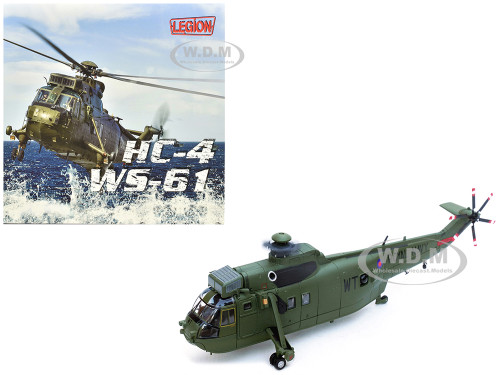
The Westland Sea King is among the company's most famous helicopters. Developed from the Sikorsky S-61 family, the British version incorporated changes for the requirements of the Royal Navy and other operators.
The Sea King became particularly well known for maritime operations. Its large fuselage, substantial main rotor, and ability to operate from naval vessels made it suitable for demanding missions over water.
Important roles included anti-submarine warfare, maritime search and rescue, troop transport, and other naval support tasks. Different versions were adapted for specific missions, and the aircraft served with the British armed forces as well as operators in other countries.
The Sea King is a compelling subject for scale-model collectors because its different versions can represent several areas of aviation history. A naval anti-submarine variant, a search-and-rescue helicopter, and a transport version may share the same basic family resemblance while differing in equipment, markings, and operational purpose.
When choosing a Sea King model, check the represented variant and operator. Radar equipment, external stores, cabin configuration, and paint scheme can distinguish one version from another.
Westland Lynx
The Westland Lynx was developed as a new British helicopter in collaboration with the French aerospace industry. Its prototype first flew in 1971, and the aircraft went on to serve in military and civilian roles.
The Lynx became particularly associated with the British Army and Royal Navy. Land-based versions performed tasks including reconnaissance, utility transport, and armed operations, while naval versions were designed for shipboard use and maritime missions.
One of the Lynx's most notable features was its agility and high performance. In 1986, a specially modified Lynx designated G-LYNX established a helicopter world speed record, reaching approximately 249 miles per hour (400.87 km/h). This achievement became an important milestone in the aircraft's history.
For collectors, the Lynx offers several distinct subjects. Army and naval variants have different equipment and visual details, while export versions can represent the aircraft's international service. Its compact design also contrasts with larger Westland helicopters such as the Sea King and Wessex.
Westland Wessex
The Westland Wessex was developed from the Sikorsky S-58 but incorporated significant British adaptations, including turbine power. It entered Royal Navy service in 1961 and was subsequently used by the Royal Air Force and other operators.
The Wessex served in several roles. Naval versions were used for anti-submarine warfare, while other variants transported troops and equipment, supported ground operations, and conducted rescue missions.
Its distinctive appearance includes a rounded forward fuselage, a prominent main rotor, and a substantial cabin. Some versions featured different engine arrangements and mission equipment, giving collectors opportunities to compare the aircraft's development.
The Wessex is also an important subject in the history of British military transport and maritime aviation. Models representing different versions can illustrate how a common airframe design was adapted for different operational needs.
Westland Whirlwind
The Westland Whirlwind helicopter was derived from the Sikorsky S-55 and became one of the important early helicopters used by British military forces. It was distinct from the earlier Westland Whirlwind fixed-wing fighter, despite sharing the name.
The helicopter served in transport and support roles, including carrying personnel and supplies. Its broad cabin and characteristic forward fuselage reflect the design priorities of early utility helicopters.
For aviation collectors, the Whirlwind represents the transition from early postwar helicopter operations toward the more specialized aircraft that followed. It is particularly relevant to collections focused on the development of British military aviation during the 1950s and 1960s.
Westland Scout and Wasp
The Westland Scout and Wasp were related light helicopters developed from the Saunders-Roe P.531 design. Both served British military requirements, but they were adapted for different operating environments.
The Scout was primarily associated with land-based military operations. It performed reconnaissance, observation, liaison, and utility duties, supporting ground forces with a compact helicopter that could operate in a variety of conditions.
The Wasp was developed for naval use. Its configuration enabled it to operate from relatively small warships, including frigates, where space for aviation equipment was limited. It was used for maritime support and anti-submarine missions.
These helicopters are especially interesting to collectors because their relatively compact designs differ significantly from larger transport and maritime helicopters. Their military markings and specialized equipment can also make them useful additions to collections focused on particular armed forces or historical periods.
Westland Gazelle and Puma
Westland was also involved in the development and production of the Gazelle and Puma through Anglo-French cooperation.
The Gazelle is a light helicopter recognized for its streamlined shape and distinctive fenestron tail rotor, in which the tail rotor is enclosed within the tail structure. It served in reconnaissance, liaison, and utility roles.
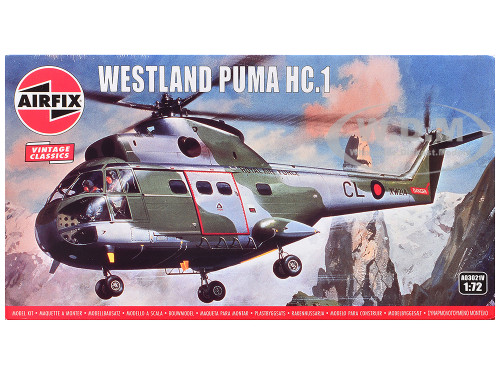
The Puma is a larger transport helicopter designed to carry troops and equipment. Its broader fuselage and more substantial cabin reflect its medium-transport mission.
Although these helicopters emerged from international collaboration, they are closely associated with Westland's history and British military aviation. They offer collectors additional variety beyond the company's most familiar naval helicopter designs.
Westland Aircraft in Military and Naval Aviation
Westland helicopters became important because they helped armed forces carry out missions that were difficult or impractical for fixed-wing aircraft alone.
Maritime Operations
Helicopters such as the Sea King, Wessex, Lynx, and Wasp expanded the capabilities of naval forces. Depending on the aircraft and configuration, they could search for submarines, support surface ships, transport personnel, and assist with rescue operations.
Shipboard helicopters had to accommodate restricted flight decks, limited hangar space, and demanding conditions at sea. Folding rotor blades or tails, specialized landing equipment, and mission-specific sensors were important features on certain versions.
These operational requirements can make naval Westland models particularly interesting to collectors. The aircraft's markings, sensors, external stores, and configuration can help identify the service and role it represents.
Army and Air Force Operations
Land-based Westland helicopters supported reconnaissance, troop movement, utility transport, and other military duties. Aircraft such as the Scout and Gazelle were suited to lighter missions, while larger helicopters provided greater capacity for moving personnel and equipment.
The Wessex and Puma were especially relevant to transport operations, while the Lynx served in a range of land-based and naval roles. These differences give collectors an opportunity to build a display showing how helicopters evolved to meet different military requirements.
Search and Rescue
Westland helicopters also became associated with rescue work, particularly over water and in challenging weather conditions. Aircraft such as the Sea King were used for search-and-rescue missions, where their endurance, cabin capacity, and ability to hover were important.
Rescue versions may feature distinctive paint schemes, markings, and equipment. For collectors, these details distinguish them from combat-oriented or transport configurations and highlight the humanitarian side of military and government aviation.
Choosing a Westland Scale Aircraft Model
When selecting a Westland helicopter model, consider more than the aircraft's name. Different versions can have substantially different equipment, markings, and proportions.
-
Aircraft variant: Check whether the model represents a naval, army, air force, transport, or rescue version.
-
Operator and markings: National insignia, squadron markings, service numbers, and paint schemes can help identify the aircraft represented.
-
Scale: Confirm the stated scale and dimensions so the model fits your display and collection.
-
Rotor and tail details: Main rotor arrangements, tail rotors, and other visible features are important when comparing helicopter replicas.
-
Mission equipment: Radar domes, sensors, external stores, rescue equipment, and other fittings vary by aircraft and variant.
-
Construction: Materials and levels of detail depend on the individual model. Check the product listing for information about its construction and any movable components.
-
Display space: Consider rotor diameter as well as fuselage length, since helicopter rotors can require more shelf space than the body alone suggests.
Scales such as 1:72, 1:48, and 1:32 are common in aircraft modelling, but availability varies by product. Do not assume that every Westland aircraft is offered in every scale. Use the scale and dimensions stated in each listing to make an accurate comparison.
Building a Westland Aviation Collection
Westland models can form the foundation of a collection devoted to British helicopter development. One approach is to focus on the company's best-known types, such as the Sea King, Lynx, and Wessex. Another is to follow the progression from early postwar helicopters through later military designs.
Collectors may also organize aircraft by service or mission. A naval display could include shipboard helicopters such as the Wasp, Lynx, and Sea King, while a transport-focused collection might feature the Wessex and Puma. A search-and-rescue theme could emphasize aircraft associated with rescue operations and distinctive service markings.
Comparing different variants of the same helicopter is another useful approach. Changes in sensors, rotor equipment, cabin arrangements, and external stores can reveal how aircraft were adapted over time. If you collect models from different manufacturers, matching the scale where possible can help create a consistent display.
Westland aircraft also complement broader collections of British military aircraft, naval aviation models, and helicopters from other countries. Their history reflects both the evolution of rotary-wing technology and the international cooperation that shaped postwar aerospace engineering.
Westland Models for Aviation Enthusiasts and Gift Shoppers
A Westland scale model can be a thoughtful gift for military aviation enthusiasts, helicopter fans, veterans, historians, and collectors of British aircraft. The best choice often depends on the recipient's interests.
Someone fascinated by naval aviation may appreciate a Sea King or Wasp, while a collector interested in high-performance helicopters may prefer the Lynx. The Wessex and Whirlwind are relevant choices for those interested in the development of postwar military transport and utility helicopters.
Before buying a model as a gift, verify the aircraft variant, scale, markings, and included features. Collectors may have a preference for a particular service, historical period, or configuration, and checking the listing helps ensure that the model matches those interests.
Explore the available Westland aircraft models at Diecast Models Wholesale to discover collectible helicopters representing the history of British aviation, from early utility designs to renowned naval and military aircraft.



 $99.99
 $99.99
 $99.99