Consolidated Diecast Aircraft Models
Consolidated was one of the most important American aircraft manufacturers of the 20th century, producing aircraft that played major roles in military aviation, maritime patrol, long-range reconnaissance, air-sea rescue, and strategic bombing. For diecast aircraft collectors, the name Consolidated is particularly associated with two legendary aircraft: the PBY Catalina flying boat and the B-24 Liberator heavy bomber.
This category is dedicated to diecast and collectible aircraft associated with Consolidated Aircraft Corporation and its historic designs. Depending on available releases, collectors may find models representing Consolidated aircraft in different scales, liveries, military markings, and configurations.
The History of Consolidated Aircraft
Consolidated Aircraft Corporation was founded in 1923 by Reuben H. Fleet in East Greenwich, Rhode Island. Fleet had already developed extensive aviation experience as an Army aviator and early U.S. airmail leader. Consolidated initially developed aircraft for both military and civilian applications, but its reputation grew significantly through its work on flying boats and patrol aircraft.
The company eventually moved its operations to Buffalo, New York, before relocating to San Diego, California, in 1935. San Diego became closely associated with Consolidated and its growing aircraft manufacturing operation. The company would go on to become one of the most important aerospace manufacturers in Southern California.
Consolidated's aircraft covered a wide range of missions. Its designs included patrol aircraft, flying boats, bombers, transports, and other specialized military aircraft. The company's wartime production also helped make San Diego a major center of American aircraft manufacturing.
Consolidated PBY Catalina
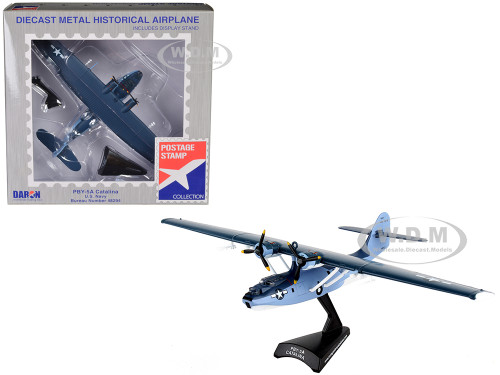
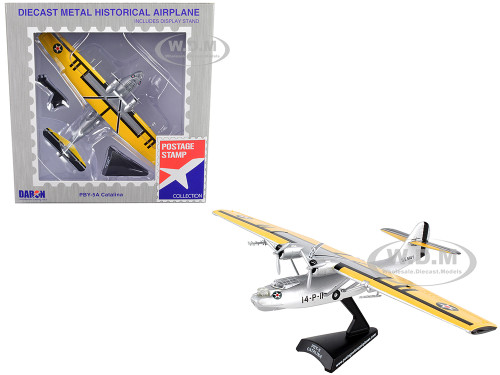
The Consolidated PBY Catalina is arguably the aircraft most strongly associated with the Consolidated name among aviation collectors.
Developed during the 1930s, the PBY was a twin-engine flying boat designed for long-range maritime patrol. Its large parasol wing, boat-shaped hull, retractable wingtip floats, and twin radial engines gave it a distinctive appearance that remains immediately recognizable.
The prototype first flew in 1935, and the aircraft entered U.S. Navy service in the following years. The PBY evolved through several versions, including the PBY-1, PBY-2, PBY-3, PBY-4, PBY-5, PBY-5A amphibian, and PBY-6A. The amphibious versions added retractable landing gear, allowing the aircraft to operate from both water and conventional runways.
The Catalina became an exceptionally versatile aircraft. During World War II it was used for:
- Maritime patrol
- Long-range reconnaissance
- Anti-submarine warfare
- Search and rescue
- Air-sea rescue
- Convoy protection
- Bombing and anti-shipping missions
- Transport and supply missions
Catalinas operated throughout the Atlantic and Pacific theaters and served with numerous Allied air forces. Their ability to remain over large areas of ocean for extended periods made them particularly valuable for reconnaissance and rescue operations.
For collectors, the Catalina offers an unusually broad range of potential subjects. Models can represent U.S. Navy aircraft, U.S. Army Air Forces OA-10s, Royal Air Force Catalinas, Royal Canadian Air Force aircraft, and aircraft operated by other nations.
PBY Catalina Diecast Models
A PBY Catalina diecast model is an excellent choice for collectors interested in World War II aircraft, seaplanes, maritime aviation, or historically significant military aircraft.
The Catalina's unusual configuration also makes it visually different from conventional land-based aircraft. Its boat hull and high-mounted wing create a distinctive silhouette that stands out in an aircraft display.
Collectors may encounter different versions including:
PBY-5
The PBY-5 represented an important production version of the Catalina and saw extensive wartime service. It retained the classic flying-boat configuration and was used extensively for patrol and reconnaissance missions.
PBY-5A
The PBY-5A Catalina added retractable landing gear, turning the flying boat into a true amphibious aircraft. This version is especially recognizable because of its ability to operate from both water and land.
OA-10
The U.S. Army Air Forces designated its Catalinas as OA-10 aircraft. These aircraft were heavily associated with search-and-rescue operations, making OA-10 models especially interesting to collectors who focus on Army Air Forces rescue aviation.
International Catalina Variants
Catalinas were also built or operated outside the United States. Canadian-built aircraft included versions known as Canso, while other license-built and locally operated aircraft served throughout the world.
These different designations can make collecting Catalina models particularly rewarding because two aircraft that look broadly similar can represent very different operators, missions, and historical periods.
Consolidated B-24 Liberator
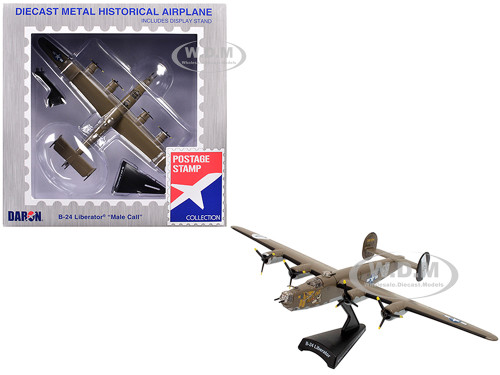
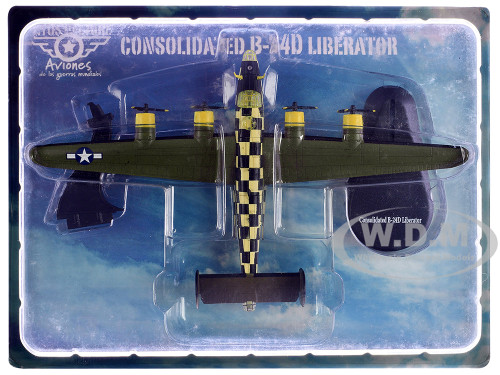
The other major aircraft associated with Consolidated is the B-24 Liberator, one of the most important heavy bombers of World War II.
Consolidated developed the XB-24 prototype in response to a U.S. Army requirement for a long-range bomber. The prototype first flew in December 1939. The design featured a twin-tail arrangement, high-mounted wing, and four engines, giving it a distinctive appearance compared with the B-17 Flying Fortress.
The B-24 became a major Allied bomber and was produced in enormous numbers. Production expanded beyond Consolidated's own facilities, with aircraft manufactured at multiple locations by Consolidated and other participating manufacturers.
The Liberator was used in a wide variety of missions, including:
- Strategic bombing
- Maritime patrol
- Anti-submarine warfare
- Long-range reconnaissance
- Transport
- Special operations
- Search and rescue
Its long range was particularly valuable in the European, Atlantic, and Pacific theaters.
For diecast collectors, the B-24 provides opportunities to collect aircraft associated with different bomber groups, squadrons, theaters, nose art, camouflage schemes, and historical missions.
Consolidated Aircraft and World War II
World War II transformed Consolidated Aircraft into a massive aircraft manufacturer. The company was simultaneously responsible for important aircraft programs such as the PBY Catalina and B-24 Liberator.
Consolidated's San Diego operation expanded dramatically during the war. Thousands of workers were involved in aircraft production, including a rapidly growing number of women entering manufacturing positions as men entered military service. The company's wartime production became an important part of the broader industrial history of Southern California.
This wartime background adds considerable historical context to Consolidated aircraft models. A diecast PBY or B-24 can represent not only a particular aircraft but also the technological, industrial, and military history surrounding the aircraft.
Other Notable Consolidated Aircraft
Although the Catalina and Liberator are the best-known Consolidated designs among collectors, the company produced numerous other significant aircraft.
The P2Y patrol flying boat helped establish Consolidated's reputation in maritime aviation before the Catalina. The PB2Y Coronado was another large four-engine flying boat developed for long-range maritime operations.
Consolidated also produced the PBY-derived aircraft, specialized patrol aircraft, trainers, and other military designs. The company's work eventually expanded into the postwar era and contributed to the development of aircraft that became associated with Convair.
In 1943, Consolidated merged with Vultee Aircraft to create Consolidated Vultee Aircraft, commonly known as Convair. The company's subsequent history continued into the jet age, producing aircraft such as the Convair 880 and F-102 Delta Dagger.
This broader history can make a Consolidated collection an interesting starting point for collectors who want to explore the evolution from prewar flying boats and piston-engine aircraft into postwar aerospace technology.
Collecting Consolidated Diecast Aircraft
When selecting a Consolidated aircraft model, collectors should consider several factors.
Aircraft Type
Determine whether the model represents a PBY Catalina, B-24 Liberator, or another Consolidated design. The Catalina and Liberator appeal to somewhat different collecting interests, with the former being especially attractive to seaplane and maritime aviation collectors.
Scale
Aircraft models are produced in several scales. Common aviation scales include 1:72, 1:100, 1:144, 1:200, 1:400, and 1:48, although availability varies considerably by aircraft and manufacturer.
For a larger display, 1:72 or 1:48 models provide substantially more physical detail. Smaller scales such as 1:144 and 1:200 can make it easier to display multiple aircraft together, while 1:400 is useful for larger collections or compact displays.
Always check the individual product specifications because the same aircraft may be available in multiple scales.
Markings and Livery
Military aircraft models can differ significantly based on squadron, service branch, country, aircraft serial number, camouflage, and historical period.
For example, a PBY Catalina in U.S. Navy markings represents a different collecting subject from an RAF Catalina or an OA-10 operated by the U.S. Army Air Forces.
Display Theme
Consolidated models can work particularly well in themed collections such as:
- World War II aircraft
- U.S. Navy aviation
- U.S. Army Air Forces
- Maritime patrol aircraft
- Seaplanes and flying boats
- Search-and-rescue aircraft
- Pacific Theater aviation
- Atlantic Theater aviation
- Historic San Diego aerospace
- American aircraft manufacturers
Why Consolidated Models Stand Out
Consolidated aircraft occupy an unusual place in aviation history because the company's designs covered two very different but equally important areas of World War II aviation.
The PBY Catalina represents endurance, maritime patrol, reconnaissance, and rescue. Its ability to operate from water made it especially valuable in areas where conventional runways were unavailable.
The B-24 Liberator represents long-range bomber development and the massive industrial mobilization required to produce aircraft for a global war.
For collectors, these aircraft provide both visual variety and historical depth. A Consolidated diecast aircraft model can therefore complement collections focused on military aviation, American aircraft manufacturers, World War II, or historically important aircraft.
Shop Consolidated Diecast Aircraft Models
Consolidated aircraft models are a strong choice for collectors looking for historically significant American aircraft with distinctive designs and important service histories. From the amphibious PBY Catalina to the legendary B-24 Liberator, Consolidated produced aircraft that left a lasting mark on aviation.
Browse the Consolidated category at DiecastModelsWholesale.com to explore available Consolidated diecast aircraft models, compare aircraft, scales, markings, and configurations, and find a model that fits your aviation collection.