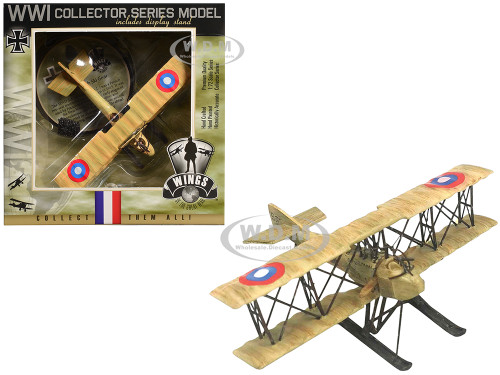
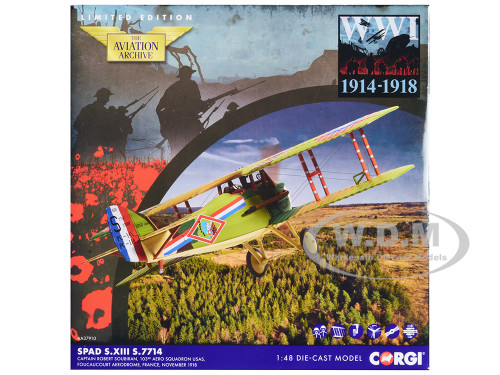
SPAD aircraft hold an important place in aviation history, particularly during World War I, when French-designed fighter planes became some of the most recognizable aircraft of the conflict. For aviation enthusiasts, military history collectors, and model airplane hobbyists, SPAD represents an era of rapid technological development, daring aerial combat, and the emergence of fighter pilots as internationally celebrated figures.
The SPAD category at Diecast Models Wholesale is intended for collectors interested in SPAD aircraft and related aviation collectibles. Depending on current availability, shoppers may find miniature representations of historic French military aircraft, World War I fighters, and aircraft associated with the Allied air forces. These models can appeal to collectors building a World War I aviation display, assembling a collection of historic military aircraft, or exploring the development of early fighter planes.
What Was SPAD?
SPAD was a French aircraft manufacturer whose name became closely associated with high-performance military aircraft during World War I. The company developed a series of single-seat fighters that served with French and other Allied air forces. Its aircraft became known for their speed, strong construction, and effectiveness in combat.
The SPAD name is most closely associated with the SPAD S.VII and SPAD S.XIII, two important fighter designs introduced during the war. These aircraft helped establish a reputation for French fighter aviation and were flown by numerous notable pilots.
SPAD aircraft are particularly interesting to collectors because their designs capture a transitional period in aviation. Aircraft were moving beyond the fragile, relatively lightly armed machines of the earliest war years toward faster, more powerful fighters designed for sustained aerial combat.
The History of SPAD Fighter Aircraft
SPAD S.VII: A New Generation of Fighter
The SPAD S.VII entered service in 1916 and became one of France's important fighter aircraft during World War I. Designed by Louis Béchereau, it was developed around a powerful engine and a relatively strong airframe, offering performance that helped Allied pilots challenge capable German fighters.
The S.VII was valued for its speed, diving performance, and robust construction. Although it did not have the same maneuverability as every competing aircraft, its characteristics suited pilots who could use speed and energy effectively in combat.
The aircraft also served outside France. British, Italian, and other Allied air forces operated SPAD fighters, helping spread the design's influence beyond its country of origin.
For model collectors, the SPAD S.VII offers a classic representation of early fighter development. Its streamlined fuselage, biplane wings, exposed bracing wires, and period markings make it a distinctive subject for a World War I aircraft collection.
SPAD S.XIII: One of the War's Best-Known Fighters
The SPAD S.XIII followed the S.VII and became one of the most widely recognized French fighters of World War I. Introduced in 1917, it retained the general design approach of the earlier aircraft while incorporating improvements that included a more powerful engine and enhanced combat capability.
The S.XIII was used by French units and by several Allied air forces. Its performance made it a significant aircraft during the later stages of the war, when fighter design and aerial tactics were developing quickly.
The aircraft is associated with many well-known Allied pilots, including French ace Georges Guynemer and American aviator Eddie Rickenbacker. Individual pilots flew different aircraft at different points in their careers, so markings and aircraft identities are important details for historically focused collectors.
The SPAD S.XIII is an especially recognizable subject for miniature aircraft because of its compact biplane profile, twin-wing configuration, and the variety of national insignia, squadron markings, and personal decorations used on aircraft of the period.
SPAD and Allied Aviation
Although SPAD was a French manufacturer, its aircraft became part of a broader Allied aviation story. French, American, British, and Italian air services all contributed to the development and operation of military aviation during World War I.
The United States entered the war in 1917, and American pilots serving with U.S. units flew SPAD S.XIII fighters. The type became associated with American pursuit aviation as well as French service, making it relevant to collectors interested in both French aircraft history and the beginnings of American military aviation.
SPAD aircraft also reflect the international nature of early aviation. Designs, engines, production methods, and combat experience developed across national boundaries, influencing the aircraft that followed in the years after the war.
Why SPAD Aircraft Matter to Collectors
SPAD models can add historical variety to a diecast aircraft collection. Rather than focusing exclusively on modern jets or the larger aircraft of World War II, collectors can use World War I fighters to explore the origins of dedicated military fighter aviation.
Reasons to collect SPAD aircraft include:
-
World War I history: SPAD fighters represent a formative period in military aviation and aerial combat.
-
Distinctive aircraft design: Their biplane wings, narrow fuselages, propellers, and external bracing create a recognizable early-aircraft silhouette.
-
Famous pilots and units: Certain SPAD aircraft are associated with prominent French and American pilots, although specific markings should be checked against each product listing.
-
French aviation heritage: SPAD models complement collections focused on French aircraft manufacturers and the history of European aviation.
-
Historical display possibilities: They can be displayed alongside other World War I aircraft to illustrate how fighter design evolved during the conflict.
What to Look for When Choosing a SPAD Model
The most suitable model depends on your collecting interests and the details of the individual product.
Aircraft Type and Variant
Check whether a model represents the SPAD S.VII, SPAD S.XIII, or another aircraft associated with the manufacturer. These designations refer to different aircraft types, so confirming the variant helps ensure that a model fits the historical period or collection you are building.
Pilot, Squadron, and National Markings
World War I aircraft often carried distinctive national insignia, unit markings, and personal decorations. If you collect aircraft connected to a particular pilot or military service, review the product name and available images carefully. Exact markings can be just as important to a historical collection as the aircraft type itself.
Scale and Display Space
Scale determines the model's approximate size relative to the real aircraft. A smaller-scale aircraft may fit conveniently into a broader aviation display, while a larger model can make individual structural details easier to appreciate. The available scales depend on current inventory, so consult each product listing for the stated scale and dimensions rather than assuming every SPAD model is offered in multiple sizes.
Construction and Presentation
Product materials and display features can differ by manufacturer and release. Review the individual listing for information about diecast metal, plastic components, included display stands, packaging, and other specifications. These details help determine whether a model is best suited to an enclosed display, a desk collection, or a larger historical aviation arrangement.
Building a World War I Aircraft Collection
SPAD aircraft can serve as a starting point for a collection devoted to the First World War. Pairing a SPAD fighter with aircraft from other participating nations can help illustrate the range of designs used during the conflict, from early reconnaissance machines to specialized fighters developed later in the war.
Collectors may also organize their displays by manufacturer, country, aircraft type, military service, or historical period. A French aviation display, for example, can highlight SPAD's role in Allied fighter development, while a pilot-focused collection can explore the aircraft associated with individual aviators.
For collectors who prefer a chronological arrangement, World War I aircraft provide an opportunity to trace the evolution of military aviation from the early years of the conflict through the more capable fighters introduced in 1917 and 1918.
Availability varies by product and manufacturer, and not every historic SPAD variant will necessarily be represented in the current selection. Product descriptions should be used to confirm the exact aircraft, scale, markings, and construction of each model.
Shop SPAD Diecast Aircraft Models
Whether you are interested in the SPAD S.VII, the famous SPAD S.XIII, or the wider history of French military aviation, SPAD aircraft offer a meaningful connection to the early years of aerial combat. Their distinctive designs and place in World War I history make them appealing subjects for aviation enthusiasts and military model collectors.
Browse the SPAD category at Diecast Models Wholesale to explore the available aircraft models and find a piece that complements your aviation collection.