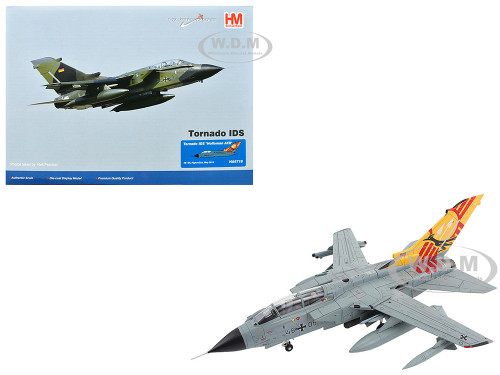
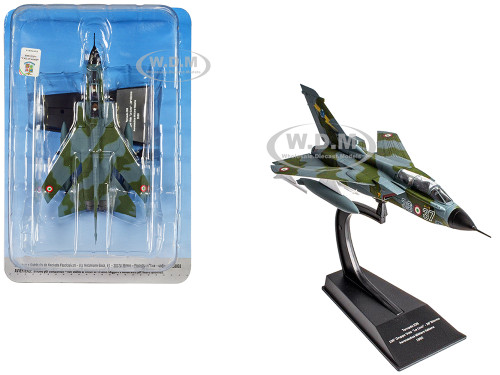
Discover Panavia Tornado diecast aircraft models at Diecast Models Wholesale, featuring a legendary military aircraft developed through international cooperation between the United Kingdom, Germany, and Italy. Known for its distinctive variable-sweep wings, twin-engine design, and versatility across demanding military missions, the Panavia Tornado has earned a lasting place in modern aviation history. For military aircraft enthusiasts, aviation historians, and diecast collectors, Tornado models offer a way to celebrate one of Europe's most recognizable combat aircraft.
The Panavia category focuses on scale models of the Panavia Tornado, including aircraft associated with the British Royal Air Force, German Luftwaffe, and Italian Air Force. Depending on current availability, collectors can find different Tornado variants, historical aircraft markings, unit insignia, and commemorative liveries from manufacturers such as Hobby Master, Corgi, and Hachette Collections. Available models may include different scales, allowing collectors to select an aircraft that fits their display space and collecting interests.
Panavia and the History of the Tornado
An International Aviation Project
Panavia Aircraft GmbH was established in 1969 as a multinational consortium involving the United Kingdom, West Germany, and Italy. The participating countries sought a modern combat aircraft capable of performing demanding missions in European operating conditions. Rather than developing three entirely separate aircraft, the partners collaborated on a common design that could be adapted to meet the requirements of their individual air forces.
The result was the Panavia Tornado, a twin-engine combat aircraft designed around variable-sweep wings. The wings could be adjusted to different positions to accommodate different phases of flight, helping the aircraft combine efficient flight characteristics with the high-speed performance required for its intended missions. Its two-seat arrangement in the principal operational versions also supported cooperation between the pilot and a second crew member responsible for navigation and mission systems.
The Tornado prototype made its first official flight on August 14, 1974. Following extensive development and testing, the aircraft entered operational service around the beginning of the 1980s. It became a significant example of European defense cooperation and served in several roles across multiple air forces.
For diecast collectors, this shared history makes the Panavia Tornado particularly interesting. A model represents not only an individual aircraft but also a major international engineering program that brought together aerospace industries and military requirements from three countries.
A Distinctive Variable-Sweep Design
The Tornado's most recognizable feature is its variable-sweep wing configuration. The wings can be positioned farther forward for operating conditions favoring lift and maneuverability or swept back for high-speed flight. This gives the aircraft a visibly different profile depending on its wing position.
Other defining features include its twin-engine arrangement, long fuselage, tandem cockpit, and substantial tail assembly. These features give the Panavia Tornado a strong visual identity among modern military aircraft.
On a scale model, the Tornado's design is particularly appealing to aviation enthusiasts who appreciate aircraft engineering as well as historical significance. Wing shape, cockpit details, landing gear, external stores, and service-specific markings can all contribute to the character of a particular model. The exact features will depend on the manufacturer, scale, and version represented.
Panavia Tornado Variants to Know
The Tornado was developed into several variants to perform specialized missions. Understanding their differences can help collectors identify the aircraft represented by individual models.
Panavia Tornado IDS
The IDS, or Interdiction Strike, is the principal strike and attack version of the Tornado. It was designed to carry out air-to-ground missions, including attacks against strategic and tactical targets. The aircraft also supported maritime strike and reconnaissance duties in appropriate configurations.
Tornado IDS aircraft served with the German and Italian air forces, as well as the Royal Saudi Air Force, while the British Royal Air Force operated its related strike aircraft under designations including GR1 and later GR4.
Collectors may encounter German Luftwaffe Tornado IDS models depicting aircraft assigned to operational units, aircraft wearing particular exercise markings, and aircraft associated with overseas deployments. These variations allow collectors to explore different periods in the Tornado's service history while collecting examples of the same basic aircraft design.
Panavia Tornado ECR
The ECR, or Electronic Combat and Reconnaissance, variant was developed for missions involving the detection and suppression of enemy air-defense systems, along with electronic and tactical reconnaissance. Its specialized mission equipment distinguishes it from the standard strike configuration.
Germany and Italy operated Tornado ECR aircraft. Models depicting this version can be especially relevant to collectors interested in electronic warfare, reconnaissance aircraft, and the specialized roles performed by modern military aviation.
When comparing Tornado ECR diecast models with IDS versions, look at the aircraft designation, national markings, unit identification, and configuration described in the product listing. These details help distinguish one mission variant from another and provide useful context for a military aircraft display.
Royal Air Force Tornado GR1A
The Tornado GR1A was a British reconnaissance version derived from the RAF's Tornado GR1. It was configured for tactical reconnaissance missions and forms part of the broader Tornado family developed for the United Kingdom's requirements.
A model representing a GR1A adds a different dimension to a collection focused on the aircraft. Rather than concentrating exclusively on strike missions, it represents the Tornado's use in gathering information and supporting military planning.
Depending on available models, collectors may also encounter other British Tornado designations and service markings. Check each product description for the precise version, aircraft identity, and historical details.
Tornado Air-Defense Variant
Panavia also developed the Tornado ADV, or Air Defence Variant, for long-range interception and air-defense duties. This version was most closely associated with British requirements and was later used by Saudi Arabia. Compared with the strike-oriented versions, it featured a longer, more slender nose to accommodate its air-interception radar.
Although its appearance differs from the IDS and ECR versions, the ADV shares the Tornado family's characteristic variable-sweep wings and overall design. It is a useful variant to know when researching Panavia aircraft, even when a particular version is not part of the category's current selection.
Aircraft, Air Forces, and Historical Markings
One of the most rewarding aspects of collecting Panavia Tornado models is comparing aircraft from the different nations that operated the type. National insignia, squadron markings, camouflage, serial numbers, and commemorative decorations can make two models of the same variant look quite different.
German Luftwaffe
German Tornado models are of interest to collectors of European military aviation and postwar German aircraft. The Luftwaffe operated the Tornado IDS and ECR, and its aircraft served in strike, reconnaissance, and electronic combat roles.
Depending on current availability, models may represent aircraft associated with Jagdbombergeschwader 31 “Boelcke,” the German technical and evaluation establishment WTD 61, or other units and operations. Particular aircraft identities and historical markings can help collectors connect a model to a specific unit or period of service.
German Tornados also participated in international exercises and overseas deployments. Models representing aircraft associated with training in the United States or operations in Afghanistan provide examples of the aircraft's use beyond its home bases.
British Royal Air Force
The Royal Air Force operated the Tornado in strike and reconnaissance roles, making British examples an important part of the aircraft's history. RAF Tornado models may be distinguished by their national roundels, squadron markings, aircraft codes, and mission-specific designations.
A model of a Tornado GR1A, for example, represents the reconnaissance side of the aircraft's service, while strike variants reflect its attack role. The exact aircraft, unit, and period represented should be checked against the product description rather than inferred from the general Tornado designation alone.
Italian Air Force
Italy was one of the founding partners in the Panavia program and operated Tornado IDS and ECR aircraft. Italian examples offer collectors an opportunity to compare national markings and unit identities with British and German aircraft.
Models featuring Italian Air Force markings, such as those associated with the 156 Gruppo and 36 Stormo, can be valuable additions to collections focused on European combat aircraft or the international Tornado program. As with any military aircraft model, the specific markings and aircraft history vary by release.
Choosing a Panavia Tornado Diecast Model
When choosing a Tornado model, consider the scale, variant, manufacturer, markings, and intended display.
Compare Available Scales
The Panavia category may feature models in several scales, depending on current availability.
-
1:48 scale: A larger display format that can offer a substantial presence on a shelf or in a military aircraft collection. A 1:48 Corgi Panavia Tornado GR1A is an example of this scale represented in the category.
-
1:72 scale: A popular aircraft-modeling scale that balances display size with the ability to collect multiple aircraft. Hobby Master Tornado IDS and ECR examples illustrate the types of releases collectors may find.
-
1:100 scale: A smaller format suited to compact displays or collections where aircraft from several countries and periods are displayed together. Hachette Collections has represented the Tornado in this scale.
Scale alone does not guarantee a particular level of detail or a specific construction material. Review the individual product specifications for information about materials, configuration, included display equipment, and other features.
Consider the Manufacturer and Release
Different manufacturers may emphasize different aspects of a diecast aircraft. Hobby Master models often appeal to collectors seeking specific military aircraft identities and service markings. Corgi has produced larger-scale aviation collectibles, while Hachette Collections has represented the Tornado in smaller-scale releases.
The exact construction, finish, accessories, and presentation vary by release. Check the product listing for the model's scale, manufacturer, aircraft variant, livery, and any stated edition or display features before purchasing.
Build a Themed Military Aviation Collection
A Panavia Tornado model can stand on its own or form part of a larger aviation display. Some collectors focus on one air force, while others compare the same aircraft family across different countries. Another approach is to collect different mission variants to illustrate how a shared airframe was adapted for strike, reconnaissance, electronic combat, and air defense.
The Tornado also fits naturally into a broader collection of modern military aircraft. Pairing it with other European combat aircraft can help illustrate the development of military aviation from the late twentieth century onward. For collectors interested in squadron histories, overseas deployments, or multinational defense programs, carefully selected aircraft markings can give a display a more specific historical theme.
Shop Panavia Tornado Diecast Aircraft at Diecast Models Wholesale
The Panavia Tornado combines distinctive aircraft engineering, international cooperation, and a long service history across several air forces. Its IDS, ECR, and reconnaissance-related versions give collectors multiple subjects to explore, while different scales and aircraft markings offer opportunities to build a varied military aviation display.
Browse the Panavia category at Diecast Models Wholesale to explore available Tornado diecast aircraft models from manufacturers including Hobby Master, Corgi, and Hachette Collections. Compare the scale, variant, markings, and product details to find the Panavia Tornado model that best fits your collection.