BAC diecast aircraft models represent one of the most interesting periods in British aviation history, covering the transition from conventional postwar aircraft to supersonic military aircraft and passenger jets. British Aircraft Corporation (BAC) was a major British aerospace company formed in 1960 through the consolidation of aircraft interests associated with Vickers-Armstrongs, English Electric, Bristol, and Hunting Aircraft. The company operated until 1977, when it was nationalized along with other major British aerospace interests to form British Aerospace.
For aviation collectors, the BAC name is associated with several particularly significant aircraft, including the BAC 1-11, BAC TSR-2, BAC Strikemaster, BAC Lightning-related production, and Concorde. These aircraft represent very different branches of aviation, from short-haul commercial transportation to advanced tactical strike aircraft and the world's most famous supersonic passenger airliner.
The BAC category at DiecastModelsWholesale.com is intended for collectors looking for scale aircraft models connected with this important chapter of British aerospace development.
The History of British Aircraft Corporation
BAC was established in 1960 as part of a British government effort to consolidate a fragmented aircraft industry. Vickers-Armstrongs, English Electric, and Bristol Aircraft combined their aircraft interests under the new corporation, with Hunting Aircraft subsequently becoming part of the group. The new company brought together engineering expertise from several of Britain's established aircraft manufacturers.
One of BAC's earliest and most ambitious responsibilities was the development of the TSR-2, a supersonic tactical strike and reconnaissance aircraft intended for the Royal Air Force. At the same time, BAC entered the commercial aircraft market with the One-Eleven, while continuing important military programs and developing international partnerships.
BAC's history is therefore particularly appealing to collectors because the company's aircraft span the rapidly changing aviation technology of the 1960s and 1970s. The period saw aircraft designers move from traditional subsonic aircraft toward Mach 2 military aircraft and supersonic passenger transportation.
BAC 1-11: Britain's Short-Haul Jet Airliner
The BAC 1-11, also written as BAC One-Eleven or BAC 111, is arguably the most important aircraft to carry the BAC name in commercial aviation.
The design originated with Hunting Aircraft as the H107, a proposed short-range jet airliner. After Hunting became part of BAC, the design was developed further and evolved into the larger 80-seat BAC 1-11. The prototype first flew from Hurn on August 20, 1963, and the aircraft entered passenger service with British United Airways in January 1965.
The One-Eleven was designed for short- and medium-range routes and became an important competitor in the growing market for smaller jet airliners. Its rear-mounted engines and T-tail gave it the characteristic appearance shared by several successful aircraft of the era.
Different versions were developed during its production life. The Series 200 was followed by the Series 400, while the stretched Series 500, sometimes called the Super One-Eleven, increased passenger capacity and became particularly useful on European routes and charter operations. BAC also developed the Series 475 for hot-and-high and short-field requirements.
For collectors, BAC 1-11 models can be especially interesting because the aircraft served airlines around the world. Airline-specific liveries allow collectors to build displays around British operators, European carriers, charter airlines, and international aviation history.
What to Look for in a BAC 1-11 Model
When choosing a BAC 1-11 scale model, collectors may want to compare:
- Aircraft series or variant
- Airline and historical operator
- Aircraft registration
- Livery and period represented
- Engine and fuselage configuration
- Manufacturer and construction quality
- Scale and display dimensions
- Landing gear configuration
- Level of surface and livery detail
A model representing a particular airline or registration can also be an excellent way to complement a collection focused on commercial aviation history.
BAC TSR-2: Britain's Controversial Mach 2 Aircraft
The BAC TSR-2 occupies a very different place in aviation history. Designed as a low-level, high-speed tactical strike and reconnaissance aircraft for the RAF, the TSR-2 was one of the most technologically ambitious British military aircraft projects of the 1960s.
The program originated from an RAF requirement for an aircraft capable of high-speed, low-level operations. Vickers-Armstrongs was selected as prime contractor with English Electric as subcontractor, and the companies subsequently became part of BAC.
The TSR-2 incorporated advanced technology for its time, including sophisticated navigation and attack systems, a low-level flight capability, and a design intended to reach approximately Mach 2. Its two Bristol-Siddeley Olympus reheated turbojets were related to the engine family that would later power Concorde.
The aircraft first flew in September 1964, but the program was cancelled by the British government in April 1965. The cancellation made the TSR-2 one of the most famous "what if" aircraft in British aviation history.
For collectors, a BAC TSR-2 model represents more than a military aircraft. It documents a major technological program that influenced the direction of British aerospace development and makes an interesting centerpiece for Cold War aviation collections.
BAC Strikemaster and Military Aviation
BAC also produced military aircraft derived from earlier English Electric designs. The BAC Strikemaster evolved from the Jet Provost family and was developed as an armed trainer and light attack aircraft. It found customers outside the United Kingdom and remained in military service with various operators for decades.
The Strikemaster is particularly useful for collectors who want to explore the training and light-attack side of BAC's history rather than concentrating exclusively on large aircraft such as Concorde.
Its compact proportions and military markings also make it an appealing subject for collections focused on Cold War aircraft, RAF trainers, or international military aviation.
BAC and Concorde
No discussion of BAC is complete without Concorde.
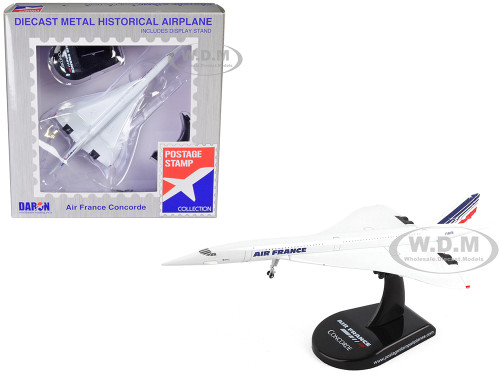
Concorde was an Anglo-French supersonic passenger aircraft developed jointly by BAC and France's Sud Aviation. The project combined British and French aerospace expertise and became one of the most ambitious commercial aviation programs of the 20th century.
The first Concorde prototype flew on March 2, 1969, marking a major milestone in aviation history. The aircraft combined a slender delta-wing design with four Rolls-Royce/Snecma Olympus-derived engines and was capable of sustained supersonic passenger service.
Concorde entered commercial service in 1976 and was operated primarily by British Airways and Air France. Its distinctive needle-shaped nose, slender fuselage, delta wing, and four-engine arrangement make it instantly recognizable.
Because Concorde was jointly developed and manufactured by British and French aerospace organizations, it can appear in both BAC-related and Concorde-focused aviation collections. For a BAC collection, however, it represents the company's involvement in one of the defining technological achievements of the era.
Collecting BAC Aircraft Models
BAC provides an excellent theme for collectors who enjoy aviation history rather than collecting only a single aircraft type. A chronological BAC display can illustrate the rapid transformation of aviation during the 1960s and 1970s.
A collection might include:
- BAC 1-11 — representing the expansion of British jet airliner manufacturing.
- BAC TSR-2 — representing advanced Cold War tactical aviation.
- BAC Strikemaster — representing military training and light attack aircraft.
- Concorde — representing Anglo-French supersonic passenger aviation.
This combination provides a remarkably broad picture of the company's work.
Collectors can also specialize. Commercial aviation enthusiasts may focus on BAC 1-11 models and airline liveries, while military collectors may prefer the TSR-2 and Strikemaster. Concorde models appeal to collectors interested in civil aviation, supersonic flight, British engineering, and aviation history.
Choosing the Right BAC Scale Model
Scale is particularly important with aircraft because large aircraft such as Concorde can require substantial display space.
Common aircraft modeling scales include 1/72, 1/100, 1/144, 1/200, 1/400, and 1/500, although the appropriate scale depends on the aircraft and manufacturer.
Larger scales such as 1/72 or 1/100 can provide more room for details such as cockpit areas, engines, landing gear, panel lines, and livery markings. Scales such as 1/144 and 1/200 provide a useful balance between visible detail and display size. Smaller scales such as 1/400 and 1/500 make it easier to display several aircraft together or create a larger airline fleet collection.
For BAC 1-11 and Concorde collectors, maintaining a consistent scale can be especially effective when displaying multiple airline liveries. Military collectors may instead choose a scale that matches an existing RAF or Cold War aircraft collection.
Why BAC Models Are Interesting to Collectors
The appeal of BAC lies in the variety of aircraft associated with the company and the technological transition they represent. The BAC 1-11 shows the growth of practical short-haul jet transportation, the TSR-2 demonstrates the possibilities of advanced Cold War military aviation, and Concorde represents the pursuit of supersonic commercial travel.
BAC also provides a connection between several major British aerospace organizations and later British Aerospace. When BAC was nationalized in 1977, its operations became part of the new British Aerospace organization, which eventually evolved into today's BAE Systems.
For collectors, this makes BAC models useful not only as individual aircraft but also as historical pieces representing the evolution of British aircraft design.
Shop BAC Diecast Aircraft Models
Whether you are searching for a BAC 1-11 model, a BAC TSR-2, a BAC Strikemaster, or a Concorde associated with British Aircraft Corporation, these aircraft offer a fascinating way to explore British aviation history.
Browse the BAC collection at DiecastModelsWholesale.com to find available BAC diecast aircraft and scale models and add an important piece of British commercial, military, or supersonic aviation history to your collection.



 $149.99
 $149.99