BAE Systems diecast aircraft models represent the modern chapter of Britain's long aerospace heritage, bringing together aircraft programs developed by British Aerospace and its predecessor companies with aircraft in which BAE Systems has played a major design, manufacturing, systems, or support role. For aviation collectors, the BAE Systems name connects Cold War aircraft, advanced trainers, carrier aviation, multinational fighter programs, and some of the world's most recognizable modern military aircraft.
BAE Systems itself was formed in 1999 through the merger of British Aerospace and Marconi Electronic Systems. Its aerospace heritage, however, reaches much further back through companies including British Aircraft Corporation, Hawker Siddeley, English Electric, Vickers, Avro, de Havilland, and other historic British aviation organizations. This extensive lineage is important when collecting BAE Systems aircraft models because many aircraft associated with the company were originally developed under an earlier manufacturer's name.
The BAE Systems category at DiecastModelsWholesale.com is designed for collectors looking for scale aircraft connected with this British aerospace lineage, including subjects such as the BAE Hawk, Harrier, Sea Harrier, Eurofighter Typhoon, Jaguar, Tornado, and other aircraft associated with British Aerospace and BAE Systems programs.
The History Behind BAE Systems Aircraft
The story of BAE Systems aviation begins well before the BAE Systems name appeared on an aircraft.
In 1977, the British Aircraft Corporation, Hawker Siddeley Aviation, Hawker Siddeley Dynamics, and Scottish Aviation were brought together as British Aerospace. This consolidation brought many of Britain's most important aircraft programs under one organization. British Aerospace later became a public company and was privatized during the 1980s.
In 1999, British Aerospace merged with Marconi Electronic Systems to create BAE Systems. The resulting company inherited an enormous portfolio of aerospace, defense, electronics, and systems expertise.
This history means that collectors may encounter BAE Systems-associated aircraft that carry very different original manufacturer names. A model may therefore be marketed around BAE Systems while representing an aircraft originally developed by Hawker Siddeley, British Aircraft Corporation, English Electric, SEPECAT, Panavia, or the Eurofighter consortium.
That distinction is useful when researching and organizing a collection.
BAE Hawk: Britain's Famous Jet Trainer
The BAE Hawk is one of the most recognizable aircraft associated with British Aerospace and BAE Systems.
The Hawk originated at Hawker Siddeley in the 1970s as a new-generation advanced jet trainer. After the formation of British Aerospace in 1977, development and production continued under the new company. The aircraft subsequently became one of Britain's most successful military aviation exports.
The Hawk was designed to provide advanced training for fast-jet pilots before they moved to operational combat aircraft. Its compact size, swept wings, tandem cockpit, and clean aerodynamic shape have made it instantly recognizable.
Hawk variants have been operated by numerous air forces, and the aircraft became particularly famous through its association with the Royal Air Force Red Arrows. Models featuring Red Arrows markings can therefore appeal to both military aviation collectors and enthusiasts of aerobatic teams.
BAE Systems continues to describe the Hawk as a highly successful military trainer, with a large worldwide fleet supporting fast-jet training.
Collecting BAE Hawk Models
When selecting a Hawk model, collectors may want to consider:
- RAF or international operator markings
- Hawk variant
- Red Arrows or standard military livery
- Aircraft registration
- Camouflage scheme
- Manufacturer and model construction
- Scale and display space
A Hawk can also make an excellent companion to models of aircraft that represent the next stage of a pilot's career, such as the Harrier, Tornado, or Eurofighter Typhoon.
Harrier and Sea Harrier
The Harrier is another important part of the aerospace heritage that eventually became BAE Systems.
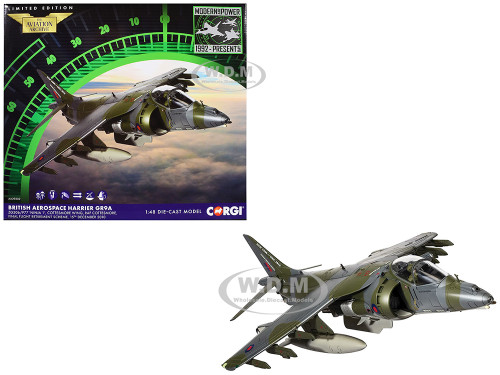
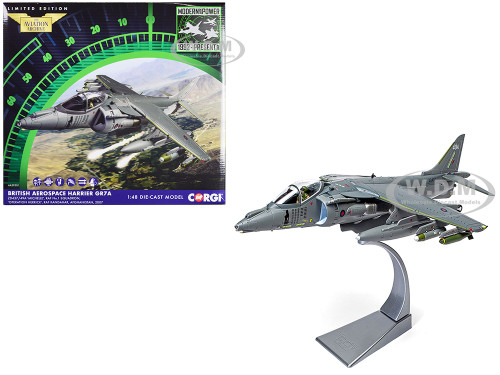
The aircraft originated with Hawker Siddeley and evolved from the experimental P.1127 and Kestrel programs. It became the world's first operational vertical/short takeoff and landing jet aircraft, using vectored thrust to redirect engine exhaust and enable unusual takeoff and landing capabilities.
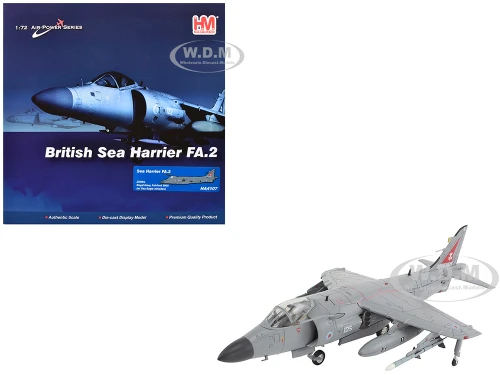
After British Aerospace was formed in 1977, the company continued development of the Harrier family. The Sea Harrier became particularly famous as a carrier-based fighter operated by the Royal Navy and saw extensive combat during the Falklands War in 1982.
Later developments included the Sea Harrier FA2, which incorporated improved avionics and radar capabilities.
For collectors, Harrier models offer several distinct collecting themes:
- RAF Harrier aircraft
- Royal Navy Sea Harriers
- Falklands War aircraft
- Harrier GR variants
- Sea Harrier FRS and FA variants
- Aircraft carrier aviation
- British vertical/short takeoff aircraft
The Harrier's distinctive shape and unusual operating capability also make it one of the most recognizable aircraft in a British military aviation collection.
Eurofighter Typhoon
The Eurofighter Typhoon represents a much later generation of combat aircraft and demonstrates the increasingly international nature of European aerospace development.
The aircraft was developed by a consortium involving the United Kingdom, Germany, Italy, and Spain. BAE Systems became the major British industrial partner, contributing to aircraft development, manufacturing, systems, and continuing support.
The Typhoon evolved from the European Future European Fighter Aircraft program and was preceded by the British Aerospace Experimental Aircraft Programme (EAP) technology demonstrator. The EAP explored technologies that contributed to the development of the future Typhoon, including advanced aerodynamic and control concepts.
The production aircraft combines a delta wing and canard configuration with advanced avionics and a twin-engine layout. BAE Systems remains heavily involved in the aircraft's continuing development and support.
Collecting Eurofighter Typhoon Models
Eurofighter Typhoon models can be collected according to:
- Royal Air Force markings
- International operator
- Squadron
- Special display or anniversary scheme
- Aircraft variant
- Weapons configuration
- Manufacturer
- Scale
Because the Typhoon is operated by several nations, collectors can build an international display around the same basic aircraft while comparing different national markings and camouflage patterns.
Jaguar and Tornado
BAE Systems' aircraft heritage also includes important multinational combat aircraft.
The SEPECAT Jaguar was developed jointly by Britain and France during the 1960s as a supersonic ground-attack and training aircraft. British production and development involved British Aircraft Corporation and later British Aerospace. BAE Systems continues to recognize the Jaguar as part of its aircraft heritage and portfolio.
The Panavia Tornado was another major European collaboration involving Britain, Germany, and Italy. The aircraft was designed around a variable-sweep wing and became an important multirole combat aircraft.
British Tornado models can be particularly attractive to collectors interested in RAF Cold War aviation, Gulf War history, low-level strike aircraft, and the evolution of European combat aircraft.
BAE Systems' current aircraft portfolio continues to recognize the Tornado GR4 as an important part of its aviation heritage.
Modern BAE Systems Aircraft
BAE Systems remains involved in some of the world's most advanced military aircraft programs.
The company's current aircraft portfolio includes the Eurofighter Typhoon, Hawk, and F-35 Lightning II, among other aviation programs. BAE Systems has been involved with the F-35 program since its early development, contributing to areas including aircraft development, advanced manufacturing, electronic warfare systems, and sustainment.
This gives collectors an opportunity to use BAE Systems models to create a chronological display extending from classic British jet aircraft through today's fifth-generation combat aviation.
For example, a collection might progress from:
Harrier → Hawk → Tornado → Eurofighter Typhoon → F-35 Lightning II
Each aircraft represents a different stage in the development of British and multinational military aviation.
BAE Systems Aircraft and Scale Collecting
Aircraft scale is especially important when collecting military models because large aircraft can require considerable display space.
Common aviation scales include 1/72, 1/100, 1/144, 1/200, 1/400, and 1/500, although the available scale varies by aircraft, manufacturer, and release.
Larger models generally provide more room for details such as cockpit features, landing gear, panel lines, weapons, antennas, and national markings. Smaller scales are useful for collectors who want to display multiple aircraft or create a chronological fleet.
A 1/72 or 1/100 fighter can make an effective centerpiece, while 1/144 and 1/200 models offer a good balance between size and display detail. Smaller scales such as 1/400 and 1/500 are particularly useful when space is limited or when building larger collections.
For collectors combining BAE Systems aircraft with models from other manufacturers, consistent scale can make a significant difference in the appearance of the finished display.
Building a BAE Systems Aviation Collection
One of the most interesting ways to collect BAE Systems aircraft is to focus on technological evolution rather than a single aircraft type.
A British aerospace timeline might begin with an earlier-generation aircraft inherited through BAE Systems' predecessor companies, continue through the Harrier and Hawk programs, and then move into the Tornado and Eurofighter eras.
Another approach is to concentrate on a particular theme.
RAF Collectors
RAF enthusiasts can focus on aircraft such as the Hawk, Harrier, Tornado, and Eurofighter Typhoon, using squadron markings and operational schemes to create a historically focused collection.
Carrier Aviation Collectors
The Sea Harrier provides a natural centerpiece for collectors interested in Royal Navy aviation and aircraft carrier operations.
Cold War Collectors
Harrier, Jaguar, and Tornado models provide a strong foundation for a Cold War British and European military aviation display.
Modern Combat Aviation Collectors
Collectors interested in contemporary aircraft can focus on Eurofighter Typhoon and F-35 Lightning II models and compare different national operators and aircraft configurations.
Why BAE Systems Models Are Important to Collectors
The appeal of BAE Systems aircraft goes beyond the company name. These models represent a long chain of British aerospace development extending through many of the country's most important aircraft manufacturers.
From the innovative Harrier and widely operated Hawk to the multinational Tornado and Eurofighter Typhoon programs, BAE Systems' aviation heritage covers several generations of military aircraft.
For collectors, this creates numerous opportunities to build a focused display around British aviation, RAF history, carrier aviation, Cold War aircraft, modern combat aircraft, or the broader development of European aerospace technology.
Whether you are looking for a BAE Hawk model, Harrier or Sea Harrier, Eurofighter Typhoon, Jaguar, Tornado, or another BAE Systems-associated aircraft, each model can add a distinct chapter to an aviation collection.
Shop BAE Systems Diecast Aircraft Models
Explore the BAE Systems category at DiecastModelsWholesale.com to find available BAE Systems diecast aircraft and scale models. Compare aircraft types, markings, manufacturers, and scales to find the models that best fit your collection and build your own display of British and European aerospace history.