Winged Sprint Car Diecast Models
Winged sprint cars are specialized open-wheel race cars built primarily for high-speed competition on dirt oval tracks. Their most recognizable feature is the large aerodynamic wing mounted above the driver and chassis. The wing helps generate downforce and improve traction, while also giving each car a highly distinctive appearance that makes winged sprint cars especially recognizable in diecast form.
At DiecastModelsWholesale.com, the Winged Sprint Cars category is designed for collectors and racing enthusiasts looking for miniature versions of these purpose-built dirt-track machines. Depending on the products available, shoppers can find sprint car diecast models representing individual drivers, teams, race numbers, sponsors, liveries, and different eras of sprint car racing.
Unlike production-based race cars, sprint cars are purpose-built competition machines. A modern 410 sprint car is an open-wheel car with a lightweight chassis, large racing tires, a powerful engine, and aerodynamic wings. The World of Outlaws describes its sprint car as a purpose-built open-wheel race car using a 410-cubic-inch engine, with the cars producing approximately 900 horsepower.
What Makes a Winged Sprint Car Different?
The defining characteristic is the top wing, positioned above the roll cage. Sprint cars can also use a smaller front wing, depending on the rules of the sanctioning organization.
The large top wing serves an important aerodynamic purpose. It can produce downforce over the car and contribute to rear-wheel traction, while its position and angle can be adjusted according to track conditions and regulations. The National Sprint Car Hall of Fame notes that large wings became an important part of modern Super Sprint and sprint car design, providing stability and additional downforce.
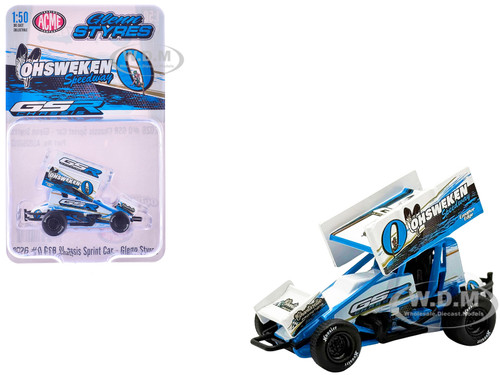
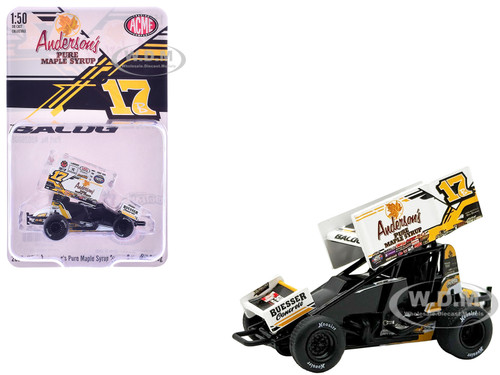
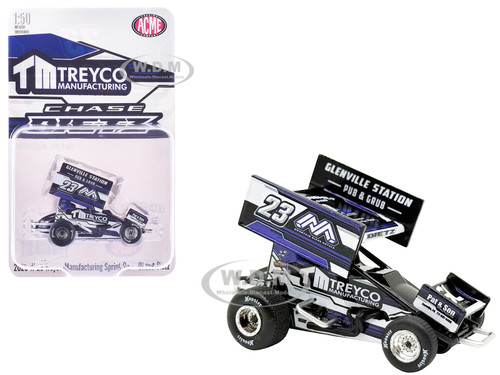
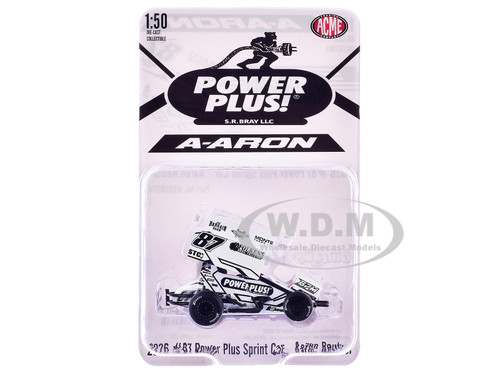
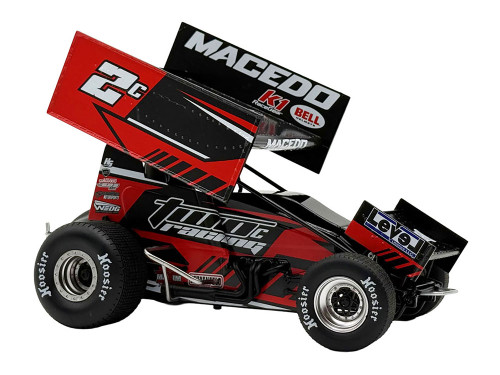
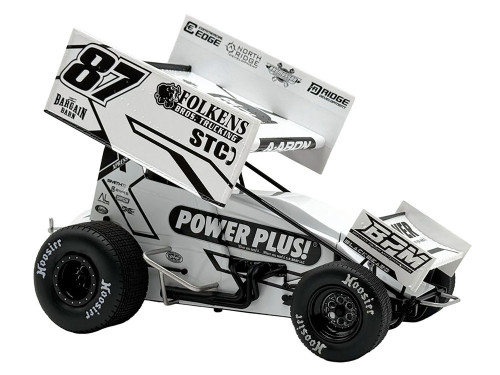
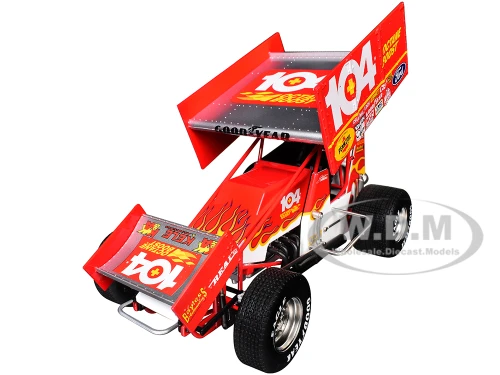
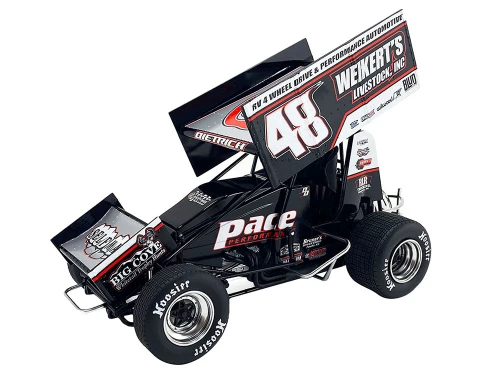
The wing also provides an unusually large canvas for racing graphics. Driver numbers, team colors, sponsors, manufacturer markings, and event-specific liveries are often displayed prominently across the wing and bodywork. That makes a winged sprint car diecast model more than a miniature race car—it can preserve the exact visual identity of a particular racing team or season.
Winged vs. Non-Winged Sprint Cars
Winged and non-winged sprint cars share the same basic open-wheel racing heritage, but they represent different approaches to sprint car competition.
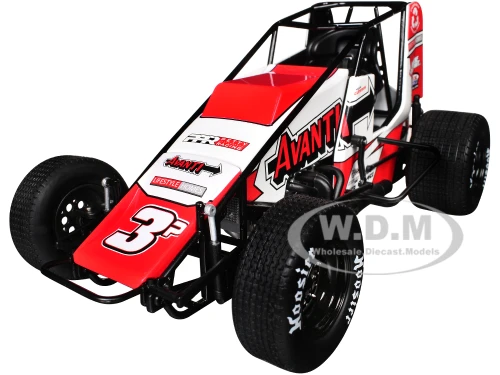
Winged sprint cars are generally associated with aerodynamic wings, high-speed dirt-track competition, and touring series such as the World of Outlaws Sprint Car Series. Non-wing sprint cars omit the large top wing and are raced under different rules and at different types of tracks.
This distinction is important when shopping for sprint car collectibles. A model described as a 410 sprint car, World of Outlaws sprint car, or winged sprint car represents a different category of race car from a non-wing USAC sprint car.
A Brief History of Winged Sprint Car Racing
Sprint car racing has deep roots in American open-wheel motorsports, with generations of drivers, car builders, owners, mechanics, and promoters contributing to the sport's development. The National Sprint Car Hall of Fame & Museum in Knoxville, Iowa, was established to preserve this history and houses a collection of historic sprint cars and racing memorabilia.
The development of wings became an important chapter in sprint car history. The National Sprint Car Hall of Fame records the introduction of large wings on Super Modifieds in the late 1950s, with the aerodynamic concept eventually becoming an important feature of modern sprint cars.
Winged sprint car competition continued to develop at regional tracks throughout the United States. For example, winged sprint cars became part of weekly competition in central Pennsylvania during the 1960s, including at Williams Grove and other major dirt-track venues.
The World of Outlaws Era
A major milestone came in 1978, when Ted Johnson formed the World of Outlaws. The organization brought together leading sprint car competitors for a traveling series that helped expand the national profile of winged dirt sprint car racing. The first official World of Outlaws points race took place at Devil's Bowl Speedway in Texas on March 18, 1978.
The World of Outlaws eventually became closely associated with winged sprint car racing. According to the National Sprint Car Hall of Fame, the series announced in 1984 that it would run winged sprint car races exclusively, while the large top wing also became a distinctive part of the cars' appearance and identity.
Today, the World of Outlaws Sprint Cars remain one of the most prominent forms of touring winged sprint car competition in the United States, with events held at dirt tracks across the country.
410 Sprint Cars and Other Classes
One detail collectors may encounter when shopping for sprint car models is the engine classification.
410 Sprint Cars
The 410 sprint car is the premier and most powerful commonly recognized sprint car class in major winged dirt-track competition. The "410" designation refers to the approximate 410-cubic-inch engine displacement.
World of Outlaws competition uses 410 sprint cars, while sprint car racing also includes 360 and 305 classes. The National Sprint Car Hall of Fame maintains separate historical records and awards for 410, 360, and non-wing sprint car categories, reflecting the variety of sprint car competition.
For collectors, this means that two models may both be described as sprint cars while representing different engine classes, sanctioning bodies, or styles of competition.
Famous Drivers and Sprint Car Teams
Winged sprint car racing has produced a long list of notable drivers whose cars have become recognizable through their numbers, sponsors, teams, and championships.
The National Sprint Car Hall of Fame maintains extensive records of sprint car drivers and industry figures, while its modern awards include separate Driver of the Year recognition for 410, 360, and non-wing competitors.
Among the names associated with modern winged sprint car racing are Donny Schatz, Steve Kinser, Sammy Swindell, Danny Lasoski, Jac Haudenschild, Brad Sweet, David Gravel, and many other drivers who have competed at major dirt-track events.
For collectors, a driver's name can be just as important as the car itself. A diecast model may represent a particular championship season, famous race, team, sponsor combination, or race number.
Collecting Winged Sprint Car Diecast Models
Winged sprint car diecast models appeal to several types of collectors. Some focus on a favorite driver, while others collect particular teams, manufacturers, racing numbers, or eras.
Popular ways to organize a sprint car collection include:
- Driver collections — Models representing the career of a favorite sprint car driver.
- Team collections — Multiple cars from the same owner or racing organization.
- Race-number collections — Collecting cars associated with a particular number.
- Sponsor and livery collections — Focusing on distinctive paint schemes and sponsor graphics.
- World of Outlaws collections — Models representing cars from the national touring series.
- 410 sprint car collections — Focusing on the premier winged sprint car class.
- Historic and modern collections — Comparing earlier sprint car designs with contemporary cars.
- Track and event collections — Building a group around famous dirt tracks or major sprint car events.
Because the wings provide substantial surface area for graphics, sprint car models can be particularly interesting to collectors who appreciate accurate paint schemes and sponsor details.
What to Look for in a Winged Sprint Car Diecast
When choosing a sprint car model, consider more than the driver's name.
Driver and Car Number
Check the driver, car number, team, and season represented by the model. A familiar number can be an important part of a driver's identity and may help distinguish one version of a car from another.
Racing Livery
The paint scheme can identify a particular season or event. Look closely at the graphics on the top wing, nose, side panels, and tail section.
Scale
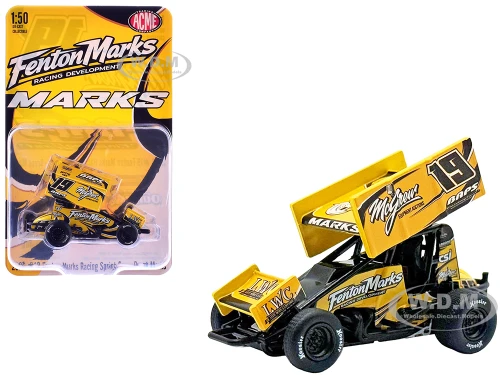
Diecast sprint cars are produced in different scales depending on the manufacturer and release. Common collector scales can include 1/18, 1/24, 1/43, and 1/64, although availability varies by model.
Larger scales generally provide more room for details such as suspension components, wheels, cockpit areas, wings, decals, and chassis features. Smaller scales can make it easier to display multiple cars in a limited space.
Era and Configuration
Sprint car design has changed significantly over time. Comparing older and newer models can reveal differences in chassis construction, wing design, bodywork, wheels, graphics, and overall proportions.
For serious collectors, identifying the exact year or race season can therefore be as important as identifying the driver.
Winged Sprint Cars as Display Collectibles
The unusual proportions of a sprint car make these models stand out in a motorsports collection. The exposed wheels, open cockpit, large top wing, and compact chassis create a silhouette that is very different from stock cars, sports cars, or open-wheel road-racing cars.
A collection can also be built around the history of dirt-track racing rather than a single driver. Pairing different sprint car eras allows collectors to see how aerodynamic wings, chassis design, bodywork, engine classes, and racing graphics evolved over the decades.
For collectors interested in the broader history of the sport, the National Sprint Car Hall of Fame & Museum provides a useful reference for sprint car history, drivers, builders, owners, and historic race cars.
Shop Winged Sprint Car Diecast Models
Whether you collect World of Outlaws cars, 410 sprint cars, specific drivers and teams, or simply appreciate the engineering and distinctive appearance of dirt-track racing machines, winged sprint car diecast models offer a way to bring this specialized form of motorsport into your collection.
Browse the Winged Sprint Cars category at DiecastModelsWholesale.com to explore available sprint car collectibles and find models that match your favorite drivers, teams, race numbers, liveries, and racing eras.





 $16.95
 $16.95

 $129.95
 $129.95


 $129.95

 $124.95
 $124.95
 $124.95
 $124.95
 $124.95