Vought is a historic American aerospace name associated with some of the most recognizable naval and military aircraft of the twentieth century. From World War II fighters to Cold War carrier-based jets, Vought aircraft played important roles in the development of U.S. military aviation. Their distinctive designs, combat histories, and engineering innovations make them compelling subjects for aviation enthusiasts and scale-model collectors.
The Vought category at Diecast Models Wholesale is intended for shoppers interested in collectible models associated with Vought aircraft. Depending on current availability, products may represent historic fighters, carrier-based attack aircraft, and other notable military aviation designs connected with the company.
Vought aircraft models can appeal to collectors of U.S. Navy aviation, military-history enthusiasts, aircraft modelers, and anyone interested in the evolution of combat aircraft. Some collectors focus on World War II aircraft such as the F4U Corsair, while others are drawn to Cold War designs such as the F-8 Crusader and A-7 Corsair II.
Because Vought's history includes aircraft developed under different company names and corporate arrangements, the particular aircraft and version represented by each model are important considerations. Product descriptions should be used to confirm the subject, markings, scale, and included features of an individual collectible.
The History of Vought Aircraft
Early American Aviation
Vought's aviation history began in the early twentieth century, when the company developed aircraft during a period of rapid experimentation and technological progress. Founded by aviation pioneer Chance M. Vought, the company became involved in designing aircraft for military service as the United States expanded its aviation capabilities.
As naval aviation developed, aircraft manufacturers faced demanding design requirements. Carrier-based aircraft needed to operate in confined spaces, withstand challenging maritime conditions, and combine performance with the structural strength required for repeated takeoffs and landings aboard aircraft carriers.
Vought became especially associated with U.S. Navy aviation. Its designs reflected the changing needs of naval warfare, from the propeller-driven fighters of World War II to increasingly fast jet aircraft during the Cold War.
For collectors, this history provides a way to explore how aircraft design evolved in response to new engines, weapons, operational requirements, and advances in aerodynamics.
Vought During World War II
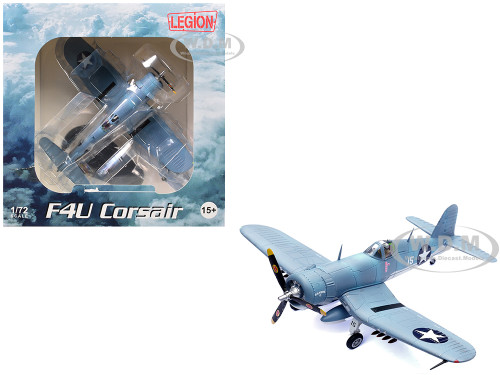
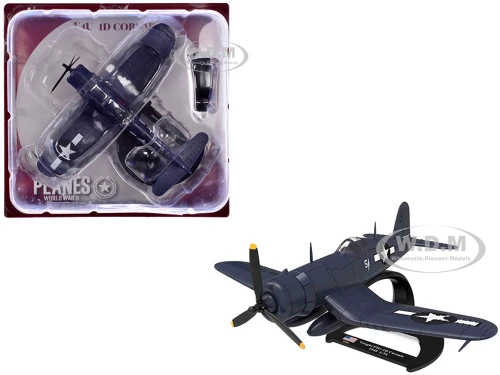
World War II was a defining period for Vought, particularly because of the development of the F4U Corsair. The aircraft became one of the most recognizable American fighters of the conflict and is famous for its distinctive inverted-gull wings, powerful radial engine, and carrier-aviation heritage.
The Corsair entered service during the war and became particularly important in the Pacific theater. It served with U.S. Navy and Marine Corps aviation units and was also operated by other Allied forces. Its combination of speed, firepower, and rugged construction made it an important fighter-bomber as well as an air-superiority aircraft.
Vought's wartime work also formed part of the broader expansion of American aircraft production, when manufacturers developed and built aircraft in large numbers to meet the demands of global conflict.
For scale-model collectors, World War II Vought aircraft offer recognizable silhouettes, historically significant markings, and connections to particular theaters of operation. The Corsair's unusual wing shape and large propeller make it especially distinctive in a collection of historic military aircraft.
Notable Vought Aircraft for Scale-Model Collectors
F4U Corsair: The Bent-Wing Fighter
The F4U Corsair is arguably Vought's best-known aircraft and one of the most recognizable fighters of World War II. Its inverted-gull wing design accommodated a large propeller while providing the necessary ground clearance, creating a silhouette unlike that of most other piston-engine fighters.
The Corsair served extensively with U.S. Marine Corps units in the Pacific and also operated with the U.S. Navy and Allied air forces. Its service continued after World War II, including ground-attack missions during the Korean War. Several variants introduced changes to engines, armament, equipment, and operational roles.
For collectors, the Corsair offers numerous potential subjects, from wartime fighters to later ground-attack versions. Different squadron markings, national insignia, camouflage schemes, and variant designations can make individual models distinct additions to a collection.
When comparing Corsair models, pay attention to the variant and historical markings. The F4U family included multiple versions, and aircraft produced by other manufacturers under license also served under related designations.
F-8 Crusader: The Supersonic Naval Fighter
The Vought F-8 Crusader represented a major step forward in carrier-based jet aviation. Developed during the 1950s, it was designed to meet a U.S. Navy requirement for a supersonic day fighter.
One of the Crusader's most distinctive features was its variable-incidence wing, which could tilt upward for takeoff and landing. This design helped the aircraft maintain a useful approach attitude while improving the pilot's visibility during carrier operations.
The F-8 saw combat during the Vietnam War and also served in photo-reconnaissance versions. Its combination of swept wings, a prominent nose intake, and slender fuselage makes it an immediately recognizable Cold War aircraft.
F-8 Crusader scale models can appeal to collectors interested in carrier aviation, supersonic fighter development, and the history of U.S. Navy and Marine Corps aircraft. Reconnaissance variants offer an additional collecting angle for enthusiasts who focus on specialized military aircraft.
A-7 Corsair II: A Dedicated Attack Aircraft
The A-7 Corsair II was developed from a U.S. Navy requirement for a light attack aircraft. Although its name recalls the F4U Corsair, the A-7 was a separate jet-powered design rather than a direct continuation of the World War II fighter.
Entering service in the 1960s, the A-7 was designed to carry a substantial weapons load over useful distances while providing a relatively economical attack platform. It served with the U.S. Navy and U.S. Air Force, as well as other air forces, and saw combat in several conflicts.
Its compact fuselage, broad wings, and large nose intake give the A-7 a distinctive appearance. Collectors interested in Vietnam-era aviation and later Cold War aircraft may find it a useful complement to fighter models such as the F-8 Crusader.
V-173 Flying Pancake: An Experimental Design
The Vought V-173, commonly known as the Flying Pancake, was an experimental aircraft developed to investigate an unusual low-aspect-ratio, circular-wing concept. Its broad, flattened shape and large propellers near the wing tips made it unlike conventional aircraft.
The V-173 was a technology demonstrator intended to explore the potential for low-speed flight and short takeoffs and landings. Although the concept did not lead to an operational production fighter, it remains a fascinating chapter in experimental aircraft design.
For collectors, the Flying Pancake is a particularly unusual subject. Its shape stands out in a display of conventional fighters and bombers, making it appealing to enthusiasts who appreciate aviation research, prototypes, and unconventional engineering.
Other Vought Aircraft and Historical Subjects
Vought's aircraft history extends beyond its most famous fighters and attack aircraft. Earlier designs and less widely known jet aircraft illustrate the company's work across different periods of military aviation.
Notable examples include:
-
SB2U Vindicator: A carrier-based dive bomber used by the U.S. Navy in the years leading up to and during the early period of World War II.
-
O3U Corsair: An observation and reconnaissance aircraft family used during the interwar period.
-
F6U Pirate: An early Vought jet fighter developed for the U.S. Navy.
-
F7U Cutlass: A distinctive swept-wing naval jet fighter with an unusual tailless configuration and twin-engine layout.
-
XF5U Flying Flapjack: An ambitious follow-on development of the circular-wing concept explored by the V-173, which did not enter operational service.
These aircraft are useful reference points for understanding how Vought's designs changed as aviation moved from biplanes and propeller-driven aircraft to advanced jet-powered machines.
The availability of models representing these subjects varies. Check each product listing to confirm the specific aircraft, variant, markings, and scale.
Choosing a Vought Scale Aircraft Model
The best scale model depends on your available display space, collecting interests, and preference for aircraft detail. Military aircraft models may be offered in different scales and materials, depending on the manufacturer and the particular release.
When selecting a Vought aircraft model, consider:
-
Aircraft variant: Confirm whether the model represents a particular Corsair, Crusader, or other Vought design. Similar names do not necessarily indicate the same aircraft.
-
Historical markings: Squadron insignia, service branch markings, national markings, and camouflage patterns can distinguish one model from another.
-
Scale and dimensions: Compare the stated scale and physical dimensions with the other aircraft in your collection.
-
Construction and finish: Materials, surface detail, paint quality, and small components vary between models.
-
Display accessories: Check whether a stand or other display component is included.
-
Historical context: If accuracy is important to your collection, consider the aircraft's operational period and whether the markings correspond to the version represented.
Scale alone does not determine accuracy or quality. Product descriptions and photographs provide the best way to compare the features of individual models.
Vought Models for Military Aviation Collectors and Gift Shoppers
Vought aircraft offer a strong collecting theme because they represent several important eras of aviation history. The F4U Corsair connects collectors with World War II and the Korean War, the F-8 Crusader represents the development of supersonic naval fighters, and the A-7 Corsair II illustrates the evolution of dedicated jet attack aircraft.
Experimental aircraft such as the V-173 add variety for collectors interested in engineering innovation and unusual designs. Together, these subjects can help build a collection that explores how aircraft evolved to meet changing military requirements.
Vought scale models can also make thoughtful gifts for aviation enthusiasts, military-history fans, aircraft model collectors, and people with a particular interest in naval aviation. When selecting a gift, consider the recipient's preferred aircraft, historical period, scale, and available display space.
Browse the available Vought aircraft models at Diecast Models Wholesale to explore collectible representations of historic American aviation, compare individual product details, and find a distinctive addition to your military aircraft collection.

 $49.99
 $49.99


 $49.99

 $30.95


 $49.99
