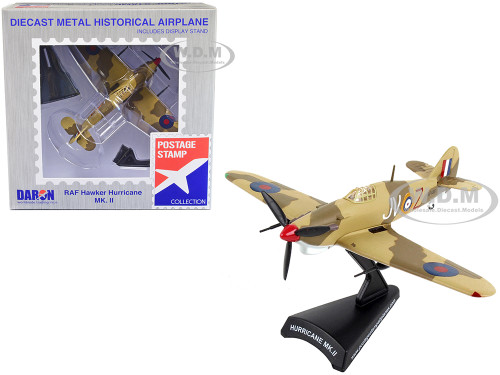
Hawker diecast aircraft models represent some of the most important British military aircraft of the 20th century. From the elegant Hawker Fury and Hawker Hart to the legendary Hurricane, Typhoon, Tempest, and Hunter, Hawker aircraft played major roles in British aviation history, particularly during the interwar period and Second World War.
The Hawker category at DiecastModelsWholesale.com is for aviation collectors, military history enthusiasts, and model aircraft shoppers looking for miniature representations of aircraft developed by Hawker Aircraft and its related companies. Depending on the individual release, the category may include fighter aircraft, bombers, trainers, carrier aircraft, and postwar jet aircraft in a range of collectible scales.
The History of Hawker Aircraft
Hawker's history can be traced to the Sopwith Aviation Company, one of Britain's major aircraft manufacturers during the First World War. After Sopwith entered liquidation in 1920, Harry Hawker and his associates established H.G. Hawker Engineering, which became Hawker Aircraft in the 1930s.
The company quickly established itself as an important British aircraft manufacturer. Designer Sydney Camm became one of the most influential figures in Hawker's history, contributing to a succession of highly successful aircraft.
During the interwar years, Hawker produced aircraft such as the Hart, Demon, Fury, and Nimrod. These aircraft helped develop the company's expertise in high-performance fighters and military aircraft.
That experience became especially important during the Second World War, when the Hawker Hurricane became one of Britain's principal front-line fighters. Later, the company produced the Typhoon and Tempest, two powerful aircraft that evolved from the same broad family of Hawker designs but were adapted for increasingly demanding combat roles.
Hawker's development continued into the jet age with aircraft such as the Hawker Sea Hawk and Hawker Hunter. The company's aircraft eventually became part of the larger Hawker Siddeley organization, but the Hawker name remains strongly associated with some of Britain's most recognizable military aircraft.
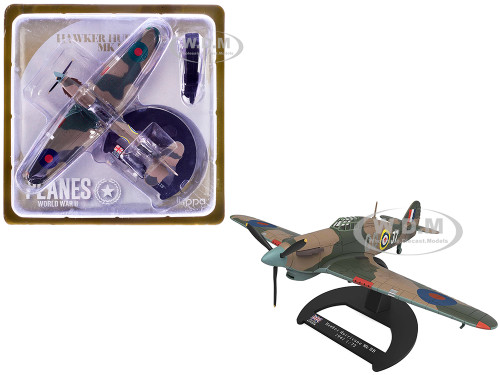
Hawker Hurricane Diecast Models
The Hawker Hurricane is the most famous aircraft associated with the Hawker name and one of the defining fighters of the Second World War.
The Hurricane first flew in 1935 and entered Royal Air Force service in 1937. It was a single-seat, single-engine fighter developed around Sydney Camm's design work. While the aircraft incorporated modern features such as a retractable undercarriage and enclosed cockpit, its construction retained elements of traditional aircraft manufacturing techniques.
During the Battle of Britain, Hurricanes formed a major part of RAF Fighter Command's fighter force. The aircraft was used extensively against German bombers and fighters and continued to serve in many other theaters and roles throughout the war.
Hurricane variants evolved considerably during production. Changes included different engines, armament configurations, tropical equipment, and specialized adaptations. Some versions were also developed for ground attack, reconnaissance, and carrier operations.
For collectors, Hurricane diecast models can be especially interesting because different releases may represent particular squadrons, pilots, camouflage schemes, aircraft markings, or historical operations.
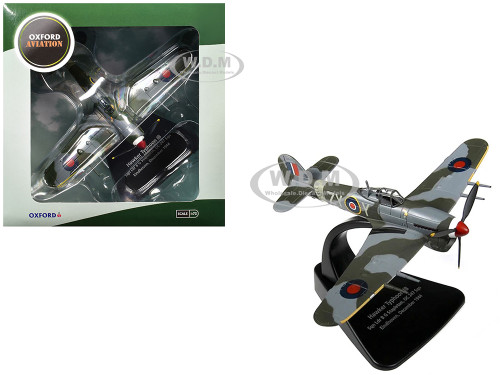
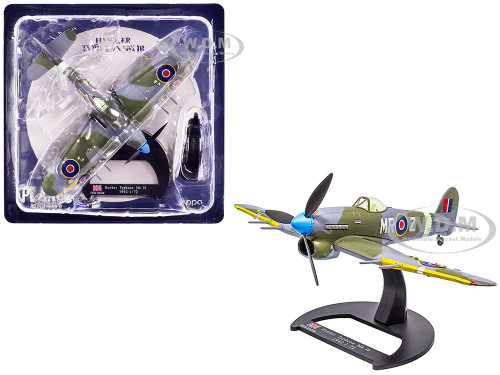
Hawker Typhoon
The Hawker Typhoon was developed as a low-level, high-performance fighter and eventually became one of the RAF's most important ground-attack aircraft.
The Typhoon was originally intended to replace earlier Hawker fighters and was equipped with the powerful Napier Sabre engine. Its development was complicated by early technical problems, but the aircraft ultimately became highly effective in ground-attack and close-support operations.
During the later stages of the Second World War, Typhoons were particularly important in attacks against German ground forces, railways, armored vehicles, and other targets. The aircraft is also closely associated with the Allied campaign in northwest Europe following D-Day.
Typhoon models can add an important ground-attack dimension to a collection otherwise focused on classic fighter aircraft.
Hawker Tempest
The Hawker Tempest was developed from the Typhoon family but incorporated significant aerodynamic and structural changes. It became one of Britain's most capable piston-engine fighters of the later war.
The Tempest was used for several missions, including fighter operations, ground attack, and interception. One of its notable roles was combating German V-1 flying bombs during 1944.
Different Tempest variants used different engines and had different operational characteristics. The Tempest Mk V, powered by the Napier Sabre, is among the best-known versions.
For collectors, a Tempest model pairs naturally with a Hurricane or Typhoon to illustrate the progression of Hawker fighter design during the Second World War.
Hawker Fury and Interwar Fighters
Before the Hurricane, Hawker developed a series of highly regarded interwar fighters.
The Hawker Fury was a single-seat biplane fighter introduced during the early 1930s. Its combination of speed, maneuverability, and attractive proportions made it one of the Royal Air Force's notable fighters of the interwar era.
The related Hawker Nimrod was a naval fighter derived from the Fury concept and designed for operation from aircraft carriers. The Nimrod's naval role makes it particularly interesting for collectors interested in Royal Navy and Fleet Air Arm aviation.
The Hawker Hart was another important interwar design. Developed as a light bomber, it became the basis for several related aircraft, including the Demon fighter and Hind bomber.
These aircraft are useful additions to collections that cover British aviation before the Second World War.
Hawker Sea Hawk
The Hawker Sea Hawk was one of Hawker's early postwar jet fighters. Designed for the Royal Navy's Fleet Air Arm, it was a carrier-based aircraft that entered service in the 1950s.
The Sea Hawk represented a major technological transition from Hawker's famous piston-engine fighters to swept-wing jet aircraft. It also saw combat service during the Suez Crisis in 1956.
A Sea Hawk model can therefore provide an interesting connection between Second World War-era Hawker aircraft and the company's later jet designs.
Hawker Hunter Diecast Models
The Hawker Hunter is another landmark Hawker aircraft and one of Britain's most famous early jet fighters.
The Hunter was developed as a high-performance swept-wing fighter and first flew in 1951. It entered RAF service during the 1950s and remained in military use for decades in various countries.
Its clean swept-wing design, distinctive air intakes, and four-cannon armament made the Hunter instantly recognizable. The aircraft was also operated by the Royal Air Force Red Arrows aerobatic team during the team's early jet era.
Hunter diecast models can appeal to collectors interested in Cold War aviation, British jets, RAF history, and international operators.
Other Notable Hawker Aircraft
The Hawker name covers a broad family of military and civil aircraft. Depending on the individual diecast release, collectors may encounter models representing:
- Hawker Fury – Interwar RAF fighter
- Hawker Hart – Light bomber and highly influential interwar design
- Hawker Demon – Two-seat fighter developed from the Hart
- Hawker Nimrod – Fleet Air Arm carrier fighter
- Hawker Hurricane – Famous Second World War fighter
- Hawker Typhoon – Powerful fighter and ground-attack aircraft
- Hawker Tempest – Advanced late-war fighter
- Hawker Sea Hawk – Postwar naval jet fighter
- Hawker Hunter – Swept-wing Cold War fighter
- Hawker Siddeley aircraft – Later designs developed after Hawker became part of the larger Hawker Siddeley organization
Not every aircraft is available in every scale or configuration. Individual product listings should be checked for the precise aircraft variant, operator, markings, scale, and manufacturer.
Collecting Hawker Diecast Aircraft
Hawker aircraft offer several different collecting approaches. A collector might concentrate on the Hurricane alone, build a chronological display of Hawker fighters, or collect aircraft associated with a particular branch of British military aviation.
Collect by Aircraft
A focused collection could feature multiple Hurricane variants or combine several important Hawker fighters, such as the Fury, Hurricane, Typhoon, Tempest, Sea Hawk, and Hunter.
This approach makes it possible to compare the dramatic evolution from biplanes to high-performance swept-wing jets.
Collect by Historical Era
A chronological Hawker collection can be organized around major periods:
Interwar aviation: Fury, Hart, Demon, and Nimrod.
Second World War: Hurricane, Typhoon, and Tempest.
Early jet era: Sea Hawk and other transitional designs.
Cold War: Hunter and later aircraft associated with Hawker Siddeley.
This creates a display that illustrates how rapidly aircraft technology changed during the 20th century.
Collect by Operator
Military aircraft markings can provide another collecting theme. RAF aircraft may be identified by squadron markings, camouflage patterns, serial numbers, and individual aircraft codes. Naval aircraft can be collected by Fleet Air Arm unit or carrier association, while Hunter models can represent different international operators.
Choosing a Hawker Diecast Scale
Aircraft models are produced in a variety of scales, and the appropriate choice depends on the aircraft and the available display space. Hawker models may be found in scales such as 1/72, 1/48, 1/100, 1/144, 1/200, and 1/400, depending on the specific release.
1/72 Scale
1/72 scale is a popular choice for military aircraft collectors because it offers a useful balance between size and detail. A 1/72 Hurricane, Typhoon, Tempest, or Hunter can provide a strong visual presence without requiring the space of larger models.
1/48 Scale
1/48 scale offers a larger presentation and can show more visible aircraft details. It is particularly attractive to collectors who want a more substantial display model.
1/144, 1/200 and 1/400 Scale
Smaller scales can be useful for collectors building larger aircraft displays or working with limited shelf space. 1/200 and 1/400 can be particularly useful for broader aviation collections, while 1/144 offers a middle ground for many aircraft.
The actual dimensions of the finished model depend on the full-size aircraft, so a large aircraft such as a bomber or transport will naturally require more display space than a single-engine fighter at the same scale.
Building a British Aviation Collection
Hawker models work particularly well alongside other British aircraft manufacturers and military aircraft from the same historical periods. A collection featuring the Hurricane, Typhoon, or Tempest can provide a strong representation of RAF aviation during the Second World War, while the Sea Hawk and Hunter can extend the collection into the postwar and Cold War eras.
Collectors can also combine Hawker models with aircraft representing major historical events, including the Battle of Britain, the later Allied campaign in Europe, carrier aviation, and the development of Britain's first-generation jet fighters.
The result is more than a collection of individual aircraft—it can become a visual history of British fighter development.
Find Hawker Diecast Aircraft Models
From the graceful biplanes of the interwar RAF to the Hurricane of the Battle of Britain, the Typhoon and Tempest of the Second World War, and the Sea Hawk and Hunter of the jet age, Hawker aircraft cover some of the most significant periods in British aviation.
Whether you are looking for a Hawker Hurricane, Typhoon, Tempest, Hunter, Sea Hawk, Fury, or another Hawker aircraft, review the individual product details for scale, variant, markings, and manufacturer.
Browse the Hawker diecast aircraft collection at DiecastModelsWholesale.com and find a British aviation model that fits your collection, display, or historical aviation interests.



 $30.95
 $30.95