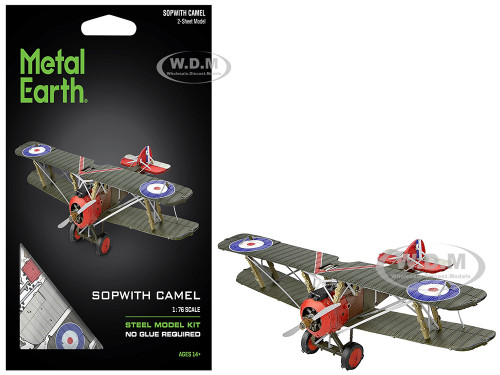
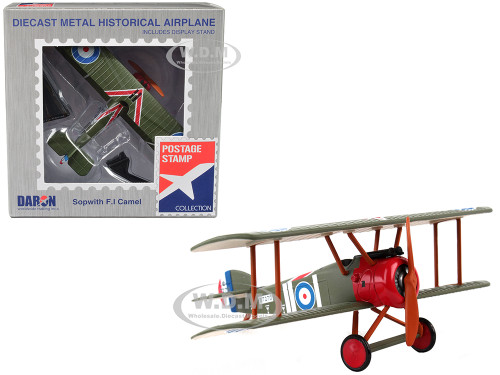
Sopwith is one of the most recognizable names in early British military aviation. The Sopwith Aviation Company developed several influential aircraft during World War I, including fighters and bombers that helped shape the evolution of aerial combat. Its aircraft are remembered for their distinctive designs, maneuverability, and service with the Royal Flying Corps (RFC) and Royal Naval Air Service (RNAS), the British organizations that preceded the modern Royal Air Force and Fleet Air Arm.
For aviation enthusiasts and military model collectors, Sopwith aircraft represent a formative period in aviation history. These early aircraft were often constructed with wooden frames, fabric-covered wings, and exposed structural elements. Their appearance contrasts sharply with the metal-bodied, high-speed aircraft that emerged in later decades.
The Sopwith category at Diecast Models Wholesale is intended for shoppers interested in collectible miniature aircraft associated with this historic manufacturer. Depending on current availability, the selection may include models representing famous World War I fighters and other Sopwith designs. Check individual product listings for the specific aircraft, scale, manufacturer, markings, and construction details.
The History of the Sopwith Aviation Company
From Early Aviation to World War I
The Sopwith Aviation Company was founded in 1912 by British aviation pioneer Thomas Octave Murdoch Sopwith. Based in the United Kingdom, the company initially developed aircraft during a period when powered flight was still relatively new and aviation technology was advancing rapidly.
The outbreak of World War I in 1914 created an urgent demand for military aircraft. Airplanes initially used mainly for reconnaissance soon became involved in artillery observation, interception, bombing, and direct aerial combat. Sopwith became an important supplier of aircraft for British military aviation during this transformation.
The company's designs evolved quickly as military requirements changed. Aircraft needed greater maneuverability, improved engine performance, and better armament. Sopwith engineers developed several successful types that became associated with British flying units and wartime aviation history.
For collectors, Sopwith aircraft offer an opportunity to explore the beginnings of military aviation through models that represent a variety of roles, designs, and operational periods.
Famous Sopwith Aircraft for Collectors
Sopwith Camel
The Sopwith Camel is among the best-known fighter aircraft of World War I. Introduced in 1917, it earned a reputation for its maneuverability and demanding flying characteristics. Its name came from the raised fairing over the twin machine guns, which gave the aircraft a distinctive hump-like appearance.
The Camel played an important role in British aerial operations during the later stages of the war. It was credited with numerous aerial victories and served in several operational environments, including conventional land-based fighter operations and some ship-based missions.
The aircraft's compact fuselage, rounded upper body, and paired wings make it instantly recognizable. For collectors, a Sopwith Camel model can be a centerpiece in a World War I aviation display or a companion to other early fighter aircraft.
When selecting a Camel miniature, examine the represented squadron markings, pilot identification, paint scheme, and scale. These details can distinguish one model from another, even when both represent the same aircraft type.
Sopwith Triplane
The Sopwith Triplane was a distinctive fighter featuring three sets of wings. Its design offered excellent maneuverability and climb performance, making it notable during its relatively short operational career.
Although produced in smaller numbers than some other Sopwith aircraft, the Triplane gained recognition through its use by British and Allied flying units. Its unusual three-wing configuration makes it one of the most visually distinctive aircraft of the era.
A Sopwith Triplane model is particularly appealing to collectors who appreciate unusual aircraft engineering and the experimentation that characterized early fighter development. It also provides a strong visual contrast with biplanes and later monoplane aircraft.
Sopwith Pup
The Sopwith Pup was a lightweight fighter introduced during the early period of World War I aerial combat. Known for its responsive handling and relatively forgiving flight characteristics compared with some contemporary aircraft, it served with both land-based and naval aviation units.
The Pup was used by the Royal Flying Corps and Royal Naval Air Service. Its service helped demonstrate the importance of maneuverability and pilot control in fighter design.
For collectors, the Sopwith Pup represents an earlier stage in the development of British fighter aircraft. Its smaller proportions and simple biplane layout make it an interesting addition to a collection featuring several generations of Sopwith designs.
Sopwith 1½ Strutter
The Sopwith 1½ Strutter was a versatile two-seat aircraft used for reconnaissance, bombing, and fighter-related duties. Its distinctive wing bracing arrangement contributed to the nickname “1½ Strutter.”
The aircraft was important in the development of British military aviation because it could perform several roles at a time when aircraft specialization was still evolving. It served with British and French forces, demonstrating the wider influence of Sopwith designs during the war.
A model of the 1½ Strutter can broaden a collection beyond single-seat fighters and highlight the reconnaissance and bombing roles that were central to early air warfare.
Sopwith Snipe
The Sopwith Snipe was a later World War I fighter designed to improve upon earlier aircraft. It entered operational service near the end of the war and continued to serve in the immediate postwar period.
Compared with earlier Sopwith fighters, the Snipe reflected changes in aircraft design, including a more powerful engine and a different overall configuration. Its history illustrates how quickly fighter technology developed during the conflict.
Collectors interested in the transition between early and more advanced military aircraft may find the Snipe a useful addition to a Sopwith-themed display.
Sopwith Dolphin
The Sopwith Dolphin was another distinctive British fighter introduced during World War I. It featured an unusual cockpit arrangement and a distinctive upper-wing structure, setting it apart from more conventional biplanes.
Although less widely recognized than the Camel, the Dolphin remains an interesting subject for aviation enthusiasts because of its unconventional design and operational history. A miniature representing this aircraft can add variety to a collection of British World War I fighters.
Why Collect Sopwith Model Aircraft?
Sopwith models appeal to collectors who value aviation history, early aircraft engineering, and the development of military flight. The company's aircraft represent a period when designers were experimenting with wing configurations, engine placement, armament, and aircraft roles.
Reasons to collect Sopwith diecast aircraft models include:
-
World War I history: Sopwith aircraft played important roles in the development of military aviation.
-
Distinctive designs: Camels, Triplanes, Pups, and other aircraft have recognizable silhouettes.
-
Historical squadron markings: Different paint schemes and unit markings can represent particular aircraft and operational settings.
-
Engineering variety: The Sopwith range includes single-seat fighters, two-seat aircraft, and unusual wing configurations.
-
Themed collections: Sopwith models can complement displays of British aircraft, Allied aviation, or the history of aerial combat.
For many collectors, the appeal extends beyond the aircraft itself. Squadron markings, pilot associations, and historical context can make a miniature a useful way to explore the people and events behind early aviation.
Understanding Scales and Model Details
Scale is an important factor when selecting a collectible aircraft. It describes the relationship between the miniature and the full-size aircraft. A 1:72 scale model, for example, is approximately one seventy-second the size of the original aircraft.
The scale available for Sopwith models varies by product and manufacturer. Smaller models may be convenient for displays containing many aircraft, while larger examples can offer more space for visible details.
Before purchasing a Sopwith model, consider:
-
Aircraft type: Confirm whether the model represents a Camel, Pup, Triplane, Snipe, or another Sopwith design.
-
Scale and dimensions: Check the listed scale and approximate size.
-
Historical markings: Review the represented squadron, national insignia, and paint scheme.
-
Manufacturer: Identify the maker of the miniature and review the features described in the listing.
-
Materials and construction: Confirm whether the model is diecast metal, plastic, or a combination of materials.
-
Display accessories: Check whether a stand or other accessories are included.
-
Packaging: Review the product information if you prefer to keep models in their original boxes.
Because aircraft models may represent specific historical subjects, the product listing is the best place to confirm the exact version and included features.
Displaying and Caring for Sopwith Collectible Aircraft
Early aircraft models often feature delicate wings, struts, propellers, landing gear, and other small components. Careful handling can help protect these details and maintain the model's appearance.
For a long-lasting display:
-
Place the model on a stable shelf or suitable stand.
-
Avoid lifting it by the wings, propeller, or wing-support struts.
-
Keep it away from excessive heat, moisture, and prolonged direct sunlight.
-
Remove dust gently with a soft brush.
-
Leave adequate space between models to reduce the risk of accidental contact.
-
Store the original packaging in a clean, dry location if you intend to keep it.
Sopwith models can be arranged chronologically to illustrate the development of British aircraft during World War I. Another approach is to group them by aircraft role, squadron markings, or wing configuration. A Camel displayed alongside a Pup, Triplane, or Snipe can help show the diversity of early fighter design.
Explore Sopwith Collectible Aircraft
From the iconic Sopwith Camel and unusual Triplane to the Pup, 1½ Strutter, and Snipe, Sopwith aircraft capture the innovation and challenges of early military aviation. Their distinctive structures and historical significance make them compelling subjects for World War I aircraft collectors.
Browse the Sopwith category at Diecast Models Wholesale to explore the available selection, compare product details, and find a collectible aircraft that adds historical character to your aviation display.