Curtiss diecast airplane models represent some of the most important aircraft in the history of American aviation. From early biplane trainers and pioneering flying boats to the famous P-40 Warhawk of World War II, Curtiss aircraft played major roles in military aviation, flight training, air mail, exploration, and commercial aviation.
The Curtiss category at DiecastModelsWholesale.com is designed for collectors looking for Curtiss scale aircraft models, including historically significant aircraft associated with Glenn Curtiss, the Curtiss Aeroplane and Motor Company, and the later Curtiss-Wright organization. Depending on the available models, collectors may find subjects ranging from the classic Curtiss JN-4 Jenny and NC-4 flying boat to the P-40 Warhawk/Tomahawk/Kittyhawk family.
These models are especially appealing to collectors of early aviation, World War I aircraft, World War II fighters, American military aircraft, and historically important aircraft designs.
Glenn Curtiss and the Origins of Curtiss Aircraft
Curtiss aircraft history is closely connected to aviation pioneer Glenn Hammond Curtiss, whose work in motorcycles and engines helped lead him into powered flight. Curtiss became one of the most important American aircraft designers and manufacturers during the first decades of aviation.
His company produced a wide range of aircraft as aviation technology rapidly developed. Curtiss designs included seaplanes, military aircraft, trainers, racing aircraft, and landplanes.
The Curtiss name became particularly important during the period surrounding World War I, when the United States and its allies needed large numbers of reliable training aircraft. Curtiss also became a major participant in the development of naval aviation and long-range flying boats.
For diecast collectors, this makes Curtiss an unusually broad aircraft subject. A collection can move from fragile-looking early biplanes to large multi-engine flying boats and then to streamlined World War II fighters.
Curtiss JN-4 Jenny
One of the most recognizable Curtiss aircraft is the JN-4, better known as the Jenny. Developed during the World War I era, the JN series became one of the most important American training aircraft of the period.
The Jenny was not primarily famous for combat. Instead, its greatest contribution was training pilots. The aircraft was used extensively by the U.S. Army Air Service and other organizations, and thousands of pilots learned to fly in JN-series aircraft. After World War I, surplus Jennys became widely available and played a major role in the American barnstorming era of the 1920s.
The Curtiss JN-4D is particularly recognizable with its two-seat biplane configuration, wire-braced wings, open cockpits, and Curtiss OX-5 engine. Later variants included the JN-4H, which used a more powerful Hispano-Suiza engine and was adapted for advanced training.
For collectors, a Curtiss Jenny model provides an opportunity to represent the earliest generation of American aviation and the transition from military flight training to civilian flying.
Why the Jenny Matters to Collectors
The JN-4 is associated with several important aviation themes:
- World War I flight training
- Early American military aviation
- Barnstorming and aerial exhibitions
- Early air mail
- Curtiss aviation history
- The development of civilian aviation
- Classic open-cockpit biplanes
The aircraft's connection to early U.S. air mail is another reason it is historically significant. Curtiss JN-4 variants were adapted for mail operations, helping connect the aircraft with the development of America's early air transportation network.
Curtiss NC Flying Boats
Another important group of Curtiss aircraft is the NC series of flying boats. Developed during World War I for the U.S. Navy, the NC aircraft were designed for long-range operations, including anti-submarine patrol and transoceanic flight.
The most famous was the Curtiss NC-4, which became the first aircraft to complete a transatlantic flight in 1919. The journey began in New York and proceeded through Newfoundland and the Azores before reaching Portugal and England. The flight took place several years before Charles Lindbergh's famous 1927 solo nonstop Atlantic crossing.
The NC-4's enormous size and unusual configuration make it a fascinating subject for aviation model collectors. A scale model of the aircraft can also provide a striking contrast to smaller Curtiss biplanes and fighters.
Collectors interested in the NC series are often drawn to the combination of aviation history, naval aviation, long-distance flight, and early flying-boat technology.
Curtiss P-40 Warhawk
The Curtiss P-40 Warhawk is arguably the most famous Curtiss combat aircraft. Developed from the earlier P-36 Hawk, the P-40 entered production shortly before World War II and became an important fighter for the United States and Allied nations.
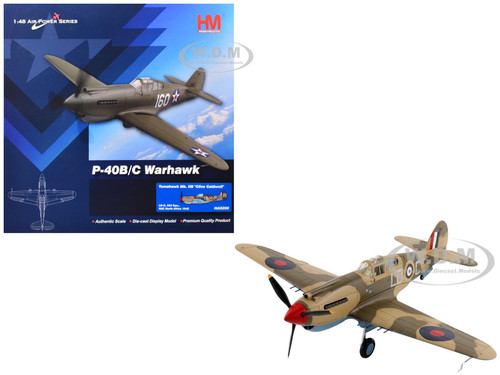
The aircraft was known by different names depending on the operator. American aircraft were generally called the Warhawk, while British Commonwealth versions included the Tomahawk and Kittyhawk designations.
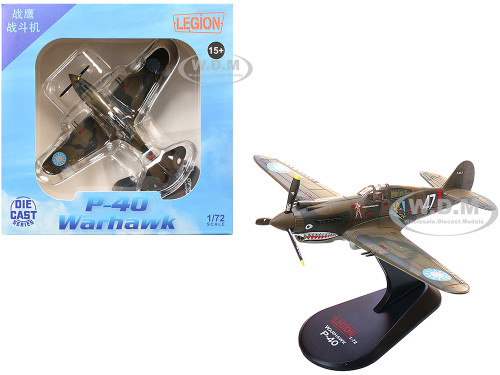
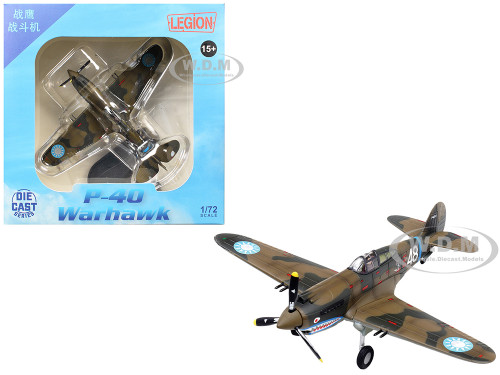
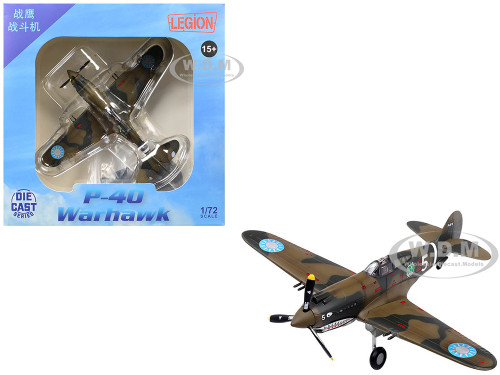
The P-40 became particularly famous for its association with the American Volunteer Group, or Flying Tigers, in China. Their P-40s were recognized around the world for the distinctive shark-mouth artwork painted around the large engine intake. The design became one of the most recognizable aircraft markings of World War II.
The P-40 was a rugged and versatile fighter that saw combat across multiple theaters. It remained in production from 1939 through 1944, with more than 13,000 aircraft built.
P-40 Warhawk, Tomahawk and Kittyhawk Models
Collectors may encounter Curtiss P-40 models representing different variants and operators, including:
- P-40B and P-40C Tomahawk
- P-40E Warhawk
- P-40F
- P-40K
- P-40M
- P-40N
- British Tomahawk and Kittyhawk aircraft
- Flying Tigers P-40s
- U.S. Army Air Forces P-40s
- Allied P-40 aircraft
The individual markings can be just as important as the aircraft variant. A model representing a Flying Tigers aircraft, for example, has a very different collecting appeal from a Royal Canadian Air Force Kittyhawk or an American P-40 from another combat theater.
Curtiss-Wright and Later Aircraft
Curtiss's aircraft manufacturing operations eventually became part of the larger Curtiss-Wright Corporation, created in 1929 through the merger of Curtiss Aeroplane and Motor Corporation with Wright Aeronautical Corporation and associated companies.
The Curtiss-Wright name became one of the most important in American aviation manufacturing. During World War II, the organization produced large numbers of aircraft, with the P-40 among its most recognizable products.
This later history is useful when identifying Curtiss-related scale aircraft because some products may be described using Curtiss, Curtiss-Wright, or specific aircraft designations rather than simply the Curtiss brand.
Collecting Curtiss Diecast Aircraft Models
Curtiss models can appeal to several different types of aviation collectors. Some collectors concentrate on a particular aircraft, while others build displays around an era or historical event.
A Curtiss collection can be organized around:
- Early aviation — JN-4 Jenny and related biplanes
- World War I — military trainers and early naval aircraft
- Early air mail — JN-series aircraft associated with postal aviation
- Naval aviation — NC flying boats and other naval aircraft
- World War II — P-40 Warhawk, Tomahawk, and Kittyhawk
- Flying Tigers — P-40 aircraft associated with the American Volunteer Group
- American aviation history — important Curtiss aircraft across multiple decades
This variety makes Curtiss particularly useful for collectors who want a display showing how aircraft evolved from fabric-covered biplanes to enclosed, high-performance fighters.
Scale and Display Considerations
Curtiss aircraft models are available in several scales depending on the aircraft and manufacturer. Common aircraft-model scales include 1/72, 1/100, 1/144, 1/200, and 1/400, although the exact scale depends on the individual release.
For larger aircraft such as the NC flying boat, a smaller scale can make the model easier to display while still preserving its distinctive proportions. Smaller fighters such as the P-40 can be particularly attractive in 1/72 or 1/48-style collections when available.
Before purchasing, collectors should check the individual product specifications for:
- Exact aircraft variant
- Scale
- Manufacturer
- Operator or military unit
- Aircraft markings and livery
- Materials
- Dimensions
- Display stand or accessories
- Whether the model represents a specific historical aircraft
For serious collectors, identifying the exact variant and markings is particularly important because visually similar Curtiss aircraft can represent very different periods and operators.
Building a Curtiss Aviation Collection
Curtiss models also pair naturally with aircraft from other major American manufacturers. A historical display could place a Curtiss JN-4 alongside other World War I aircraft, while a World War II collection could feature a P-40 alongside contemporary fighters such as the P-38 Lightning, P-47 Thunderbolt, and P-51 Mustang.
Another approach is to build a Flying Tigers or China-Burma-India Theater collection, where a Curtiss P-40 serves as the centerpiece. Alternatively, collectors can focus on early American aviation and combine a Jenny with other aircraft from the barnstorming and air-mail eras.
The wide range of Curtiss aircraft makes the category useful for both focused collectors and enthusiasts building a broader history-of-flight display.
Find Curtiss Scale Aircraft Models
From the iconic Curtiss JN-4 Jenny to the historic NC-4 flying boat and the legendary P-40 Warhawk, Curtiss aircraft represent some of the defining chapters of American aviation.
Browse the Curtiss diecast aircraft collection at DiecastModelsWholesale.com to explore available scale models and find a Curtiss aircraft that adds early aviation, military history, or classic American aircraft heritage to your collection.


 $49.99
 $49.99
 $49.99
 $49.99
 $31.95


 $30.95


 $59.99

