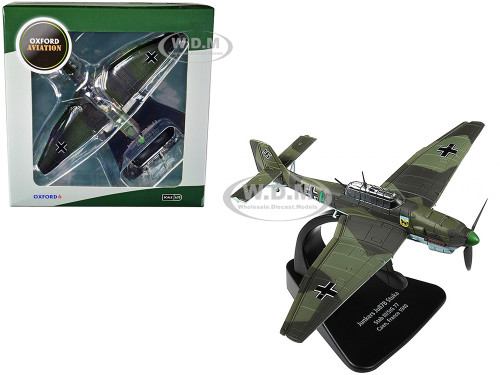
Junkers diecast aircraft models celebrate the engineering history of one of Germany's most influential aircraft manufacturers. Known for pioneering all-metal aircraft construction and producing distinctive airplanes for civilian aviation and military service, Junkers developed aircraft that helped shape aviation during the early and mid-twentieth century.
The Junkers category at Diecast Models Wholesale is for aviation enthusiasts, aircraft model collectors, military history fans, and shoppers looking for miniature representations of historic Junkers aircraft. Depending on current product availability, the selection may include the famous Ju 52 transport aircraft, the Ju 87 Stuka dive bomber, the Ju 88, the Ju 86, and other notable designs associated with the company.
Junkers aircraft are particularly interesting to collectors because of their variety. Some are recognized for corrugated metal construction and early commercial aviation, while others are associated with the development of military aircraft during World War II. Their different roles, silhouettes, historical periods, and operator markings provide several ways to build a focused aviation collection.
Aircraft diecast models may be offered in scales such as 1:72, 1:48, 1:100, 1:144, 1:200, and 1:400, depending on the aircraft and release. Not every Junkers aircraft is available in every scale, so check each product listing for the exact model, scale, livery, and included display features.
The History of Junkers Aviation
Hugo Junkers and Early Aircraft Innovation
Junkers' aviation history is closely associated with German engineer Hugo Junkers, who founded the Junkers Flugzeugwerke in Dessau in 1910. He was an important advocate of metal aircraft construction at a time when many airplanes still relied heavily on wood, fabric, and mixed structural materials.
Junkers and his engineering teams explored ways to create aircraft with metal airframes that could offer structural strength and durability. The company became especially associated with corrugated duralumin construction, in which thin metal sheets were shaped into ridges and grooves to improve stiffness.
The Junkers J 1, which first flew in 1915, was an early all-metal monoplane and an important milestone in aircraft design. Later aircraft developed these ideas into practical designs for military and civilian applications.
For collectors, this engineering heritage gives Junkers models a distinctive place in aviation history. The company's early aircraft look markedly different from later streamlined airliners and modern military jets, making them especially interesting subjects for historical displays.
The Junkers Ju 52 and Civil Aviation
The Junkers Ju 52 is one of the company's best-known aircraft. First flown in its original single-engine form in 1930, it evolved into the three-engine Ju 52/3m, which became widely recognized as a transport and passenger aircraft.
The Ju 52's corrugated metal skin, fixed landing gear, and three-engine layout give it a distinctive appearance. It served airlines and operators in several countries and was used for passenger travel, cargo transport, and other aviation roles. During World War II, military versions were used extensively as transports.
Collectors may find Ju 52 diecast models representing civilian airline liveries, military transport markings, or aircraft from particular historical periods. The different paint schemes and operator identities make the Ju 52 suitable for both commercial aviation and military aviation collections.
Its recognizable shape also makes it an appealing centerpiece for a display focused on early airliners and transport aircraft.
Junkers and German Military Aviation
Junkers produced several important military aircraft during the interwar years and World War II. Some were designed for bombing and ground attack, while others served as transports, reconnaissance aircraft, or general-purpose military platforms.
The company's military aircraft reflect the rapid development of aviation technology during this period. Early designs evolved into faster aircraft with more streamlined airframes, improved engines, and increasingly specialized mission equipment.
These aircraft are historically significant subjects for collectors, but they also represent a period of warfare. Collectible models can be approached as historical and technical artifacts, with attention to their design, service history, and the role they played in the development of aviation.
Popular Junkers Aircraft for Diecast Collectors
Junkers Ju 52: The Iconic Transport Aircraft
The Ju 52 is one of the most recognizable Junkers designs and a popular subject for aircraft model collections. Its three engines, corrugated fuselage, and traditional landing gear make it easy to distinguish from other transport aircraft of the same era.
The Ju 52 served civilian airlines and military operators, with configurations adapted for passenger transport, cargo duties, and military support. Collectors may encounter models representing different airlines, national operators, or wartime service.
When choosing a Ju 52 model, compare the operator markings, engine configuration, paint scheme, and represented period. A civilian airline version can complement a collection of historic airliners, while a military-marked version may fit a collection of World War II transport aircraft.
Junkers Ju 87 Stuka: The Famous Dive Bomber
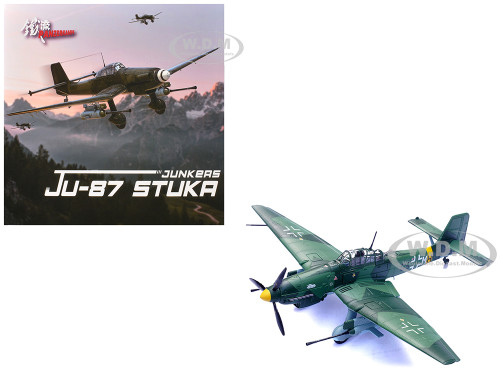
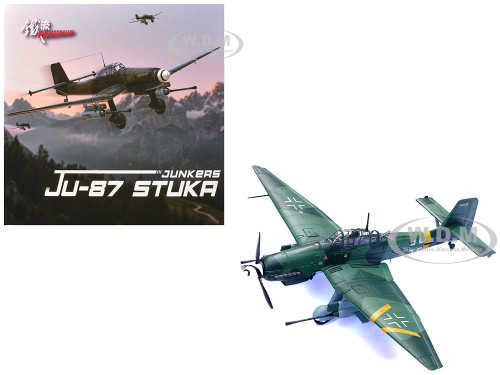
The Junkers Ju 87, widely known as the Stuka, became one of the most recognizable German military aircraft of World War II. Its inverted gull wings, fixed landing gear, and distinctive silhouette made it visually different from many other combat aircraft of the period.
The Ju 87 was developed for dive-bombing and ground-attack missions. Different variants were used in different operational roles, including versions adapted for anti-tank operations and naval attack.
Collectors may find models representing early Ju 87 variants, later versions, or aircraft associated with particular units and campaigns. Details such as variant designation, camouflage, markings, and underwing equipment can distinguish one release from another.
A Ju 87 model is often a natural choice for a collection focused on World War II aviation, alongside other historical fighters, bombers, and ground-attack aircraft.
Junkers Ju 88: A Versatile Combat Aircraft
The Ju 88 was one of Junkers' most versatile wartime aircraft. Originally developed as a fast bomber, it was adapted for a variety of missions, including reconnaissance, night fighting, and other specialized duties.
Its twin-engine layout and relatively streamlined design distinguish it from the Ju 87 and Ju 52. The Ju 88 family also included related developments, such as the Ju 188 and Ju 388, which reflected continued efforts to improve performance and capability.
For collectors, the Ju 88 offers opportunities to compare different variants and mission configurations. Depending on the model, differences may include nose design, antenna arrangements, defensive equipment, camouflage, and national markings.
Junkers Ju 86: Civilian and Military Aviation
The Ju 86 was developed as a twin-engine aircraft for both commercial and military use during the 1930s. Civilian versions served airlines, while military variants were adapted for bombing and reconnaissance.
The Ju 86 is an interesting subject for collectors because it connects the development of passenger aviation with the rapid expansion of military aircraft during the same period. Its appearance also reflects the transition from early all-metal aircraft to more modern streamlined designs.
When comparing models, pay attention to whether the miniature represents a civilian airliner or a military variant, since the equipment, markings, and overall presentation can differ significantly.
Junkers F 13: An Early All-Metal Airliner
The Junkers F 13 was a pioneering commercial aircraft that first flew in 1919. Designed with an all-metal structure, it helped demonstrate the potential of metal aircraft construction for practical passenger transport.
The F 13 had an enclosed passenger cabin and a relatively open cockpit for the crew, reflecting the design conventions of early commercial aviation. It was used by operators in different countries and became an important part of Junkers' aviation legacy.
For collectors of historic airliners, the F 13 provides a useful contrast with later aircraft such as the Ju 52. Its early design and historical significance make it a distinctive addition to an aviation display.
Junkers G 38 and Ju 90
The Junkers G 38 was a large experimental and commercial aircraft that attracted attention for its size and unusual design. It reflected the company's interest in advancing all-metal aircraft construction and exploring new approaches to passenger transport.
The later Ju 90 was developed as a large four-engine passenger aircraft before military requirements influenced its development. It illustrates the transition between commercial aviation design and the transport aircraft demands of the late 1930s and World War II era.
These aircraft are less familiar to many casual aviation fans than the Ju 52 or Ju 87, making them especially interesting subjects for collectors who enjoy unusual or historically significant aircraft. Model availability depends on the manufacturer and release.
Choosing Junkers Diecast Aircraft Models
Collect by Aircraft Type
One approach is to focus on a particular kind of aircraft. A transport collection might include the F 13 and Ju 52, while a military aviation display could feature the Ju 87, Ju 88, and related combat aircraft.
Another approach is to collect different Junkers designs across several decades, showing how aircraft evolved from early metal monoplanes to larger commercial transports and specialized military aircraft.
Compare Liveries and Historical Variants
A single aircraft type can be represented by multiple diecast releases. Civilian airline markings, military camouflage, national insignia, unit markings, and variant-specific details can all affect a model's appearance.
Before purchasing, verify the aircraft designation and depicted operator in the product description. Two models with similar names may represent different variants or historical periods.
Consider Scale and Display Space
Aircraft scale has a significant effect on display size, especially for larger bombers and transport aircraft. A 1:72 model will generally require more space than a 1:144 or 1:200 version of the same aircraft.
Think about the dimensions of the aircraft and the amount of room available on your shelf. If you plan to display several models together, selecting a consistent scale can help create a more cohesive collection.
Check Construction and Display Features
Diecast aircraft models vary in their materials, level of detail, and included accessories. Depending on the release, features may include display stands, landing gear, rotating propellers, or detailed cockpit and exterior markings.
Not every model includes functional or removable parts. Review the listing to confirm the specific construction and features rather than assuming all Junkers models share the same specifications.
Junkers Aircraft Scales
Junkers diecast and scale aircraft models may be offered in several common aviation scales, depending on the specific aircraft and release.
-
1:72 scale: A popular scale for military aircraft collections, offering a balance between model size and visible detail.
-
1:48 scale: Larger models that can make a prominent display piece when available.
-
1:100 scale: A middle-sized option for selected aircraft and aviation displays.
-
1:144 scale: Suitable for compact collections of bombers, transports, and other aircraft.
-
1:200 scale: Commonly used for commercial airliners and transport aircraft.
-
1:400 scale: A compact scale suited to collections of airliners and larger aircraft where shelf space is limited.
These scales are general references, not a guarantee of availability for every Junkers aircraft. Always check the individual product listing for the stated scale, dimensions, and model details.
Junkers Models for Aviation Enthusiasts and Gift Buyers
Junkers diecast aircraft models can make thoughtful gifts for military aviation enthusiasts, historic aircraft collectors, and people interested in the development of commercial aviation.
A Ju 52 may appeal to someone who collects early airliners and transport aircraft, while a Ju 87 or Ju 88 may be more appropriate for a collector focused on World War II aviation. The F 13 is an option for someone interested in the early history of passenger flight.
If you are buying a model as a gift, consider the recipient's preferred aircraft, historical period, scale, and available display space. Checking the exact aircraft designation and markings will help you choose a model that suits their interests.
Shop Junkers Diecast Aircraft Models at Diecast Models Wholesale
From the pioneering F 13 and iconic Ju 52 to the Ju 87 Stuka, Ju 88, and other historic designs, Junkers aircraft offer a fascinating range of subjects for aviation collectors.
Browse the Junkers category at Diecast Models Wholesale to explore available collectible aircraft models. Compare aircraft types, historical variants, markings, and scales to find the right addition for your aviation display or a thoughtful gift for an aircraft enthusiast.



 $39.95