Douglas Diecast Aircraft Models
Douglas is one of the most important names in American aviation history. Founded by Donald W. Douglas, the Douglas Aircraft Company became known for pioneering commercial airliners, military transports, bombers, fighters, and jet aircraft. Its designs played an important role in the development of modern air transportation and American military aviation.
Douglas diecast aircraft models allow collectors to explore this history through miniature representations of aircraft ranging from the legendary DC-3 to the DC-4, DC-6, DC-7, DC-8, DC-9, DC-10, and numerous military aircraft. Depending on the specific release, collectors may find models representing different airlines, military operators, liveries, aircraft variants, and historical periods.
The Douglas name is particularly important to aviation collectors because the company's aircraft span the transition from early commercial aviation and piston-powered airliners to the modern jet age.
The History of the Douglas Aircraft Company
Donald W. Douglas established the Douglas Aircraft Company in California in 1921. The company quickly developed a reputation for designing capable and reliable aircraft for both military and civilian applications.
One of Douglas's earliest major successes was the Douglas World Cruiser, which was developed for the U.S. Army Air Service's attempt to circumnavigate the globe. In 1924, four modified Douglas DT aircraft began the first successful aerial circumnavigation of the world. The achievement became one of the defining accomplishments of early aviation and influenced the Douglas company's identity for decades.
Douglas subsequently became a major force in commercial aviation. The DC-1 was developed in response to the emerging competition from aircraft such as the Boeing 247. The DC-2 followed, establishing a family of all-metal twin-engine transports that eventually led to one of the most influential aircraft in aviation history: the DC-3.
The company's aircraft also became central to the Allied war effort during World War II. Douglas produced military transports, bombers, fighters, and other aircraft, expanding its manufacturing operations as demand for aircraft increased.
After the war, Douglas continued developing commercial and military aircraft, eventually becoming one of the leading manufacturers of the emerging jet age. Douglas merged with McDonnell Aircraft in 1967 to form McDonnell Douglas, which later merged with Boeing in 1997.
Douglas DC-3 Diecast Models
The Douglas DC-3 is arguably the most famous aircraft associated with the Douglas name and is one of the most significant aircraft in aviation history.
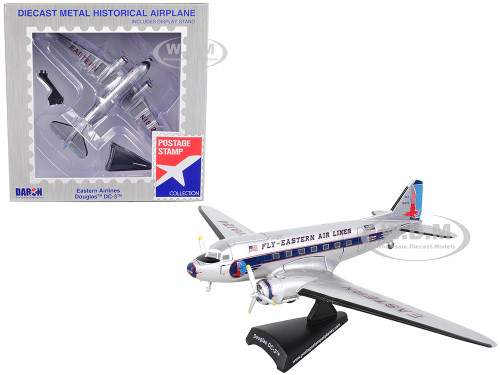
First flown in 1935, the DC-3 evolved from the DC-2 and was developed in part to meet airline demand for a larger and more comfortable passenger aircraft. The design could be configured as a day airliner or as a sleeper transport, and its combination of capacity, speed, reliability, and operating economics transformed commercial air travel.
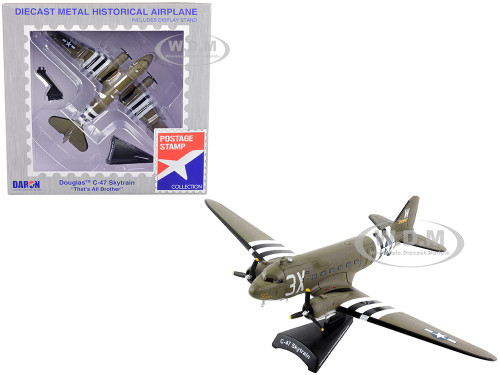
The DC-3 was also adapted for military service. During World War II, military versions included the C-47 Skytrain, C-53 Skytrooper, and related variants. The aircraft served as a transport, cargo aircraft, and troop carrier and continued to have important military applications after the war.
More than 13,000 DC-3s and military derivatives were produced in the United States and elsewhere, according to the Smithsonian National Air and Space Museum. Many aircraft continued operating for decades after their original airline careers.
For collectors, Douglas DC-3 models can represent an impressive variety of subjects, including:
- American Airlines
- Eastern Air Lines
- United Air Lines
- TWA
- Pan American and other international operators
- U.S. military C-47 aircraft
- Cargo and transport configurations
- Postwar civilian operators
- Historic airline liveries
A DC-3 model is particularly useful for collectors interested in the history of commercial aviation because it represents the period when scheduled passenger air travel was becoming a practical and expanding industry.
Douglas DC-4, DC-6 and DC-7
Following the DC-3, Douglas developed larger four-engine aircraft that helped airlines expand their long-distance operations.
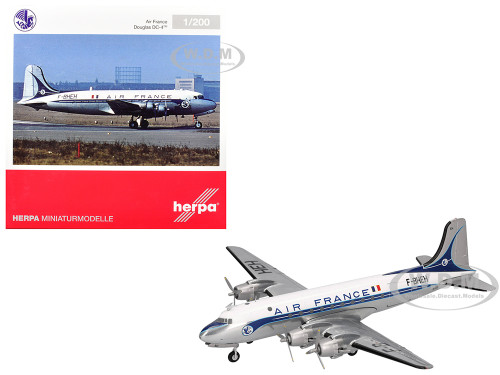
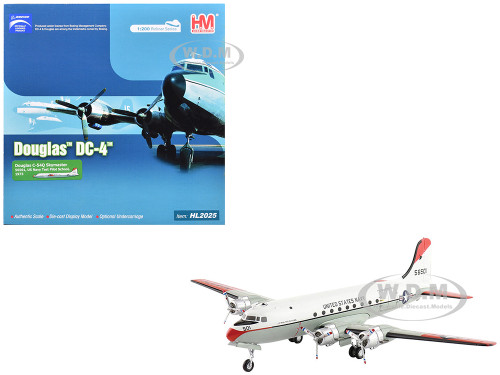
The Douglas DC-4 was developed as a larger four-engine transport and eventually became an important postwar passenger and cargo aircraft. Its military derivatives, including the C-54 Skymaster, also played important roles during and after World War II.
The DC-6 followed with improvements in performance, range, and passenger comfort. It became an important long-range piston-engine airliner and was operated by major airlines around the world.
The Douglas DC-7 represented the final major development of the company's piston-engine airliner family. Introduced by American Airlines in 1953, the DC-7 became the first airliner capable of nonstop transcontinental service in both directions. The Smithsonian identifies it as the fastest transport aircraft in service at the time, with a cruising speed of approximately 360 mph.
These aircraft are particularly appealing to collectors who enjoy classic airliners, vintage airline liveries, and the golden age of commercial aviation.
Douglas Military Aircraft
Douglas's history extends far beyond passenger aircraft. The company developed and produced many important military designs.
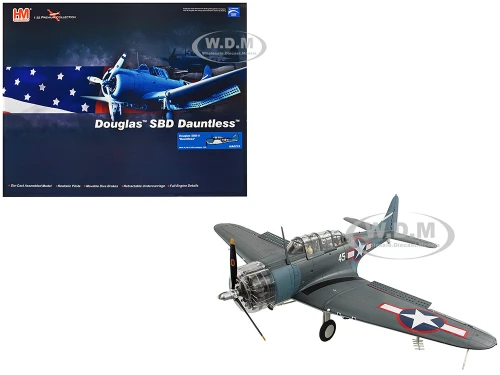
The SBD Dauntless became one of the best-known U.S. Navy and Marine Corps aircraft of World War II. It was a carrier-based dive bomber and played a significant role in the Pacific War.
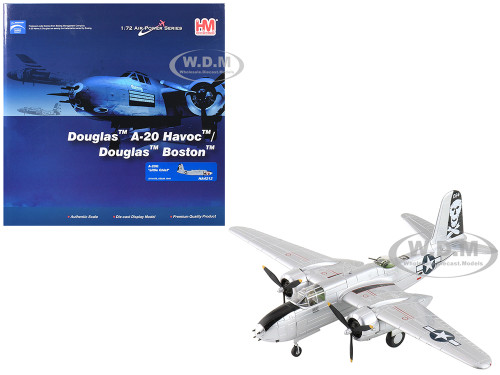
Other important Douglas military aircraft included the A-20 Havoc, A-26 Invader, and C-47 Skytrain. Douglas also became involved in postwar military aviation with aircraft such as the A-4 Skyhawk, which served with the U.S. Navy, Marine Corps, and numerous international operators.
The Douglas A-4 Skyhawk is especially interesting from a collecting perspective because its compact design and long service history resulted in numerous versions, operators, and paint schemes.
Collectors may therefore find Douglas models particularly useful for building displays focused on:
- World War II aviation
- U.S. Navy aircraft
- U.S. Marine Corps aviation
- U.S. Army Air Forces
- Vietnam-era aircraft
- Carrier aviation
- Military transport aircraft
- Cold War aviation
Douglas and the Beginning of the Jet Age
Douglas entered the jet age with aircraft that became important milestones in commercial aviation.
The DC-8 was Douglas's first commercial jetliner and entered service during the late 1950s. It competed directly with other early jet transports and helped establish the era of fast, long-distance jet travel.
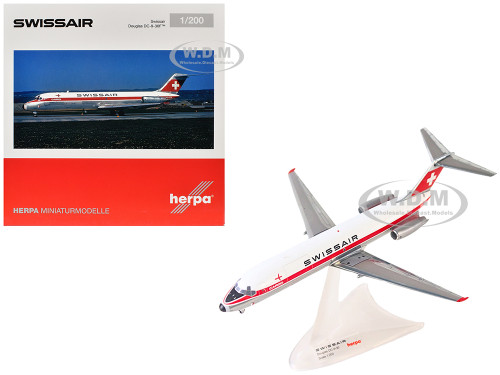
The DC-9, introduced in the 1960s, was a smaller twin-engine jet designed primarily for short- and medium-haul routes. Its design became the foundation for a large family of aircraft and remained in service with airlines around the world.
The larger DC-10 followed as a wide-body trijet. With three engines and a distinctive configuration, it became an important part of the transition to wide-body commercial aviation.
For diecast collectors, these aircraft offer an opportunity to continue a Douglas collection from classic piston airliners into the jet age. A display featuring a DC-3, DC-7, DC-8, DC-9, and DC-10 can illustrate several decades of commercial aircraft development.
Douglas Airline Diecast Models
Airline markings are an important part of collecting Douglas model aircraft. The same aircraft type can look substantially different depending on the airline, era, and livery represented.
Classic Douglas airliners were operated by numerous major airlines, making airline-specific models particularly attractive to collectors. When choosing a model, consider the relationship between the aircraft type and the historical period represented by the livery.
For example, a DC-3 in an early airline livery tells a different story from a military C-47, even though the aircraft share the same basic lineage. Similarly, a DC-7 in a classic 1950s airline livery can represent the final stage of the piston-airliner era before jet aircraft transformed commercial aviation.
Collectors who focus on airline history can therefore use Douglas models to create displays organized around:
- Individual airlines
- Aircraft generations
- Historical decades
- National aviation
- Airline liveries
- The transition from piston aircraft to jets
Choosing Douglas Diecast Aircraft Models
When selecting a Douglas model aircraft, pay attention to more than the aircraft name. The specific variant, operator, scale, livery, and historical period can all affect the character of the model.
Important factors include:
- Aircraft type: DC-3, DC-4, DC-6, DC-7, DC-8, DC-9, DC-10, C-47, A-20, A-26, A-4, and others.
- Variant: Different versions can have different engines, windows, doors, landing gear, wings, or other features.
- Operator: Airline and military markings can significantly change the appearance of a model.
- Era: A 1930s airliner, World War II transport, 1950s piston airliner, and 1960s jet can represent very different periods.
- Scale: Choose a size that fits the rest of your aircraft collection.
- Display features: Depending on the manufacturer, models may include landing gear, display stands, detailed engines, antennas, cockpit details, and other features.
Because large aircraft can have substantial wingspans even in miniature, checking the model's dimensions can also be helpful when planning a display.
Douglas Model Aircraft Scales
Douglas diecast aircraft are produced in different scales depending on the aircraft type and manufacturer.
1/72 scale is popular with military aircraft collectors and provides a good balance between size and detail.
1/100 scale can work well for larger military and transport aircraft while remaining manageable for display.
1/144 scale is particularly useful for airliner collectors who want to display several aircraft together or build an airline fleet.
1/200 scale is another popular choice for commercial aircraft and allows collectors to represent large airliners without requiring the display space of larger scales.
Other scales may also be available for particular Douglas aircraft. Always check the individual product specifications for the exact scale, dimensions, materials, and features.
Building a Douglas Aviation Collection
A Douglas collection can follow several different themes. An enthusiast of classic airliners could concentrate on the DC-3, DC-4, DC-6, and DC-7. A military collector could focus on the C-47, Dauntless, A-20, A-26, and A-4. Another collector might use Douglas aircraft to document the evolution of commercial aviation from piston engines to early jets.
The breadth of Douglas's history makes it possible to create a collection that spans more than half a century of aviation development. The Smithsonian's aviation collection, for example, includes Douglas aircraft such as the DC-3 and DC-7 as part of its history of American air transportation.
Whether your interest is classic airliners, military aircraft, airline history, American aviation, or the development of the jet age, Douglas diecast aircraft models provide an opportunity to represent important aircraft and eras in a compact display.
Browse the available Douglas diecast aircraft models at DiecastModelsWholesale.com to explore classic airliners, military aircraft, airline liveries, and historic Douglas designs, and find a model that fits your aviation collection.



 $34.95




 $30.95