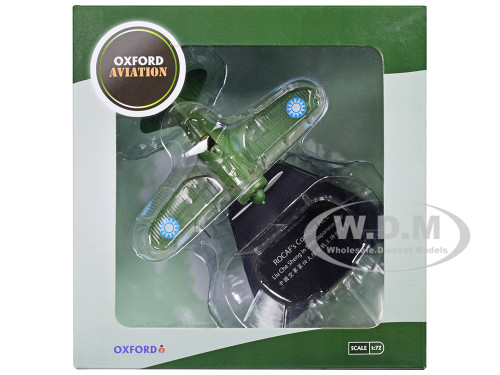
Discover Polikarpov model airplanes inspired by one of the most recognizable aircraft design bureaus in early Soviet aviation history. Founded by aircraft designer Nikolai Polikarpov, the organization developed numerous military aircraft during the interwar period and the early years of World War II. Its designs played an important role in the evolution of Soviet fighter aircraft, training planes, and other military aviation technology.
The Polikarpov category at Diecast Models Wholesale is intended for aviation enthusiasts and collectors interested in miniature replicas of historically significant aircraft. Depending on available releases, models may represent classic Soviet fighters, biplanes, and other aircraft associated with Polikarpov's work.
Polikarpov aircraft are particularly interesting to collectors who appreciate aviation history beyond the better-known American, British, and German aircraft of World War II. Their distinctive silhouettes, historical significance, and connection to the development of Soviet military aviation make them valuable subjects for aircraft model collections.
Whether you collect World War II fighter planes, early military aviation, Soviet aircraft, or historically important aircraft designs, Polikarpov model airplanes can add variety and historical context to your display.
The History of Polikarpov Aircraft
Nikolai Nikolaevich Polikarpov was a prominent Soviet aircraft designer whose work helped shape military aviation during the 1920s and 1930s. His designs included several aircraft that became important to Soviet aviation, particularly during the period leading up to World War II.
Polikarpov's work reflected a period of rapid change in aircraft engineering. Aviation designers were transitioning from relatively simple fabric-covered biplanes toward faster, more capable aircraft incorporating improved engines, stronger structures, and more advanced aerodynamic designs.
The Polikarpov design bureau developed aircraft for several roles, including fighter operations, pilot training, and other military applications. Some designs became widely produced, while others were experimental or represented intermediate stages in aircraft development.
The I-15 and I-153 biplane fighters, along with the I-16 monoplane fighter, are among the best-known aircraft associated with Polikarpov. These aircraft illustrate the diversity of his work and the changing priorities of military aviation during the 1930s.
For collectors, Polikarpov aircraft models offer a way to explore this transitional period in aviation history. They can be displayed alongside other Soviet aircraft to show how aircraft design evolved before and during World War II.
Popular Polikarpov Aircraft for Model Collectors
Several Polikarpov aircraft are especially recognizable among military aviation enthusiasts. Availability in miniature form varies by manufacturer, scale, release, and current inventory.
Polikarpov I-15
The Polikarpov I-15 was a Soviet biplane fighter introduced during the 1930s. Its compact design and distinctive upper-wing configuration made it visually different from many of the monoplane fighters that followed.
The I-15 participated in military conflicts before World War II, including the Spanish Civil War and the conflict between Soviet and Japanese forces in East Asia. Its service history makes it an interesting subject for collectors studying international aviation developments during the 1930s.
A Polikarpov I-15 model can complement a collection of early fighter aircraft, particularly when displayed alongside other biplanes from the same era. Its wing arrangement, landing gear, and compact fuselage provide distinctive details for miniature aircraft enthusiasts.
Polikarpov I-153 Chaika
The Polikarpov I-153, commonly known as the Chaika, was an advanced development of the I-15 family. Its distinctive gull-shaped upper wing and retractable landing gear distinguished it from many earlier biplane fighters.
The I-153 entered service during the late 1930s and saw combat before and during World War II. Although it retained a biplane configuration at a time when monoplanes were becoming increasingly important, it incorporated design features intended to improve performance.
For model collectors, the I-153 is particularly appealing because of its unusual wing shape and historical position between traditional biplane fighters and more modern aircraft.
When selecting a miniature I-153, compare the aircraft markings, camouflage, national insignia, and other details if you are interested in a particular operational period.
Polikarpov I-16
The Polikarpov I-16 was one of the most influential aircraft associated with Nikolai Polikarpov. Introduced during the 1930s, it was a compact monoplane fighter with a low-mounted wing, enclosed or open cockpit configurations depending on the version, and retractable landing gear.
The I-16 represented a significant step in fighter aircraft development. Its relatively small size and modern configuration made it visually distinct from the biplane fighters that preceded it.
The aircraft saw combat during the Spanish Civil War, the conflict involving Soviet and Japanese forces in East Asia, and the early stages of World War II. It became an important part of the history of Soviet military aviation.
A Polikarpov I-16 model is a compelling addition to a collection focused on early monoplane fighters. Its compact fuselage, rounded engine cowling, and distinctive landing gear arrangement make it recognizable among aircraft from the same period.
Collectors may encounter different I-16 variants represented in miniature form. Checking the variant and historical markings can help identify the particular aircraft configuration depicted.
Polikarpov U-2 and Po-2
The Polikarpov U-2, later redesignated the Po-2, was a versatile Soviet biplane originally developed as a training aircraft. Its simple construction and adaptable design allowed it to serve in several roles, including liaison, transport, and other military duties.
Unlike the I-15 and I-16 fighters, the U-2 and Po-2 were not primarily designed as fighter aircraft. Their long service history illustrates how relatively simple aircraft could remain useful across changing operational requirements.
The Po-2 is also associated with night operations during World War II, including missions flown by Soviet women aviators of the 588th Night Bomber Regiment, later known as the 46th Guards Night Bomber Aviation Regiment.
For collectors, a Polikarpov U-2 or Po-2 model provides a different perspective on Soviet aviation. Its biplane structure, exposed cockpit arrangement, and historical versatility distinguish it from dedicated fighter aircraft.
Other Polikarpov Experimental and Development Aircraft
Polikarpov's design work extended beyond the aircraft that became most widely recognized. His bureau explored different configurations and approaches to fighter development as Soviet aviation requirements changed.
Collectors with a particular interest in aviation engineering may find models of less common aircraft especially interesting when such releases are available. These models can help illustrate the experimentation that took place as designers sought to improve speed, maneuverability, armament, and operational capability.
Because miniature releases do not cover every aircraft type or variant, shoppers should check individual product descriptions to confirm the exact aircraft represented.
Polikarpov Aircraft and World War II Aviation
Polikarpov aircraft are closely associated with the development of Soviet military aviation before and during World War II. Their operational histories help explain the challenges faced by aircraft designers as military requirements evolved rapidly.
The I-15 and I-153 represent the continued development of biplane fighter designs, while the I-16 illustrates the transition toward compact monoplane fighters. The U-2 and Po-2 demonstrate the importance of versatile aircraft used for training and other operational duties.
These aircraft also provide an opportunity to explore the broader history of military aviation during the 1930s. They operated alongside aircraft designed in other countries, creating a diverse landscape of competing aerodynamic approaches, engine technologies, and tactical concepts.
For collectors, Polikarpov models can be arranged by aircraft type, operational period, or historical theater. Displaying them alongside other Soviet aircraft helps illustrate the wider development of the Soviet air force.
When researching a particular replica, consider the aircraft variant, service period, camouflage, unit markings, and other identifying details. These features can help distinguish models representing different aircraft or historical contexts.
Choosing the Right Polikarpov Model Airplane
Selecting a Polikarpov model depends on your collecting interests, preferred scale, display space, and desired level of detail.
Understanding Aircraft Model Scales
Scale describes the relationship between the miniature aircraft and the full-size airplane. Common aircraft model scales include:
-
1:72 scale: A popular scale for military aircraft collections, offering a balance between visible detail and display space.
-
1:48 scale: A larger format that provides more room for exterior features and detailed presentation.
-
1:100 scale: A compact scale suitable for collections with limited display space.
-
1:144 scale: A smaller format for collectors who want to display multiple aircraft together.
-
1:200 scale: A compact scale familiar to collectors of commercial aircraft, although availability of individual Polikarpov models varies.
Other scales may also be available depending on the manufacturer and specific release. Always check the product listing for the stated scale and dimensions before purchasing.
Construction and Model Details
Polikarpov miniature aircraft may be made from diecast metal, plastic, or a combination of materials. Construction methods and levels of detail vary by manufacturer.
When evaluating a model, consider:
-
Wing configuration and proportions.
-
Fuselage shape and engine cowling.
-
Propeller and landing gear details.
-
Cockpit design and canopy configuration.
-
Camouflage, national insignia, and aircraft markings.
-
Display stand or base, if included.
-
Packaging and presentation.
Some models are designed primarily for display, while others may have removable stands or other features. Product descriptions and photographs are the best way to determine what is included in a particular release.
Building a Soviet Aircraft Model Collection
Polikarpov aircraft offer several ways to develop a focused military aviation collection.
Collect by aircraft type. Compare the I-15 and I-153 biplane fighters with the I-16 monoplane fighter to explore different design approaches.
Collect by historical period. Display prewar aircraft alongside later World War II designs to show how aviation technology developed.
Collect by operational role. Combine fighter aircraft with trainers and utility airplanes such as the U-2 and Po-2.
Collect by historical theater. Organize aircraft according to documented service histories and operational locations, using accurate markings where possible.
Explore international aviation history. Display Polikarpov models alongside contemporary aircraft from other countries to compare the engineering and styling of different aviation traditions.
This approach can transform a collection into a visual record of aircraft development rather than simply an assortment of individual models.
Displaying and Caring for Polikarpov Model Aircraft
Proper handling and display help preserve collectible aircraft. Small models may feature delicate propellers, landing gear, wing struts, antennas, and other components that can be damaged by rough handling.
Place models on stable shelves or in display cabinets, and avoid prolonged exposure to direct sunlight. Use a soft brush or suitable cloth to remove dust without placing excessive pressure on fragile details.
Biplane models deserve particular care because their wing struts and multiple wing surfaces can be delicate. When moving a model, support its stronger structural areas rather than lifting it by the propeller, wings, or landing gear.
If you prefer to keep models in their original packaging, retain the box and protective inserts where practical. Before adding a new aircraft to your display, check its wingspan and overall dimensions to ensure that it fits comfortably alongside other models.
Shop Polikarpov Model Airplanes at Diecast Models Wholesale
From the distinctive I-15 and I-153 biplane fighters to the historically significant I-16 and versatile Po-2, Polikarpov aircraft represent an important chapter in Soviet aviation history. Their varied designs and operational backgrounds make them appealing subjects for collectors interested in early military aircraft and the evolution of fighter aviation.
Browse the Polikarpov category at Diecast Models Wholesale to explore available miniature aircraft, compare scales and markings, and find a model that suits your interests. Review individual product listings for current availability, aircraft specifications, and included display features, then choose a Polikarpov model airplane to expand your aviation collection or give to a military aviation enthusiast.