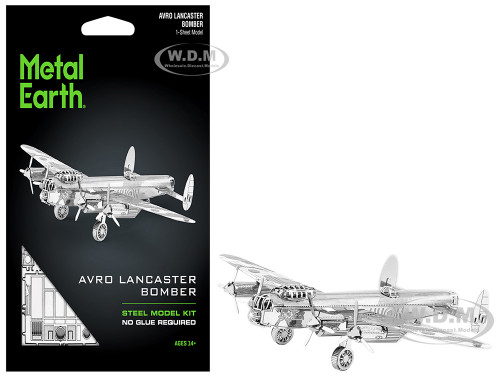
Avro diecast aircraft models represent more than a century of British aviation design, from pioneering biplanes and trainers to some of the most recognizable military aircraft of the 20th century. The Avro name is especially important to collectors interested in Royal Air Force history, World War I and World War II aircraft, Cold War aviation, British engineering, and historically significant aircraft models.
At DiecastModelsWholesale.com, the Avro category is intended for collectors and aviation enthusiasts looking for scale models representing aircraft developed by A.V. Roe & Company and the Avro design organization. Depending on the models available, collectors may encounter aircraft from very different periods of Avro's history, including the Avro 504, Anson, Manchester, Lancaster, Lincoln, Shackleton, and Vulcan.
The History of Avro
Avro traces its origins to Alliott Verdon Roe and his brother Humphrey Verdon Roe, who established A.V. Roe & Company in Manchester on January 1, 1910. Alliott Verdon Roe had already gained recognition for his early aircraft experiments, including the Roe I Triplane, and the company became one of Britain's pioneering aircraft manufacturers.
One of Avro's earliest major successes was the Avro 504. First flown in 1913, the aircraft was used in reconnaissance and anti-Zeppelin duties during the early part of World War I before becoming particularly famous as a training aircraft. The 504K became one of the most important British training aircraft of the period, with more than 8,000 built during the war.
Avro's development work continued through the interwar years. Aircraft such as the Avro Tutor, Prefect, Cadet, and Anson demonstrated the company's ability to produce trainers, utility aircraft, and military aircraft for changing aviation requirements. The Avro Heritage Museum's aircraft records illustrate the extraordinary range of designs produced by the company during this period.
Avro Aircraft from World War II
For many collectors, Avro is synonymous with the Avro Lancaster. Developed under designer Roy Chadwick, the Lancaster evolved from the unsuccessful twin-engine Manchester and became one of the Royal Air Force's most important heavy bombers of World War II. The prototype first flew in January 1941.
The Lancaster was powered by four Rolls-Royce Merlin engines and is particularly recognizable for its long fuselage, four-engine configuration, and distinctive twin elliptical tail fins. A total of 7,377 Lancasters were built, making it one of the most significant British aircraft production programs of the war.
The Avro Manchester, although less successful than the Lancaster, is also an important part of Avro history. Its development directly contributed to the Lancaster program, making Manchester models particularly interesting to collectors who want to represent the progression of British bomber design rather than focusing only on the most famous aircraft.
Other wartime and immediate postwar Avro designs include the Lincoln, York, and Lancastrian. These aircraft broaden the collecting possibilities beyond the Lancaster and provide a useful way to explore how Avro adapted its designs for heavy bombing, transport, and long-range aviation.
Avro Lancaster Models
Avro Lancaster scale models are especially popular among World War II aviation collectors because individual aircraft can be connected to specific squadrons, RAF stations, commanders, missions, and historic events.
When comparing Lancaster models, collectors may want to consider:
- Aircraft variant and configuration
- RAF squadron or unit markings
- Individual aircraft registration
- Camouflage and paint scheme
- Bomb-load configuration
- Nose art and crew markings
- Landing gear and display configuration
- Manufacturer and level of detail
- Scale and available display space
These details can make two models representing the same basic Lancaster variant significantly different from one another as collectibles.
Avro and the Cold War
Avro's contribution to aviation did not end with World War II. The company developed aircraft for Britain's changing postwar military requirements, including the Avro Shackleton, a long-range maritime patrol and reconnaissance aircraft derived from the Lancaster family.
The Shackleton is particularly appealing to collectors interested in Royal Air Force and Royal Navy-related aviation history because of its distinctive four-engine configuration and long service career. It served in roles including maritime patrol, anti-submarine warfare, and airborne early warning.
The most visually dramatic Avro aircraft of the postwar era was the Avro Vulcan.
Avro Vulcan
The Vulcan began as the Avro Type 698 and became one of Britain's famous V-bombers. Its large delta wing gave it a futuristic appearance when the prototype first flew in 1952. The aircraft eventually entered RAF service in 1956 and formed part of Britain's strategic V-Force alongside the Vickers Valiant and Handley Page Victor.
The Avro Vulcan B.2 is particularly recognizable for its broad delta wing, four Olympus turbojet engines, and smooth, powerful silhouette. It was designed for strategic strike and reconnaissance missions and became an important symbol of Britain's Cold War nuclear deterrent.
For collectors, Vulcan models offer an interesting contrast with Avro's earlier propeller-driven aircraft. A Lancaster represents the classic heavy bomber of World War II, while the Vulcan represents the transition to the jet age and Britain's postwar strategic aviation program.
Avro Aircraft Worth Collecting
Depending on availability, an Avro collection can cover several important periods of British aviation history.
Early Avro Aircraft
Early aircraft such as the Avro 504 are ideal for collectors interested in pioneering aviation and World War I. The 504's transition from operational duties to pilot training also makes it an important aircraft in the development of military aviation instruction.
Avro Anson
The Avro Anson was an important prewar and wartime twin-engine aircraft used for training, patrol, and other duties. Its distinctive low-wing configuration and twin-engine layout make it immediately recognizable among classic British aircraft.
Avro Manchester
The Manchester provides an interesting historical link between early Avro heavy-bomber development and the much more successful Lancaster. Collectors building historically focused World War II displays may appreciate having both aircraft represented.
Avro Lancaster
The Lancaster is arguably the centerpiece of an Avro aviation collection. Its enormous historical importance, recognizable appearance, and numerous squadron and aircraft markings create many collecting possibilities.
Avro Shackleton
The Shackleton represents the postwar maritime-patrol era and is a natural choice for collectors interested in RAF coastal and maritime aviation.
Avro Vulcan
The Vulcan is one of the defining Avro models for Cold War collectors. Its delta-wing design, distinctive four-engine arrangement, and V-bomber history make it one of the most recognizable British military aircraft of its generation.
Choosing an Avro Scale Model
Scale is an important consideration when building an aircraft collection. A larger model can provide more room for surface detail, cockpit features, panel lines, landing gear, markings, and other finishing touches, while smaller scales make it easier to display several aircraft together.
Common aviation scales include 1/72, 1/100, 1/144, 1/200, 1/400, and 1/500, although the actual scale available depends on the particular Avro aircraft and manufacturer.
For example, a large Lancaster or Vulcan model can become a centerpiece of a collection, while smaller-scale models allow collectors to create displays covering multiple Avro aircraft or entire RAF eras.
When selecting a scale, consider:
- Available display space
- Whether the model will be displayed individually or as part of a collection
- Desired level of visible detail
- Aircraft size
- Manufacturer and construction quality
- Whether matching aircraft are available in the same scale
Keeping related aircraft in a consistent scale can be particularly effective for collectors creating displays around World War II bombers, RAF aircraft, or Cold War British aviation.
Building an Avro Aviation Collection
An Avro collection does not have to focus exclusively on one famous aircraft. One approach is to build a chronological display showing how the company's designs evolved from early biplanes to advanced jet aircraft.
For example, a collection could progress from the Avro 504 and Avro Anson, through the Manchester and Lancaster, and eventually to the Shackleton and Vulcan. This creates a visual history of British aviation engineering across several decades.
Another approach is to specialize in one aircraft. A Lancaster collection can focus on individual RAF squadrons, aircraft markings, wartime configurations, or different manufacturers. A Vulcan collection can similarly focus on B.1 and B.2 development, RAF service markings, special schemes, or individual aircraft.
The Avro name also provides an excellent collecting theme for enthusiasts interested in British aviation designers and engineering history. Roy Chadwick's work, in particular, connects several important Avro aircraft and demonstrates the evolution of the company's aircraft designs from the interwar period through the postwar era.
Avro Diecast Aircraft for Collectors
Avro scale aircraft models combine historical significance with distinctive designs that make them attractive display pieces. Whether your interest is World War I aviation, World War II heavy bombers, RAF history, maritime patrol aircraft, or Cold War strategic aviation, Avro offers a broad range of subjects to explore.
Browse the Avro collection at DiecastModelsWholesale.com to discover available Avro diecast aircraft and scale models, and find the aircraft, markings, and scale that best fit your aviation collection.