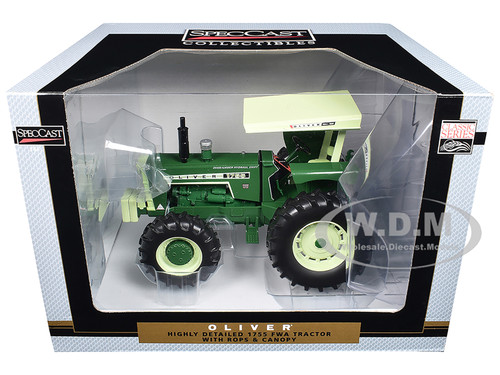
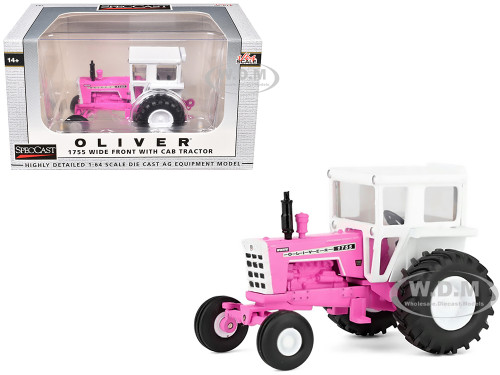
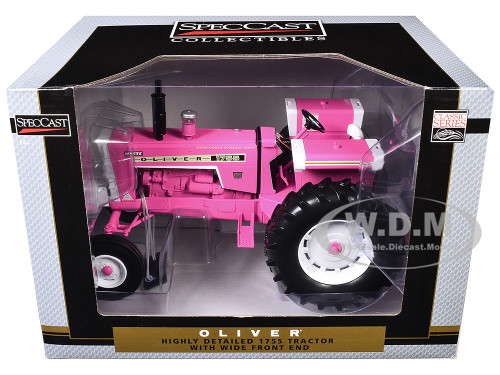
Discover Oliver diecast tractor models inspired by one of America's historic agricultural machinery manufacturers. Known for its distinctive green tractors, strong farming heritage, and evolution from early tractor engineering to powerful mid-century farm machinery, Oliver became a recognizable name among American farmers and agricultural equipment enthusiasts.
The Oliver Tractors category at Diecast Models Wholesale is designed for farm toy collectors, tractor enthusiasts, agricultural history fans, and hobbyists looking for miniature replicas of classic Oliver farm equipment. Depending on current product availability, models may represent vintage tractors such as the Oliver 70, 77, 88, Super 55, 550, 770, 880, 1650, 1750, 1850, and larger tractors from the 1900 and 2000 series.
Oliver tractors are especially appealing to collectors because they represent several important periods in American agriculture. Earlier models reflect the development of practical farm tractors before and after World War II, while later models show the progression toward more powerful equipment designed for increasingly mechanized farming.
Available Oliver diecast tractor models may include scales such as 1:12, 1:16, 1:18, 1:24, 1:43, 1:50, and 1:64, depending on the manufacturer and product. Larger miniatures can serve as prominent display pieces, while smaller tractors are useful for compact farm layouts and collections featuring several agricultural brands.
Whether you grew up around Oliver farm machinery, collect vintage American tractors, or are building a miniature farm scene, Oliver diecast models offer a distinctive way to celebrate the history of agricultural equipment.
The History of Oliver Tractors
Oliver's history brings together several established American farm equipment manufacturers. The company was formed in 1929 through the merger of the Oliver Chilled Plow Works, Hart-Parr, Nichols & Shepard, and the American Seeding Machine Company. This combination brought together experience in plows, tractors, planting equipment, and harvesting machinery.
One important predecessor was Hart-Parr, a pioneer in early gasoline-powered agricultural tractors. Another was Oliver Chilled Plow Works, known for manufacturing durable plows designed to work in challenging soil conditions.
The resulting Oliver Farm Equipment Company introduced its first Oliver tractor, the 18-28, in 1930. The company subsequently developed a growing lineup of tractors for different agricultural applications, including general farm work, row-crop cultivation, and larger field operations.
During the 1930s and 1940s, Oliver became known for tractors with distinctive styling and practical engineering. The company continued developing its range after World War II, introducing additional models and updating its designs to meet changing farming requirements.
The 1950s brought the development of the Super Series, including models such as the Super 55, Super 66, Super 77, Super 88, and Super 99. These tractors represent an important stage in Oliver's postwar development.
In 1960, White Motor Corporation acquired Oliver. The company continued producing Oliver-branded tractors through the following years, including the 50 Series and later 55 Series. The final Oliver-branded tractor, the 2255, rolled off the assembly line in 1976, marking the end of a distinctive nameplate in American farm machinery.
For diecast collectors, Oliver's history offers a variety of models from different decades. A collection can focus on a particular tractor series or include examples from several generations to show how agricultural machinery evolved.
Classic Oliver 70, 77, and 88 Tractor Models
Oliver's classic tractors are among the most recognizable subjects for collectors of vintage American farm equipment. Their traditional bodywork, exposed mechanical details, and familiar green finish make them visually distinctive in miniature form.
Oliver 70
The Oliver 70 was introduced in the 1930s and remained in production into the late 1940s. It represented an important part of Oliver's prewar and postwar tractor lineup.
The 70 is associated with the development of practical farm tractors designed for everyday agricultural work. Its proportions and traditional styling distinguish it from the larger tractors introduced in later decades.
For collectors, an Oliver 70 diecast model can represent an earlier period in American farming. It fits naturally into displays focused on vintage tractors, historical farm machinery, or the development of Oliver's tractor designs.
When selecting a model, consider the represented year and front axle configuration. Narrow-front and other tractor arrangements can create different appearances, even within closely related tractor families.
Oliver 77
The Oliver 77 followed the earlier 70 Series and became one of the recognizable postwar Oliver tractors. It was designed for general agricultural work and was offered in configurations suited to different farm applications.
The 77's classic body design makes it a useful addition to collections of mid-century tractors. Depending on the replica, exterior details may include the engine housing, radiator grille, operator seat, steering wheel, exhaust stack, and agricultural tires.
Collectors may find the Oliver 77 particularly appealing when building a group of tractors that shows the progression from prewar designs to later postwar machinery.
Oliver 88
The Oliver 88 was another important member of the company's postwar lineup. Positioned above the 77, it represented a larger tractor in Oliver's range.
Its appearance and proportions offer a useful comparison with the smaller models. Displaying an Oliver 77 alongside an 88 can help illustrate how manufacturers developed related tractor families to serve different farm requirements.
For collectors, the 88 is a natural choice for a vintage Oliver display. Review the specific model designation, front-end configuration, and other identifying details to determine which version a replica represents.
Oliver Super Series Tractors
The Oliver Super Series was introduced during the 1950s and brought updates to several established tractor families. These models retained the brand's recognizable styling while representing a new stage in Oliver's development.
Oliver Super 55
The Oliver Super 55 was introduced in the mid-1950s as a compact utility tractor. It was designed for smaller farms and varied agricultural tasks, making it a different type of machine from Oliver's larger row-crop tractors.
Its compact proportions are an advantage for miniature farm displays. A Super 55 model can be arranged beside a barn, small implement, trailer, or other agricultural vehicle to create a realistic farmyard scene.
Collectors who prefer smaller vintage tractors may appreciate the Super 55 as an alternative to the larger and more powerful Oliver models.
Oliver Super 77 and Super 88
The Super 77 and Super 88 developed the concepts established by their earlier counterparts. They reflected the company's continued refinement of its tractor lineup during the postwar period.
These tractors are interesting subjects for collectors because they show how Oliver updated familiar designs while offering equipment for different farming requirements.
When comparing miniature Super Series tractors, pay attention to the model designation, hood details, grille, wheels, and front axle. These features can help distinguish related models and make a collection more representative of the original lineup.
Oliver Super 99
The Super 99 was among the larger and more powerful tractors in Oliver's Super Series. It represents the company's efforts to provide equipment capable of handling more demanding agricultural work.
A Super 99 diecast model can add a larger tractor to a collection of vintage Oliver machinery. Its size and styling also create a contrast with compact tractors such as the Super 55.
Availability and configurations vary by product, so check the individual listing for the exact version and specifications.
Oliver 550, 770, and 880 Tractor Models
Oliver's numbered tractor series introduced during the late 1950s and early 1960s continued the company's development of practical and versatile farm equipment. Models such as the 550, 770, and 880 are recognized by collectors for their distinctive styling and place in Oliver's postwar history.
Oliver 550
The Oliver 550 was a compact tractor introduced around 1958. It served a variety of general farm and utility purposes and became one of the smaller tractors in the Oliver lineup.
For diecast collectors, the 550 is a suitable addition to a display that includes compact farm machinery or smaller tractors from other American manufacturers.
Its smaller proportions can also be useful when creating miniature scenes with buildings, implements, livestock equipment, or other accessories.
Oliver 770
The Oliver 770 became an established model in the company's lineup during the late 1950s and 1960s. It represented a versatile tractor for general agricultural duties.
The 770's styling and dimensions distinguish it from both the compact 550 and larger tractors in Oliver's range.
A miniature Oliver 770 can complement other Oliver models in a collection organized by series or era. Collectors should review the specific model's paint finish, wheels, front axle, and operator station to understand the version represented.
Oliver 880
The Oliver 880 was another significant tractor from the company's numbered series. Its configuration and proportions make it a useful subject for collectors interested in medium-sized vintage agricultural machinery.
For a model display, an 880 can sit alongside the 770 or larger 50 Series tractors to illustrate the variety of Oliver equipment during this period.
Oliver 50 Series: 1650, 1750, 1850, and 1950
The Oliver 50 Series was produced during the 1960s and included several tractors designed for different levels of agricultural work. These machines represent an important period in the shift toward more powerful tractors and increasingly mechanized farming.
Oliver 1650
The Oliver 1650 was part of the company's medium-to-large tractor lineup during the 1960s. Its design reflects the move toward tractors capable of handling a wider range of field operations and larger implements.
For collectors, a 1650 miniature represents a recognizable stage in Oliver's development before the later 55 Series.
Oliver 1750
The Oliver 1750 offered additional capability within the 50 Series range. Its proportions and styling provide a contrast with smaller Oliver tractors and reflect the company's focus on versatile, more powerful agricultural equipment.
A 1750 model can be a good addition to a collection that includes several Oliver generations.
Oliver 1850
The Oliver 1850 was a larger tractor designed for demanding agricultural work. It is particularly interesting to collectors who focus on the development of higher-horsepower farm machinery during the 1960s.
Depending on the replica, visible details may include large rear tires, a substantial engine housing, an enclosed or open operator station, and other equipment associated with the represented version.
Oliver 1950
The Oliver 1950 occupied the upper end of the 50 Series lineup. It represents the company's continued expansion into tractors designed for larger field operations.
For collectors, the 1950 can complement the 1650, 1750, and 1850, providing a broader representation of the range.
Always check the model designation and configuration in the product description, as related Oliver tractors can look similar at a glance.
Oliver 55 Series and the Final Oliver Tractors
The Oliver 55 Series was produced during the late 1960s and 1970s, covering a period when the company's future was increasingly connected to White Motor Corporation's wider agricultural machinery business.
These tractors included models such as the 1555, 1655, 1755, 1855, 1955, and the larger 2255. They reflect the company's continued efforts to develop modern tractors for demanding agricultural applications.
Oliver 1855
The Oliver 1855 was part of the 55 Series and represented a development of the earlier 1850. Changes in engine and related equipment reflected the continuing evolution of agricultural tractor technology.
A miniature 1855 can fit into a collection focused on later Oliver tractors, providing a comparison with earlier 50 Series models.
Oliver 1955
The Oliver 1955 was another model in the 55 Series. It represents a later period in the company's development and provides a contrast with the classic 77, 88, and Super Series tractors.
Collectors interested in the final decades of Oliver-branded production may appreciate a 1955 model as part of a series representing the company's evolution.
Oliver 2255
The Oliver 2255 is particularly significant because it was the last Oliver-branded tractor to leave the production line in 1976. It represents the closing chapter of the Oliver name as a distinct tractor marque.
For collectors, a 2255 diecast tractor can be a meaningful centerpiece in an Oliver collection. It provides a way to represent the end of an era while contrasting with earlier tractors that helped establish the brand.
Why Collect Oliver Diecast Tractor Models?
Oliver tractors appeal to collectors for their historic significance, familiar green styling, and variety of model families.
-
American agricultural heritage: Oliver grew from several established farm equipment manufacturers and became a recognizable name in tractor production.
-
Distinctive appearance: The green finish and characteristic styling make Oliver models stand out among other vintage farm toys.
-
Generational variety: From the 70, 77, and 88 to the Super Series, numbered tractors, and later 55 Series, collectors can represent several decades of development.
-
Farm display potential: Oliver tractors can be displayed with implements, trailers, barns, and other miniature agricultural equipment.
-
Historical interest: Collecting different generations illustrates the transition from earlier farm tractors to more powerful modern designs.
A collection may focus entirely on Oliver tractors or incorporate the brand into a broader display of American agricultural machinery.
Choosing the Right Oliver Diecast Tractor Scale
Scale determines the relationship between a miniature tractor and its full-size counterpart. It influences display dimensions and how easily a model fits with other farm toys.
1:16 Scale Oliver Tractors
The 1:16 scale is popular among farm toy collectors who prefer substantial tractor models. Its larger size can make the tractor a prominent display piece and may allow exterior and operator-station details to be more noticeable.
1:18 and 1:24 Scale Models
These scales offer alternatives for collectors who want a display model without using as much space as a larger tractor. They can work well for collections featuring multiple agricultural brands.
1:32 and 1:43 Scale Models
These scales can be useful for collectors creating farm scenes with several tractors and implements. Their smaller footprints make it easier to arrange multiple vehicles together.
1:50 and 1:64 Scale Models
Smaller tractors are suitable for compact collections, miniature farm layouts, and displays that include many different vehicles. The 1:64 scale is especially useful when creating a miniature farm with buildings, equipment, trucks, and trailers.
These are general scale considerations rather than a guarantee that every Oliver model is available in every size. Review the specific product's dimensions, scale, and features before purchasing.
What to Look for When Buying Oliver Diecast Tractors
Before choosing an Oliver model, consider the details that matter most to your collection.
-
Tractor designation: Confirm whether the miniature represents a 70, 77, 88, Super Series, numbered series, or 55 Series tractor.
-
Front axle: Narrow-front and wide-front configurations can give a tractor a distinctly different appearance.
-
Tires and wheels: Check tire style, wheel configuration, and any dual-wheel or specialized setup.
-
Operator station: Determine whether the model has an open station or an enclosed cab.
-
Attachments: Some models may include implements or other accessories, while others depict the tractor alone.
-
Scale and dimensions: Make sure the model fits the display space and matches the other vehicles in your collection.
-
Construction and packaging: Materials, moving features, paint finish, and box details vary by product.
Product selection changes over time. Review the individual product listing to confirm the exact tractor, scale, configuration, and included accessories.
Explore Oliver Diecast Tractor Models
From the classic Oliver 70, 77, and 88 to the Super 55, 770, 880, 1650, 1850, and final-generation 2255, Oliver's tractor history offers a wide variety of collectible agricultural machinery.
Browse the Oliver Tractors category at Diecast Models Wholesale to compare available replicas, explore different tractor series and scales, and find a distinctive addition to your farm toy or diecast collection.