De Havilland diecast aircraft models represent the legacy of one of Britain's most influential aircraft manufacturers. From the elegant Moth trainers and the high-speed DH.88 Comet racer to the legendary Mosquito, Vampire, Comet airliner, and aircraft developed by De Havilland Canada, these models give aviation collectors an opportunity to explore more than a century of aircraft design and development in miniature.
The De Havilland category at DiecastModelsWholesale.com features collectible model aircraft associated with the De Havilland name and its Canadian lineage. Depending on the available selection, collectors may find military aircraft, civilian aircraft, regional airliners, bush planes, and other historically significant designs in a variety of scales and liveries.
The History of De Havilland
The De Havilland story is closely associated with British aviation pioneer Sir Geoffrey de Havilland. After working at the Aircraft Manufacturing Company (Airco) during World War I, Geoffrey de Havilland established the de Havilland Aircraft Company at Stag Lane Aerodrome in 1920.
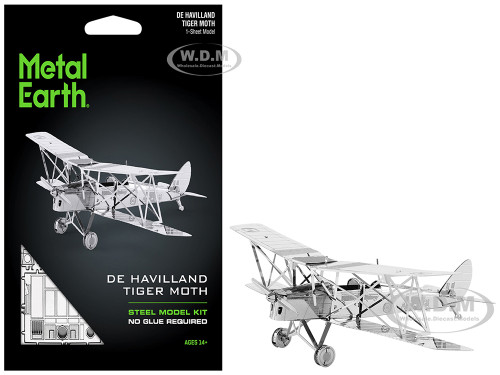
The company's early success came from relatively light, efficient aircraft designed for touring, training, and general aviation. The DH.60 Moth, which first flew in 1925, became the foundation for a highly successful family of aircraft. Its successor, the DH.82 Tiger Moth, became one of the best-known training aircraft in aviation history and was widely used by the Royal Air Force during World War II.
De Havilland also developed aircraft manufacturing operations outside Britain. De Havilland Canada was established in 1928, eventually developing its own important family of utility and regional aircraft. This means the De Havilland name encompasses two closely connected but distinct strands of aviation history: the original British company and the Canadian aircraft manufacturer that became particularly famous for rugged STOL and turboprop aircraft.
Classic De Havilland Aircraft
DH.60 Moth and DH.82 Tiger Moth
The Moth family established De Havilland's reputation for practical, lightweight aircraft. These aircraft were used for civilian flying, touring, training, and military applications.
The Tiger Moth is particularly significant to collectors because of its association with pilot training before and during World War II. The DH.82A Tiger Moth combined the familiar biplane configuration with the straightforward handling and reliability needed for elementary flight instruction.
A Tiger Moth diecast model can be an excellent addition to a collection focused on historic British aviation, early military trainers, or aircraft used during the 1930s and 1940s.
DH.88 Comet Racer
The DH.88 Comet was a purpose-built racing aircraft developed for the 1934 MacRobertson Air Race between England and Australia. Three Comets entered the race, and the aircraft Grosvenor House, named after its sponsor, won the competition.
The Comet's lightweight stressed wooden construction and clean aerodynamic design were especially important in De Havilland's later development work. The company's experience with advanced wooden construction contributed to the design philosophy that would eventually produce the Mosquito.
For collectors, the DH.88 Comet is one of the more distinctive De Havilland subjects because it represents aviation racing history rather than conventional military or airline service.
The De Havilland Mosquito
Few aircraft are more closely associated with De Havilland than the DH.98 Mosquito. Developed during World War II, the Mosquito made extensive use of wooden construction at a time when other aircraft were increasingly dependent on metal.
The prototype was developed at Salisbury Hall and made its first flight on November 25, 1940. The aircraft's combination of speed, range, and versatility led to numerous versions, including bombers, night fighters, intruders, photo-reconnaissance aircraft, and other specialized variants. More than 4,400 Mosquitos were built at De Havilland's Hatfield and Leavesden facilities, with additional aircraft produced elsewhere.
The Mosquito's distinctive twin-engine configuration, wooden airframe, streamlined fuselage, and broad range of wartime roles make it particularly recognizable as a model aircraft. Collectors can look for different Mosquito variants to represent the aircraft's changing missions throughout World War II.
Why the Mosquito Is Important to Collectors
A De Havilland Mosquito model can fit naturally into several types of aviation collections:
- World War II aircraft collections
- Royal Air Force collections
- British military aviation displays
- Twin-engine aircraft collections
- Historic aircraft technology collections
- De Havilland manufacturer collections
Different scales and versions also make it possible to display the Mosquito alongside other contemporary aircraft without requiring an entire collection to use the same subject.
De Havilland Vampire and Early Jet Aircraft
De Havilland moved rapidly into jet aviation after World War II. The DH.100 Vampire was powered by the company's Goblin jet engine and first flew in 1943. The Vampire went on to become an important early British jet fighter and was built in several countries for different operators.
The Vampire is particularly interesting from a collecting perspective because it bridges the gap between wartime piston-engine aircraft and the jet age. Its compact proportions and distinctive twin-boom configuration make it immediately recognizable in a model-aircraft display.
Later De Havilland jet developments included the Venom and Sea Venom, demonstrating the company's continued work in fighter and naval aviation.
The De Havilland Comet
The DH.106 Comet occupies a special place in aviation history as the world's first jet airliner to enter regular passenger service. The prototype first flew on July 27, 1949, and BOAC began the first scheduled Comet passenger service in May 1952.
The Comet represented a major change in commercial aviation. Its pressurized cabin, swept-wing design, and jet engines allowed passenger travel at significantly higher speeds and altitudes than the piston-engine airliners that preceded it.
Although early Comet accidents led to extensive investigation and redesign, later versions such as the Comet 4 became successful commercial aircraft and were operated by airlines around the world. The Comet design also provided the foundation for later developments, including the RAF's Nimrod maritime patrol aircraft.
For aviation collectors, a De Havilland Comet model is more than an airline miniature—it represents one of the defining technological transitions in commercial aviation.
De Havilland Canada
De Havilland Canada's history developed alongside the British company but eventually became especially associated with utility aircraft, short takeoff and landing capability, regional transportation, and operations in challenging environments.
The Canadian company delivered its first aircraft in 1928 and later developed aircraft including the DHC-1 Chipmunk, DHC-2 Beaver, DHC-3 Otter, DHC-4 Caribou, DHC-5 Buffalo, DHC-6 Twin Otter, DHC-7 Dash 7, and Dash 8 family.
DHC-2 Beaver
The DHC-2 Beaver first flew in 1947 and became one of Canada's most recognizable bush aircraft. Designed for utility operations, the Beaver could be configured for wheels, floats, or skis, making it particularly well suited to remote areas and changing terrain. Approximately 1,600 were produced before production ended in 1967.
A DHC-2 Beaver model is an excellent choice for collectors interested in bush planes, Canadian aviation, floatplanes, or aircraft designed for remote operations.
DHC-3 Otter and DHC-6 Twin Otter
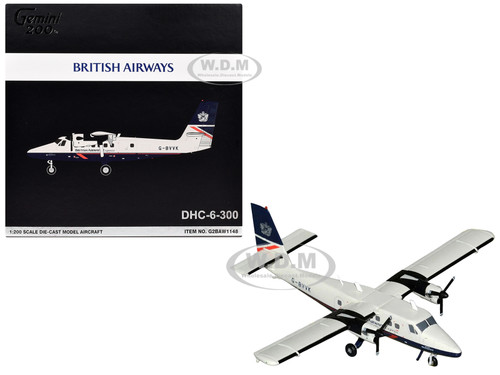
The larger DHC-3 Otter expanded on the Beaver concept with greater capacity and power while retaining STOL capability. The DHC-6 Twin Otter took the concept further with two engines and became one of the best-known utility aircraft of its type.
Twin Otters have served airlines, military organizations, scientific operations, cargo operators, and remote communities. Their rugged appearance and wide variety of liveries also make them appealing subjects for airline and aviation collectors.
DHC-4 Caribou and DHC-5 Buffalo
The DHC-4 Caribou and DHC-5 Buffalo represent another side of De Havilland Canada's history: tactical transport aircraft designed to operate from relatively short and challenging airstrips.
The Caribou first flew in 1958 and became known for its combination of cargo capacity and STOL performance. The Buffalo followed with greater payload capability and improved STOL characteristics and was also used extensively for military and search-and-rescue missions.
De Havilland Dash 7 and Dash 8
De Havilland Canada's move into regional aviation produced the four-engine DHC-7 Dash 7 and the twin-engine Dash 8 family.
The Dash 7 first flew in 1975 and was designed as a regional airliner with STOL capability. The Dash 8-100 followed with its first flight in 1983, beginning a highly successful family of turboprop regional aircraft. Later Dash 8 variants increased passenger capacity and performance, with the Dash 8-400 becoming a particularly well-known modern turboprop.
For diecast collectors, Dash 8 models can be especially interesting because airline liveries create a wide range of display possibilities. A collector can focus on a particular airline, aircraft generation, country, or regional aviation era.
Choosing a De Havilland Diecast Aircraft
Scale is an important consideration when choosing a De Havilland model aircraft.
1/72 Scale
1/72 is a popular scale for military and historic aircraft and provides a useful balance between physical size and detail. It works particularly well for aircraft such as the Mosquito, Vampire, Tiger Moth, and other relatively compact De Havilland designs.
1/100 Scale
1/100 models are useful for larger aircraft and airliners while remaining manageable for display. They can work particularly well for aircraft such as the Comet and regional aircraft.
1/144 Scale
1/144 is a practical choice for collectors interested in airliners, military transports, and larger aircraft. The smaller dimensions make it easier to display several aircraft together.
1/200 and Other Scales
Larger airliners can also be represented in scales such as 1/200 and other specialized aviation-model scales. When comparing models, consider not only the aircraft type but also the scale, airline or military livery, registration, variant, and era represented.
Building a De Havilland Collection
A De Havilland collection can be organized in several ways. One approach is to follow the company's technological development from the Moth and Tiger Moth through the Comet racer, Mosquito, Vampire, and Comet jetliner.
Another approach is to concentrate on De Havilland Canada, combining aircraft such as the Beaver, Otter, Caribou, Buffalo, Twin Otter, Dash 7, and Dash 8. This creates a display focused on utility aviation, STOL aircraft, Canadian aviation, and regional transportation.
Collectors can also build displays around specific operators. Airline liveries, military markings, rescue organizations, bush operators, and specialized aircraft configurations can make otherwise similar aircraft distinctly different additions to a collection.
When selecting a model, compare the aircraft variant, scale, livery, registration, configuration, and period represented. These details are especially important when collecting aircraft that were produced over many decades or operated by numerous organizations.
Shop De Havilland Diecast Aircraft Models
From the Tiger Moth and DH.88 Comet to the legendary Mosquito, Vampire, Comet airliner, Beaver, Otter, Twin Otter, Caribou, Buffalo, and Dash 8, De Havilland aircraft represent a remarkable range of aviation history.
Browse the available De Havilland diecast aircraft models at DiecastModelsWholesale.com to explore classic British aircraft, De Havilland Canada utility aircraft, military aircraft, and regional airliners, and find the models that best fit your aviation collection.

 $39.99