Focke-Wulf diecast aircraft models represent an important chapter in German aviation history, particularly the development of high-performance military aircraft during the 1930s and 1940s. Focke-Wulf Flugzeugbau was founded in Bremen in 1923 by Henrich Focke, Georg Wulf, and Dr. Werner Naumann. The company became best known for aircraft such as the Focke-Wulf Fw 190, Fw 200 Condor, and the later Ta 152, while its history also includes transport aircraft, trainers, reconnaissance aircraft, and experimental designs.
For aviation collectors, Focke-Wulf model aircraft provide an opportunity to represent historic aircraft in miniature, from early German aviation designs to some of the most recognizable Luftwaffe aircraft of World War II. Depending on the product, this category may include Focke-Wulf fighter aircraft, bombers, maritime patrol aircraft, and related variants in different scales and configurations.
A Brief History of Focke-Wulf
Focke-Wulf Flugzeugbau AG was established in 1923 in Bremen. One of the company's early successes was the Focke-Wulf Fw 44 Stieglitz, a two-seat biplane designed by Kurt Tank. Introduced during the 1930s, the Fw 44 became an important training and aerobatic aircraft and was used by flying schools and air forces in several countries.
The company expanded significantly during the 1930s as German aircraft production accelerated. Focke-Wulf developed both military and civilian aircraft, including fighters, reconnaissance aircraft, transports, and long-range aircraft.
A major figure in the company's aircraft development was Kurt Tank, an influential German aircraft designer and test pilot. Tank was responsible for several of Focke-Wulf's most important aircraft, including the Fw 190 and Ta 152.
Focke-Wulf Fw 190
The Focke-Wulf Fw 190 Würger is the aircraft most closely associated with the Focke-Wulf name. Designed under Kurt Tank's direction, the Fw 190 made its first flight in 1939 and entered Luftwaffe service in 1941.
The aircraft was developed around the air-cooled BMW 801 radial engine, giving the Fw 190 a distinctive appearance compared with many contemporary liquid-cooled inline-engine fighters. It combined high speed, strong armament, good handling, and a robust structure.
Early Fw 190 A-series aircraft were used extensively as fighter and fighter-bomber aircraft. Later versions introduced changes to engines, armament, equipment, and intended missions.
Important Fw 190 Variants
Collectors may encounter several Fw 190 variants and designations, including:
- Fw 190 A – The principal early production fighter series, powered by BMW 801 radial engines.
- Fw 190 F – Ground-attack and fighter-bomber variants developed from the A-series.
- Fw 190 G – Long-range fighter-bomber versions.
- Fw 190 D-9 – The "Dora" variant, fitted with the liquid-cooled Jumo 213 engine and a lengthened forward fuselage.
- Fw 190 D-series – High-performance developments intended to improve the aircraft's capabilities at higher altitudes.
- Ta 152 – A substantially developed high-performance fighter related to the Fw 190 design.
The different variants make the Fw 190 particularly interesting for scale-model collectors. Two models that both represent an Fw 190 can have noticeably different appearances depending on the variant, engine installation, armament, camouflage, markings, and mission.
Fw 190 Dora
The Fw 190 D-9, commonly known as the "Dora," is one of the most recognizable later versions of the aircraft.
The D-9 replaced the radial engine used by earlier Fw 190 A-series aircraft with the liquid-cooled Junkers Jumo 213 A engine. The resulting longer nose and modified airframe gave the aircraft a noticeably different profile.
The Fw 190 D-9 was introduced late in World War II and was used primarily as a high-performance fighter. It is a particularly popular subject for collectors because it represents the evolution of the Fw 190 from its original radial-engine configuration into a faster late-war fighter.
When purchasing an Fw 190 diecast model, checking the exact variant is important. An A-series model and a D-9 model represent significantly different stages of the aircraft's development.
Ta 152
The Focke-Wulf Ta 152 represents another important stage in the development of Kurt Tank's fighter designs. The aircraft was named after Tank using the "Ta" designation and was developed from the Fw 190 D-series.
The Ta 152 incorporated a longer fuselage, greater wingspan in certain versions, and a powerful Jumo 213 engine. It was intended to provide improved high-altitude performance, although production and operational use were limited by the circumstances of the final stages of World War II.
For collectors, the Ta 152 is an interesting companion to an Fw 190 because it illustrates how an established fighter design could evolve into a specialized high-performance aircraft.
Focke-Wulf Fw 200 Condor
The Focke-Wulf Fw 200 Condor provides a completely different side of Focke-Wulf's history.
Originally developed as a long-range civilian airliner, the Fw 200 was a four-engine aircraft designed for long-distance routes. Its long-range capability made it particularly significant during World War II, when military versions were used for maritime reconnaissance, patrol, and anti-shipping operations.
The Fw 200 became associated with long-range operations over the Atlantic. Its large four-engine configuration makes it visually very different from the compact Fw 190 and provides collectors with an opportunity to explore the broader range of Focke-Wulf aircraft.
Civilian and Military Condor Models
The Condor is especially interesting because the same basic aircraft represents two different eras of aviation history. Early civilian versions were associated with long-distance airline operations, while military versions carried reconnaissance and maritime equipment.
Collectors should therefore pay attention to the specific version, operator, registration, camouflage, and markings represented by an individual Fw 200 model.
Other Focke-Wulf Aircraft
Although the Fw 190 and Fw 200 dominate the company's legacy, Focke-Wulf produced numerous other aircraft.
The Fw 58 Weihe was a twin-engine aircraft used for training, communications, and other utility roles. It reflected Focke-Wulf's broader involvement in aircraft beyond frontline fighters.
The Fw 189 Uhu was a distinctive twin-engine reconnaissance aircraft with a highly recognizable central nacelle and twin-boom configuration. It was used extensively for battlefield reconnaissance and observation.
Focke-Wulf also developed experimental aircraft and participated in advanced aircraft programs during the later years of the war. These projects demonstrate the company's efforts to address changing requirements for speed, altitude, range, and specialized missions.
Focke-Wulf Aircraft and Aviation Collecting
Focke-Wulf diecast models can fit several different collecting themes. Some collectors concentrate specifically on the Fw 190, while others build collections around Luftwaffe aircraft, German aviation, World War II fighters, or the evolution of aircraft design.
A focused Fw 190 collection can be organized by variant, for example:
- Early Fw 190 A-series fighter
- Fw 190 F or G fighter-bomber
- Fw 190 D-9
- Ta 152
Another approach is to collect different aircraft from the Focke-Wulf company. An Fw 44, Fw 58, Fw 189, Fw 190, and Fw 200 would demonstrate the considerable range of aircraft produced under the Focke-Wulf name.
What to Look for in a Focke-Wulf Model
When comparing Focke-Wulf aircraft models, consider:
- Aircraft type and variant – The designation is important because different versions can have substantially different configurations.
- Scale – Make sure the model fits your existing aircraft collection.
- Markings and livery – Squadron markings, aircraft codes, national insignia, and camouflage can distinguish otherwise similar releases.
- Configuration – Engine type, propeller arrangement, weapons, antennas, landing gear, and other details can vary between versions.
- Manufacturer – Construction, finish, cockpit detail, landing gear, display options, and packaging can differ between manufacturers.
- Era and operator – Particularly important for the Fw 200, which existed in both civilian and military configurations.
Focke-Wulf Diecast Aircraft Scales
Focke-Wulf aircraft models are available in different scales depending on the aircraft and manufacturer.
1/72 scale is a popular choice for military aircraft collections because it provides a useful combination of aircraft size and detail. It is especially practical for displaying several fighters together.
1/48 scale offers a larger presentation and allows more room for cockpit, engine, landing-gear, and surface detailing. It is particularly attractive for collectors who want a more substantial Fw 190 or Ta 152 display.
1/100 and 1/144 scales are useful for collectors with limited display space or for those building larger aircraft collections.
1/200 and 1/400 scales can be especially useful for larger aircraft such as the Fw 200 Condor, depending on the model manufacturer and release.
Exact availability varies by aircraft, manufacturer, and release, so collectors should always check the individual product specifications for the correct scale and configuration.
Building a Focke-Wulf Collection
A Focke-Wulf collection can be as focused or broad as you prefer. A fighter-focused display might center on the Fw 190 and Ta 152, while a company-history collection could include trainers, reconnaissance aircraft, transports, and fighters.
Collectors can also use Focke-Wulf models to illustrate the development of German aircraft design from the 1930s through the World War II period. Comparing the compact Fw 190 with the large four-engine Fw 200, for example, demonstrates how widely the company's aircraft designs varied according to their intended roles.
For a more detailed display, consider collecting the same aircraft in different variants or markings. This approach allows you to explore the evolution of the design rather than simply collecting multiple examples of the same basic aircraft.
Shop Focke-Wulf Diecast Aircraft Models
Whether you are looking for an Fw 190 Würger, Fw 190 Dora, Ta 152, Fw 200 Condor, or another historic Focke-Wulf aircraft, a scale model provides an engaging way to represent an important chapter of aviation history.
Browse the available Focke-Wulf diecast aircraft models at DiecastModelsWholesale.com and find aircraft that match your preferred scale, variant, era, and collecting interests.

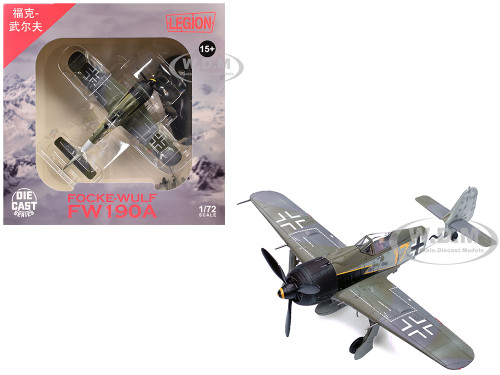 $49.99
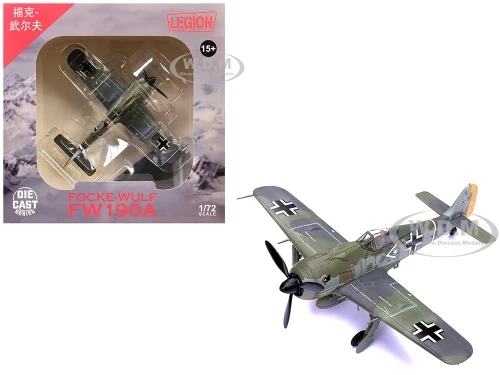 $49.99
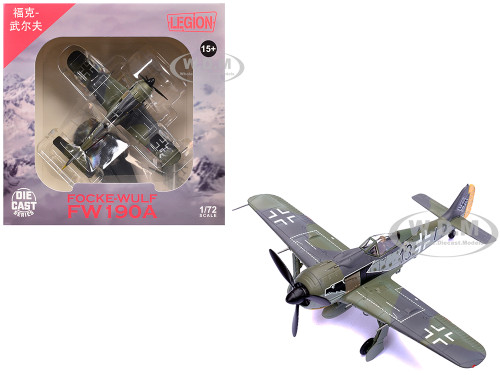 $49.99
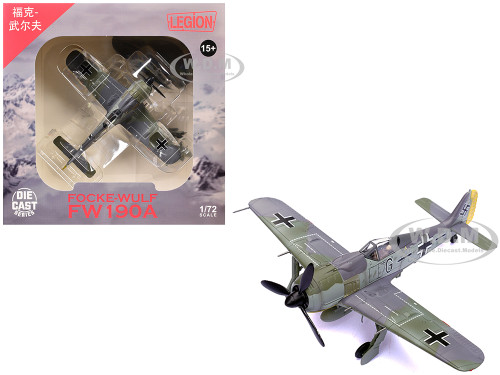 $49.99

 $34.95


