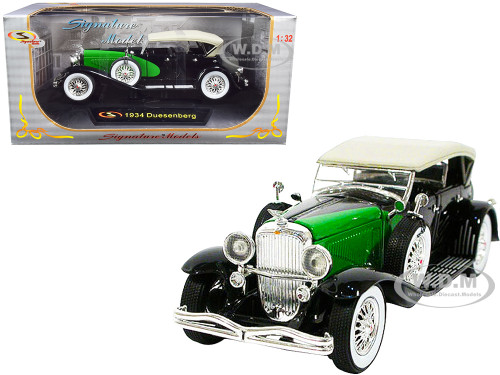
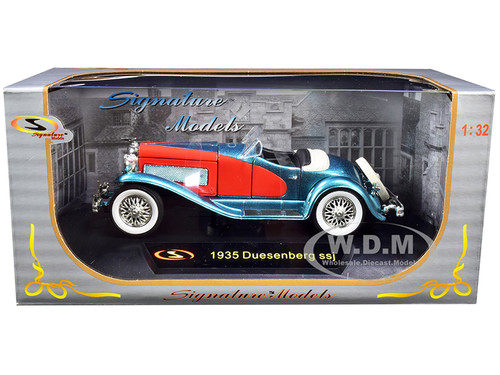
Duesenberg Diecast Model Cars
Duesenberg represents one of the most celebrated names in American automotive history. The company became famous for combining advanced engineering, powerful engines, exceptional craftsmanship, and custom coachbuilt bodies into automobiles intended for buyers who demanded something beyond ordinary luxury cars. Duesenberg diecast models capture the distinctive styling and engineering of these legendary American automobiles in collectible miniature form.
The Duesenberg story began with brothers Fred and August Duesenberg, who built a reputation through engineering and motorsports before establishing the Duesenberg Motor Company in 1913. The company initially produced engines and racing cars, and its competition success helped establish the Duesenberg name as a symbol of technical ability and performance.
The category is particularly appealing to collectors interested in classic American cars, luxury automobiles, prewar vehicles, vintage racing, custom coachbuilt cars, and automotive history. Depending on the release, Duesenberg model cars may represent famous road cars, racing automobiles, or custom-bodied versions from the company's most important period.
The Duesenberg Brothers and Early Racing History
Fred and August Duesenberg were German-American brothers whose early engineering work centered on automobiles and engines. Their company became involved in racing during the 1910s, establishing a reputation for building high-performance machinery.
Duesenberg racing cars competed successfully in major American events. The company achieved a particularly important victory at the Indianapolis 500 in 1924, when L. L. Corum and Joe Boyer drove a Duesenberg to victory. Duesenberg-powered cars also won the Indianapolis 500 in 1925 and 1927, further establishing the connection between the brand and American motorsport.
Racing was more than a marketing exercise for Duesenberg. Competition provided an opportunity to develop engines, chassis, and other technologies that contributed to the company's reputation for engineering excellence.
For collectors, early Duesenberg racing models offer a different perspective from the luxury automobiles for which the company later became famous. They represent the performance-oriented roots of the Duesenberg name.
The Duesenberg Model A
The Duesenberg Model A, introduced in the early 1920s, was the company's first production automobile. It incorporated several advanced features for its era and helped establish Duesenberg as a technically ambitious American manufacturer.
The Model A was powered by an inline eight-cylinder engine and was among the earliest American production automobiles to use hydraulic brakes. Its engineering reflected the company's competition experience and willingness to adopt sophisticated mechanical solutions.
Although the Model A was not produced in the same numbers as mass-market automobiles, it established the foundation for Duesenberg's later luxury cars.
A Model A diecast can therefore be an interesting addition to a collection focused on the development of American luxury and performance automobiles during the 1920s.
Duesenberg Model J
The Duesenberg Model J is the vehicle most closely associated with the company's legendary reputation.
Introduced in 1928, the Model J was designed to compete with the finest luxury automobiles available anywhere in the world. It used a large naturally aspirated inline-eight engine with dual overhead camshafts and four valves per cylinder, producing an impressive level of performance for the period.
Duesenberg did not sell the Model J simply as a conventional factory-bodied automobile. Customers could purchase the chassis and have it fitted with custom coachwork from some of the leading American and European coachbuilders.
This resulted in an extraordinary variety of Model J automobiles. The same basic chassis could appear as a formal sedan, limousine, convertible, roadster, phaeton, dual-cowl model, or another individually styled body.
That diversity makes Duesenberg Model J diecast cars particularly interesting to collectors. Two Model J models can represent substantially different automobiles depending on their body style, coachbuilder, proportions, color, and trim.
Duesenberg Model J Coachbuilt Cars
Coachbuilding is an essential part of understanding Duesenberg.
Rather than producing every body in a standardized factory configuration, Duesenberg supplied chassis to customers who could commission custom bodies from specialist coachbuilders. Among the firms associated with Duesenberg automobiles were LeBaron, Murphy, Rollston, Fleetwood, Judkins, Derham, and Willoughby, along with other body manufacturers.
This created some of the most distinctive automobiles of the American Classic Era.
Collectors selecting a Duesenberg diecast model should therefore pay attention to the body style and coachbuilder, not just the Model J designation. A convertible coupe, disappearing-top roadster, phaeton, and formal sedan can each have a completely different appearance despite sharing the same underlying chassis and engine family.
This is one of the characteristics that makes Duesenberg particularly rewarding for collectors interested in coachbuilt automobiles.
Duesenberg Model J and the Supercharged Model SJ
Duesenberg introduced the Model SJ as a supercharged performance development of the Model J. The supercharger increased engine output and gave the car substantially greater performance.
The external appearance of an SJ can often be distinguished by its supercharger and associated exhaust arrangement, although individual cars and body configurations varied.
The Duesenberg SJ is particularly significant for collectors because it demonstrates how the company combined luxury with serious performance. The Model J was already an exceptionally capable automobile for its time, while the supercharged SJ pushed the concept even further.
Special versions and highly customized cars, including famous examples such as the Mormon Meteor, further contributed to Duesenberg's motorsport mythology.
Duesenberg JN, JLA and Other Variations
Duesenberg's Model J family included numerous chassis and body variations. Later developments included the Model JN and Model JLA, among other designations used during the company's final years.
The exact terminology can vary depending on how a particular historical automobile or reproduction is documented, so collectors should use the product's stated model designation and specifications when comparing individual diecast releases.
Some Duesenberg models are also based on particularly famous surviving automobiles. These can be especially interesting to collectors because the miniature may reproduce a specific historic car rather than simply representing a generic Duesenberg body style.
Duesenberg and American Automotive Design
Duesenberg automobiles were products of the Classic Era of American automotive design, when luxury manufacturers competed not only through mechanical engineering but also through appearance, materials, craftsmanship, and personalization.
The company's cars were typically large, imposing automobiles with long hoods, substantial wheelbases, elaborate grilles, and highly detailed coachwork. Their proportions make them especially recognizable as miniature models.
The combination of engineering and custom styling also places Duesenberg at an important intersection between American automotive manufacturing and European-inspired luxury design.
For collectors, a Duesenberg can complement other classic American luxury marques while providing a distinctive example of the custom-coachbuilt tradition.
Duesenberg Diecast Models for Collectors
Duesenberg models are well suited to several collecting themes, including:
- Classic American automobiles
- American luxury cars
- Prewar automobiles
- Coachbuilt cars
- Vintage racing
- Classic-era automotive design
- Famous historic automobiles
- Automotive engineering history
- Classic car concours displays
Collectors can build a Duesenberg-focused collection around the progression from the Model A to the Model J and supercharged SJ, or concentrate on specific body styles.
Another approach is to collect several versions of the Model J. Differences in body design, paint, trim, and proportions can make each model visually distinct even when the underlying automobile is part of the same family.
Choosing a Duesenberg Model Car
When choosing a Duesenberg diecast model, consider the following details:
Model and Variant
Determine whether the model represents a Model A, Model J, SJ, or another Duesenberg designation. If the model represents a particular historic automobile, look for the specific version identified by the manufacturer.
Body Style
Body style is particularly important with Duesenberg. Roadsters, phaetons, sedans, coupes, and dual-cowl bodies can have dramatically different appearances.
Coachbuilt Design
If a product listing identifies the coachbuilder, this can add historical significance to the model. Coachbuilder details are often central to identifying individual Duesenberg automobiles.
Scale
Choose a scale that works with your existing classic-car collection and available display space. Larger scales can showcase the long bodywork and intricate styling of these automobiles, while smaller scales make it easier to display multiple vehicles.
Construction and Features
Depending on the specific release, diecast models may include opening doors, hoods, trunks, detailed interiors, steering wheels, engine compartments, rubber tires, or other features. Check the individual product specifications for the exact model.
Duesenberg Diecast Scales
Duesenberg model cars are available in several collectible scales depending on the manufacturer and release.
1/12 scale models offer substantial display presence and are particularly suited to collectors who want to emphasize the large proportions and coachbuilt details of a classic Duesenberg.
1/18 scale is a popular choice for detailed classic automobiles. It provides enough size to appreciate bodywork and interior details while remaining practical for most displays.
1/24 scale offers a good balance between detail and space and works well for collectors building a broader classic-car collection.
1/43 scale provides a compact option for collectors who want to represent multiple Duesenberg models or combine them with a larger collection of historic automobiles.
Not every Duesenberg is available in every scale, so check each individual product listing for the exact scale, dimensions, materials, and features.
Why Collect Duesenberg Models?
Duesenberg's appeal comes from the combination of engineering, performance, luxury, and custom design. Few American automobile manufacturers of the Classic Era produced cars with such a strong connection between racing technology and bespoke luxury.
The Model J in particular has become an enduring symbol of the period when wealthy customers could commission automobiles built around a specific chassis and personalized to their preferences.
A Duesenberg diecast model can therefore represent much more than an old American car. It can preserve the appearance of a particular body style, coachbuilder, racing connection, or chapter in the history of American automotive design.
Whether you are looking for a Duesenberg Model J, SJ, classic racing car, or another historic Duesenberg automobile, these models make distinctive additions to collections of American classics and prewar automobiles.
Browse the available Duesenberg diecast model cars at DiecastModelsWholesale.com to explore classic American luxury and performance automobiles in available scales and find a distinctive Duesenberg for your collection.