Waste Management Diecast Models
Explore the specialized vehicles and equipment used to collect, transport, and manage waste with Waste Management diecast models from DiecastModelsWholesale.com. This category focuses on the working trucks that support municipal sanitation, commercial waste collection, recycling, transfer operations, and other waste-management services.
Waste collection vehicles are an interesting area of diecast collecting because their designs are closely connected to the work they perform. Rear-loading garbage trucks, automated side loaders, front loaders, roll-off trucks, recycling vehicles, and other specialized equipment each have distinctive body configurations and mechanical features.
For collectors, these models can represent much more than a generic truck. A particular diecast may reproduce the appearance of a municipal sanitation vehicle, a private waste hauler, a recycling truck, or a specialized container-handling vehicle. Company graphics, municipal markings, body design, loading equipment, and vehicle configuration can all add collecting interest.
Types of Waste Management Diecast Models
Waste management involves several different types of collection and transportation equipment. EPA documentation has historically classified solid-waste collection vehicles into categories including rear loaders, front loaders, side loaders, roll-off vehicles, transfer vehicles, and other specialized equipment.
Depending on the models available, this category may include:
- Garbage and refuse collection trucks
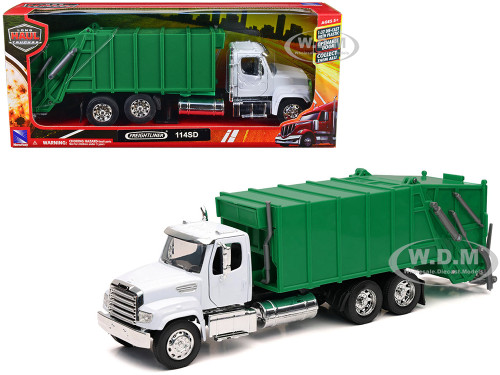
- Rear-loading garbage trucks
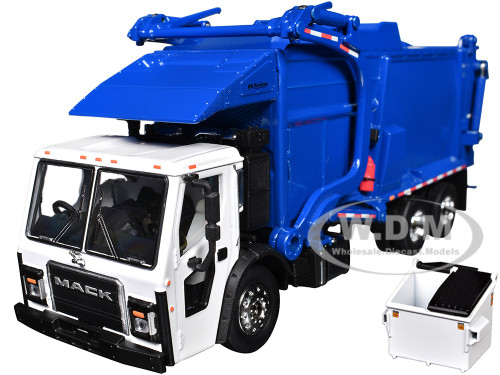
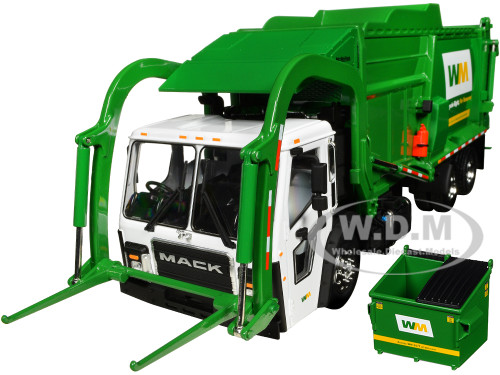
- Front-loading garbage trucks
- Side-loading collection trucks
- Automated garbage trucks
- Recycling collection trucks
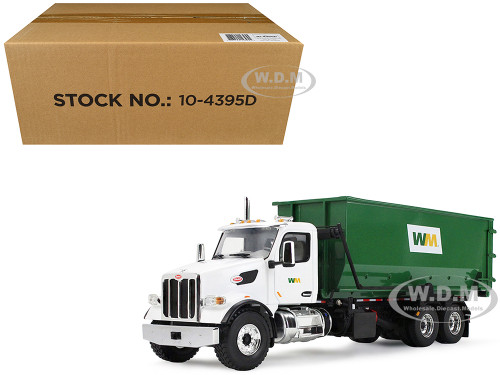
- Roll-off trucks
- Dumpster trucks
- Container-hoist vehicles
- Transfer trucks
- Commercial waste collection vehicles
- Municipal sanitation vehicles
- Waste and recycling fleet vehicles
- Specialty waste-management trucks
This variety gives collectors several ways to build a focused collection around the equipment itself, the companies operating it, or the communities and industries it serves.
Garbage Truck Diecast Models
Rear-Loading Garbage Trucks
Rear loaders are among the most recognizable traditional garbage trucks. Waste containers are brought to the rear of the vehicle, where a loading mechanism or collection crew places the material into the body. A compaction system then reduces the volume of the collected material.
EPA documentation describes compactor trucks as vehicles equipped with hydraulically powered rams that compact collected waste and later push it out at a disposal or transfer facility. Compactor trucks are commonly categorized as front-loading, side-loading, or rear-loading vehicles.
A rear-loader diecast model can therefore be especially interesting to collectors because of the equipment mounted behind the cab. The hopper, lifting mechanism, compactor body, rear access area, and hydraulic components give these trucks a distinctive appearance.
Front-Loading Garbage Trucks
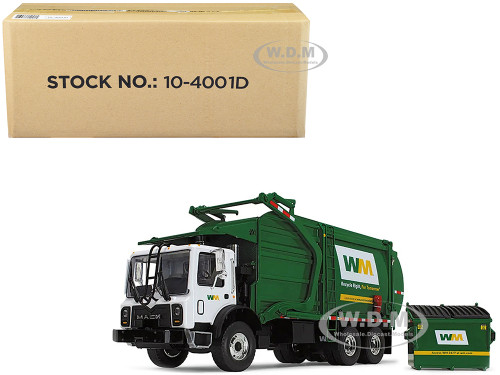
Front loaders are commonly associated with commercial waste collection and large dumpsters. A mechanical arm or fork assembly lifts a container over the cab and empties it into the collection body.
This configuration gives front-loader garbage trucks a distinctive silhouette and makes them easy to recognize in a collection.
Front-loading vehicles are also useful for creating commercial waste-management dioramas featuring dumpsters, businesses, warehouses, restaurants, shopping centers, or industrial properties.
Side-Loading Garbage Trucks
Side loaders collect material through equipment positioned along the side of the vehicle. Modern automated systems can use mechanical arms to lift and empty standardized residential carts.
EPA research documents the development of semiautomated and automated collection systems, including side- and top-loading vehicles designed to improve the efficiency of curbside collection.
For diecast collectors, side-loading trucks can be particularly appealing because the collection arm adds a prominent mechanical feature to the model.
Recycling Truck Models
Waste management extends beyond ordinary household garbage collection. Recycling programs require specialized collection equipment capable of handling recyclable materials separately from conventional municipal solid waste.
Recycling collection vehicles can have compartmentalized bodies or other configurations designed around the materials and collection system being used.
These trucks can add another dimension to a waste-management collection by representing the separation and transportation of recyclable materials rather than traditional refuse collection.
Roll-Off and Dumpster Trucks
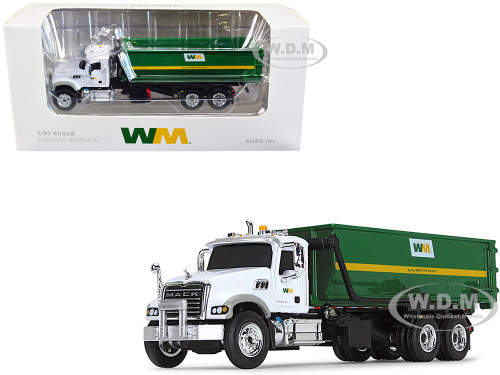
Roll-off trucks are designed to transport removable containers that can be loaded, transported, and deposited at another location. They are commonly associated with construction debris, commercial waste, industrial materials, and other applications where large containers are needed.
EPA solid-waste guidance identifies roll-off and hoist-type vehicles as distinct categories of waste-collection equipment.
A roll-off truck model can therefore represent a different stage of waste handling from a residential garbage truck. Instead of collecting individual household containers along a street, the vehicle moves a larger container between a collection point and a disposal, processing, or transfer facility.
Waste Transfer and Hauling Vehicles
Waste collection and waste transportation are not always performed by the same vehicle. Transfer systems can consolidate material from smaller collection vehicles into larger loads for transportation to a disposal or processing facility.
EPA research describes transfer stations as a connection between route-collection vehicles and bulk transportation, with larger vehicles reducing the need for multiple collection trucks to make long trips to disposal sites.
For collectors, this creates another category of working vehicles to explore. A complete waste-management display can include residential collection trucks, commercial front loaders, roll-off trucks, and larger transfer or hauling vehicles.
A Brief History of Waste Collection Vehicles
Waste collection existed long before the modern garbage truck. Early municipal systems depended heavily on manual labor, carts, containers, and animal-drawn vehicles.
The transition to motorized collection vehicles changed the way waste could be collected and transported. An EPA historical report from the early 1970s noted that many collection practices had evolved from earlier systems in which horse-drawn carts were replaced by motor-powered vehicles with greater capacity and compaction capability.
As truck chassis, hydraulic systems, compactors, and specialized bodies improved, waste collection vehicles became increasingly purpose-built.
By the middle of the 20th century, collection fleets included multiple truck configurations. EPA historical data from the 1960s and 1970s documents packer trucks as well as rear, front, and side loaders, along with roll-off and other specialized vehicles.
The Development of Mechanized Collection
Mechanization gradually reduced the amount of manual handling required for some collection operations. Hydraulic lifting equipment, compactors, standardized containers, and automated systems allowed collection trucks to perform increasingly specialized tasks.
The development of automated collection also changed the appearance of waste-management vehicles. Mechanical arms, lifting devices, larger collection bodies, and specialized controls became important parts of modern sanitation equipment.
This evolution gives collectors an opportunity to build a historical display showing how waste collection vehicles changed from relatively simple trucks into highly specialized machines.
Waste Management Companies and Fleet Collecting
Some collectors choose waste-management models based on the company or fleet livery rather than the truck type.
Company graphics can make a model particularly recognizable. A garbage truck with a specific corporate design can represent the appearance of a commercial fleet during a particular period, while a municipal truck may carry the name, seal, or markings of a city or sanitation department.
Collectors can therefore organize models around:
- Waste-management companies
- Municipal sanitation departments
- Recycling services
- Regional fleets
- Historical fleet liveries
- Vehicle manufacturers
- Specific truck types
A fleet-based collection can be especially effective when several models share the same branding but use different truck bodies or chassis.
Collecting Waste Management Diecast Models
Waste-management models provide several natural collecting themes.
Collect by Vehicle Type
A straightforward collection can include one or more examples of each major collection configuration:
- Rear loader
- Front loader
- Side loader
- Automated side loader
- Recycling truck
- Roll-off truck
- Transfer vehicle
This approach highlights the different mechanical solutions developed for waste collection and transportation.
Collect by Era
Older sanitation trucks can be displayed alongside modern automated collection vehicles to show how the industry evolved.
A historical collection might progress from early motorized refuse trucks to mid-century packers, later hydraulic compactors, and contemporary automated vehicles.
Collect by Company or Municipality
Collectors can focus on branded commercial fleets or municipal sanitation vehicles. Distinctive logos, color schemes, and markings can provide a strong visual theme.
Collect by Manufacturer
Another approach is to focus on the underlying truck manufacturer or specialized body manufacturer. This allows collectors to compare different chassis, cab designs, collection bodies, and equipment configurations.
Waste Management Models for Dioramas
Waste-management diecast models are particularly well suited to realistic working-vehicle displays.
A small diorama could show a garbage truck collecting residential containers along a street. A larger scene could include a transfer station, recycling facility, commercial dumpster area, or landfill-related transportation.
Useful display elements can include:
- Residential trash carts
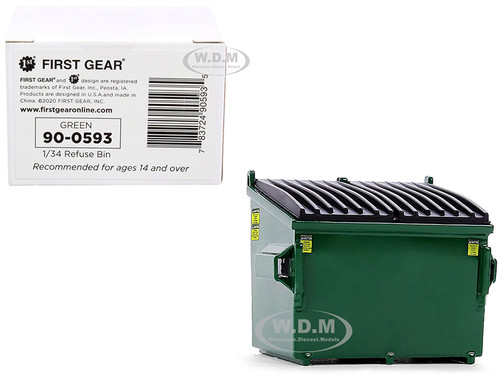
- Commercial dumpsters
- Recycling containers
- Transfer stations
- Waste-processing facilities
- Industrial buildings
- Loading areas
- Service garages
- Roads and parking areas
Because garbage and recycling trucks are working vehicles, they also combine naturally with construction, trucking, industrial, and municipal service models.
Waste Management Diecast Scales
Scale is an important consideration when collecting specialized commercial vehicles. Depending on the manufacturer and model, waste-management diecast vehicles can be found in scales such as 1/18, 1/24, 1/32, 1/43, 1/50, 1/64, and 1/87.
1/18 Waste Management Models
1/18 models provide substantial space for detailed truck bodies, cabs, wheels, lifting mechanisms, and other equipment. They work well as individual display pieces.
1/24 Waste Collection Models
1/24 offers a useful balance between model size and available detail. It can also work well in collections that combine waste trucks with other similarly scaled working vehicles.
1/50 Waste Management Models
1/50 is widely used for detailed commercial and heavy-equipment models and can be a particularly practical scale for specialized waste-management trucks.
1/64 Waste Collection Models
1/64 models take up less display space and can be useful for collectors building a larger fleet of commercial or municipal vehicles.
1/87 Waste Management Models
Smaller models such as 1/87 can be useful for large-scale transportation scenes, especially when multiple vehicles, buildings, and infrastructure elements are being displayed together.
Because specialized garbage trucks vary considerably in size and configuration, always check the model's actual dimensions as well as its stated scale.
Details Collectors Notice
Waste collection vehicles can have an impressive amount of mechanical detail. When selecting a model, collectors may want to consider:
- Cab design
- Collection body
- Hopper configuration
- Compactor equipment
- Hydraulic arms
- Lifting mechanisms
- Rear, side, or front loading configuration
- Wheels and tires
- Mirrors and lights
- Safety equipment
- Company or municipal graphics
- Container or dumpster compatibility
- Opening or moving components, when specified
The collection mechanism is often one of the most interesting features. A model with a visible side-loading arm or rear compactor assembly can look very different from a conventional commercial truck.
Why Collect Waste Management Diecast Models?
Waste-management vehicles are an important part of everyday infrastructure, yet they are often overlooked when compared with sports cars, classic automobiles, or racing vehicles. That makes them an interesting subject for collectors who appreciate working vehicles and specialized equipment.
These models can represent the evolution of sanitation technology, municipal services, commercial fleets, recycling programs, and heavy-duty truck design.
They can also broaden an existing collection. A collector who already has construction equipment or trucking models can add waste-management vehicles to create a more complete display of commercial and industrial transportation.
Choosing a Waste Management Model
When selecting a waste-management diecast model, consider both the vehicle and the collection theme you are building.
If historical accuracy matters, look at the approximate era, truck configuration, company or municipal markings, and equipment design. If mechanical detail is the priority, pay particular attention to the collection body, lifting system, compactor, and other specialized components.
Scale is equally important. Larger models can provide more visible detail, while smaller scales allow you to build a larger fleet within the same display area.
Shop Waste Management Diecast Models
Explore the Waste Management category at DiecastModelsWholesale.com to discover collectible garbage trucks, recycling vehicles, front loaders, rear loaders, side loaders, roll-off trucks, and other specialized waste-management models. Whether you collect working vehicles, municipal equipment, commercial trucks, or detailed sanitation vehicles, browse the available models and find the next addition to your collection.








 $9.95
$9.95
 $12.95
 $12.95
 $12.95
 $16.95
 $16.95