Philippine Airlines (PAL) is the flag carrier of the Philippines and one of Asia's long-established airlines. Known for its role connecting the Philippine archipelago with destinations across Asia, North America, Australia, and beyond, the airline has a distinctive place in the history of regional and international aviation.
Philippine Airlines diecast airplane models appeal to aviation enthusiasts, airline memorabilia collectors, and travelers who appreciate the aircraft and liveries associated with the Philippines' national airline. These collectible scale aircraft bring together commercial aviation history, recognizable airline branding, and the engineering of passenger aircraft.
Depending on current product availability, this category may feature models representing different generations of Philippine Airlines aircraft. Collectors may be interested in classic passenger jets, modern long-haul airliners, or aircraft wearing the airline's distinctive colors and markings. Each model can be a standalone display piece or part of a broader collection focused on Asian airlines, international carriers, or specific aircraft families.
The History of Philippine Airlines
Philippine Airlines was established in 1941 and is widely recognized as Asia's first commercial airline to operate under its original name. Its early operations developed during a period when commercial aviation was expanding across the region, connecting cities and islands where air travel could provide an important alternative to sea and land transportation.
The airline's history was shaped by the geography of the Philippines, an archipelago of thousands of islands. Domestic air service became an important part of connecting communities, while international routes linked the country with business, tourism, and family destinations around the world.
In the decades following World War II, Philippine Airlines expanded its services and introduced larger and more capable aircraft as commercial aviation technology advanced. The transition from propeller-driven airliners to jet aircraft helped improve speed, capacity, and the reach of international routes. Later generations of passenger aircraft made long-haul operations more efficient and expanded the airline's ability to serve overseas destinations.
Philippine Airlines has continued to evolve alongside the commercial aviation industry. Its fleet has included aircraft from major manufacturers, with different types serving domestic, regional, and long-distance routes. For collectors, this history creates opportunities to explore how aircraft design, airline liveries, and passenger travel changed over time.
Notable Philippine Airlines Aircraft
Philippine Airlines has operated a range of aircraft over its history. The following types are useful reference points for collectors researching the airline and its place in commercial aviation. Their inclusion here describes historical fleet associations and does not guarantee that a model of each aircraft is currently available.
Douglas DC-3 and the early passenger era
The Douglas DC-3 was one of the most influential airliners of the piston-engine era. Aircraft of this type helped establish reliable scheduled passenger service around the world and played an important role in the development of postwar commercial aviation.
For collectors interested in the early history of Philippine Airlines, classic propeller aircraft provide a contrast to the large jets that later became common on international routes. Their simpler shapes, prominent propellers, and period liveries also offer a distinctive look in an aviation display.
Boeing 707 and the arrival of the jet age
The Boeing 707 helped transform international air travel in the late 1950s and 1960s. Its four jet engines and swept-wing design represented a major change from earlier piston-powered passenger aircraft, offering higher speeds and supporting the growth of longer-distance jet services.
The jet age was an important period in the development of international aviation across Asia. Models representing aircraft from this era can appeal to collectors who focus on the transition to jet-powered passenger travel and the development of long-haul airline networks.
Airbus A300 and wide-body development
The Airbus A300 was an early wide-body twin-engine jetliner, reflecting the industry's move toward aircraft designed to carry more passengers while improving operating efficiency. Wide-body designs became an important part of commercial aviation as passenger demand grew and airlines expanded their networks.
For aviation model collectors, the A300 represents a significant stage in the evolution of passenger aircraft between the first generation of commercial jets and newer twin-engine wide-body designs.
Boeing 747: A symbol of long-haul travel
The Boeing 747 is one of the most recognizable aircraft in commercial aviation. Its wide fuselage, four engines, and distinctive upper-deck profile made it a defining aircraft of long-distance passenger travel for decades. Philippine Airlines operated Boeing 747s on major routes, including long-haul international services.
A Philippine Airlines Boeing 747 diecast model can be an appealing centerpiece for a collection of wide-body airliners. Its size and recognizable silhouette distinguish it from narrow-body passenger jets and make it especially interesting to collectors who remember the era when four-engine aircraft dominated many long-distance routes.
Airbus A330 and Airbus A340
The Airbus A330 and A340 represent different approaches to long-haul aircraft design. The twin-engine A330 became widely used for medium- and long-distance services, while the four-engine A340 was developed for long-range routes and larger international operations.
Philippine Airlines has operated aircraft from both families. For collectors, these types illustrate the development of modern wide-body aircraft and the gradual shift toward efficient twin-engine designs on many long-distance routes.
Airbus A350 and Boeing 777
Modern wide-body aircraft have helped airlines serve international routes with improved efficiency, passenger comfort, and advanced flight technology. The Airbus A350 and Boeing 777 are associated with this more recent stage of commercial aviation.
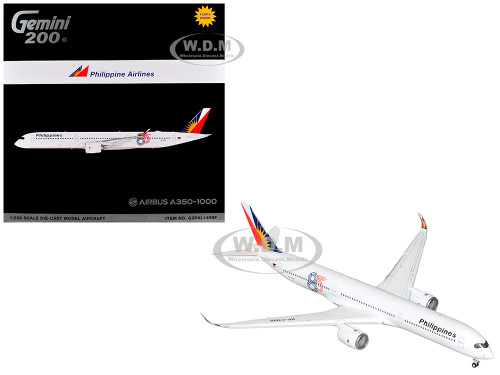
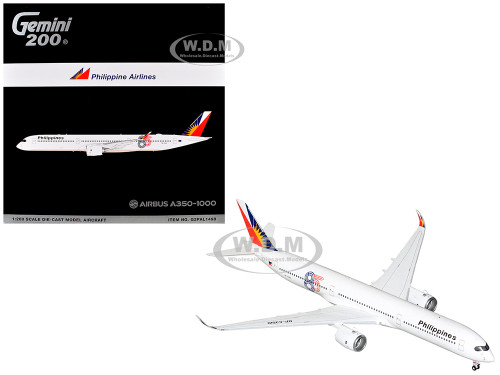
Philippine Airlines operates Airbus A350 aircraft and has also operated Boeing 777s. Models representing these aircraft can complement collections of contemporary international airlines or displays showing the evolution from classic jetliners to modern long-haul aircraft.
Airbus A320 family
The Airbus A320 family consists of narrow-body passenger jets widely used on domestic and regional routes. These aircraft are designed for shorter and medium-distance services and are an important part of many airlines' fleets.
For Philippine Airlines collectors, A320-family models can add variety alongside larger long-haul aircraft. Their smaller size and different proportions help illustrate the range of aircraft needed to serve an airline's domestic and international network.
Philippine Airlines Livery and Collecting Appeal
Airline liveries are a central part of aircraft model collecting. Philippine Airlines' visual identity connects its aircraft to the Philippines and gives its models a recognizable appearance within a collection of international carriers.
When comparing Philippine Airlines diecast airplane models, look at the paint scheme, airline lettering, logo placement, aircraft registration, and the period represented. Liveries can change over time, and different aircraft types may have details that are important to collectors seeking a particular version.
A model can be especially meaningful when it represents an aircraft connected to a memorable trip, a favorite route, or an important moment in aviation history. Collectors may also choose models based on aircraft design, manufacturer, or the role an aircraft played in the airline's development.
Choosing a Philippine Airlines Diecast Model
Before selecting a model, consider the features that matter most to your collection:
-
Aircraft type: Choose between classic propeller aircraft, early jets, large wide-body airliners, and modern passenger aircraft according to your interests.
-
Scale: Common aircraft model scales include 1:200, 1:400, and 1:500. The scale affects the model's dimensions and how easily it fits alongside other aircraft.
-
Display space: Larger-scale aircraft offer a more substantial display presence, while smaller models allow collectors to represent more aircraft in a limited area.
-
Livery and era: Check the paint scheme and aircraft version to make sure the model matches the period or aircraft you want to collect.
-
Construction and features: Review the individual product listing for materials, landing gear, display stand, packaging, and other included features, since specifications vary.
-
Collection theme: A Philippine Airlines model can fit into a collection focused on Asian airlines, national flag carriers, modern wide-body aircraft, or the history of commercial aviation.
These considerations are also useful when shopping for a gift. A model representing a favorite airline or aircraft can be a thoughtful choice for an aviation enthusiast, a frequent traveler, or someone with a personal connection to the Philippines.
Explore Philippine Airlines Aviation Collectibles
From the development of postwar passenger service to the modern era of long-haul jets, Philippine Airlines reflects the changing technology and growing reach of commercial aviation. Its history and recognizable airline identity make it an interesting subject for collectors of international airline models.
Browse the available Philippine Airlines diecast airplane models at Diecast Models Wholesale to find a collectible that celebrates the airline's history, adds variety to your aircraft display, or makes a memorable gift for an aviation enthusiast.