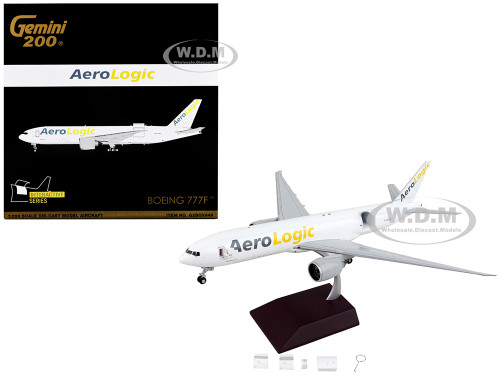
AeroLogic is a German cargo airline known for operating long-haul freight services between Europe and major markets around the world. Unlike passenger airlines, which are recognized for carrying travelers and their luggage, AeroLogic specializes in air cargo, transporting goods aboard dedicated freighter aircraft. Its distinctive aircraft and role in international logistics make AeroLogic Airlines diecast models an appealing subject for aviation enthusiasts, cargo-aircraft collectors, and model airplane hobbyists.
The AeroLogic Airlines category at DiecastModelsWholesale.com is intended for collectors interested in miniature aircraft representing this specialized carrier. Depending on current availability, products may appeal to those who collect cargo airlines, Boeing freighters, European aviation companies, or aircraft featuring distinctive freight-carrier liveries. Each listing should be checked for the exact aircraft type, scale, manufacturer, markings, and included display accessories.
AeroLogic models can add variety to an aviation collection that might otherwise focus mainly on passenger jets. They can also help illustrate the important role dedicated cargo aircraft play in moving goods across continents, connecting logistics hubs, and supporting international commerce.
The Background of AeroLogic Airlines
AeroLogic was established in 2007 as a joint venture between Lufthansa Cargo and DHL Express. The airline was created to support long-haul air freight operations, combining the experience of established logistics and cargo-aviation businesses. It began flight operations in 2009 and developed a network serving the needs of international freight transportation.
The airline operates from Germany and is associated with Leipzig/Halle Airport, an important European logistics hub. Its operations connect European cargo networks with destinations farther afield, helping move shipments through the international supply chain.
AeroLogic’s role differs from that of a conventional passenger carrier. Its aircraft are configured for freight rather than passenger cabins, and its operational requirements are shaped by cargo capacity, range, scheduling, and connections between major logistics centers. This makes the airline especially relevant to collectors interested in the commercial and industrial side of aviation.
For model collectors, AeroLogic represents a modern segment of the airline industry: dedicated long-haul cargo operations. Its aircraft provide a useful contrast to passenger airliners, even when both are based on the same underlying aircraft family.
The Boeing 777 Freighter: AeroLogic’s Signature Aircraft
Why the Boeing 777F Matters
The Boeing 777 Freighter, commonly identified as the 777F, is the defining aircraft of AeroLogic’s fleet. Developed from the Boeing 777 widebody family, it is designed specifically for cargo transportation, combining long-range capability with a large freight capacity.
Unlike a passenger Boeing 777, a dedicated 777F has a main deck configured for cargo rather than passenger seating. Its large fuselage, twin-engine layout, and long wings give it the distinctive appearance of a modern long-haul freighter. These characteristics make the aircraft particularly recognizable in an airport display or a collection of commercial aviation models.
The Boeing 777F is also an important aircraft in the broader development of air freight. Its capabilities support international cargo networks that require the movement of substantial loads over long distances. For AeroLogic, this aircraft type provides the foundation for its specialized operations.
What Collectors Should Look For
When choosing an AeroLogic Boeing 777F model, pay attention to details that distinguish one product from another:
-
Aircraft type: Confirm that the model represents the Boeing 777 Freighter rather than a passenger version of the Boeing 777.
-
Airline markings: Examine the AeroLogic name, logo, and livery shown in the product photographs.
-
Scale: Check the stated scale and model dimensions to determine how the aircraft will fit your display.
-
Construction: Review whether the model uses diecast metal, plastic components, or a combination of materials.
-
Display accessories: Verify whether a stand or other accessories are included.
-
Registration details: If you collect aircraft by individual registration, check whether the product listing identifies the specific aircraft represented.
These details can be particularly important to collectors who aim to build an accurate cargo-airline display or compare the same aircraft family across different operators.
AeroLogic Livery and Visual Identity
An aircraft’s livery is often one of the first things that attracts a collector to a model. Airline names, logos, tail markings, and color schemes help distinguish aircraft that may share the same basic design.
AeroLogic aircraft are associated with the airline’s own branding, while some aircraft have appeared in DHL’s yellow-and-red livery. This makes it worthwhile for collectors to examine the specific markings on each model rather than assuming every AeroLogic aircraft uses an identical paint scheme.
Different liveries can tell different stories about an airline’s commercial relationships and operations. For aviation enthusiasts, these variations add interest to a collection, particularly when displayed alongside models from other cargo carriers.
If you are seeking a particular AeroLogic livery, aircraft registration, or historical appearance, use the product photographs and descriptions to confirm the exact version. Not every real-world variation is necessarily represented by a collectible model, and availability can change.
Why Collect Cargo Airline Models?
Cargo aircraft occupy a distinctive place in commercial aviation. They operate behind the scenes of everyday commerce, moving express parcels, industrial components, consumer goods, and other shipments between major markets. Although they may be less familiar to casual travelers than passenger jets, they are essential to international freight networks.
AeroLogic models can appeal to several types of collectors:
-
Cargo aviation enthusiasts: Add a dedicated freighter to a collection focused on freight operations rather than passenger travel.
-
Boeing aircraft collectors: Include a miniature representation of the 777F, a significant member of Boeing’s widebody family.
-
European aviation collectors: Represent a German cargo airline with international operations.
-
DHL and logistics enthusiasts: Explore the aircraft associated with the wider express and freight transportation industry.
-
Airport display builders: Add a freighter to a miniature airport scene featuring cargo terminals, runways, and other commercial aircraft.
-
Airline model collectors: Expand a collection beyond passenger carriers to include specialized cargo operators.
A cargo-airline collection can be organized by aircraft manufacturer, aircraft type, country, logistics company, or livery. AeroLogic is a useful subject for collectors interested in how modern freight operations differ from conventional passenger services.
Choosing a Scale for Your AeroLogic Model
Scale is an important consideration when buying any collectible aircraft. It determines the model’s proportions relative to the real airplane and helps you plan a display.
Comparing Common Aircraft Model Scales
1:200 scale models offer a larger presence, making them suitable for collectors who want an individual aircraft to stand out. A Boeing 777F at this scale will generally require more shelf space than a smaller-scale representation.
1:400 scale models are often a practical choice for collectors who want to display multiple airlines and aircraft types together. This scale can help create a varied cargo-airline collection without requiring the space needed for larger models.
1:500 scale models provide a more compact option for collectors who prioritize space efficiency or want to build a broad airport scene.
These scales are general examples of aircraft-model formats, not confirmation that AeroLogic models are currently offered in each size. Check the actual scale and dimensions of each available product before ordering.
For a realistic display, consider the size of the aircraft as well as its scale. A large widebody freighter occupies more space than a smaller aircraft at the same scale, and its wingspan may be a key factor when planning shelf depth or arranging multiple models.
Displaying and Caring for AeroLogic Aircraft Models
A well-planned display can highlight the size and distinctive shape of a cargo aircraft. Place your AeroLogic model on a stable, level surface with enough room for its wings and tail. If you display several aircraft together, leave adequate space to avoid accidental contact between delicate components.
Keep models away from prolonged direct sunlight, excessive heat, and moisture. Dust gently with a soft brush or suitable microfiber cloth, and avoid applying pressure to smaller parts such as landing gear, antennas, and engine details.
If a model includes a display stand, check that it is designed for the specific product and is securely positioned. Retaining the original packaging can also help protect the model during storage or transportation.
Collectors who document their collections may wish to record the aircraft type, scale, manufacturer, registration, and livery represented by each model. This information is particularly useful when collecting several versions of the same aircraft or comparing cargo carriers.
AeroLogic Models for Gifts and Aviation Collections
An AeroLogic aircraft model can make a distinctive gift for someone interested in aviation, freight transportation, Boeing aircraft, or European airlines. It can also be a useful addition for a collector who already owns passenger aircraft and wants to explore the dedicated cargo side of commercial aviation.
When choosing a gift, consider the recipient’s preferred scale, display space, and collecting interests. Someone who focuses on Boeing aircraft may appreciate the 777F itself, while a cargo-airline enthusiast may be more interested in the specific livery and registration.
Check the product listing for the exact aircraft version, construction, dimensions, and included accessories. These details vary by model and are more reliable than assumptions based solely on the airline name.
Explore the available AeroLogic Airlines models at DiecastModelsWholesale.com to discover collectible cargo aircraft for your display, expand your Boeing freighter collection, or find a thoughtful gift for an aviation enthusiast.