Tyrrell holds a distinctive place in Formula One history. Known for its independent racing spirit, innovative engineering, and memorable blue racing cars, the British team competed at the highest level of motorsport for decades. Tyrrell diecast model cars appeal to Formula One enthusiasts, motorsport historians, and collectors who appreciate the machines and personalities that helped shape Grand Prix racing.
The Tyrrell category at DiecastModelsWholesale.com is intended for shoppers looking for collectible replicas associated with the team, its racing cars, and its legacy in international motorsport. Depending on current product availability, a collection may include miniature Formula One cars from different eras, featuring distinctive bodywork, racing liveries, driver markings, and aerodynamic designs.
Whether you collect Formula One models by team, driver, championship season, or car design, Tyrrell offers an especially interesting subject. Its history includes championship-winning cars, experimental engineering concepts, and later-generation racers that reflect the sport's changing technology.
The History of Tyrrell in Formula One
Tyrrell's Formula One story began with Ken Tyrrell, a British motorsport figure who established a successful racing organization before entering the sport's premier championship as a constructor. The team made its Formula One debut as a constructor in 1970 and quickly became a major competitor.
The early 1970s were Tyrrell's most successful period. The team won the Formula One Constructors' Championship in 1971 and 1973, while its drivers secured multiple victories and championship titles. Tyrrell became closely associated with the French driver Jackie Stewart, whose precision, consistency, and racecraft helped establish the team as one of the leading names in Grand Prix racing.
Tyrrell's cars are particularly recognizable for their deep blue liveries, although colors and sponsorship markings varied over the team's history. For collectors, this visual identity makes many Tyrrell racing cars stand out in a display of Formula One models.
As Formula One evolved, Tyrrell continued to compete through changing regulations, engine developments, aerodynamic advances, and increasingly sophisticated racing technology. Although the team did not maintain its early championship-winning form throughout its entire existence, it remained part of the sport's landscape for decades. The Tyrrell name appeared in Formula One until the team was sold after the 1998 season, with its entry becoming British American Racing in 1999.
For diecast collectors, this long history provides opportunities to explore very different periods of racing through miniature replicas, from the relatively simple shapes of early championship cars to the more complex aerodynamic designs of the modern era.
Iconic Tyrrell Formula One Cars
Tyrrell's legacy includes several racing cars that are especially significant to motorsport history and collectible model enthusiasts.
Tyrrell 003
The Tyrrell 003 is one of the team's best-known early Formula One cars. It was closely associated with Jackie Stewart during the 1971 season, when Stewart won the World Drivers' Championship and Tyrrell secured the Constructors' Championship.
The car represents an important stage in Formula One design, with a relatively clean, purposeful shape compared with the highly developed aerodynamic machines that appeared in later decades. A diecast replica of the Tyrrell 003 can appeal to collectors interested in championship-winning cars and the history of early-1970s Grand Prix racing.
Tyrrell 006
The Tyrrell 006 continued the team's success in the early 1970s. Jackie Stewart won his third and final World Drivers' Championship in 1973, and the car is closely associated with that achievement.
Collectors may be drawn to the Tyrrell 006 for its connection to one of Formula One's most successful drivers and to the team's championship era. It also represents a period when driver skill, mechanical reliability, chassis design, and team strategy were central elements of Grand Prix competition.
Tyrrell P34: The Six-Wheeled Formula One Car
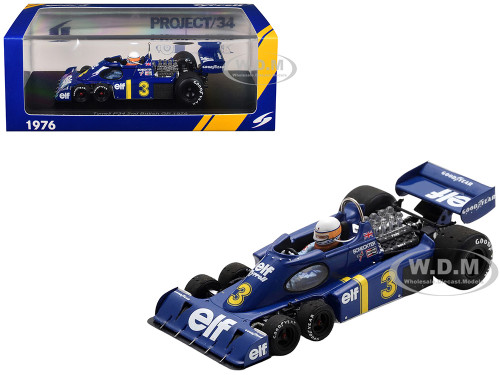
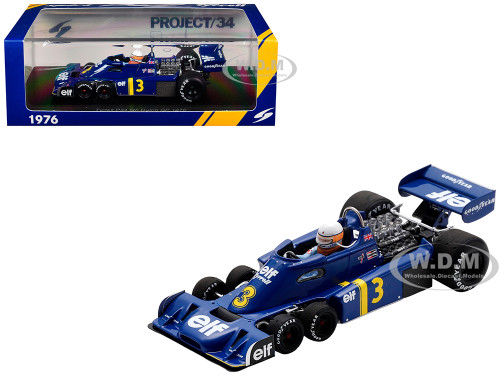
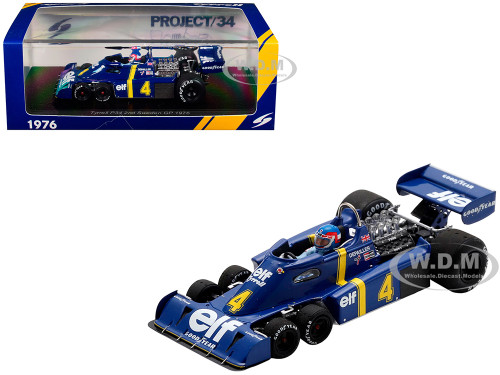
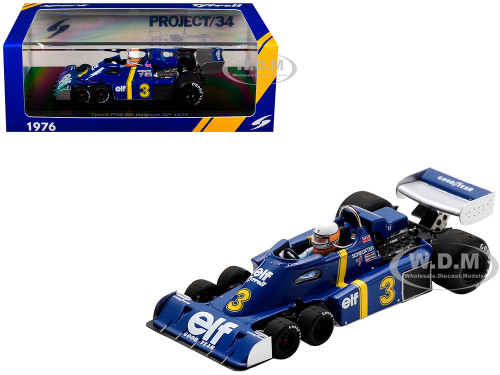
Few Formula One cars are as instantly recognizable as the Tyrrell P34. Introduced in the 1970s, the P34 used four small front wheels instead of the conventional two, while retaining two larger rear wheels. The unusual configuration was intended to improve front-end aerodynamic performance and tire contact characteristics.
The six-wheeled design made the P34 one of the most unconventional cars ever to compete in Formula One. It achieved a notable victory at the 1976 Swedish Grand Prix, driven by Jody Scheckter, and became an enduring symbol of the sport's experimental era.
The Tyrrell P34 is particularly appealing to model collectors because its appearance differs dramatically from that of conventional Formula One cars. The additional front wheels, compact nose, and distinctive proportions make it a natural focal point in a motorsport display.
Later Tyrrell Formula One Cars
Tyrrell continued developing and racing Formula One cars throughout the 1980s and 1990s. These later machines reflect the sport's transition toward more complex aerodynamic bodywork, changing engine configurations, and greater emphasis on chassis development.
Cars from these decades may interest collectors who want to represent a broader timeline of Formula One history rather than concentrating solely on championship-winning machinery. The team's later entries also provide a contrast with its early blue cars and unusual experimental designs.
Specific Tyrrell cars, drivers, liveries, and model years available to purchase depend on the current category listings.
Why Collectors Choose Tyrrell Diecast Models
A Distinctive Formula One Legacy
Tyrrell models represent more than a single racing season. They offer a way to explore the evolution of Formula One through cars associated with championship success, distinctive engineering, and a team that often pursued unconventional solutions. Collectors who enjoy the history behind their models can use Tyrrell replicas to represent important milestones in the development of Grand Prix racing.
Memorable Designs and Racing Liveries
Tyrrell's traditional blue racing colors help many of its cars stand out in a collection. Depending on the era and model, replicas may also feature period sponsorship graphics, driver numbers, cockpit details, and aerodynamic components. These visual differences can make models from separate seasons interesting to display together.
The P34 is especially recognizable because of its six-wheel configuration, while cars such as the 003 and 006 connect collectors with the team's championship-winning years. Comparing these designs offers a miniature view of how Formula One engineering changed over time.
Driver and Championship Collections
Some collectors organize their displays around particular drivers, while others focus on championship seasons, constructors, or historically significant cars. Tyrrell models can complement collections devoted to Jackie Stewart, Jody Scheckter, classic Formula One teams, and the broader history of British motorsport.
When choosing a replica, consider the driver's name and number, the racing season represented, the livery, and whether the car's historical significance fits the theme of your collection. These details can be just as important to an enthusiast as the model's overall appearance.
Choosing a Tyrrell Diecast Model
The right Tyrrell model depends on your collecting interests, display space, and preferred level of detail. Consider the following factors when browsing available products.
-
Historical period: Early championship-winning cars, experimental designs such as the P34, and later Formula One racers each represent different stages of the team's history.
-
Driver and season: Check the product description for the driver, race number, and season represented. Cars that look similar can reflect different configurations or racing events.
-
Scale: The scale determines the model's size relative to the real car. A larger model generally occupies more display space, while smaller replicas make it easier to display multiple cars together.
-
Construction and detail: Depending on the specific product, a replica may include detailed bodywork, cockpit components, racing graphics, exposed mechanical features, or display packaging.
-
Display and storage: Consider shelf dimensions, the model's base, packaging requirements, and how you plan to protect the finish from dust and handling.
Always review the individual product listing for confirmed scale, materials, features, and included accessories. Not every Tyrrell car or scale is necessarily available at all times.
Understanding Diecast Model Scales
Scale is an important consideration when building a Formula One collection. It indicates how the miniature compares in size with the original vehicle. For example, a 1:18 scale model is larger than a 1:43 scale replica of the same car.
Common scales across the diecast and model-car hobby include:
-
1:18 scale: A larger format suited to displaying individual racing cars and examining their exterior details.
-
1:24 scale: A mid-sized option for collectors who want a substantial model without using as much space as many 1:18 replicas.
-
1:43 scale: A popular format for building collections across multiple teams, drivers, and seasons while keeping display space manageable.
-
1:64 scale: A compact format that can work well for space-conscious displays and broader motorsport collections.
These are general scale comparisons, not a guarantee that Tyrrell models are currently available in every size listed. Check the scale specified on each product page before ordering.
Tyrrell Models for Collectors and Gifts
Tyrrell diecast model cars can be meaningful additions for long-time Formula One fans, collectors of classic racing machinery, and enthusiasts fascinated by unusual automotive engineering. The team's championship history provides a connection to some of Grand Prix racing's most memorable seasons, while the P34 offers a distinctive subject for anyone interested in experimental racing designs.
A Tyrrell replica can also make a thoughtful gift for someone who follows Formula One history or collects miniature racing cars. If you are buying for another person, consider which drivers, eras, and scales they prefer. A historically significant car may be an especially suitable choice for a collector who appreciates the story behind a model as much as its appearance.
For experienced collectors, Tyrrell models can help fill a gap in a constructor-focused display or complement replicas from rival teams. For newer hobbyists, a recognizable car such as the six-wheeled P34 can provide an accessible starting point for exploring the team's history.
Explore Tyrrell Diecast Model Cars at Diecast Models Wholesale
From the championship-winning cars associated with Jackie Stewart to the unconventional six-wheeled Tyrrell P34, the team's history offers plenty to interest Formula One collectors. Browse the available Tyrrell diecast model cars at DiecastModelsWholesale.com to find a replica that fits your motorsport interests, preferred scale, and collection.

 $19.99