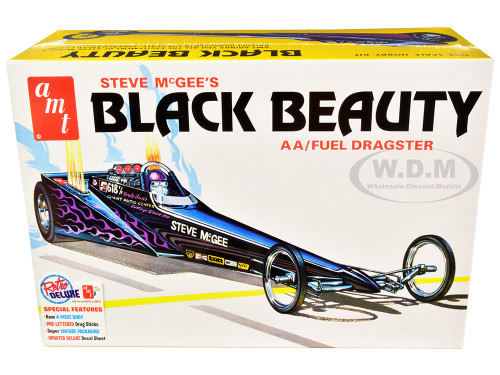
Funny Car and Dragster diecast models capture two of the most recognizable forms of purpose-built drag racing machinery. Unlike ordinary street cars modified for competition, these race cars are engineered around rapid acceleration, specialized chassis designs, extreme power, lightweight construction, and the demands of straight-line competition.
The Funny Car & Dragster category at DiecastModelsWholesale.com is designed for collectors interested in NHRA-style drag racing, historic competition cars, famous racing teams and drivers, and the distinctive body styles and liveries associated with professional drag racing. Depending on the individual model, shoppers may find replicas of Funny Cars, Top Fuel-style dragsters, classic fuel dragsters, and other specialized drag racing subjects.
For related road-going performance vehicles, explore the Muscle & Hot Rod diecast models, while the broader Vehicle Type collection includes additional automotive subjects.
What Is a Funny Car?
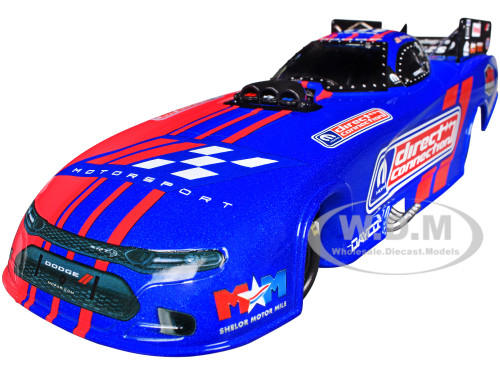
A Funny Car is a purpose-built drag racing vehicle that retains the visual appearance of a production-based automobile while using highly specialized racing technology underneath. Modern Funny Cars have a lightweight body, specialized chassis, large rear racing tires, a powerful engine, and a driver positioned inside a purpose-built competition structure.
The name originated from the unusual appearance of early experimental drag cars. During the 1960s, racers and manufacturers experimented with altered wheelbases, modified production bodies, supercharged engines, and increasingly specialized chassis designs. These cars looked noticeably different from conventional production-based race cars, leading to the "Funny Car" nickname.
Early Funny Cars are particularly interesting to collectors because the category evolved rapidly. The 1960s saw altered-wheelbase cars give way to tube-chassis designs and flip-top bodies, establishing the basic visual identity that became associated with Funny Car racing. NHRA identifies the 1966 World Finals as the first national event at which Funny Car was officially hosted as an eliminator, with Eddie Schartman becoming the first official Funny Car winner.
What Is a Dragster?
A dragster is a purpose-built acceleration race car designed primarily for straight-line performance. Traditional dragsters have a long, narrow chassis, a small front section, exposed or partially enclosed wheels, and a driver positioned behind the front axle. Their appearance is very different from the production-car styling associated with Funny Cars.
Dragsters have been part of organized drag racing since the sport's formative years. NHRA's history traces organized American drag racing to the post-World War II hot-rodding scene, with dry-lake racing and early dragstrips helping establish the sport. The first NHRA race was held in 1953 at the Los Angeles County Fairgrounds in Pomona, California.
Top Fuel dragsters represent one of the most specialized forms of the category. Their long chassis and distinctive proportions make them immediately recognizable in a diecast collection.
Funny Car and Dragster History
The Rise of Organized Drag Racing
Drag racing developed from America's postwar hot-rodding culture. Enthusiasts who had previously competed on dry lakes increasingly moved toward organized acceleration contests, where cars raced over measured distances rather than simply pursuing top speed.
Wally Parks was an important figure in the organization of the sport. He helped establish the Southern California Timing Association and later founded the National Hot Rod Association in 1951. NHRA's first official race followed in 1953.
The development of purpose-built dragsters accelerated during the 1950s and early 1960s. Builders experimented with engine placement, chassis construction, aerodynamics, tires, fuels, and weight distribution. These innovations helped establish the visual and technical differences between dragsters and modified production cars.
The Birth of the Funny Car
The roots of Funny Cars can be traced to Factory Experimental and related classes of the early 1960s. Racers began altering wheelbases and modifying production bodies while using increasingly powerful engines.
NHRA's historical account identifies the 1962 introduction of A/Factory Experimental classes as an important step in this development. By 1964 and 1965, cars such as the Sachs & Sons Comet and altered-wheelbase Dodge Chargers were pushing the concept further.
The development of flip-top bodies and tube chassis in 1966 produced cars much closer to the Funny Cars collectors recognize today. The category expanded rapidly, and the 1970s became an especially important period in Funny Car history.
Famous Funny Car Body Styles
One of the attractions of collecting Funny Car diecast models is the connection between the race car and the production vehicle whose styling inspired it.
Historic Funny Cars have appeared with bodies representing many recognizable American performance cars, including:
- Dodge Charger
- Plymouth Barracuda
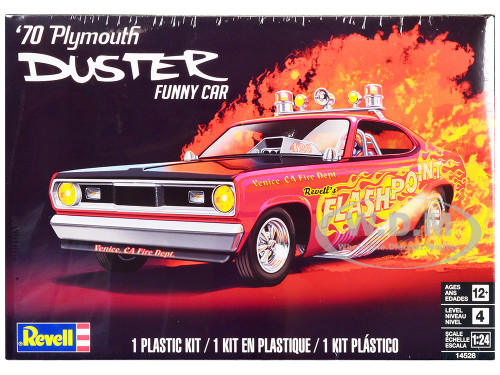
- Plymouth Duster
- Mercury Comet
- Ford Mustang
- Ford Mustang Cobra Jet
- Chevrolet Camaro
- Chevrolet Vega
- Chevrolet Monza
- Pontiac Firebird
- Oldsmobile Cutlass
- Plymouth Road Runner
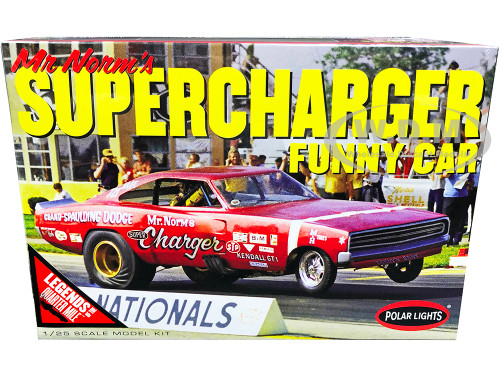
The Dodge Charger has had a particularly long association with Funny Car racing. NHRA's historical coverage notes that the Charger was already appearing as a Funny Car body style during the class's formative period in the mid-1960s.
For collectors, this creates an interesting connection between two types of models: a production-car diecast can represent the road-going automobile, while a Funny Car replica can represent its highly modified racing counterpart.
Classic Dragsters and Top Fuel
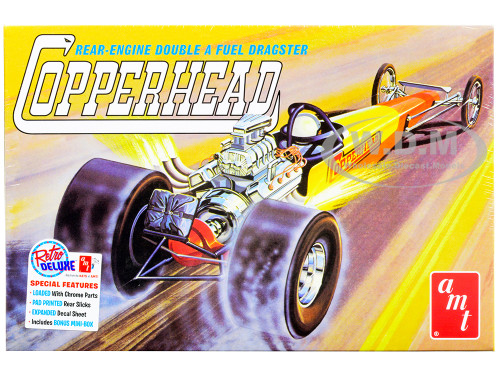
Dragster collecting offers a different perspective on racing history. Early "slingshot" dragsters typically placed the driver behind the rear-mounted engine and had a long, narrow chassis with the front wheels positioned far ahead of the cockpit.
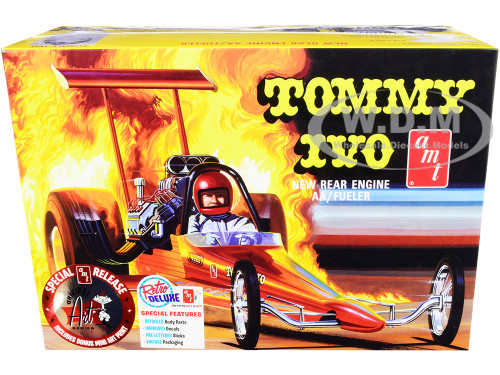
Later developments changed the basic configuration. NHRA's historical timeline notes the arrival of rear- or mid-engine dragster designs as an important conceptual change during the early 1970s.
Top Fuel dragsters are especially recognizable for their long wheelbases, large rear tires, narrow front tires, exposed mechanical components, and distinctive driver position. Their appearance has changed over the decades as chassis construction, aerodynamics, safety equipment, engines, and other racing technology evolved.
Historical dragsters can therefore be collected by era as well as by driver or team.
What to Look for in Funny Car & Dragster Diecast Models
Drag racing replicas can be especially rewarding for collectors because the race cars often have details that are completely different from conventional automotive models.
Important features to compare include:
- Body style: Look for the production-car shape associated with a particular Funny Car era.
- Chassis: Dragsters generally have a long, exposed racing chassis, while Funny Cars use enclosed bodywork.
- Engine detail: Superchargers, intake systems, headers, and other visible components can be important features.
- Wheels and tires: Specialized rear racing tires are a defining characteristic of drag racing vehicles.
- Livery: Sponsor graphics, team colors, driver names, and race numbers are often central to the identity of a particular car.
- Driver: A replica can represent an important racer, team, or period in drag racing history.
- Era: Compare early altered-wheelbase cars, classic 1960s and 1970s Funny Cars, and later professional racing designs.
- Scale: Make sure the model fits with other race cars in your collection or display.
Racing Liveries and Collector Appeal
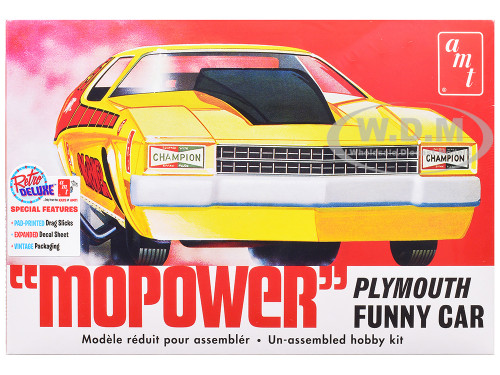
Funny Cars are particularly recognizable because of their colorful graphics and strong visual identities. During the 1970s, the category became known for dramatic body styles, colorful paint schemes, memorable names, and distinctive sponsor liveries. NHRA describes this period as a major part of the class's rise in popularity.
For collectors, the livery can be just as significant as the vehicle itself. A model may represent a particular driver, team, sponsor, championship season, or historic race rather than simply a generic Funny Car.
This makes it useful to collect by theme. Some collectors may focus on a particular driver, while others may concentrate on a manufacturer such as Ford, Chevrolet, Dodge, Plymouth, or Mercury. Another approach is to assemble a chronological collection showing how Funny Car body styles changed from the 1960s onward.
Funny Car vs. Dragster Diecast Models
Although both are drag racing vehicles, Funny Cars and dragsters have distinctly different appearances.
Funny Cars typically have:
- Enclosed bodies resembling production automobiles
- Large rear racing tires
- Shorter-looking proportions
- Flip-top or hinged body designs on many modern and historic examples
- Strong connections to recognizable passenger-car styling
Dragsters typically have:
- Long, narrow chassis
- Open or minimally enclosed mechanical components
- Small front tires and large rear tires
- Purpose-built competition bodies rather than production-car silhouettes
- Distinctive driver and engine placement
This difference makes the two categories complementary. A collection containing both can illustrate the different approaches racers have taken to achieving rapid acceleration.
Scales for Drag Racing Diecast Models
Funny Car and dragster models are produced in several scales depending on the manufacturer and subject. Common automotive diecast scales include 1/18, 1/24, 1/32, 1/43, and 1/64, although availability varies by model.
Scale can be particularly important with dragsters because their long chassis can make them physically larger than an ordinary car at the same scale. A 1/24 dragster, for example, can require considerably more display space than a similarly scaled compact passenger car.
When building a racing display, matching scale allows Funny Cars and dragsters to be displayed alongside other race cars, transporters, service vehicles, and pit equipment.
Collecting Drag Racing History in Scale
Funny Car and Dragster diecast models can represent more than just miniature race cars. They can preserve particular moments in drag racing history through the combination of driver, vehicle, body style, sponsor graphics, and competition era.
A collection might focus on:
- 1960s Funny Car pioneers
- 1970s classic Funny Cars
- Top Fuel dragsters
- Famous drivers and teams
- Ford, Chevrolet, Dodge, Plymouth, or Mercury race cars
- Historic sponsor liveries
- Pomona and other major NHRA events
- Vintage drag racing
- Modern professional drag racing
For Southern California collectors in particular, the history of the sport has a strong local connection. Early drag racing developed around Southern California dry lakes and dragstrips, while Pomona became an important venue in NHRA history from the organization's earliest years.
Explore Funny Car & Dragster Diecast Models
Whether you are interested in classic Funny Cars, historic dragsters, Top Fuel-style racers, or the colorful racing liveries that define professional drag racing, these models offer a way to bring drag racing history into a scale collection. Browse the Funny Car & Dragster category at DiecastModelsWholesale.com to explore available racing subjects and find models that fit your collection, display, or motorsports theme.

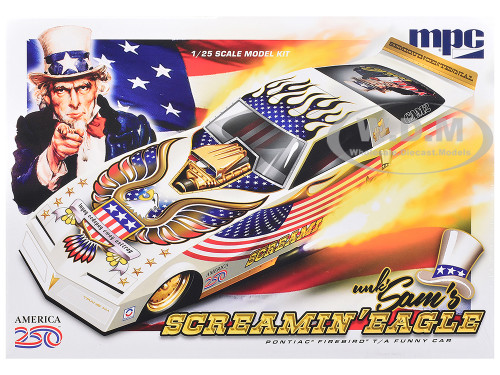


 $17.99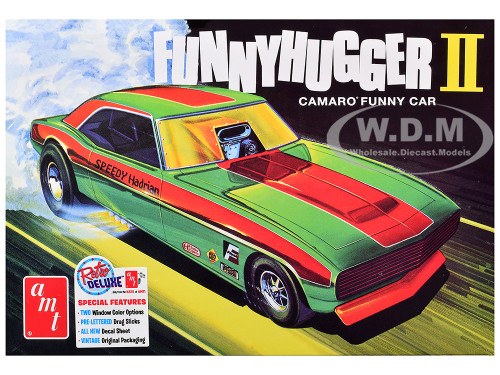
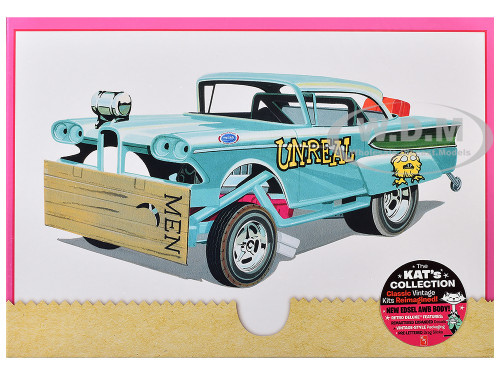




 $32.49Was $35.99Save 9%
 $28.99



 $30.99Was $32.99Save 6%
 $32.49Was $35.99Save 9%