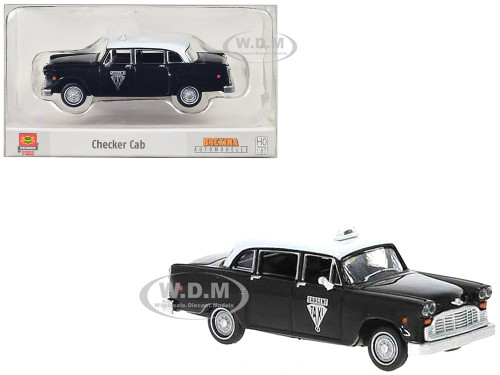
Checker diecast models represent one of the most recognizable American automobiles ever built for the taxi industry. With its tall, boxy profile, spacious passenger compartment, large trunk, and distinctive checkerboard markings, the Checker taxi became an enduring symbol of American city transportation. For collectors, Checker models are especially appealing because the vehicles combine automotive history, commercial transportation, popular culture, and an unusually recognizable design.
The Checker category at DiecastModelsWholesale.com is intended for collectors, hobbyists, automotive enthusiasts, and anyone looking for scale models of classic Checker automobiles. Depending on availability, shoppers may find Checker Marathon taxis, civilian versions, police or service vehicles, and other configurations based on the company's distinctive full-size cars. Models can differ by year, livery, body style, scale, and manufacturer, making it possible to collect several variations of essentially the same iconic design.
The History of Checker
Checker's history began in the early 1920s when Morris Markin consolidated several automotive-related businesses and established the Checker Cab Manufacturing Company. Production became associated with Kalamazoo, Michigan, where Checker developed a reputation for building rugged vehicles specifically suited to the demanding requirements of taxi service.
Checker was unusual among American automobile manufacturers because its vehicles were designed with commercial fleet operators in mind. Taxi companies needed automobiles capable of carrying passengers throughout long shifts, accumulating substantial mileage, and withstanding constant use. Large rear seating areas, generous luggage capacity, durable construction, and practical engineering became important characteristics of the Checker design.
Checker also operated or had connections with taxi businesses, giving the company a direct understanding of what fleet operators needed from their vehicles. This relationship between vehicle manufacturing and taxi service helped make Checker one of the best-known names in American taxicabs.
The company changed its corporate name to Checker Motors Corporation in 1958. Although Checker produced a variety of vehicles and specialty configurations throughout its history, the later full-size taxi is the design most strongly associated with the brand.
The Iconic Checker Taxi
The Checker taxi's most recognizable form emerged during the 1950s. Its upright body, large windows, broad doors, substantial bumpers, and distinctive proportions were designed with practicality rather than yearly styling changes as the primary goal.
Unlike the major American automobile manufacturers, which typically introduced significantly redesigned cars every few years, Checker retained the basic appearance of its taxi for decades. This unusual longevity is one of the reasons a Checker remains immediately recognizable today.
The traditional yellow taxi with a checkerboard stripe became especially associated with New York City and other major American cities. Checker cabs became part of the visual identity of urban streets, airports, train stations, and transportation hubs.
For diecast collectors, this makes Checker models particularly interesting. A small-scale Checker taxi can represent not only a particular automobile but also an important part of 20th-century American transportation history.
Checker Marathon Diecast Models
The Checker Marathon is the model most collectors associate with the later Checker automobile. Introduced for the 1961 model year, the Marathon was offered as a civilian passenger car while sharing its basic architecture with the company's taxi vehicles.
The Marathon continued through 1982, making it one of the longest-running American automobile designs of its era. Its relatively unchanged appearance is one of its defining characteristics. While other manufacturers regularly changed body styles, the familiar Checker silhouette remained remarkably consistent.
Checker Marathon diecast models can therefore be especially rewarding to collect by year, configuration, or livery. A collector may find that two models based on similar Marathon bodies represent completely different real-world applications.
Common subjects can include:
- Checker Marathon taxis
- New York City-style yellow cabs
- Other city taxi liveries
- Civilian Checker Marathons
- Police and municipal versions
- Special-service vehicles
- Different model years and trim configurations
When comparing Checker Marathon models, pay attention to the model year, A-series designation, livery, and specific vehicle configuration rather than assuming every Marathon represents exactly the same automobile.
Checker A11 and A12
The Checker A11 is particularly important to taxi collectors. The A11 represents the familiar later-generation Checker taxi that remained in production into the early 1980s. Its long body, high roofline, large rear doors, and traditional taxi appearance make it one of the most recognizable Checker subjects.
The A12 Marathon represents the civilian-oriented side of the same basic design. It was sold to private customers as a passenger automobile rather than being limited to taxi fleets.
This distinction can be useful when shopping for Checker diecast models. A model labeled as a Checker Marathon may depict a taxi, civilian automobile, or another specialized configuration. Checking the product description and photographs can help determine exactly which version is represented.
Checker Aerobus Models
One of the most unusual vehicles produced by Checker was the Checker Aerobus. Based on the company's passenger-car architecture but extended to provide additional seating, the Aerobus was designed for moving groups of passengers.
The Aerobus could be configured with multiple doors and rows of seating, making it particularly useful as an airport, hotel, corporate, or other passenger shuttle. Its unusual proportions and numerous doors distinguish it from the standard Checker sedan.
For diecast collectors, a Checker Aerobus model can provide welcome variety in a collection centered on the brand. It also demonstrates how Checker adapted its basic automotive platform for commercial transportation beyond conventional taxi service.
Checker Models Beyond the Taxi
Although the Checker taxi dominates the company's image, Checker produced and developed other vehicles and specialized configurations. Its vehicles were adapted for passenger transportation, fleet use, and specialized applications.
The company also produced unusual conversions such as vehicles intended for medical transportation. The Checker platform's large interior and practical construction made it suitable for adaptations that required additional passenger or equipment space.
This broader history can make Checker an interesting collecting subject even for enthusiasts who are not specifically interested in taxis. A collection can be organized around the company's commercial vehicles, unusual body configurations, civilian automobiles, or different examples of its famous taxi design.
Checker in American Popular Culture
The Checker taxi became much more than a commercial vehicle. Its distinctive appearance made it a recurring part of American movies, television programs, photographs, advertisements, and representations of major cities.
New York City in particular became strongly associated with the Checker cab. The vehicle's large passenger compartment and unmistakable exterior made it easy to recognize on screen and in photographs.
That connection to popular culture adds another dimension to collecting Checker diecast models. Some collectors may be primarily interested in the automobile itself, while others may want specific taxi liveries associated with a city, era, television production, or cultural memory.
Choosing a Checker Diecast Model
When selecting a Checker model, there are several details worth considering.
Model and Configuration
Determine whether the model represents an A11 taxi, A12 Marathon, Aerobus, or another Checker configuration. The same general body design can represent different vehicles depending on the year and intended use.
Livery and Markings
Taxi markings are an important part of Checker collecting. Yellow paint, checkerboard stripes, roof signs, door lettering, fleet numbers, and city-specific details can make one model substantially different from another.
A collector interested in transportation history may prefer models that accurately represent a particular taxi fleet or period.
Scale
Scale is especially important when building a diecast car collection. A 1/64 Checker model occupies relatively little display space and works well with other small-scale vehicles, while larger scales provide more room for body, trim, interior, and exterior details.
Common scales found among collectible diecast automobiles include:
- 1/64 scale – Compact and well suited to larger collections or city scenes.
- 1/43 scale – A popular display size that provides a useful balance between detail and footprint.
- 1/24 scale – Larger models with greater visual presence and room for additional detailing.
- Other scales – Specialty Checker models may be produced in other scales depending on the manufacturer.
When combining models in a display, keeping vehicles at the same scale can make the overall scene look more consistent.
Manufacturer and Construction
Different manufacturers may approach Checker models differently. Some emphasize affordability and compact display size, while others concentrate on detailed bodywork, interiors, trim, opening features, or historically specific liveries.
Product descriptions should be checked for information about scale, materials, dimensions, included accessories, and the particular Checker variant being represented.
Collecting Checker Taxi Models
Checker offers an interesting opportunity for collectors because the basic automobile remained recognizable for such a long period. Instead of collecting entirely different body styles, enthusiasts can concentrate on variations of the same famous design.
A collection might begin with a classic yellow Checker taxi and expand into different cities, model years, operators, body configurations, and paint schemes. Another approach is to combine a Checker taxi with a civilian Marathon and an Aerobus to demonstrate the different roles the company served.
Collectors interested in American transportation history can also use Checker models as part of a broader city or taxi display. A Checker cab can be displayed alongside other historic taxis, police cars, buses, service vehicles, or period automobiles to create a miniature representation of an American city street.
Why Checker Models Remain Collectible
Checker automobiles are distinctive because their importance extends beyond conventional automotive styling. They were working vehicles designed for demanding commercial service, and their appearance became closely tied to American urban life.
The company's decision to retain a familiar design for many years also gives collectors a recognizable visual connection between different examples. A Checker model immediately communicates its purpose and era even at a small scale.
The end of automobile production in 1982 further established the Checker as a historic American vehicle. Surviving examples are now preserved as reminders of an era when purpose-built taxi automobiles were a common sight in major cities.
Shop Checker Diecast Models
Checker diecast models offer collectors a chance to preserve one of America's most recognizable taxi designs in miniature. From classic Checker Marathon taxis and civilian automobiles to unusual Aerobus configurations and specialized versions, these models provide a variety of ways to explore the history of Checker Motors.
Whether you are building a taxi collection, collecting American automotive icons, recreating a city street scene, or simply looking for a distinctive diecast automobile, browse the Checker category at DiecastModelsWholesale.com to find available models, scales, liveries, and configurations for your collection.
 $7.99