Pace and safety cars are specialized vehicles used in motorsports to control the field, manage race starts and restarts, or maintain a controlled speed when track conditions require additional caution. Pace & Safety Cars diecast models give collectors the opportunity to own scale replicas of the production and performance cars that have played these important roles at major racing events.
At DiecastModelsWholesale.com, the Pace & Safety Cars category is part of the broader Vehicle Type collection and is suited to collectors interested in motorsports, racing history, official event vehicles, and performance automobiles. These models can include Indianapolis 500 pace cars, Formula 1 safety cars, racing-series safety vehicles, and other official or specially prepared cars associated with motorsport events.
The category is particularly interesting because the cars themselves are often significant automotive subjects. A pace car may be a limited-production performance model or a highly recognizable sports car, while a safety car can represent an important chapter in the history of a racing series.
What Is a Pace Car?
A pace car is a vehicle used to control the speed and formation of a racing field. One of its best-known applications is at the start of the Indianapolis 500, where the pace car leads the field around the track before the race begins.
The tradition dates back to the inaugural Indianapolis 500 in 1911. Indianapolis Motor Speedway founder Carl Fisher used a Stoddard-Dayton passenger car to lead the 40-car field for one unscored lap before pulling off and releasing the competitors to the starter. Indianapolis Motor Speedway considers this the first major-event use of a pace vehicle and notes that a pace car has been used to start every Indianapolis 500 since.
This long history has made the Indianapolis 500 pace car an important collecting subject. The pace car list includes everything from early American automobiles to iconic performance cars and modern sports cars.
Indianapolis 500 Pace Cars
The Indianapolis 500 has produced one of the most extensive collections of pace-car subjects in motorsports.
Over the decades, the event has used automobiles from manufacturers including:
- Chevrolet
- Ford
- Dodge
- Chrysler
- Pontiac
- Oldsmobile
- Buick
- Cadillac
- Mercury
- Plymouth
- Studebaker
- Packard
- DeSoto
- Lincoln
The Chevrolet Corvette has been particularly important in Indianapolis 500 pace-car history. Indianapolis Motor Speedway's historical records show Corvette pace cars beginning in 1978, while Chevrolet has led the field numerous times since its earlier 1948 appearance.
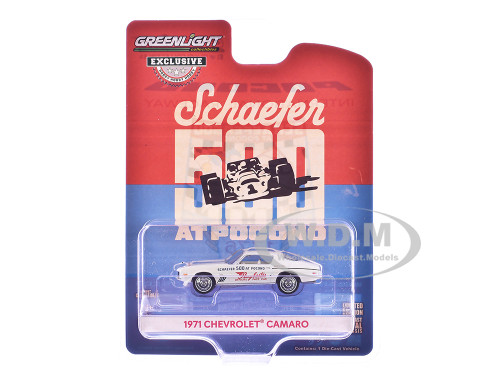
Other memorable pace-car subjects include the Ford Mustang, Chevrolet Camaro, Dodge Viper, Pontiac Trans Am, Oldsmobile 4-4-2, Chevrolet SSR, Chevrolet Corvette Z06, Corvette Grand Sport, and Corvette ZR1.
For collectors, this creates an interesting combination of motorsport and automotive history. A pace car model can represent both a specific Indianapolis 500 event and an important production automobile.
What Is a Safety Car?
A safety car is used during a race when conditions require the competing cars to slow down while remaining on the circuit. Rather than stopping the race completely, the safety car controls the field and creates a safer environment for dealing with incidents, debris, weather, or other hazards.
The safety car therefore has a different primary role from a traditional race-start pace car, although the terms can sometimes overlap depending on the racing series and historical period.
Safety cars need sufficient performance to maintain an appropriate speed for the racing field. Their specifications can therefore make them fascinating automotive subjects in their own right.
Formula 1 Safety Cars
Formula 1 provides one of the most recognizable examples of the modern safety car.
The first Formula 1 Safety Car appearance occurred at the 1973 Canadian Grand Prix, where a Porsche 914 was deployed during difficult weather conditions. Formula 1 later made the Safety Car a regular feature beginning in 1993.
The early 1990s produced an unusually diverse selection of safety cars because individual race organizers supplied their own vehicles. Formula 1 records examples including the Fiat Tempra, Ford Escort Cosworth, Honda Prelude, Renault Clio, Porsche 911, and Lamborghini Diablo.
A major change came in 1996, when Mercedes-Benz became the official Safety Car supplier. This began a long association that produced a succession of high-performance Mercedes-AMG models.
Modern Formula 1 has also included Aston Martin alongside Mercedes. The Aston Martin Vantage and Mercedes-AMG models have both served as official Safety Cars in recent years.
For collectors, this means Formula 1 safety-car models can be organized as a historical sequence, following the evolution of the cars used by the championship over several decades.
Pace Cars vs. Safety Cars
Although the two terms are related, they describe different motorsport functions.
Pace Cars
Pace cars are primarily associated with:
- Leading a race field before the start
- Controlling formation laps
- Establishing a controlled pace
- Leading rolling starts
- Representing a major race or event
The Indianapolis 500 is particularly famous for its pace-car tradition.
Safety Cars
Safety cars are primarily associated with:
- Controlling the field during incidents
- Slowing competitors without necessarily stopping the race
- Managing hazardous track conditions
- Neutralizing competition temporarily
- Maintaining a controlled speed until racing can safely resume
A racing series may use different terminology or procedures, so the exact role depends on the championship and its sporting regulations.
Why Pace and Safety Cars Make Interesting Diecast Models
Pace and safety cars occupy an unusual place between production automobiles and racing vehicles. They may not compete directly against the race cars, but they are still an official part of the event.
This makes them particularly appealing to collectors who enjoy:
Motorsport history: A model can represent a particular race, season, or championship.
Automotive history: Many pace cars are significant production vehicles in their own right.
Limited editions: Some pace cars are commemorative versions or special editions created around major events.
Performance cars: Sports cars, muscle cars, and high-performance sedans frequently serve as pace or safety cars.
Authentic graphics: Event markings, safety-car graphics, lights, stripes, logos, and official liveries can distinguish a racing-service vehicle from the standard production version.
Details to Look For in Pace & Safety Car Models
The most interesting features can vary considerably from one model to another.
Event-Specific Markings
Look for graphics identifying the race, year, championship, or official role. These details can make a model more historically specific than an ordinary production-car replica.
Emergency and Warning Lights
Safety cars commonly feature roof-mounted light bars or other warning-light equipment. These details are especially important when distinguishing a safety car from the corresponding road-going automobile.
Performance Equipment
Some official cars receive modifications to suspension, aerodynamics, cooling, braking, or other systems so they can maintain the required pace. Formula 1's Aston Martin Vantage Safety Car, for example, received suspension and aerodynamic modifications for its role.
Body Style and Generation
A particular race may use a specific model year or generation. This can be important when collecting pace cars because a model may look similar to later or earlier versions but represent a completely different event.
Driver and Event Association
Some pace cars are closely associated with the celebrity, racing driver, manufacturer representative, or public figure who drove them. Indianapolis Motor Speedway's historical records identify the pace-car driver for each listed Indianapolis 500.
Popular Types of Pace & Safety Car Models
Depending on the manufacturer and release, collectors may encounter:
- Indianapolis 500 pace cars
- Formula 1 safety cars
- NASCAR-related pace cars
- IndyCar pace cars
- Official racing-series safety vehicles
- Corvette pace cars
- Mustang pace cars
- Camaro pace cars
- Dodge Viper pace cars
- Porsche safety cars
- Mercedes-AMG safety cars
- Aston Martin safety cars
- Special-edition event vehicles
- Racing medical and support vehicles
Some collectors focus on one racing series, while others collect the actual production cars regardless of the motorsport event in which they served.
Pace Car and Safety Car Scales
Pace and safety car replicas are produced in several popular diecast scales. Common scales can include:
- 1/12 scale – large display models with room for extensive detail
- 1/18 scale – popular for detailed motorsport and collector replicas
- 1/24 scale – a practical size for automotive displays
- 1/32 scale – compact models for smaller collections
- 1/43 scale – a long-established motorsport and vehicle-collecting scale
- 1/64 scale – miniature models that make it easier to collect multiple race-event subjects
Scale availability varies according to the individual vehicle and manufacturer.
Collectors building a motorsport display may choose a consistent scale so the pace or safety cars can be displayed alongside racing cars. Others may collect specific event vehicles regardless of scale because certain historical subjects may only be available in one size.
Building a Motorsport Collection
Pace and safety cars can add an important supporting element to a racing collection. Instead of displaying only competition cars, collectors can use official event vehicles to recreate more of the environment surrounding a race.
For example, an Indianapolis 500 collection could include a pace car alongside Indy racing cars from the same period. A Formula 1 collection could pair a Mercedes-AMG or Aston Martin Safety Car with F1 cars from the corresponding era.
Collectors interested in performance automobiles can also explore the Muscle & Hot Rod collection, while the broader Car Diecast Models collection provides additional road-car subjects.
For a more competition-focused collection, Funny Car & Dragster models offer another way to explore American drag-racing history.
Collecting by Event, Manufacturer, or Era
There are several practical ways to build a Pace & Safety Cars collection.
By event: Focus on Indianapolis 500 pace cars, Formula 1 safety cars, or another specific racing championship.
By manufacturer: Collect Corvette, Camaro, Mustang, Porsche, Mercedes-AMG, Aston Martin, or other vehicles used in official racing roles.
By era: Build a timeline showing how pace and safety cars evolved from ordinary passenger cars into highly specialized performance vehicles.
By model: Collect different generations of one automobile that served as an official pace or safety car.
By scale: Maintain a consistent 1/18, 1/24, 1/43, or other scale for a uniform display.
This flexibility is one of the strengths of the category: a pace or safety car can be collected as a motorsport artifact, an automotive replica, or both.
Browse Pace & Safety Car Diecast Models
From the historic Stoddard-Dayton that led the first Indianapolis 500 field to iconic Corvette pace cars and modern Formula 1 safety cars, these vehicles have played a distinctive role in motorsport history.
Explore the Pace & Safety Cars collection at DiecastModelsWholesale.com to browse available scale replicas and find a pace car or safety car that fits your motorsport collection.

 $8.49
$8.49

 $8.49
$8.49
