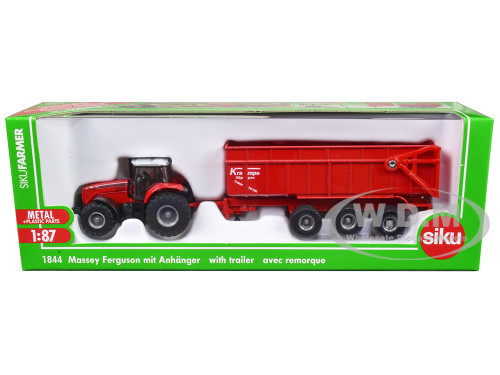
End Dump Trailer Diecast Models
End dump trailers are specialized hauling trailers designed to transport and unload loose bulk materials by raising the front of the trailer body and allowing its contents to discharge through the rear. This simple but effective design makes the end dump trailer a familiar piece of equipment in construction, road building, landscaping, demolition, aggregate hauling, and other heavy-duty applications.
For diecast collectors, end dump trailers provide an opportunity to add realistic hauling equipment to displays featuring construction trucks, dump trucks, heavy machinery, and jobsite scenes. Their distinctive raised-bed configuration, heavy-duty chassis, multiple axles, and hydraulic dumping equipment can also make them particularly interesting models to display alongside compatible truck tractors.
At DiecastModelsWholesale.com, the End Dump category is intended for collectors and enthusiasts looking for scale trailer models representing this important type of bulk-material hauling equipment.
What Is an End Dump Trailer?
An end dump trailer is an unpowered trailer with a hinged dump body that is raised at the front, typically using a hydraulic hoist or cylinder. As the body tilts upward, gravity causes loose material to slide toward the rear and out through the tailgate.
Unlike a conventional enclosed cargo trailer, an end dump is specifically designed around the movement of bulk materials. Typical loads can include aggregates, sand, gravel, dirt, demolition debris, construction materials, and other loose products suitable for this type of transport.
An end dump trailer is normally pulled by a truck tractor or another suitable towing vehicle. Its combination of a heavy-duty frame, suspension, axles, dump body, and hydraulic equipment allows it to handle demanding hauling applications.
Key Features of End Dump Trailers
Scale models can reproduce many of the features that distinguish an end dump from other trailer types, including:
- Hinged dump body
- Hydraulic lifting mechanism
- Rear tailgate
- Heavy-duty chassis
- Multiple axles
- Large-scale wheels and tires
- Suspension components
- Landing gear
- Trailer frame and support structure
- Detailed front bulkhead
- Towing connection
On more detailed diecast models, the dumping mechanism and chassis components can be especially appealing because they help communicate how the real trailer operates.
How End Dump Trailers Work
The defining feature of an end dump trailer is its ability to raise the front of the dump body. During normal transport, the body remains level on the trailer chassis. At the unloading location, the trailer is positioned where the material can safely be discharged.
The hydraulic system then raises the front of the body. As the angle increases, the material moves toward the rear opening. Once unloading is complete, the body is lowered back onto the chassis for transportation.
This design provides a relatively straightforward method of unloading bulk material without requiring the entire trailer to be manually emptied. The rear-discharge configuration also makes the trailer particularly useful where material needs to be deposited in a controlled area behind the vehicle.
For collectors, a model with a raised or articulated dump body can provide an especially dynamic display and clearly distinguish an end dump from a conventional cargo or flatbed trailer.
Common Uses for End Dump Trailers
End dump trailers are closely associated with industries that regularly move large quantities of loose material.
Construction
Construction projects frequently require the movement of aggregate, soil, sand, gravel, demolition debris, and other bulk materials. End dump trailers can transport these materials between suppliers, construction sites, and disposal or processing locations.
A scale end dump trailer can therefore complement construction equipment such as excavators, loaders, bulldozers, and other machinery. Collectors building a jobsite diorama can combine models from the Construction category with an end dump to create a more complete scene.
Road Building
Road construction and maintenance require substantial quantities of aggregate and other materials. End dump trailers are well suited to hauling these materials to paving and grading operations.
A construction display featuring an end dump trailer alongside a loader, grader, dozer, or paving equipment can recreate the different stages of a roadwork operation.
Landscaping and Aggregate Hauling
Smaller or appropriately configured dump trailers can be used for landscaping materials such as gravel, soil, mulch, and similar bulk products. Larger commercial trailers are used for aggregate transportation over longer distances.
This broad range of applications helps explain why dump trailers are represented in many different configurations and scales.
End Dump Trailer vs. Other Dump Trailers
Not all dump trailers unload in the same way. The distinction is important when selecting a diecast model.
An end dump trailer raises from the front and discharges material through the rear. This is the configuration most commonly associated with the term "end dump."
A side dump trailer tilts or opens to discharge material from the side rather than the rear. Side dump designs can be advantageous where lateral unloading is desirable.
A dump truck, meanwhile, has its dump body permanently mounted on a powered truck chassis. An end dump trailer is unpowered and requires a suitable towing vehicle.
Collectors interested in different types of dump equipment can compare end dump trailers with models in the broader Truck and Trailer categories.
A Brief History of Dump Trailers
The basic concept behind dump equipment developed from the need to move and unload bulk materials more efficiently. Before modern trucks and trailers, loose materials were transported using carts and wagons that had to be unloaded manually.
As motorized transportation developed in the late 19th and early 20th centuries, manufacturers began developing bodies and mechanisms that could make unloading faster and less labor-intensive. Hydraulic technology subsequently became increasingly important to commercial dump equipment because it allowed heavy bodies to be raised with controlled mechanical force.
The growth of highway construction, large-scale building projects, mining, quarrying, and aggregate industries further increased the need for specialized bulk-hauling equipment. Trailer manufacturers developed increasingly robust chassis, suspension systems, hydraulic mechanisms, and multi-axle configurations to handle heavier loads.
Modern end dump trailers reflect this evolution, combining high-capacity bodies with specialized frames, axles, braking systems, and hydraulic equipment. Diecast models capture these characteristics in miniature, making them useful representations of the equipment that supports modern construction and material transportation.
Choosing an End Dump Trailer Diecast Model
When shopping for an end dump trailer model, collectors should consider more than the trailer's appearance. Scale compatibility, configuration, level of detail, and intended display can all affect the best choice.
Match the Scale
End dump trailers are produced in several scales depending on the manufacturer and prototype. Common scales in commercial and construction diecast include 1/18, 1/24, 1/32, 1/43, 1/50, and 1/64.
A trailer should ideally be matched with a truck tractor or other towing vehicle in the same scale. This creates a more realistic overall proportion and makes the combination suitable for a transportation or construction display.
Look at the Dump Body
The dump body is the visual centerpiece of an end dump trailer. Pay attention to its shape, side panels, front wall, rear tailgate, and relationship to the chassis.
Some models may emphasize rugged construction equipment styling, while others may replicate a particular commercial trailer configuration.
Examine the Chassis and Running Gear
For collectors who appreciate mechanical detail, the underside and running gear can be just as interesting as the body. Look for accurately represented axles, wheels, suspension, frame rails, landing gear, and other components.
Consider the Display
Think about how the trailer will be used in the collection. A lowered dump body works naturally in a highway transportation scene, while a raised body can suggest an active unloading operation.
An end dump can also be displayed with construction equipment, aggregate piles, loading equipment, or a truck tractor to create a compact industrial diorama.
End Dump Trailers in Diecast Collections
Construction and commercial vehicle collectors often focus on the machines that perform the visible work, such as excavators and loaders. Adding an end dump trailer introduces another important part of the operation: transporting the material.
For example, an excavator can load material into a truck or trailer, an end dump can haul it away, and a dozer or loader can continue working at the site. Displaying these vehicles together creates a more complete representation of a working construction environment.
End dump models can also appeal to collectors of heavy trucks and transportation equipment. Their multi-axle chassis and substantial dump bodies provide a distinctive alternative to enclosed cargo, flatbed, and other trailer designs.
Building a Construction or Heavy-Haul Display
An end dump trailer can serve as a central element in a scale construction scene. Consider combining it with:
- Excavators loading material
- Wheel loaders handling aggregate
- Bulldozers preparing the site
- Graders working on roads
- Truck tractors waiting for a load
- Construction workers and jobsite accessories
- Aggregate piles and road-building materials
Collectors working with larger-scale models can focus on individual mechanical details, while 1/50 and 1/64 scale enthusiasts can build broader scenes containing several pieces of construction and transportation equipment.
Find End Dump Trailer Diecast Models
Whether you collect construction equipment, commercial trucks, heavy transportation models, or simply want to add a realistic trailer to an existing vehicle display, an end dump trailer diecast model can provide an important connection between hauling and jobsite operations.
Browse the End Dump category at DiecastModelsWholesale.com to explore available scale trailer models and find the right addition for your collection, transportation scene, or construction diorama.


 $24.99Was $29.99Save 16%
 $19.99Was $21.99Save 9%
 $21.99Was $23.99Save 8%