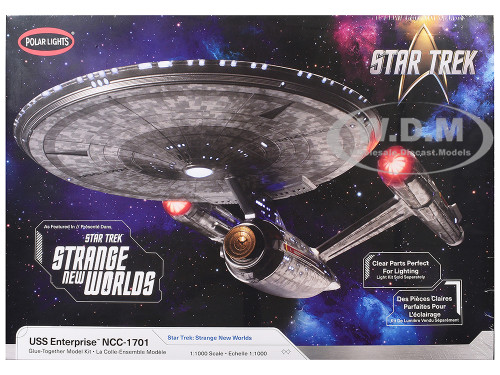
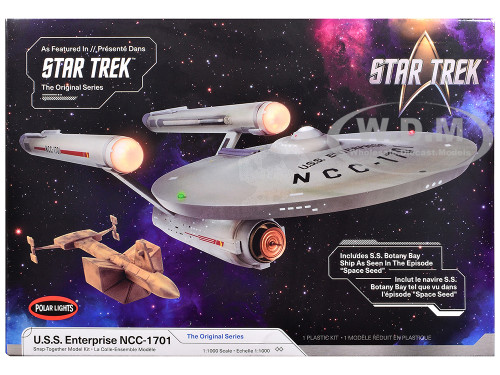
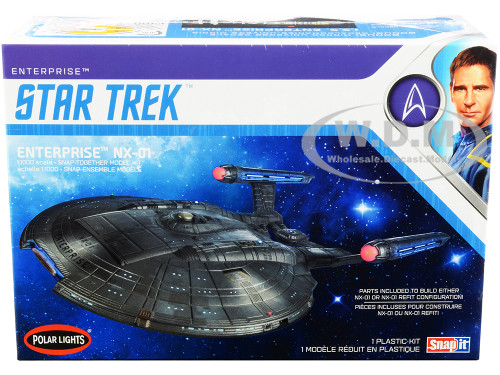
1/1000 Scale Diecast Models
1/1000 scale diecast models are compact collectibles that represent real-world subjects at one-thousandth of their full-size linear dimensions. This is a specialized small scale that can be especially useful for large prototypes, allowing collectors to display substantial aircraft, ships, military subjects, and other transportation models without requiring the space associated with larger scales.
At 1/1000 scale, a model remains small enough for compact shelves, display cabinets, desktops, and larger collections where space efficiency is important. The scale is particularly interesting for collectors who enjoy aviation, maritime history, military subjects, or unusual scale models.
Because 1/1000 is considerably smaller than established automotive scales such as 1/18, 1/24, 1/43, and 1/64, it is not generally intended for conventional car collecting. Instead, its greatest usefulness comes from representing larger real-world subjects in a manageable miniature format.
What Does 1/1000 Scale Mean?
The 1/1000 scale ratio means that one unit of measurement on the model represents 1,000 of the same units on the actual prototype.
For example:
- A 1,000-foot prototype would be approximately 12 inches long.
- An 800-foot prototype would be approximately 9.6 inches long.
- A 700-foot prototype would be approximately 8.4 inches long.
- A 500-foot prototype would be approximately 6 inches long.
- A 300-foot prototype would be approximately 3.6 inches long.
- A 200-foot prototype would be approximately 2.4 inches long.
- A 100-foot prototype would be approximately 1.2 inches long.
These measurements illustrate why 1/1000 scale works particularly well for large prototypes. A full-size subject that would require substantial display space at 1/400 or 1/500 can become much more manageable at 1/1000.
The exact finished dimensions of a model depend on the real-world size of its prototype, so shoppers should always check the individual product specifications.
A Compact Scale for Large Prototypes
One of the main attractions of 1/1000 scale models is the ability to collect large subjects without needing a large display area.
Depending on current availability, this scale may be used for:
- Large ships
- Naval vessels
- Aircraft carriers
- Commercial ships
- Aircraft
- Military subjects
- Transportation models
- Historical subjects
- Specialty and display models
The selection at any given time can vary because 1/1000 is a specialized scale. Product listings should be checked for the exact prototype, manufacturer, materials, and finished dimensions.
For collectors, this means that 1/1000 can be an excellent choice when the subject is more important than having a large physical model.
1/1000 Scale and Ship Models
Large vessels are an especially good match for compact scales. Aircraft carriers, battleships, ocean liners, and other major ships can become very long in larger modeling scales.
At 1/1000, a 900-foot ship would be approximately 10.8 inches long, while a 600-foot ship would measure approximately 7.2 inches.
This makes it possible to represent substantial vessels without requiring an oversized shelf or display cabinet.
Depending on the product, collectors may encounter models representing:
- Aircraft carriers
- Battleships
- Cruisers
- Destroyers
- Submarines
- Frigates
- Passenger ships
- Commercial vessels
- Historic ships
- Support vessels
A 1/1000 maritime collection can be organized around a particular navy, historical period, ship type, manufacturer, or individual class of vessels.
1/1000 Scale Aircraft
Aircraft can also be represented at 1/1000, although the finished models are naturally much smaller than equivalent ships because aircraft are generally shorter than the largest vessels.
For example, a 200-foot aircraft would measure approximately 2.4 inches at 1/1000, while a 150-foot aircraft would be approximately 1.8 inches long.
The compact dimensions can make 1/1000 useful for collectors who want to represent a large number of aircraft without dedicating a large amount of display space to each individual model.
Depending on product availability, the scale may be relevant to commercial aviation, military aviation, transport aircraft, or other specialized aircraft subjects.
Because models at this scale can be quite small, shoppers should pay particular attention to the product's stated dimensions and level of detail.
1/1000 Compared With Other Compact Scales
Collectors considering 1/1000 may want to compare it with nearby scales.
1/928 Scale
1/928 is larger than 1/1000. An equivalent 1/928 model is approximately 7.8% larger linearly than a 1/1000 model.
The difference is relatively modest, but it can become more noticeable when comparing large models side by side.
1/900 Scale
1/900 is also larger. An equivalent 1/900 model is approximately 11.1% larger linearly than a 1/1000 model.
For large ships or other substantial prototypes, this can produce a meaningful difference in finished length.
1/700 Scale
1/700 is substantially larger than 1/1000. An equivalent 1/700 model is approximately 42.9% larger linearly.
This is an important consideration for collectors building a fleet or maritime display. A ship measuring 12 inches at 1/1000 would measure approximately 17.1 inches at 1/700.
1/500 Scale
The difference is even more pronounced with 1/500. An equivalent 1/500 model is twice as large linearly as a 1/1000 model.
For large prototypes, choosing 1/1000 can therefore reduce the physical display footprint substantially.
Why Collectors Choose 1/1000 Scale
There are several reasons a collector may prefer a specialized compact scale.
Efficient Use of Display Space
A smaller scale allows more subjects to fit on a shelf or inside a display cabinet. This is particularly valuable when collecting large vessels or building fleet displays.
Collecting Large Prototypes
Some of the world's most interesting vehicles and vessels are physically enormous. A compact scale allows collectors to own models of these subjects without needing an equally enormous display area.
Fleet and Group Displays
Because 1/1000 models are relatively compact, collectors can create displays containing multiple ships or other large subjects. This can be particularly effective for historical collections.
Uncommon Scale Appeal
Collectors who enjoy unusual or specialized scales may appreciate 1/1000 because it provides an alternative to more common formats.
Building a 1/1000 Collection
A 1/1000 collection can be organized in several ways.
By Historical Period
Collectors can focus on a particular period, such as World War II, the Cold War, or modern transportation.
By Country or Navy
A collection can represent the ships or aircraft associated with a particular country or military force.
By Subject Type
Collectors may choose to focus on aircraft carriers, battleships, submarines, commercial ships, aircraft, or another specific subject.
By Prototype Class
Another approach is to collect different members of a particular ship or vehicle class and compare their physical characteristics.
The consistent 1/1000 ratio makes relative size comparisons more meaningful than mixing substantially different scales.
Choosing a 1/1000 Diecast Model
Because 1/1000 is a specialized scale, shoppers should examine the product information carefully before ordering.
Check the Exact Prototype
Confirm the model represents the correct aircraft, ship, vehicle, or historical subject. Similar prototypes can have different dimensions and configurations.
Check the Finished Dimensions
The scale provides the ratio, but the prototype determines the actual model length, width, and height. Always compare the listed dimensions with your available display space.
Check the Materials
A model can contain different combinations of diecast metal, plastic, and other components. Review the product description for construction details.
Check the Display Configuration
For ships, determine whether the model is presented as a full-hull or waterline model if that distinction is important to your collection. Also check whether a display stand or base is included.
Consider the Level of Detail
At 1/1000, some features may necessarily be represented at a smaller physical size than they would be in larger scales. Collectors should consider whether they prioritize compactness, subject accuracy, display size, or maximum visible detail.
Displaying 1/1000 Scale Models
The compact nature of 1/1000 makes these models suitable for a wide range of display environments.
A collection can be displayed in:
- Glass cabinets
- Wall-mounted shelves
- Desktop cases
- Historical displays
- Fleet arrangements
- Transportation-themed collections
- Compact dioramas
For a maritime display, arranging ships according to their real-world relative size can create an especially interesting presentation. A large aircraft carrier can be displayed alongside smaller cruisers, destroyers, and support vessels while preserving their proportional relationships.
Collectors combining 1/1000 with other scales should clearly distinguish the scale differences. A model at 1/700, for example, will be substantially larger than the same prototype represented at 1/1000.
1/1000 Scale for Space-Conscious Collectors
A major advantage of 1/1000 is that it allows collectors to pursue large subjects without allowing individual models to dominate the display.
Someone interested in maritime history might be able to display several major vessels at 1/1000 in the space that would accommodate only a few larger-scale models. Similarly, an aviation collector can represent numerous large aircraft without filling an entire shelf with individual models.
This makes 1/1000 particularly suitable for collectors who value breadth of collection and efficient display.
Shop 1/1000 Scale Diecast Models
If you are looking for compact models of large real-world subjects, 1/1000 scale diecast models offer an interesting combination of miniature size and broad collecting potential. Explore the available 1/1000 scale models at DiecastModelsWholesale.com, review each product's prototype, dimensions, materials, and display configuration, and find the right addition to your collection.

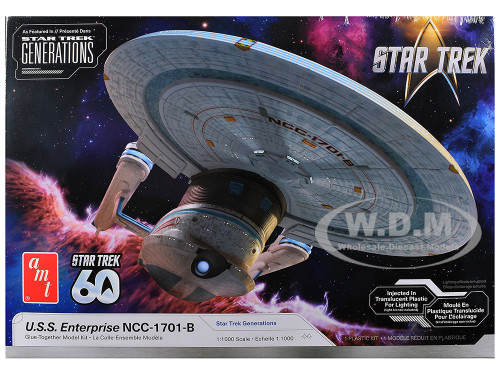

 $49.99