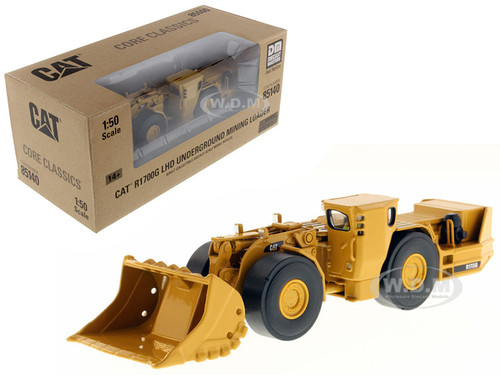
Mining diecast models bring the massive machinery of surface and underground mining into collectible scale. This category features mining trucks, haul trucks, excavators, loaders, dozers, drilling equipment, underground mining vehicles, water trucks, and other heavy machinery used in mining operations.
Mining equipment is different from ordinary construction machinery because it is designed to work in some of the most demanding environments and to move extremely large quantities of material. Ultra-class haul trucks can be many times larger than road-going trucks, while mining shovels, excavators, loaders, and underground equipment are engineered around specialized production requirements.
For collectors, these machines offer an opportunity to collect detailed representations of equipment that is rarely seen outside mines, quarries, and large industrial operations. Models can also be used to create realistic mining dioramas showing excavation, loading, hauling, and material-handling operations.
At DiecastModelsWholesale.com, the Mining category provides a focused selection of scale models representing the heavy equipment and specialized vehicles associated with the mining industry.
Types of Mining Diecast Models
Mining operations use many different machines, each designed around a specific stage of extracting and moving material. Collectors can build a collection around one equipment type or combine several types to represent a complete mining operation.
Mining Haul Truck Models
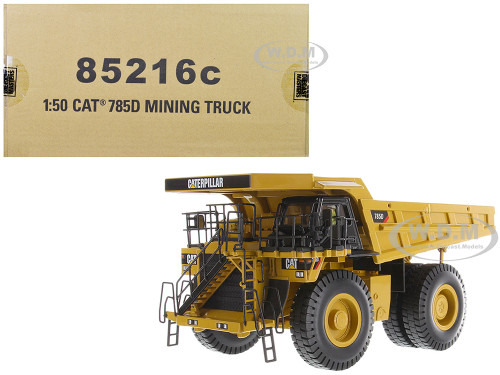
Large mining trucks are among the most recognizable subjects in mining model collecting. Unlike conventional highway dump trucks, off-highway haul trucks are built specifically for transporting massive loads over mine roads.
Caterpillar's 797 family illustrates the scale of modern mining equipment. The company introduced the 797 in 1998 as a mechanically driven mining truck, while the later 797F has a nominal rated payload of 400 U.S. tons.
These enormous vehicles make particularly impressive scale models. Collector versions can reproduce details such as large tires, articulated dump bodies, ladders, handrails, suspension components, operator cabs, and engine compartments.
Mining Excavator and Shovel Models
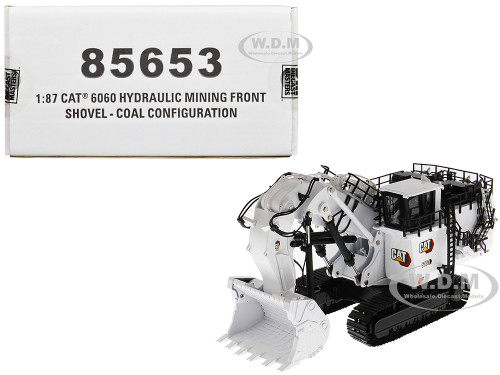
Excavators and mining shovels are used to dig and load material. Depending on the mining method and machine configuration, these can include hydraulic excavators, electric rope shovels, and other large-scale loading equipment.
The history of mining machinery includes some extraordinarily large machines. One example is Big Muskie, a Bucyrus-Erie dragline built for coal mining in Ohio. Construction began in 1966, the machine entered production in 1969, and it weighed more than 27 million pounds.
Large mining excavator and shovel models appeal to collectors who appreciate the engineering and unusual proportions of industrial machinery.
Mining Loader Models
Wheel loaders and underground loaders perform important loading and material-handling tasks.
Surface mining loaders can work alongside haul trucks, filling their large dump bodies with material. Underground loaders are designed around the restricted dimensions and operating conditions of underground mines.
Models such as underground loaders and articulated underground trucks can therefore add an entirely different type of equipment to a mining collection.
Mining Dozer Models
Dozers are used for pushing material, preparing working areas, maintaining haul roads, and supporting other mining operations.
Mining dozers are built for heavy-duty work and can be substantially different from machines intended for ordinary construction applications. Their large blades, tracked undercarriages, heavy frames, and specialized configurations make them recognizable subjects for scale models.
Underground Mining Models
Underground mining requires equipment designed to operate in confined spaces rather than the wide-open working areas of surface mines.
Collectors may encounter models representing:
- Underground loaders
- Articulated underground trucks
- Low-profile mining vehicles
- Underground drilling equipment
- Specialized utility vehicles
- Mine support equipment
These machines often have unusual proportions and compact designs that distinguish them from surface-mining equipment.
Mining Water Truck Models
Water trucks can perform important support functions at large mines, particularly on haul roads and other areas where dust control is required.
Large mining water trucks can resemble haul trucks but have specialized bodies and equipment. Their inclusion in a collection helps demonstrate that mining fleets consist of much more than excavators and haul trucks.
Surface Mining and Open-Pit Equipment
Many of the largest mining machines are associated with surface or open-pit mining.
A typical large surface mining operation can involve several stages:
- Drilling and preparation to prepare the material for excavation.
- Excavation or loading using shovels, excavators, or loaders.
- Hauling using large off-highway trucks.
- Material handling as ore or waste is transported to its next destination.
- Road and site maintenance using dozers, graders, water trucks, and support equipment.
A collection that combines several of these machine types can create a miniature representation of a working mine rather than simply a group of individual vehicles.
Underground Mining Equipment
Underground mining presents different engineering challenges. Equipment must be capable of working in tunnels, shafts, drifts, and other confined environments.
Underground loaders and articulated trucks are designed with compact dimensions and configurations suited to these conditions. Their articulated steering and specialized bodies allow them to maneuver where conventional surface equipment cannot.
For collectors, underground mining models provide an opportunity to explore an area of heavy equipment that is visually distinct from the huge haul trucks and excavators commonly associated with open-pit mining.
A Brief History of Mining Machinery
Mining is one of the oldest large-scale industrial activities, but the equipment used to extract and transport materials has changed dramatically with advances in mechanical engineering.
Early mining depended heavily on human labor, animals, hand tools, and relatively simple mechanical systems. Industrialization brought steam power, rail transportation, mechanical excavation, and eventually gasoline- and diesel-powered equipment.
As engines became more powerful and hydraulic and electric systems developed, machines became increasingly specialized. Mining companies could use larger excavators, loaders, trucks, drills, and support equipment to move greater quantities of material.
The development of enormous haul trucks represents one part of this progression. Caterpillar's history records the introduction of its 797 mining truck in 1998 and the continuing development of increasingly large mining equipment.
Mining machinery has continued to evolve into the 21st century. Caterpillar reports that it demonstrated its first battery-electric large mining truck in 2022, illustrating how electrification is becoming part of the industry's equipment development.
Mining Equipment Manufacturers
For many collectors, the manufacturer is an important part of choosing a mining model.
Caterpillar is particularly prominent in mining equipment and has produced a broad range of mining trucks, loaders, excavators, dozers, and other machinery. The company acquired Bucyrus in 2011, expanding its mining equipment portfolio.
Other major manufacturers have also developed equipment for surface and underground mining, including Komatsu, Liebherr, Hitachi, Volvo Construction Equipment, Sandvik, Epiroc, and others.
When collecting by manufacturer, pay attention to the exact machine designation. Two machines from the same manufacturer can serve very different purposes and may come from entirely different equipment families.
Collecting Mining Diecast Models
Mining models offer several ways to organize a collection.
Collect by Machine Type
A straightforward approach is to collect different equipment categories:
- Mining haul trucks
- Excavators
- Electric shovels
- Wheel loaders
- Underground loaders
- Underground trucks
- Dozers
- Water trucks
- Drilling equipment
- Support vehicles
This creates a varied collection representing different parts of the mining process.
Collect by Manufacturer
Collectors may choose to concentrate on Caterpillar, Komatsu, Liebherr, or another equipment manufacturer. This can make it possible to compare different generations and equipment classes from the same company.
Collect by Mining Application
Another approach is to separate models into surface mining and underground mining equipment.
Surface collections can emphasize enormous haul trucks, shovels, excavators, loaders, and dozers. Underground collections can focus on compact loaders, articulated trucks, drilling equipment, and specialized support vehicles.
Collect by Era
Mining equipment has changed considerably over time. A collection can therefore compare older mechanical machines with modern equipment featuring sophisticated hydraulic, electric, electronic, and autonomous systems.
Caterpillar has documented the development of autonomous mining technology beginning with prototype autonomous trucks in the 1990s and commercial autonomous hauling solutions introduced later.
Mining Diecast Scales
Scale is especially important when collecting mining models because real mining equipment can be enormous.
1/50 scale is particularly well represented among detailed construction and mining collectibles. Current manufacturer catalogs include 1/50 mining trucks, underground loaders, articulated trucks, and other mining equipment.
Other scales may also be available depending on the manufacturer and subject, including 1/64, 1/87, 1/100, and other scales.
A 1/50 mining truck can still be a substantial display piece. For example, a detailed 1/50 Cat 798 AC mining truck is approximately 12.5 inches long, illustrating how much physical space large-scale mining models can require.
When adding several mining models to a collection, matching their scale is useful for creating a believable relationship between the machines.
Mining Diecast Models and Moving Parts
Mining equipment provides excellent opportunities for functional model details because many real machines have articulated or movable components.
Depending on the model, collectors may find features such as:
- Raising and lowering dump bodies
- Working steering
- Articulated frames
- Moving suspension
- Opening engine compartments
- Folding access ladders
- Detailed hydraulic components
- Rotating or articulated equipment
- Detailed tracks or rubber tires
- Operator cab interiors
For example, current 1/50 Cat mining models can reproduce moving dump bodies, steering linkages, suspension, ladders, engine details, and other equipment-specific features.
These features can make mining models particularly interesting when displayed in different working positions.
Building a Mining Equipment Display
Mining models are well suited to industrial dioramas. A display can be built around a simple concept such as an open-pit mine, quarry, or underground operation.
A larger surface-mining scene might include:
- A large mining excavator or shovel
- Several haul trucks
- A wheel loader
- A dozer
- A water truck
- Mine roads and material stockpiles
A smaller display could focus on just two or three complementary machines.
The enormous size differences between mining equipment and ordinary vehicles can also become part of the display. A mining truck that looks large by itself can appear even more imposing when placed beside a conventional truck or construction vehicle.
What to Consider When Choosing a Mining Model
When selecting a mining diecast model, consider:
Equipment type: Decide whether you want a haul truck, excavator, loader, dozer, underground machine, or support vehicle.
Manufacturer: Look for the equipment brands and machine families that interest you.
Application: Determine whether the model represents surface mining, underground mining, quarrying, or another industrial application.
Scale: Make sure the model fits your existing collection and available display space.
Machine designation: Check the exact model number and configuration when historical or technical accuracy matters to your collection.
Moving features: Consider whether articulated components, working dump bodies, steering, or other functional details are important to you.
Display theme: Think about whether the model will be displayed individually or as part of a complete mining operation.
Why Collect Mining Diecast Models?
Mining diecast models appeal to collectors who appreciate heavy equipment, engineering, industrial history, and unusual vehicles. The machinery represented in this category is rarely encountered in everyday traffic, yet it plays an important role in extracting and transporting raw materials.
The scale and engineering of modern mining equipment also make these models visually distinctive. A collection of mining trucks, excavators, loaders, and support equipment can provide a miniature look at an industry built around machines of extraordinary size.
For collectors who already enjoy construction diecast models, mining models can also expand a heavy-equipment collection into specialized industrial machinery. Mining equipment shares some visual characteristics with construction equipment but is designed for different operating environments and production requirements.
Shop Mining Diecast Models
Explore the Mining category at DiecastModelsWholesale.com to find collectible models representing heavy mining equipment, haul trucks, loaders, excavators, and other specialized machinery.
Whether you are building a dedicated mining collection, creating an industrial diorama, collecting a particular manufacturer, or looking for a detailed model of an enormous haul truck, browse the available mining diecast models and find the equipment that fits your collection.



 $44.99Was $49.99Save 10%