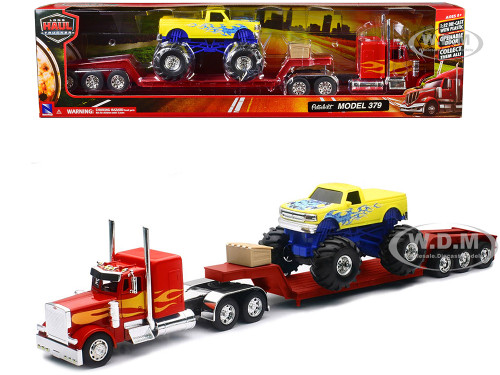
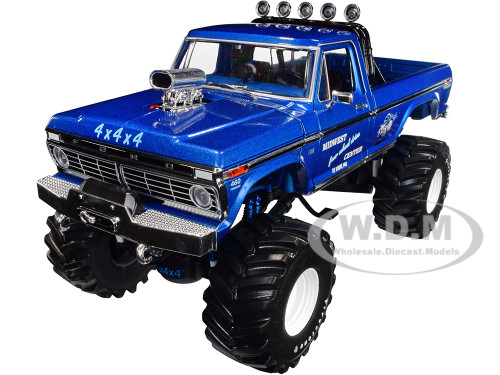
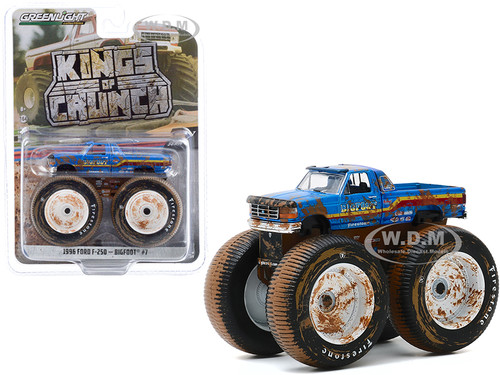
Monster truck diecast models bring the oversized tires, lifted suspensions, dramatic graphics, and unmistakable styling of monster trucks into a collectible scale. These specialized trucks are built for entertainment and competition, where modified vehicles perform jumps, car crushing, obstacle courses, racing, and other forms of motorsport exhibition.
The Monster category at DiecastModelsWholesale.com is designed for collectors, hobbyists, motorsport enthusiasts, and fans of the larger-than-life trucks that have become a distinctive part of American automotive entertainment. Depending on the model, shoppers may find monster trucks inspired by real competition vehicles, recognizable truck bodies, custom designs, and popular monster truck themes.
Unlike conventional pickup trucks, monster trucks are extensively modified for performance and showmanship. Their enormous tires, high ground clearance, tubular chassis, powerful engines, specialized suspension systems, and colorful body graphics give them a distinctive appearance that translates particularly well into diecast and scale models.
What Is a Monster Truck?
A monster truck is a highly modified vehicle designed primarily for competition and entertainment. Although many monster trucks retain the recognizable body shape of a pickup truck, their underlying construction can be dramatically different from a production pickup.
Modern competition monster trucks generally use purpose-built chassis and sophisticated suspension systems rather than simply modifying a standard factory truck. Large tires and substantial suspension travel allow them to negotiate obstacles, absorb landings, and perform jumps that would be impossible for an ordinary road-going pickup.
Monster trucks can be used in several types of events, including racing, freestyle competitions, obstacle courses, and vehicle-crushing demonstrations. Freestyle performances in particular have helped establish monster trucks as entertainment vehicles as much as motorsport machines.
For collectors, this combination of familiar truck styling and purpose-built mechanical engineering makes monster truck models an especially distinctive addition to a diecast collection.
A Brief History of Monster Trucks
The roots of monster trucks can be traced to the customized pickup-truck and four-wheel-drive culture that developed in the United States during the 1970s. Enthusiasts increasingly modified trucks with larger tires, lifted suspensions, stronger drivetrains, and other equipment for off-road use and exhibition.
One of the vehicles that helped define the early monster-truck era was Bigfoot, created by Bob Chandler and his team in Missouri. Bigfoot began as a heavily modified Ford pickup and became widely known for its enormous tires and public demonstrations. Its appearances helped introduce the concept of oversized pickup trucks to a much broader audience.
During the 1980s, monster trucks developed from modified pickups into increasingly specialized competition vehicles. Events featuring racing and car-crushing demonstrations became major attractions, and distinctive trucks began developing their own identities through names, graphics, body styles, and theatrical presentation.
The sport continued to evolve through the 1990s and 2000s. Purpose-built chassis, advanced suspension systems, large fiberglass or composite bodies, and highly specialized powertrains became increasingly common. Modern monster trucks are engineered specifically for controlled competition and high-impact performances rather than ordinary transportation.
The Rise of Monster Truck Entertainment
Monster trucks became particularly popular because they combine several elements that are immediately understandable to spectators: large vehicles, loud engines, dramatic jumps, racing, and spectacular obstacles.
Car crushing became one of the signature demonstrations associated with monster trucks. Vehicles can drive over rows of automobiles or other obstacles, showcasing the height and suspension travel of the truck. Racing courses can add jumps, turns, and obstacles, while freestyle events allow drivers to perform jumps, wheelies, donuts, and other maneuvers.
This entertainment-oriented history is important to collectors because many monster trucks are remembered not simply by their mechanical specifications, but by their names, body graphics, appearances, and competition history.
What Makes a Monster Truck Different?
Several features separate a monster truck from a conventional pickup or off-road truck.
Oversized Tires
The enormous tires are perhaps the most recognizable feature of a monster truck. Their large diameter provides substantial ground clearance and helps the vehicle negotiate obstacles and absorb impacts.
On a scale model, oversized tires immediately establish the proportions of the vehicle and distinguish it from ordinary pickup-truck models.
Lifted Suspension
Monster trucks use specialized suspension systems with substantial travel. The suspension must allow the truck to absorb large landings while maintaining control during jumps and uneven terrain.
Depending on the model represented, suspension details may include large shocks, linkages, axles, and other visible components.
Purpose-Built Chassis
Modern competition monster trucks generally use custom-built chassis rather than retaining the frame of a production pickup. The chassis is designed around the requirements of racing, jumping, and high-impact performance.
This is one reason a monster truck can look familiar on the outside while being fundamentally different mechanically from the pickup that inspired its body.
High-Output Powertrain
Monster trucks require substantial power to move their large tires and heavy chassis through demanding courses. Competition vehicles have used highly specialized engines and drivetrains developed for their particular applications.
The powertrain, transmission, axles, and four-wheel-drive system all work together to deliver power while maintaining traction and control.
Distinctive Body Graphics
Monster trucks are also recognized for their elaborate names and graphics. Some have animal-inspired designs, fantasy themes, military-inspired appearances, or exaggerated versions of familiar automotive shapes.
These visual identities are an important part of the appeal of collecting monster truck diecast models.
Monster Trucks in Diecast Collections
Monster truck models appeal to collectors for several reasons. Their proportions are immediately recognizable, their graphics can be highly detailed, and their mechanical features often provide more visual interest than a conventional road vehicle.
Collectors may organize monster truck models according to:
- Truck name or theme
- Competition series or event
- Body style
- Manufacturer or model maker
- Scale
- Era
- Livery and graphics
- Suspension and chassis design
- Personal interest in a particular truck or driver
A collection can focus entirely on monster trucks or incorporate them into a larger collection of pickup trucks, racing vehicles, construction equipment, and off-road vehicles.
For related subjects, explore the Truck category for conventional and specialty trucks or UTV & SUV for additional off-road-oriented vehicles.
Monster Truck Scales
Scale is an important consideration when choosing a monster truck model. Larger scales can provide more room for detailed body graphics, suspension components, wheels, interiors, and chassis features. Smaller models are convenient for collectors who want to display several trucks together.
Common scales found among truck and specialty vehicle models include 1/18, 1/24, 1/32, 1/43, and 1/64, although the exact scale varies by model and manufacturer.
When building a display, keeping models at compatible scales can make the differences in vehicle size and proportions easier to appreciate. Monster trucks can also create an interesting contrast when displayed beside standard pickups because their exaggerated dimensions become immediately apparent.
What to Look for in a Monster Truck Model
When shopping for a monster truck diecast model, collectors may want to consider more than just the truck's overall appearance.
Body and Graphics
Look for accurate body proportions, detailed paintwork, sponsor-style markings, graphics, and recognizable design elements. Because monster trucks often have elaborate liveries, graphics can be one of the most important visual aspects of the model.
Wheels and Tires
The wheels and tires are central to the identity of a monster truck. Check the tire size, tread appearance, wheel design, and relationship between the wheels and body.
Suspension and Chassis
On detailed models, suspension components and chassis construction can add considerable visual interest. Some models emphasize these features more than others.
Interior and Exterior Details
Depending on the scale and manufacturer, details can include the driver's compartment, steering wheel, roll cage, mirrors, lights, exhaust components, and other exterior equipment.
Display Size
Monster trucks can occupy considerably more display space than ordinary vehicles because of their oversized tires and tall stance. Consider the model's overall dimensions when planning a shelf, cabinet, or diorama.
Monster Trucks vs. Other Off-Road Trucks
Monster trucks are sometimes grouped with other off-road vehicles, but their purpose is quite different.
An off-road pickup or SUV is generally designed to transport people or cargo while traveling over rough terrain. A UTV is designed for utility or recreational off-road operation. A conventional four-wheel-drive truck may be built for work or trail use.
A competition monster truck, by contrast, is engineered primarily for motorsport entertainment. Its extreme height, specialized suspension, oversized tires, and purpose-built chassis are intended for performance in controlled events rather than everyday transportation.
That distinction makes monster truck diecast models a specialized collecting category rather than simply another type of pickup truck.
Building a Monster Truck Display
Monster truck models can make an engaging standalone display, but they can also be incorporated into larger automotive or motorsport collections.
A display might combine several monster trucks from different eras, contrasting older modified pickups with later purpose-built competition machines. Another approach is to create a miniature event scene using trucks alongside racing or support vehicles.
Collectors interested in construction and heavy equipment can also use monster trucks to add variety to a broader collection of specialized vehicles. Their extreme proportions provide an immediate visual contrast with dump trucks, loaders, excavators, and other working equipment.
Collect Monster Truck Models
Whether you are a longtime monster truck fan, a diecast collector, or simply looking for an unusual addition to your truck collection, monster truck models offer a distinctive combination of automotive styling, motorsport history, mechanical detail, and entertainment culture.
Browse the Monster category at DiecastModelsWholesale.com to discover available monster truck diecast models and scale collectibles. Compare the designs, graphics, scales, and details to find the trucks that best fit your collection, and explore related truck and off-road categories to expand your display.

 $134.99
 $8.99
 $8.99
 $8.99




 $8.99
 $8.99