Tanker trucks are specialized commercial vehicles designed to transport liquids, gases, powders, and other bulk materials in a dedicated tank body. Unlike ordinary cargo trucks, a tanker truck carries its load in a cylindrical or specially shaped tank mounted directly on the truck chassis or, in the case of a tractor-trailer combination, on a separate tank trailer.
Tanker trucks are used across many industries, making them an interesting and diverse subject for diecast collectors. Depending on the vehicle, a tanker may transport fuel, water, milk, chemicals, food products, or other liquid cargo. Their distinctive tank bodies, piping, valves, hoses, ladders, compartments, and chassis equipment also provide plenty of visual detail for scale-model collectors.
The Tanker category at DiecastModelsWholesale.com is intended for collectors and enthusiasts looking for scale representations of these specialized working vehicles.
What Is a Tanker Truck?
A tanker truck is a motor vehicle equipped with a tank for transporting bulk materials. The tank can be permanently mounted on a truck chassis or incorporated into a trailer pulled by a separate truck tractor.
The design of the tank depends heavily on the material being transported. A fuel tanker, for example, may use a compartmentalized tank designed for petroleum products, while a water tanker may have a different construction and pumping arrangement. Tank trucks used for food products or chemicals can have specialized tanks and fittings suited to their cargo.
Common terms include tanker truck, tank truck, tank lorry, fuel tanker, water tanker, and tanker trailer. The terminology can vary by region and industry.
For diecast collectors, the tank itself is usually the defining feature. Its shape, number of compartments, access equipment, piping, and relationship to the truck chassis can help identify the model and its intended application.
Types of Tanker Trucks
Tanker trucks are not limited to one type of cargo. Their specialized bodies are designed around the characteristics and handling requirements of the material being transported.
Fuel Tanker Trucks
Fuel tankers transport petroleum products such as gasoline, diesel fuel, and other liquid fuels. Many road tankers use multiple compartments so different products or grades can be carried in the same vehicle.
Fuel tanker models are recognizable by their rounded tanks, loading and unloading equipment, piping, hoses, safety equipment, and distinctive fleet graphics.
Water Tanker Trucks
Water trucks and tankers are used to transport and distribute water. They can support construction sites, agriculture, landscaping, municipal services, dust suppression, and other applications.
Some water trucks use spray bars or other equipment to distribute water rather than simply transporting it from one location to another.
Milk and Food-Grade Tankers
Food-grade tankers transport liquids such as milk and other food products. These tanks are designed with materials and construction appropriate for sanitary transportation.
Their polished or highly finished tanks can make food and dairy tanker models particularly distinctive in a commercial-vehicle collection.
Chemical Tankers
Chemical tankers are designed for specialized industrial materials. Tank construction, fittings, valves, insulation, and other equipment can vary depending on the substance being transported.
These vehicles demonstrate why tanker trucks are highly specialized rather than simply ordinary trucks fitted with a generic tank.
Other Specialized Tankers
Tank trucks can also transport other liquids and bulk materials. Specialized applications may include waste liquids, industrial products, agricultural materials, and other substances requiring dedicated transportation equipment.
Truck-Mounted Tankers vs. Tank Trailers
There are two broad configurations that collectors may encounter.
A truck-mounted tanker carries its tank directly on the truck chassis. This configuration is common for water trucks, fuel delivery trucks, municipal vehicles, and other applications where the vehicle operates as a single unit.
A tanker trailer is a separate tank body mounted on a trailer and pulled by a truck tractor. This arrangement is particularly common for long-distance transportation of bulk liquids.
The distinction is important when collecting diecast models. A truck-mounted tanker represents a complete motor vehicle, while a tank trailer normally requires a compatible tractor if you want to create a complete tractor-trailer combination.
For additional trailer subjects, browse Trailer Diecast Models.
A Brief History of Tanker Trucks
The concept of transporting liquids in dedicated containers is much older than the motor truck. Before modern road tankers, liquids were commonly transported in barrels, casks, drums, and other individual containers. These methods were labor-intensive and limited the amount of liquid that could be moved efficiently.
The development of motor trucks and improved tank construction changed bulk-liquid transportation. Dedicated tanks allowed larger quantities to be moved as a single load while reducing the need to handle numerous individual containers.
The growth of petroleum distribution was particularly important to the development of road tankers. As gasoline-powered automobiles became widespread during the early 20th century, fuel had to be transported from refineries and storage facilities to filling stations and other customers.
Truck-mounted tanks provided a practical method for delivering liquid fuel directly to local facilities. Over time, tank designs became more specialized, with improvements in compartments, pumps, valves, loading systems, grounding equipment, and other components.
As highways and commercial trucking expanded, larger tanker trailers became increasingly important for moving bulk liquids over longer distances. Modern tankers incorporate specialized engineering and safety features based on the materials they carry and the regulations governing their operation.
How Tanker Trucks Are Designed
The tank is the most obvious feature of a tanker, but many other components contribute to the vehicle's operation.
Tank Body
Tanks are commonly cylindrical or elliptical in cross-section, although the exact design varies by application. Tank construction must account for the properties of the material being transported and the operating requirements of the vehicle.
Compartments
Some tankers are divided into multiple compartments. This arrangement can allow different products or quantities to be transported while keeping them separated.
Valves and Piping
Tankers may have extensive piping, valves, hoses, pumps, and loading or unloading connections. These details are particularly interesting on highly detailed diecast models.
Access Equipment
Ladders, walkways, platforms, access covers, and other equipment allow operators to inspect and service the tank and associated systems.
Truck Chassis
The chassis supports the tank and provides the engine, transmission, axles, suspension, steering, and braking systems required to operate the vehicle.
Tanker Diecast Models for Collectors
A tanker diecast model can be an excellent addition to a collection of commercial trucks because the tank body gives the vehicle a distinctive appearance.
When comparing tanker models, collectors can look for details such as:
- Tank shape and proportions
- Number of tank compartments
- Loading and unloading equipment
- Valves, hoses, and piping
- Ladders and access platforms
- Wheels and tires
- Chassis and axles
- Cab design
- Bumpers and mirrors
- Fleet colors and graphics
- Product or company markings
These features can help distinguish a fuel tanker from a water truck, food-grade tanker, or other specialized vehicle.
Tanker Truck Scales
Tanker models are produced in a variety of scales. Depending on the specific truck and manufacturer, collectors may encounter 1/18, 1/24, 1/32, 1/43, 1/50, and 1/64 scale models.
Scale selection is particularly important when combining tanker trucks with other commercial vehicles. A 1/50 construction or commercial truck, for example, will be considerably larger than a 1/64 model.
Collectors who build displays around a particular scale can combine tanker models with other trucks, trailers, construction equipment, and service vehicles while maintaining consistent proportions.
Collecting Tanker Trucks by Industry
One of the most interesting ways to collect tanker models is by the industry they represent.
A petroleum-themed collection could include fuel tankers alongside service stations, fuel delivery equipment, and other transportation vehicles. A construction-oriented display could feature water trucks used for dust control alongside dump trucks, excavators, loaders, and other heavy equipment.
Collectors interested in agricultural transportation can look for tanker subjects associated with water, agricultural products, or dairy operations. Industrial-themed collections can focus on specialized chemical and bulk-material transportation.
This makes tanker trucks useful not only as individual models but also as part of larger scenes representing real-world industries.
For additional construction and work vehicles, visit the Construction Diecast Models category.
Tanker Truck Liveries and Fleet Identity
Tanker trucks frequently carry strong visual identities. Fuel delivery vehicles may feature recognizable petroleum-company colors and graphics, while municipal water tankers can display city or public-works markings.
Fleet graphics are therefore an important part of many tanker diecast models. A collector interested in commercial transportation may choose models based on the truck manufacturer and body configuration, while another collector may be more interested in the company livery or historical subject represented.
Comparing tankers from different periods can also reveal changes in truck styling. The cab, grille, headlights, wheels, tank shape, and graphics can all provide clues about the era of the vehicle.
Displaying Tanker Diecast Models
Tanker trucks work well in displays focused on transportation, industry, fuel distribution, construction, agriculture, or municipal services. Their rounded tank bodies also provide a visual contrast to the rectangular bodies of box trucks and the open decks of flatbeds.
A tanker collection can be organized by scale, manufacturer, industry, historical period, or vehicle configuration. Pairing a truck-mounted tanker with a tractor-and-tanker-trailer combination can also demonstrate the difference between these two major configurations.
Collectors can further expand a commercial truck display with Truck Diecast Models and other specialized truck categories.
Shop Tanker Diecast Models
Tanker trucks combine specialized engineering, recognizable commercial truck designs, and distinctive cargo bodies, making them an appealing subject for diecast collecting. From fuel and water trucks to specialized industrial and food-grade tankers, different configurations represent a wide range of real-world transportation applications.
Whether you are looking for a detailed commercial vehicle, a classic tanker, a specialized work truck, or a model to complement an existing transportation display, browse the Tanker category at DiecastModelsWholesale.com to explore available models and find the right addition to your collection.

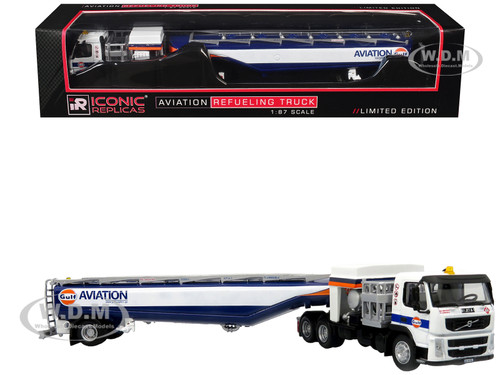
 $24.79Was $30.99Save 20%

