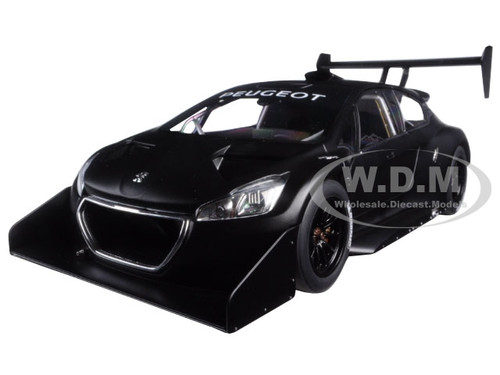
Pikes Peak Diecast Racing Models
Pikes Peak diecast models celebrate one of the most distinctive events in motorsport: the Pikes Peak International Hill Climb, also known as the Race to the Clouds. Held on Pikes Peak in Colorado, the event challenges drivers and their cars to climb a demanding mountain course against the clock. Its unusual combination of high altitude, steep elevation changes, tight corners, changing weather, and radically different racing machines has produced some of the most recognizable cars in hill-climb history.
The Pikes Peak category at DiecastModelsWholesale.com is for collectors looking for diecast racing models associated with Pikes Peak, including purpose-built hill-climb cars, modified production vehicles, rally-inspired machines, prototypes, and other memorable competitors.
Unlike a conventional circuit race, Pikes Peak is a point-to-point hill climb. Cars do not race wheel-to-wheel around a closed circuit. Each competitor attempts to complete the mountain course in the fastest possible time, making the vehicle, driver, engineering approach, and conditions an important part of every Pikes Peak story.
The Pikes Peak International Hill Climb
The Pikes Peak International Hill Climb was first held in 1916, making it the second-oldest motorsports race in the United States, according to the event's official history. The inaugural Pikes Peak Auto Hill Climb was held on August 10–12, 1916, with Rea Lentz winning in a Romano Special with a time of 20:55.600.
The race was developed to showcase the newly constructed Pikes Peak Highway and attract visitors to the mountain. More than a century later, the event remains closely associated with Colorado Springs and Pikes Peak—America's Mountain.
Today, competitors tackle a 12.42-mile course with 156 turns, climbing from approximately 9,390 feet at the start to 14,115 feet at the summit. That represents an elevation gain of roughly 4,720 feet over the course.
The road is now fully paved, but the mountain remains an extraordinary challenge. As vehicles climb, the increasingly thin air affects both drivers and engines. The official Pikes Peak rule book notes that internal-combustion engines can lose a significant amount of power at altitude, while drivers must contend with the physical and mental effects of the climb.
The Race to the Clouds
The nickname "Race to the Clouds" reflects the unusual character of Pikes Peak. The course begins high above sea level and finishes at the mountain's summit, where competitors can encounter dramatically different conditions from those experienced at the starting line.
Weather has always been an important part of the event. Drivers can encounter sunshine, rain, hail, fog, wind, sleet, or snow during a single climb, depending on conditions.
For collectors, this combination of mountain environment and motorsport technology helps distinguish Pikes Peak models from conventional racing diecasts.
Cars Built for the Mountain
One of the most interesting aspects of Pikes Peak racing is the enormous variety of vehicles that have competed there. The official Pikes Peak International Hill Climb describes the event as featuring everything from production-based Time Attack cars to purpose-built Open Wheel racers and advanced Unlimited vehicles.
Over the years, the mountain has attracted:
- Modified production cars
- Sports cars
- Rally-inspired machines
- Open-wheel hill-climb cars
- Unlimited prototypes
- Purpose-built aerodynamic race cars
- Electric racing vehicles
- Trucks and other specialized competition vehicles
This diversity creates a particularly interesting subject for diecast collecting. Two Pikes Peak models from different decades can have completely different body designs, drivetrains, aerodynamic concepts, and engineering philosophies while sharing the same mountain and race.
Legendary Pikes Peak Racing Cars and Drivers
Pikes Peak history includes an unusually broad group of drivers and automotive manufacturers. American racing families such as the Unser, Mears, Pastrana, Zwart, and Vahsholtz families have played important roles, while international competitors have included Ari Vatanen, Walter Röhrl, Michèle Mouton, Nobuhiro "Monster" Tajima, Sébastien Loeb, Rod Millen, Rhys Millen, and Romain Dumas.
These names can be especially useful when searching for Pikes Peak diecast models because many collectible cars are identified primarily by their driver, manufacturer, or famous Pikes Peak competition program.
Audi and Michèle Mouton
Audi's Pikes Peak program became one of the defining stories of the 1980s. The official Pikes Peak historical material identifies 1985–1987 Audi competition as a major period, with Michèle Mouton, Bobby Unser, and Walter Röhrl all setting course records during those years.
Michèle Mouton is also historically significant as the first and only woman to set an overall Pikes Peak course record, achieving that distinction in 1985.
For collectors, Audi's Pikes Peak cars provide an opportunity to combine rally-car history, quattro technology, and hill-climb racing in a single display.
Peugeot and Ari Vatanen
The Peugeot 405 T16 became another iconic Pikes Peak subject. Ari Vatanen's 1988 climb is particularly well known, and the official Pikes Peak historical material records Peugeot's 1988 victory and Vatanen's course record.
Vatanen's famous Pikes Peak run was also featured in the acclaimed motorsport film Climb Dance, helping make the car and its mountain ascent recognizable far beyond traditional hill-climb audiences.
Suzuki and Nobuhiro Tajima
Japanese driver Nobuhiro "Monster" Tajima became another major figure in modern Pikes Peak history. In 2011, Tajima became the first driver to break the 10-minute barrier, according to Pikes Peak's official race history.
His Suzuki-powered cars are therefore an important subject for collectors interested in the development of increasingly specialized Pikes Peak machinery.
Volkswagen I.D. R and Romain Dumas
One of the most important recent chapters in Pikes Peak history came in 2018, when Romain Dumas drove the all-electric Volkswagen I.D. R Pikes Peak to a time of 7:57.148. The official Pikes Peak International Hill Climb identifies this as the current overall course record.
The I.D. R represents an important transition in hill-climb technology. Rather than relying on a conventional internal-combustion powertrain, Volkswagen developed a purpose-built electric prototype specifically for high-performance competition.
For diecast collectors, the I.D. R is an excellent example of how Pikes Peak models can document not only racing history but also changes in automotive engineering.
Pikes Peak and Automotive Innovation
Pikes Peak has long served as a proving ground for automotive technology. The official event history notes that the race has helped demonstrate and develop technologies involving automatic transmissions, brake fluid, front-wheel drive, and electric vehicles.
The extreme elevation is one reason the event can be so valuable as an engineering challenge. A vehicle that performs well at sea level must operate in a very different environment near the summit.
This has encouraged manufacturers and independent teams to develop unusual solutions for power, cooling, aerodynamics, traction, braking, suspension, and weight reduction.
As a result, Pikes Peak diecast models often represent more than ordinary racing cars. They can serve as miniature examples of specific engineering approaches and technological eras.
From Dirt to Fully Paved
For much of its history, the Pikes Peak course was a mixture of dirt and paved sections. The transition to a fully paved course changed the nature of the challenge and influenced the design and setup of the cars competing at the mountain.
This is particularly important when collecting historic Pikes Peak models. A car built for the earlier mixed-surface course can look and perform very differently from a modern prototype designed specifically for a fully paved climb.
The official Pikes Peak historical material documents major milestones throughout this transition, including the final era of all-dirt competition and the later records established on the paved course.
Collecting Pikes Peak Diecast Models
Pikes Peak models can be collected in several different ways, depending on what aspect of the event interests you most.
Collect by Driver
A driver-focused collection might include cars associated with Ari Vatanen, Michèle Mouton, Walter Röhrl, Nobuhiro Tajima, Sébastien Loeb, Romain Dumas, or other competitors.
Collect by Manufacturer
Another approach is to concentrate on manufacturers that developed notable Pikes Peak programs. Audi, Peugeot, Suzuki, Toyota, Volkswagen, Ford, Chevrolet, and other manufacturers have appeared in the event's history, with different levels of involvement across different eras.
Collect by Era
A chronological collection can show the evolution from early hill-climb cars to classic rally-based machines and eventually to highly specialized modern prototypes.
Collect by Technology
Collectors interested in automotive engineering can build a display around technological milestones, such as four-wheel-drive competition cars, purpose-built Unlimited machines, aerodynamic prototypes, or electric racing vehicles.
Pikes Peak Diecast Scales
Pikes Peak racing models may be produced in several scales, depending on the vehicle and manufacturer. Smaller 1/64 scale models can be useful for building a broader collection of racing cars, while 1/43, 1/32, 1/24, and 1/18 scale models can provide a larger display presence.
Always check the individual product listing for the exact scale, manufacturer, driver, vehicle, and release details. This is particularly important with Pikes Peak cars because the same driver or manufacturer may have competed with substantially different vehicles during different years.
A Pikes Peak collection can also be combined with other rally, hill-climb, racing, and motorsport diecast models to create a display showing the evolution of performance cars and competition technology.
Why Collect Pikes Peak Models?
Pikes Peak occupies a distinctive position in motorsport because the event is defined by the mountain as much as by the cars. The same course has hosted everything from early competition automobiles to modern electric prototypes, giving collectors an unusually broad range of subjects.
A Pikes Peak diecast can therefore represent a famous driver, a landmark vehicle, a manufacturer's racing program, a technological milestone, or an important period in the development of hill-climb racing.
For collectors interested in rally cars, racing prototypes, American motorsport, Japanese performance cars, European racing history, electric vehicles, or automotive engineering, Pikes Peak models can provide an especially varied addition to a diecast collection.
Shop Pikes Peak Diecast Models
Explore the Pikes Peak collection at DiecastModelsWholesale.com to find available diecast racing models connected with the legendary Race to the Clouds. From historic hill-climb machines and rally-inspired cars to modern prototypes and record-setting vehicles, browse the available models and find a Pikes Peak diecast that fits your collection.


 $264.99