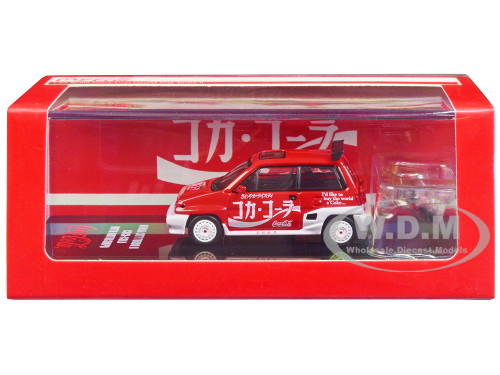
Scooters are lightweight two-wheeled vehicles distinguished from conventional motorcycles by their step-through design, enclosed or partially enclosed mechanical components, floorboard, and generally upright riding position. Their compact proportions and distinctive bodywork have made scooters an important part of transportation and popular culture in cities around the world.
Scooter diecast models bring these recognizable vehicles into scale-model collecting. At DiecastModelsWholesale.com, the Scooter category is part of the site's broader Vehicle Type selection, alongside motorcycles, bicycles, ATVs, and other specialized vehicles.
Shop Scooter Diecast Models
What Is a Scooter?
Although the terms scooter and motorcycle are sometimes used broadly, scooters have several characteristics that distinguish them from traditional motorcycles.
A typical scooter has:
- A step-through frame rather than a motorcycle-style fuel tank between the rider's knees
- A flat or relatively open floorboard for the rider's feet
- Bodywork that often surrounds the engine and mechanical components
- Smaller-diameter wheels on many traditional designs
- An upright seating position
- A handlebar-mounted steering and control arrangement
- Compact dimensions suited to urban transportation
Modern scooters range from small urban models to larger maxi-scooters capable of longer-distance travel. Electric scooters and other modern variations have also expanded the definition of two-wheeled urban mobility.
For diecast collectors, the differences are particularly noticeable in the silhouette. A scooter's enclosed body, leg shield, floorboard, seat, and small wheels give it a very different appearance from a sport bike, cruiser, or motocross motorcycle.
Scooter Diecast Models for Collectors
A scooter model can be a standalone collectible or part of a larger two-wheel vehicle display. Some collectors focus on a particular manufacturer or model family, while others collect scooters based on their historical period, country of origin, color, or scale.
The category can appeal to collectors interested in:
- Classic scooters
- Italian scooter design
- Vintage transportation
- Urban vehicles
- Modern scooters
- Vespa-style models
- Scooter and motorcycle collections
- Small-scale automotive displays
- European automotive history
- Road and travel-themed dioramas
Scooters can also be particularly effective in miniature scenes because their compact size allows several vehicles to be displayed together without requiring the space of a collection of full-size cars or trucks.
The History of the Modern Scooter
The modern scooter is strongly associated with the period immediately following World War II, when European manufacturers were looking for practical, economical forms of transportation.
One of the most influential examples was the Vespa, developed by Piaggio in Italy. After the war, Piaggio sought to create a simple and accessible vehicle that could help with postwar transportation. Aeronautical designer Corradino d'Ascanio developed the design that became the Vespa, and the first production model appeared in 1946.
The original Vespa 98 introduced many of the characteristics that became closely associated with scooters: a step-through configuration, protective bodywork, an enclosed mechanical layout, and a compact design intended to make everyday transportation easier.
Piaggio's historical record shows that the Vespa quickly expanded beyond Italy. Production and licensing arrangements helped introduce the scooter to markets including Germany, the United Kingdom, and France during the early 1950s. The Vespa 125 was also famously featured in the 1953 film Roman Holiday, helping connect the scooter with postwar European style and popular culture.
Vespa subsequently became much more than a practical means of transportation. Its distinctive shape became an important example of industrial design, while its appearances in film, fashion, music, and advertising helped make the scooter recognizable around the world. Piaggio's historical archive documents generations of Vespa models from the 1940s onward, including the 1946 Vespa 98, Vespa 125, GS models, VBB, and later generations.
Vespa and Scooter Collecting
Vespa is one of the most recognizable names in scooter history and an important subject for diecast collectors. The long production history provides an unusually broad range of designs to collect, from early postwar models to contemporary scooters.
DMW's Vespa-related catalog illustrates the range of scale subjects available to collectors. Examples include the Vespa 150 GS and Vespa GTS 300 Super, both represented as 1/12 scale models by New Ray. The broader Vespa selection also includes smaller-scale subjects and even a 1/87 HO-scale Vespa service transporter carrying two scooters.
This makes scooter collecting especially interesting for enthusiasts who want to build a display around a particular historical period. A collector might concentrate on early Vespa designs, postwar scooters, modern maxi-scooters, or several generations of the same manufacturer.
Types of Scooter Models
Scooter diecast models can represent many different approaches to two-wheel design.
Classic Scooters
Classic scooters generally feature the rounded bodywork, leg shield, enclosed mechanical components, and relatively simple styling associated with mid-century European scooters. These models are particularly appealing to collectors interested in vintage transportation.
Modern Scooters
Modern scooters often combine the traditional step-through layout with updated bodywork, larger engines, advanced suspension, disc brakes, electronic equipment, and contemporary styling.
Maxi-Scooters
Maxi-scooters are larger and generally more powerful than traditional urban scooters. They can have longer wheelbases, larger engines, more substantial bodywork, and equipment intended for highway or longer-distance use. Piaggio introduced its first maxi-scooter, the Hexagon, in 1994.
Specialty and Display Scooters
Some scale models represent scooters in unusual settings, including delivery, service, transportation, or lifestyle themes. These can work particularly well in dioramas and miniature street scenes.
Scooter Models and Popular Culture
The scooter's visual identity has made it unusually successful as a cultural symbol. The Vespa's appearance in Roman Holiday is one of the best-known examples, but scooters have subsequently appeared throughout movies, television, advertising, fashion photography, and other forms of popular culture.
This connection can make a scooter model interesting even for collectors who are not specifically motorcycle enthusiasts. A particular model may represent a period, film, design movement, or cultural setting as much as it represents the underlying vehicle.
For collectors, details such as body color, seat design, wheel style, headlight position, trim, manufacturer badges, and period-specific bodywork can help identify the era represented by a miniature.
What to Look for in a Scooter Diecast Model
Because scooters have relatively compact but highly recognizable shapes, accurate proportions and small details can make a substantial difference in a scale model.
Depending on the manufacturer and scale, collectors may look for:
- Accurate scooter body proportions
- Detailed leg shields and floorboards
- Correct wheel and tire design
- Headlights and taillights
- Mirrors and handlebars
- Seat and grab-handle details
- Engine and exhaust details
- Manufacturer badges
- Period-correct paint and graphics
- Side stands or center stands
- Opening or removable components on selected models
- Authentic packaging and presentation
Some models are designed primarily as display pieces, while others may emphasize durability and affordability. The exact materials and features vary by manufacturer and product.
Scooter Diecast Models by Scale
Scale is an important part of collecting any miniature vehicle. With scooters, scale also affects how easily fine details such as handlebars, mirrors, wheels, seats, and body panels can be appreciated.
DMW's broader two-wheel catalog includes models in multiple scales, and current scooter-related products include 1/12 and 1/64 scale examples. Individual scooter releases can vary, so collectors should check the product specifications for the exact scale before ordering.
1/12 Scale Scooter Models
1/12 scale provides a relatively large representation of a scooter and is well suited to collectors who want visible body and mechanical details. DMW's current Vespa selection includes 1/12 models such as the Vespa 150 GS and Vespa GTS 300 Super by New Ray.
1/64 Scale Scooter Models
1/64 scale scooters require much less display space and can be useful for larger miniature scenes. They can be displayed with 1/64 cars, trucks, motorcycles, figures, and other accessories.
For example, American Diorama's Motomania 6 set includes two 1/64 scooter models together with two figures, demonstrating how scooters can be incorporated into small-scale automotive scenes.
Building a Two-Wheel Vehicle Collection
Scooters can be collected independently or displayed alongside other two-wheeled vehicles. A collector interested in the evolution of personal transportation might combine scooters with motorcycles, bicycles, and ATVs.
Motorcycle Diecast Models
Motorcycle collecting offers a broader selection of sport bikes, cruisers, off-road motorcycles, racing machines, and classic motorcycles, while scooters provide a more specialized look at compact urban transportation. DMW's Vehicle Type organization places these subjects alongside ATVs and bicycles, making it easier to explore different types of two-wheel collectibles.
ATV Diecast Models
Bicycle Diecast Models
Scooters can also complement car collections, particularly displays focused on European vehicles, vintage transportation, city streets, or automotive history.
Choosing a Scooter Diecast Model
When selecting a scooter model, consider:
- Scale – Choose a size that matches your existing collection or available display space.
- Era – Decide whether you prefer early postwar scooters, classic 1950s–1970s designs, or contemporary models.
- Manufacturer and model – Vespa and other scooter manufacturers offer distinctive designs and histories.
- Color and trim – Scooter body colors and period-specific details can be an important part of the appeal.
- Display theme – Consider whether the model will be displayed alone, with motorcycles, alongside cars, or as part of a miniature street scene.
- Detail level – Compare the body, wheels, seat, controls, mechanical details, and other features included on the specific model.
Product specifications and availability can change, particularly for limited-edition and collectible releases. Always check the individual product listing for the current scale, manufacturer, dimensions, materials, and included accessories.
Whether your interest is classic Vespa history, European transportation, modern urban mobility, or miniature two-wheel vehicles, scooter diecast models provide a distinctive subject for a scale collection. Browse the Scooter category at DiecastModelsWholesale.com to explore available models and find a scooter that fits your preferred scale, era, and collecting theme.