Road rollers are specialized construction machines designed to compact and smooth soil, gravel, asphalt, and other surfaces. Also called rollers, compactors, road compactors, or asphalt rollers, these machines play an important role in preparing and finishing roads, parking lots, foundations, and other paved or graded surfaces.
For collectors, road roller diecast models offer a detailed way to represent the heavy equipment used in road construction. Their distinctive drums, compact bodies, operator stations, ROPS structures, and articulated frames make them especially recognizable among construction equipment models.
Road Roller Diecast Models
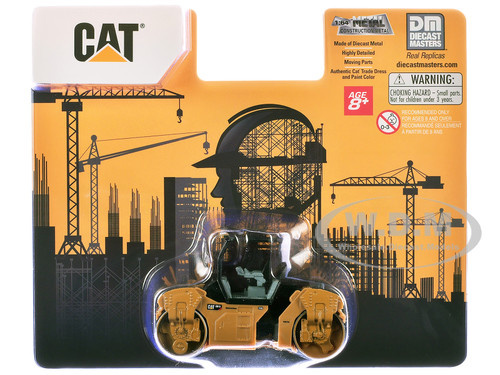
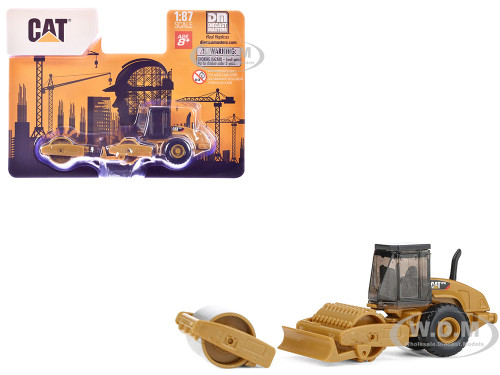
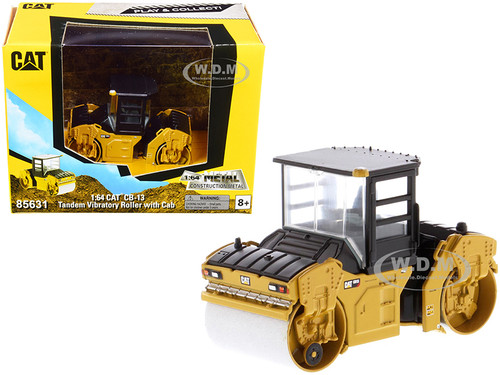
The Road Roller category at DiecastModelsWholesale.com features scale replicas of construction rollers and compactors from manufacturers such as Caterpillar (CAT) and HAMM. Current examples include the CAT CB-13 tandem vibratory roller, CAT CS56 roller, CAT CB-2.7 utility compactor, CAT CS11 GC vibratory soil compactor, and HAMM 3307 compact roller. Available models vary by release and inventory.
Road roller models can represent several different types of compaction equipment. Some are designed primarily for asphalt work, while others are soil compactors intended for earthwork and site preparation. The terminology used by manufacturers can also vary, so collectors may encounter names such as tandem vibratory roller, utility compactor, soil compactor, smooth-drum roller, asphalt roller, and road compactor.
Whether you collect construction equipment by manufacturer, scale, machine type, or complete job-site theme, road rollers can add an important piece of equipment to a construction-focused collection.
What Does a Road Roller Do?
A road roller compacts material by applying weight and, on many modern machines, vibration. Compaction reduces air spaces within soil or aggregate and helps create a more stable, uniform surface. On asphalt projects, rollers are used as part of the paving process to help achieve the desired density and surface finish.
Different machines are designed for different applications:
- Tandem vibratory rollers use two drums and are commonly associated with asphalt compaction.
- Soil compactors are designed for compacting soil and other earth materials.
- Utility compactors are smaller machines suited to more confined construction areas.
- Single-drum rollers combine a large front drum with rear tires or another supporting configuration.
- Smooth-drum rollers provide a relatively smooth compaction surface.
- Padfoot or sheepsfoot rollers use specialized drums for compacting cohesive soils.
The compactors represented by diecast models can therefore differ considerably in both appearance and intended application.
A Short History of Road Rollers
The development of road rollers is closely connected with the evolution of modern road building. Early road construction relied heavily on manual labor, animal-drawn equipment, and relatively simple mechanical tools. As road networks expanded and construction became increasingly mechanized, heavy rollers became an important method of consolidating road-building materials.
Early steam-powered road rollers were particularly associated with the development of paved roads during the late 19th and early 20th centuries. Their heavy drums provided a straightforward way to compress and smooth road surfaces. Steam rollers eventually gave way to gasoline- and diesel-powered machines that were easier to operate and more adaptable to different construction environments.
Modern road rollers have evolved considerably beyond these early machines. Vibratory systems allow operators to combine machine weight with controlled vibration, while hydraulic systems, improved operator stations, electronic controls, and specialized drums have made compactors more effective for different materials and applications.
Today, rollers are used alongside many other types of construction equipment. A typical road project may involve excavators, dozers, graders, loaders, paving equipment, dump trucks, and compactors, with each machine performing a different stage of the work.
Understanding Vibratory Rollers
One of the most common types of modern road roller is the vibratory roller. Rather than relying solely on static machine weight, a vibratory roller uses a vibrating drum to increase the compaction effect.
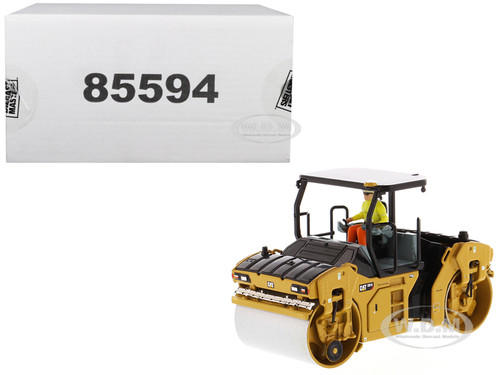
The CAT CB-13 is an example represented in the DMW collection. Current 1/50 scale versions include detailed cab and operator configurations, while 1/64 versions provide a smaller representation of the same general type of construction machine.
For collectors, vibratory rollers are particularly interesting because the drum, frame, operator station, protective structures, and machine proportions remain visually distinctive even at smaller scales.
Features Collectors Can Look For
A detailed road roller diecast model can include many of the features that distinguish a real construction machine:
- Large front or tandem drums
- Vibratory drum assemblies
- Articulated frames
- Operator cabs
- Open operator stations
- ROPS structures
- Steering mechanisms
- Hydraulic components
- Engine compartments
- Construction tires
- Manufacturer logos and safety markings
- Authentic machine colors and graphics
- Individual operators on selected models
For example, a current CAT CB-13 1/50 model from Diecast Masters includes a detailed cab interior, operator, Caterpillar markings, safety decals, and diecast-metal construction with some plastic components.
These details can make a noticeable difference when displaying a construction equipment collection or building a miniature job-site scene.
Road Roller Scales
Construction equipment is produced in several different scales, and road roller models are no exception. The 1/50 scale is particularly useful for collectors who want larger, highly detailed construction equipment models while maintaining a consistent display size.
DMW currently carries road roller examples in:
- 1/34 scale
- 1/50 scale
- 1/64 scale
- 1/87 (HO) scale
Availability varies by model and manufacturer.
1/50 Road Roller Models
1/50 is a popular scale for detailed construction equipment. Models such as the CAT CB-13 tandem vibratory roller and CAT CS11 GC vibratory soil compactor provide enough size for features such as operator stations, drums, ROPS structures, and machine markings to be represented clearly.
1/64 Road Roller Models
1/64 road rollers are useful for collectors who prefer smaller construction equipment or want to create larger-scale miniature job sites without requiring as much display space. DMW currently lists several CAT roller models in this scale.
1/87 Road Roller Models
HO-scale construction equipment can be especially useful for model railroad layouts, dioramas, and compact construction scenes. The current category includes a CAT CS56 roller in 1/87 scale.
Building a Construction Equipment Collection
Road rollers work naturally alongside other construction equipment. A collector creating a miniature road-building scene might combine a roller with an asphalt paver, grader, excavator, wheel loader, dump truck, and other support equipment.
Explore related Construction Diecast Models and browse other equipment categories to build a more complete construction-themed collection.
Road rollers also pair particularly well with Graders, since graders are commonly associated with preparing and shaping surfaces before or during construction projects. For earthmoving applications, Dozer Diecast Models and Excavator Diecast Models provide complementary equipment subjects.
Collecting Road Rollers by Manufacturer
Caterpillar is an important name in construction equipment collecting, and DMW's current Road Roller selection includes several CAT models produced by Diecast Masters. The assortment ranges from small 1/64 models to more detailed 1/50 replicas.
HAMM is another recognizable construction-equipment name represented in the category, including the HAMM 3307 Compact Roller in 1/34 scale.
When collecting construction equipment, many enthusiasts choose to stay with one manufacturer, one scale, a particular machine type, or a combination of all three. Others build mixed manufacturer displays that represent an entire construction project.
Choosing a Road Roller Diecast Model
When comparing road roller models, consider:
- Scale – Choose a scale that fits your existing construction equipment collection and available display space.
- Machine type – Decide whether you prefer tandem vibratory rollers, soil compactors, utility compactors, or another configuration.
- Manufacturer – Caterpillar, HAMM, and other equipment manufacturers can offer distinctly different machine designs.
- Level of detail – Larger models may provide more visible cab, operator, drum, and equipment details.
- Display purpose – A 1/64 or 1/87 model may work well for compact displays and dioramas, while 1/50 models can provide a more substantial centerpiece.
Because model specifications, releases, packaging, and availability can change, check the individual product page for the current scale, manufacturer, model designation, and included features before ordering.
Whether you are collecting Caterpillar construction equipment, assembling a scale job site, matching an existing 1/50 collection, or simply looking for a distinctive heavy-equipment model, road roller diecast models provide an interesting representation of the machinery behind modern road and site construction. Browse the Road Roller Diecast Models category to compare available rollers, compactors, scales, and manufacturers for your collection.






 $39.99Was $69.99Save 42%