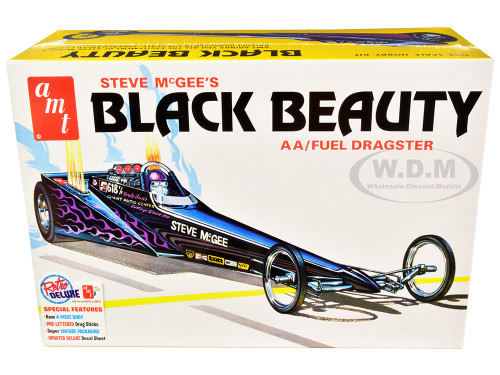
NHRA Funny Car diecast models capture one of the most recognizable and dramatic classes in professional drag racing. Known for their short wheelbases, oversized rear tires, powerful supercharged engines, and colorful bodies styled after familiar production cars, Funny Cars have been a major part of NHRA drag racing since the class emerged in the 1960s.
At DiecastModelsWholesale.com, the NHRA Funny Car category is designed for collectors and racing enthusiasts looking for detailed miniature versions of these iconic drag racing machines. Depending on availability, models may represent different eras, drivers, teams, sponsors, body styles, and manufacturers, making Funny Car diecasts an interesting way to collect both racing history and automotive design.
What Is an NHRA Funny Car?
Funny Cars are purpose-built drag racing machines that retain the general appearance of a production-based automobile while using highly specialized racing technology underneath. Modern NHRA Funny Cars have a carbon-fiber body, a short wheelbase, and a supercharged and fuel-injected 500-cubic-inch engine. Unlike conventional road cars, power is transmitted to the large rear slicks through a multistage clutch rather than a traditional transmission.
The result is a race car that can look surprisingly similar to a familiar Dodge, Chevrolet, Ford, Toyota, or other automotive design while bearing little mechanical resemblance to the street vehicle underneath. That combination of recognizable styling and extreme racing technology is a major part of the appeal of Funny Cars.
For collectors, this also means there is considerable variety in the appearance of NHRA Funny Car diecast models. Different body styles, paint schemes, sponsor graphics, driver names, numbers, and racing eras can make otherwise similar cars distinct collectibles.
A Brief History of NHRA Funny Cars
The roots of Funny Car racing can be traced to the altered-wheelbase cars of the mid-1960s. These heavily modified vehicles moved the front wheels forward and used increasingly sophisticated drag-racing technology. Their unusual proportions helped give the emerging class its memorable name. NHRA identifies 1966 as the first year of the Funny Car class.
The class became increasingly popular during the late 1960s and especially during the 1970s. Funny Cars combined high-performance drag racing with bodies that resembled contemporary showroom automobiles, while teams developed increasingly distinctive paint schemes and personalities. NHRA describes the 1970s as a particularly important period in Funny Car history, when the cars became major fan favorites.
Early Funny Cars appeared in a wide range of recognizable American body styles. Chevrolet Vegas and Camaros, Ford Mustangs, Dodge Chargers, Plymouth Barracudas, and other models became associated with famous teams and drivers. The Chevrolet Monza became another particularly notable Funny Car body during the middle of the 1970s.
As the sport evolved, Funny Cars became more specialized and technologically advanced. Modern examples still preserve the visual connection to production automobiles, but their chassis, engines, aerodynamics, safety equipment, and other components are purpose-built for professional drag racing.
Iconic Funny Car Body Styles
One of the most interesting aspects of collecting NHRA Funny Car diecasts is seeing how the appearance of the class changed over time.
Dodge Charger — The Charger has been associated with Funny Car racing since the early days of the class and became especially prominent during the 1970s. NHRA's historical coverage documents hundreds of Charger-bodied nitro Funny Cars over the years.
Chevrolet Vega — The Vega became one of the defining Funny Car shapes of the early 1970s and was raced by numerous teams and drivers.
Chevrolet Monza — Introduced into the Funny Car scene during the 1970s, the Monza quickly became one of the memorable body styles of the era. Cars associated with drivers and teams such as Don Prudhomme and other prominent racers helped make the Monza an enduring part of Funny Car history.
Ford Mustang — Mustang-based Funny Cars have appeared across multiple generations of the sport, providing collectors with an opportunity to collect different interpretations of the familiar Ford performance car.
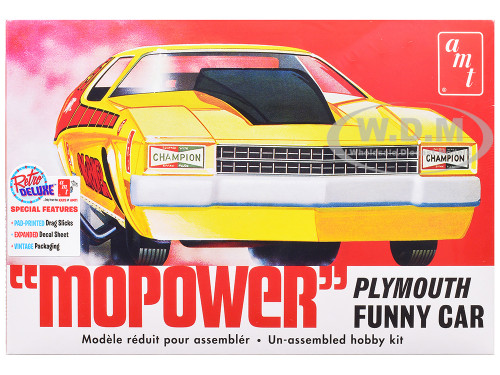
Plymouth Barracuda and other Mopar bodies — Barracuda, Charger, Challenger, and other Chrysler Corporation designs have played an important role in Funny Car history, particularly during the formative years of the category.
These historical body styles can be particularly appealing to collectors who enjoy both diecast cars and classic American muscle cars.
Drivers, Teams, and Famous Paint Schemes
NHRA Funny Car collecting is not limited to the vehicle itself. Drivers, teams, sponsors, and paint schemes are an important part of the category's history.
Names associated with the development and popularity of Funny Car racing include Don Prudhomme, Tom McEwen, Jungle Jim Liberman, Raymond Beadle, Don Schumacher, Ed McCulloch, Kenny Bernstein, John Force, and many others. NHRA's historical archives document the cars, teams, and personalities that helped define different periods of the class.
For collectors, a particular livery can sometimes be just as important as the underlying car. Sponsor graphics, racing numbers, driver names, team branding, and period-correct colors can help distinguish one release from another and make certain models especially interesting as representations of a specific season or racing era.
NHRA Funny Car vs. Top Fuel
Funny Cars and Top Fuel dragsters share many aspects of modern professional drag racing, but they have distinctly different appearances.
A Top Fuel dragster uses a long, open-wheel chassis with the driver positioned behind the engine. A Funny Car uses a shorter wheelbase and an enclosed carbon-fiber body that resembles a production automobile. NHRA describes both professional classes as using supercharged and fuel-injected 500-cubic-inch engines, while their chassis and body configurations are substantially different.
This distinction is useful when shopping for diecast models. Collectors looking specifically for NHRA Funny Car diecast cars should look for the enclosed production-style body rather than the long, open-wheel configuration of a Top Fuel dragster.
Collecting NHRA Funny Car Diecast Models
NHRA Funny Car diecasts can be collected in several different ways. Some collectors concentrate on a favorite driver or team, while others build collections around a particular manufacturer, decade, body style, sponsor, or racing series.
A driver-focused collection can follow a racer's cars across different teams and seasons. A historical collection might concentrate on the classic Funny Cars of the 1960s and 1970s. Other collectors may prefer modern NHRA Funny Cars and contemporary racing liveries.
Scale is another important consideration. Diecast racing models are produced in different scales, with each offering a different balance between display size, detail, and collecting space. When comparing models, check the listed scale, driver or team, vehicle body, year or era, and manufacturer to make sure the model fits the collection you are building.
For collectors of vintage-style racing subjects, details such as the body design, sponsor graphics, driver identification, wheels, tires, cockpit, and overall presentation can be especially important. A well-chosen Funny Car model can represent not only a race car but also a specific period in the history of NHRA drag racing.
Building a Drag Racing Collection
NHRA Funny Cars also work well as part of a broader motorsports diecast collection. Collectors can pair Funny Cars with Top Fuel dragsters, Pro Stock cars, classic muscle car models, NASCAR models, and other racing vehicles to represent different forms of American motorsports.
The historical variety of Funny Cars makes them particularly useful for building a collection around the evolution of drag racing. A display might begin with altered-wheelbase cars from the formative years, continue through the distinctive Funny Cars of the 1970s, and progress to the highly engineered machines of modern professional drag racing.
Whether you are collecting a favorite driver, recreating a memorable era, looking for a specific body style, or simply adding an NHRA race car to an existing diecast collection, Funny Car models offer a distinctive connection between miniature automobiles and drag racing history.
Shop NHRA Funny Car Diecast Models
Explore the NHRA Funny Car collection at DiecastModelsWholesale.com to find available models representing different drivers, teams, body styles, sponsors, and eras of professional drag racing. Check each product listing for details such as scale, manufacturer, vehicle, and release information, then choose the models that best fit your collection.
Browse the NHRA Funny Car category and find a miniature race car that brings the history and excitement of professional drag racing to your display.



 $17.99

 $19.99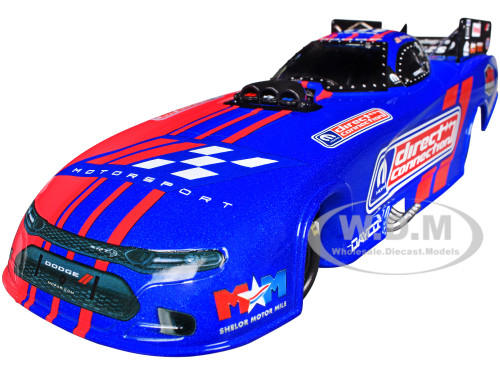



 $32.49Was $35.99Save 9%
 $28.99


 $30.99Was $32.99Save 6%
 $32.49Was $35.99Save 9%