Suzuki diecast models bring the history, engineering, racing success, and distinctive styling of one of Japan's most influential motorcycle manufacturers to the world of scale collectibles. Suzuki has produced an exceptionally broad range of motorcycles, from lightweight commuter bikes and legendary two-strokes to high-performance sport bikes, motocross machines, adventure motorcycles, cruisers, and championship-winning race bikes.
At DiecastModelsWholesale.com, the Suzuki category is designed for motorcycle collectors, enthusiasts, and shoppers looking for scale replicas of notable Suzuki motorcycles. Depending on current availability, the selection may include classic Suzuki motorcycles, sport bikes, racing models, off-road machines, and other recognizable designs. A Suzuki scale model can be collected as a standalone display piece or combined with motorcycles from other manufacturers in a larger collection.
The History of Suzuki Motorcycles
Suzuki's origins are in Japan's textile industry rather than motorcycle manufacturing. Michio Suzuki founded Suzuki Loom Works in Hamamatsu in 1909, and the company developed machinery for Japan's growing textile industry.
After World War II, Suzuki began exploring motorized transportation as Japan's transportation needs changed. The company entered the motorcycle business in the early 1950s, initially producing small motorized bicycles before developing increasingly capable motorcycles.
Suzuki's first major motorcycle, the Colleda, appeared in the early 1950s. The company continued developing lightweight motorcycles while gradually expanding into larger and more sophisticated machines.
By the 1960s, Suzuki had established itself as an important motorcycle manufacturer and was beginning to build an international reputation. Competition played an increasingly important role in that development, particularly as Suzuki entered road racing and motocross.
Suzuki and Two-Stroke Motorcycles
Two-stroke engines played a major role in Suzuki's motorcycle history. Lightweight two-stroke engines provided a useful combination of compact size, relatively low weight, and strong performance for their displacement.
The Suzuki T20 Super Six, introduced in the 1960s, was an important example of Suzuki's development of sporty two-stroke motorcycles. Its 250cc parallel-twin engine and six-speed transmission demonstrated the company's growing emphasis on performance.
The T-series eventually developed into a broader family of two-stroke motorcycles, while Suzuki continued experimenting with increasingly sophisticated engine designs.
Suzuki GT Series
The Suzuki GT family represented another important stage in the company's two-stroke development. Models such as the GT550 and GT750 became well known for their larger three-cylinder engines.
The GT750, introduced in 1971, was particularly distinctive. Its liquid-cooled three-cylinder two-stroke engine earned it the nickname "Water Buffalo" in some markets. The motorcycle combined substantial performance with touring-oriented characteristics and became one of Suzuki's most recognizable classic motorcycles.
Classic Suzuki two-stroke diecast models are particularly interesting for collectors because their engines, exhaust systems, cooling equipment, and period styling can make them visually different from later four-stroke sport bikes.
Suzuki's Motocross Heritage
Suzuki has a long history in motocross competition. The company developed lightweight two-stroke motocross motorcycles that competed successfully in international racing and helped establish the manufacturer as a major force in off-road competition.
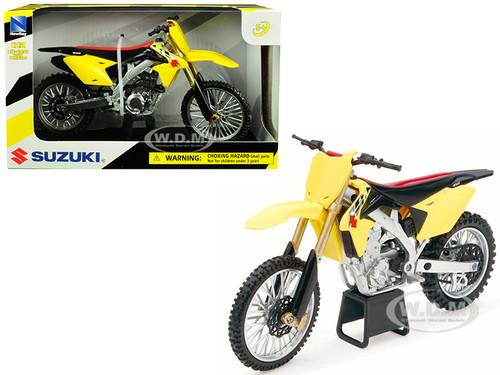
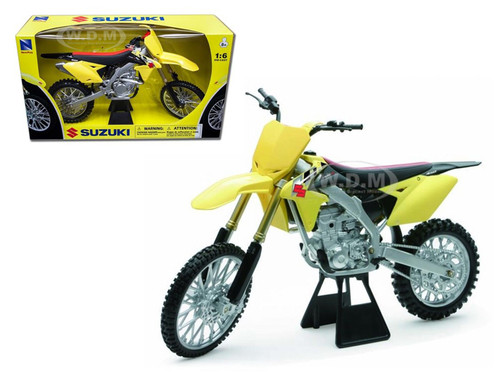
The Suzuki RM family became one of the company's best-known motocross lines. RM motorcycles have been produced in different engine sizes and generations, evolving from early two-stroke competition bikes into later machines with increasingly sophisticated suspension and chassis technology.
Suzuki's motocross success also influenced its motorcycle engineering and brand identity. The minimalist bodywork, long-travel suspension, knobby tires, and lightweight frames of RM motorcycles make them distinctive subjects for scale models.
A Suzuki RM diecast model can be especially appealing to collectors who build motocross, off-road, racing, or workshop-themed displays.
Suzuki Road Racing and the RG Series
Road racing became another important part of Suzuki's history. The company's competition motorcycles included sophisticated two-stroke Grand Prix machines that eventually helped Suzuki compete successfully at the highest levels of international motorcycle racing.
The Suzuki RG500 Gamma is one of the most recognizable motorcycles to emerge from this racing heritage. The production RG500 Gamma was inspired by Suzuki's Grand Prix racing technology and featured a two-stroke square-four engine configuration.
Its compact dimensions, full fairing, racing-inspired chassis, and unusual engine layout make the RG500 Gamma a particularly interesting subject for collectors.
The connection between Suzuki's Grand Prix racing motorcycles and production sport bikes is an important part of the brand's appeal. Scale replicas of these motorcycles can preserve design details that reflect the technology and styling of their racing era.
Suzuki GSX-R and the Superbike Revolution
Few Suzuki motorcycles are more important to modern sport-bike history than the GSX-R.
Suzuki introduced the GSX-R750 in 1985, creating a lightweight, high-performance sport motorcycle that closely reflected the company's racing philosophy. Its aluminum frame, inline-four engine, full fairing, and competition-inspired design helped establish the GSX-R as one of the defining Japanese sport-bike families.
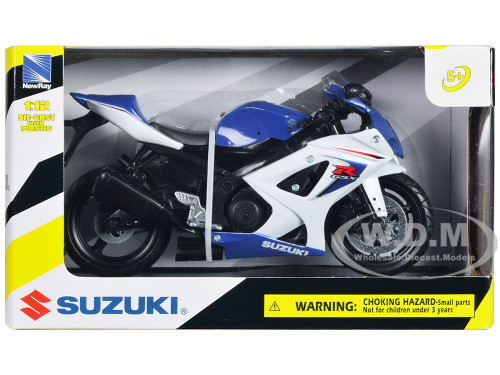
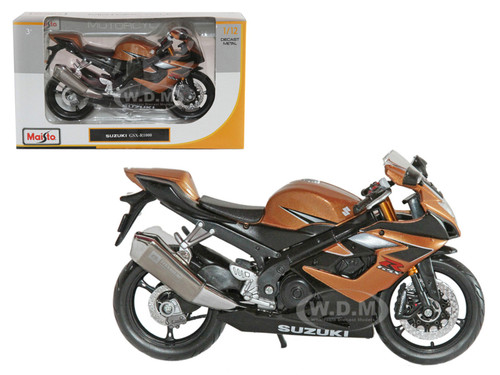
The GSX-R range expanded to include different engine capacities and generations. The GSX-R600 became a major middleweight sport bike, while the GSX-R1000, introduced in 2001, became Suzuki's flagship liter-class sport motorcycle.
GSX-R Diecast Models
GSX-R motorcycles offer collectors a particularly interesting opportunity to build a chronological display. Different generations feature substantial changes in headlights, fairings, frames, exhaust systems, wheels, and graphics.
A collection can focus on a single model such as the GSX-R750 or illustrate the evolution of Suzuki sport bikes by displaying several generations together.
Racing-inspired versions can add another dimension, especially when a model represents a specific competition livery or motorcycle associated with Suzuki's racing programs.
Suzuki Hayabusa
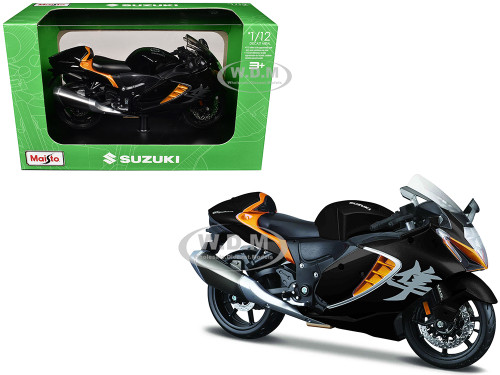
The Suzuki Hayabusa is one of the most recognizable modern Suzuki motorcycles.
Introduced in 1999 as the GSX1300R Hayabusa, it was designed as a high-performance sport motorcycle with a distinctive aerodynamic body. Its name comes from the Japanese word for the peregrine falcon, and the motorcycle's streamlined shape was designed with high-speed performance in mind.
The Hayabusa's unusual bodywork makes it immediately recognizable, even in miniature. Its enclosed fairing, aerodynamic silhouette, large engine, and distinctive proportions make it a natural centerpiece for a modern Suzuki diecast collection.
Different generations of the Hayabusa also offer collectors an opportunity to compare how Suzuki evolved the design while retaining the model's recognizable identity.
Suzuki Katana
The Suzuki Katana is another iconic Suzuki motorcycle. The original Katana GSX1100S was introduced around the beginning of the 1980s and featured a radically different design from conventional motorcycles of the period.
Its angular bodywork and distinctive styling were created in collaboration with the German design firm Target Design and became one of the most recognizable motorcycle designs of its era.
Suzuki later revived the Katana name for a modern sport-naked motorcycle, creating another interesting collecting opportunity. A classic Katana and modern Katana scale model can demonstrate how a historic design concept was reinterpreted for contemporary motorcycles.
Suzuki Adventure and Dual-Sport Motorcycles
Suzuki has also produced motorcycles intended for a combination of road and off-road riding.
The DR family includes several dual-sport and off-road motorcycles, while the V-Strom range represents Suzuki's adventure-touring approach. These motorcycles broaden the Suzuki story beyond sport bikes and racing.
The V-Strom family combines upright ergonomics, long-distance capability, and adventure-oriented styling. DR motorcycles, by comparison, have a stronger off-road identity and generally use more minimalist bodywork.
For collectors, these motorcycles can add variety to a Suzuki display while illustrating the different purposes for which Suzuki motorcycles have been designed.
Suzuki Cruisers and Touring Motorcycles
Suzuki has also produced a range of cruiser and touring motorcycles, including the Boulevard family. These motorcycles use larger engines, relaxed riding positions, low-slung proportions, and styling influenced by the American cruiser tradition.
The Suzuki Intruder name is also associated with this part of Suzuki's history. Depending on the generation, these motorcycles can feature V-twin engines, substantial fuel tanks, chrome components, and long-wheelbase proportions.
Cruiser models can provide an interesting contrast to a GSX-R, Hayabusa, or RM motocross motorcycle in a collection.
What to Look for in Suzuki Diecast Models
Suzuki has produced such a wide range of motorcycles that identifying the exact model and generation is particularly important when shopping for a scale replica.
Consider the following details:
- Model family: GSX-R, Hayabusa, Katana, GS, GT, RG, RM, DR, V-Strom, Boulevard, and other Suzuki motorcycles
- Generation: Styling and mechanical specifications can change significantly between model generations
- Engine configuration: Two-stroke triples, square-four racing-inspired engines, inline-four sport-bike engines, singles, and V-twins all have distinctive appearances
- Racing livery: Competition graphics and number plates can add historical significance
- Fairing design: Sport bikes such as the GSX-R and Hayabusa have highly recognizable aerodynamic bodywork
- Frame and suspension: Off-road and sport motorcycles use very different chassis designs
- Wheels and tires: Compare street, racing, dual-sport, and motocross configurations
- Exhaust system: Exhaust routing and muffler design can help distinguish generations
- Scale: Match the model to the other motorcycles in your display
Choosing the Right Suzuki Motorcycle Scale
Scale affects both the visual detail of a model and the amount of display space required.
1/12 scale provides a larger display format that can showcase Suzuki engines, frames, suspension components, wheels, brakes, and bodywork. These models are well suited to collectors looking for a prominent individual motorcycle.
1/18 scale offers a practical balance between size and detail. It can work particularly well for collections containing several motorcycles or multiple generations of Suzuki models.
1/24 and smaller scales are useful for compact displays and dioramas. Smaller Suzuki motocross or racing models can be incorporated into miniature tracks, garages, paddocks, and other scenes.
Always check the listed scale and dimensions of an individual model, particularly when you want several motorcycles to appear together at the same relative size.
Building a Suzuki Diecast Collection
Suzuki provides numerous possibilities for collectors. A sport-bike enthusiast might build a collection around the GSX-R family, while another collector could focus on iconic models such as the Hayabusa and Katana.
Collectors interested in motorcycle history can create a timeline ranging from classic two-stroke motorcycles such as the GT750 and RG500 Gamma to the GSX-R, Hayabusa, and modern Suzuki models. Off-road enthusiasts can create a separate display featuring RM motocross and DR dual-sport motorcycles.
A mixed collection can be particularly effective because Suzuki's motorcycles have changed dramatically according to their intended purpose. A GSX-R, RM, Hayabusa, and Boulevard can all carry the Suzuki name while representing very different approaches to motorcycle design.
Suzuki scale models can also be incorporated into a broader Motorcycle collection, allowing collectors to compare Suzuki with other Japanese, European, and American motorcycle manufacturers.
From classic two-stroke motorcycles and motocross machines to GSX-R sport bikes, Hayabusa superbikes, Katana icons, and adventure motorcycles, Suzuki offers a diverse history for scale-model collectors. Browse the Suzuki diecast models at DiecastModelsWholesale.com and find a detailed scale motorcycle that adds Suzuki's performance and racing heritage to your collection.



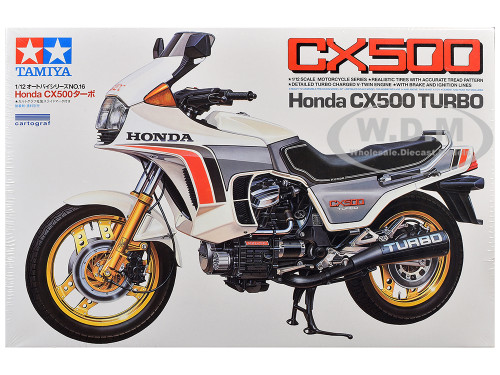 $36.99Was $45.99Save 19%

 $16.49Was $19.99Save 17%

 $43.99Was $49.99Save 12%
 $16.49Was $19.99Save 17%
 $14.49Was $16.99Save 14%