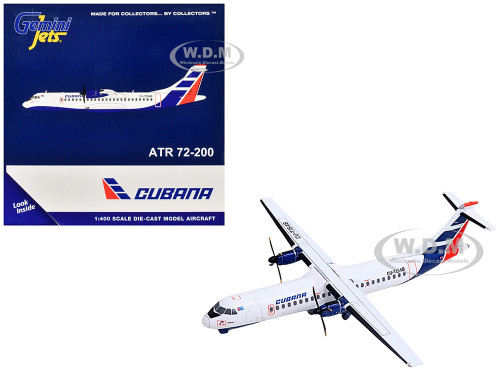
Cubana de Aviación is Cuba’s national airline and one of the most historically distinctive carriers in Caribbean aviation. Its aircraft have represented Cuban commercial aviation through changing eras, from early international passenger services to the jet age and modern regional operations. For airline model collectors, Cubana de Aviación offers a subject with strong connections to Cuban history, Caribbean air travel, and the development of international aviation.
Cubana de Aviación diecast airplane models represent the airline through miniature aircraft replicas featuring its name, markings, and liveries. Depending on current inventory, collectors may find models associated with different aircraft types and periods in the carrier’s history. Each release can differ in aircraft variant, scale, manufacturer, registration, finish, and display accessories, so shoppers should check the individual product listing for precise details.
Whether you collect national airlines, classic passenger aircraft, Soviet-designed airliners, or distinctive Caribbean airline liveries, Cubana de Aviación is an interesting addition to an international aviation collection.
The History of Cubana de Aviación
Cubana de Aviación was founded in 1929 as Compañía Nacional Cubana de Aviación Curtiss, initially operating with a focus on domestic air services. It developed during the early decades of commercial aviation, when airlines across the Caribbean and the Americas were establishing routes between cities and building connections that were difficult to maintain by land or sea.
Over time, Cubana expanded its operations and became an important part of Cuba’s transportation network. Havana served as its principal hub, linking the capital with domestic destinations and international cities. As aircraft technology advanced, the airline moved through several generations of passenger aircraft, reflecting wider changes in aviation design, operating requirements, and the political and economic circumstances affecting Cuba.
The airline’s fleet history is particularly distinctive because it has included aircraft of Western and Soviet design. This mix reflects different periods in Cuba’s international relationships and aviation supply arrangements. For collectors, it creates opportunities to explore aircraft types that are less commonly associated with many Western European and North American airline fleets.
Cubana de Aviación remains an important name in Cuban aviation history. Its long operating history and recognizable national identity make it a meaningful subject for collectors interested in airlines beyond the largest global carriers.
Notable Aircraft in Cubana de Aviación History
Cubana’s fleet has included aircraft from several countries and different stages of commercial aviation. These differences are especially appealing to collectors who enjoy comparing aircraft design, propulsion systems, and airline liveries across historical periods.
Ilyushin Il-62
The Ilyushin Il-62 was a long-range, four-engine Soviet passenger jet developed for international routes. Its swept-wing design and four engines mounted near the rear of the fuselage give it a distinctive appearance compared with many Western airliners.
Cubana operated Il-62 aircraft on international services, making the type an important part of the airline’s long-haul history. For model collectors, the Il-62 is particularly interesting because it represents a different design tradition from the Boeing and Airbus aircraft common in many contemporary airline collections.
Ilyushin Il-96
The Ilyushin Il-96 is a widebody passenger aircraft developed in the Soviet Union and Russia as a later-generation long-distance airliner. Its four-engine configuration and wide fuselage distinguish it from the twin-engine widebodies that became common on many international routes.
Cubana has operated the Il-96, giving the aircraft a notable place in the airline’s modern long-haul identity. An Il-96 model can be an appealing choice for collectors interested in Russian-designed airliners, four-engine aircraft, or the differences between Eastern and Western commercial aircraft development.
Tupolev Tu-204
The Tupolev Tu-204 is a twin-engine jet designed for medium- to long-distance passenger operations. Its overall configuration is comparable in broad purpose to aircraft such as the Boeing 757 and other twin-engine airliners, though it has its own design features and history.
Cubana has operated Tu-204 aircraft, adding another Russian-designed jet to its fleet history. Collectors interested in aircraft from multiple manufacturers may appreciate the opportunity to compare the Tu-204 with more familiar Boeing and Airbus types.
Antonov An-158
The Antonov An-158 is a regional passenger jet derived from the An-148 family. It was designed to serve regional and shorter international routes, with a high-wing configuration and engines mounted beneath the wings.
The An-158 is a distinctive aircraft in airline model collections because its design differs from the more familiar low-wing Boeing and Airbus passenger jets. Its association with Cubana also reflects the airline’s use of aircraft developed in the former Soviet Union and its successor states.
Earlier Propeller Aircraft and Other Jet Types
Cubana’s earlier history includes propeller-driven aircraft and other jetliners that reflect the development of commercial aviation through the twentieth century. Types associated with the airline over different periods include the Douglas DC-3, Bristol Britannia, and Ilyushin Il-18, alongside later aircraft such as the Yakovlev Yak-42.
These aircraft represent very different eras of passenger travel. The DC-3 is associated with the formative period of scheduled airline service, while the Britannia was a long-range turboprop designed for international travel. The Il-18 and Yak-42 illustrate other approaches to passenger aircraft design.
These historical types are useful context for understanding Cubana’s fleet, but they should not be taken as confirmation that a diecast model of each aircraft is currently available. Product selection depends on the releases offered in this category.
Cubana de Aviación Livery and Collecting Details
Cubana de Aviación’s aircraft markings connect the airline to Cuba’s national identity. The precise appearance can vary by aircraft, era, and paint scheme, which makes livery details an important part of choosing a replica.
Collectors often look for features that distinguish one release from another, including:
-
Airline titles and logo: The placement and appearance of Cubana branding on the fuselage and tail.
-
Aircraft type: Different models have distinct fuselage proportions, wing designs, engine positions, and tail configurations.
-
Livery period: Historical paint schemes can represent different stages in the airline’s development.
-
Aircraft registration: Where provided, the registration can help identify the real aircraft represented.
-
Model construction: Materials, surface detail, landing gear, and display accessories differ between products and manufacturers.
If you collect a particular Cubana aircraft, check the product title and description carefully. Similar aircraft names may refer to different variants, and an airline’s historical fleet does not necessarily correspond to currently available model releases.
Choosing a Cubana de Aviación Airplane Model
Understanding Scale
Aircraft models are produced in different scales, with the scale indicating how much smaller the replica is than the real aircraft. Common scales in the wider airline-model hobby include 1:200, 1:400, and 1:500. Availability varies by aircraft and release, so these examples should not be interpreted as a list of scales currently offered for Cubana de Aviación.
Larger models generally occupy more display space and can make exterior features easier to appreciate. Smaller models are useful for building a collection of multiple airlines or creating a miniature airport scene.
When choosing a model, consider the size of your display area and whether you want the aircraft to match the scale of other replicas in your collection. The wingspan can be just as important as the fuselage length when planning shelf or cabinet space.
Materials and Display Features
Diecast aircraft models may combine metal components with plastic parts. Construction and detail levels vary between manufacturers and product lines. Depending on the individual release, features may include printed markings, detailed engines, landing gear, or a display stand.
Some models are intended primarily for display, while others place greater emphasis on fine exterior details. Review the product listing to confirm its materials, scale, accessories, and any specific product features.
Collecting by Aircraft Type or Historical Period
Cubana de Aviación provides several ways to build a themed aviation collection. You could focus on Soviet-designed passenger aircraft, collect four-engine airliners, or compare Cuban airline models with those of other Caribbean and Latin American carriers.
Another approach is to build a historical collection that follows the transition from propeller aircraft to early jetliners and later generations of passenger aircraft. Different models can illustrate how aircraft design evolved in response to changing route distances, passenger capacity, and airline requirements.
Because Cubana has operated aircraft from different design traditions, it can also serve as a bridge between collections focused on Western manufacturers and those featuring aircraft developed in the Soviet Union or Russia.
Cubana de Aviación Models for Collectors and Gift Shoppers
Cubana de Aviación airplane models may appeal to:
-
Airline collectors building collections of national carriers from the Caribbean and Latin America.
-
Aviation history enthusiasts interested in Cuba’s commercial aviation heritage.
-
Aircraft design enthusiasts comparing Soviet- and Russian-designed airliners with Western passenger jets.
-
Scale-model hobbyists who enjoy collecting aircraft variants, airline markings, and historical liveries.
-
Gift shoppers looking for an aviation-themed collectible for someone interested in Cuban aviation or international airlines.
For a gift, consider the recipient’s preferred scale, available display space, and interest in a specific aircraft type or historical period. Checking the exact variant and livery in the listing can help you choose a model that complements an existing collection.
Explore the Cubana de Aviación Airlines category at Diecast Models Wholesale to browse the available aircraft replicas and find a collectible that suits your interest in Cuban and international aviation.