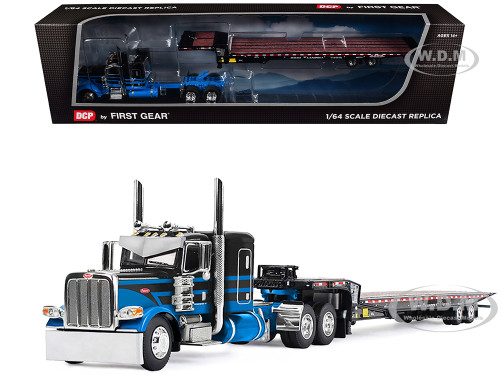
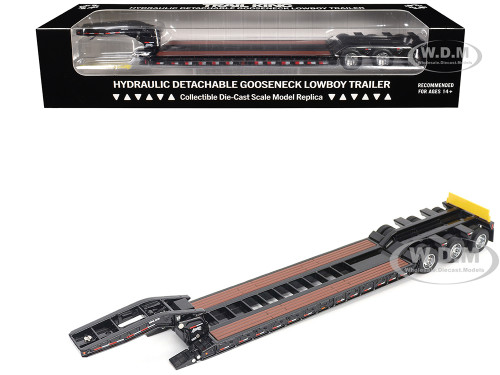
Gooseneck Trailer Diecast Models
Gooseneck trailers are specialized trailers designed with a forward section that extends over the rear of the tow vehicle and connects to a hitch located inside the truck bed, typically over or slightly ahead of the rear axle. This distinctive configuration provides a close connection between the trailer and tow vehicle and is widely associated with heavy-duty pickups, equipment hauling, livestock transportation, recreational use, and other applications that require a substantial trailer.
For diecast collectors, gooseneck trailer models offer an interesting alternative to conventional bumper-pull trailers. The raised forward neck, bed-mounted hitch arrangement, open or enclosed cargo area, and heavy-duty running gear give these trailers a recognizable appearance that can add considerable realism to a scale transportation display.
The Gooseneck category at DiecastModelsWholesale.com is intended for collectors, hobbyists, truck enthusiasts, and anyone looking to complement a scale pickup or other suitable tow vehicle with a specialized trailer.
What Is a Gooseneck Trailer?
A gooseneck trailer gets its name from the curved or raised front portion of its frame, which resembles the neck of a goose. Instead of attaching to a hitch at the rear bumper area of the tow vehicle, the trailer connects to a gooseneck ball hitch mounted in the truck bed.
The forward portion of the trailer extends over the bed, while the trailer's main deck or cargo area sits behind the truck. This arrangement places the hitch closer to the tow vehicle's rear axle than a conventional bumper-mounted connection.
Gooseneck trailers are commonly found in configurations designed to carry horses and livestock, construction equipment, vehicles, agricultural machinery, recreational equipment, and general heavy loads.
Key Features of Gooseneck Trailers
Depending on the particular prototype represented by a diecast model, collectors may see:
- Raised gooseneck front section
- Bed-mounted hitch connection
- Open or enclosed cargo area
- Flat or equipment-hauling deck
- Loading ramps
- Tandem or multiple axles
- Heavy-duty frame
- Fenders
- Trailer brakes and suspension components
- Storage compartments
- Rear loading gates or ramps
- Interior partitions on livestock or horse trailers
The gooseneck connection is the defining characteristic. It immediately distinguishes these trailers from conventional bumper-pull designs.
How Gooseneck Trailers Are Used
The gooseneck configuration is particularly useful when a trailer needs to carry substantial weight or when a stable connection between the trailer and tow vehicle is important.
Equipment Hauling
Gooseneck trailers are frequently associated with transporting construction and agricultural equipment. Open equipment-hauling versions can carry tractors, compact construction machines, attachments, utility equipment, and other machinery.
This makes a scale gooseneck trailer a natural companion for models in the Construction and Tractor categories. A pickup or heavy-duty truck towing a loaded equipment trailer can form the centerpiece of a realistic worksite or farm display.
Horse and Livestock Transportation
Gooseneck designs are also widely used for horse and livestock trailers. The forward section provides space over the tow vehicle's bed, while the rear portion can contain stalls or compartments for animals.
For diecast collectors, these trailers can introduce a distinctly agricultural or equestrian theme to a collection.
Vehicle Transportation
Some gooseneck trailers are designed to transport automobiles, off-road vehicles, motorcycles, and other recreational equipment. Open decks and loading ramps make these configurations particularly versatile.
A collector can pair one with a compatible pickup and vehicle to create a realistic recreational or automotive transportation scene.
General Heavy-Duty Use
Gooseneck trailers are also used for utility and commercial hauling where a pickup-based towing combination is more practical than a larger tractor-trailer.
Their variety of configurations means that a diecast gooseneck trailer may represent anything from a compact utility setup to a substantial equipment hauler.
Gooseneck vs. Bumper-Pull Trailers
The biggest difference between a gooseneck and conventional bumper-pull trailer is the location of the hitch.
A bumper-pull trailer connects behind the tow vehicle, generally near the rear of the vehicle. The trailer's tongue extends forward from the cargo area to the hitch.
A gooseneck trailer extends forward over the truck bed and connects to a hitch located within the bed. The resulting configuration brings the trailer connection closer to the tow vehicle's rear axle.
This distinction is easy to recognize in scale models. The long, raised front neck of a gooseneck trailer is one of its most defining visual features.
Collectors should also distinguish gooseneck trailers from fifth-wheel trailers. Both place the connection over the rear portion of the tow vehicle, but they use different hitch arrangements and are commonly associated with different trailer designs and applications.
A Brief History of Gooseneck Trailers
The development of gooseneck trailers is closely connected to the evolution of pickup trucks and specialized towing. As trucks became more capable of carrying and towing heavier loads, trailer designers developed configurations that could make better use of the truck's structure and available payload capacity.
The basic principle of placing the trailer connection over the tow vehicle's rear axle has long been useful for heavy-duty towing. Gooseneck designs became particularly familiar in agricultural, livestock, equipment-hauling, and recreational applications.
The configuration proved versatile because a pickup could serve as the tow vehicle while still providing a substantial trailer platform behind it. Manufacturers developed increasingly specialized versions, including livestock trailers, horse trailers, flatbed equipment trailers, enclosed cargo trailers, and recreational haulers.
Modern gooseneck trailers continue to be closely associated with heavy-duty pickups and work-oriented transportation. Their distinctive profile has also made them recognizable to collectors of agricultural equipment, construction machinery, trucks, and motorsports vehicles.
Choosing a Gooseneck Trailer Diecast Model
When selecting a gooseneck trailer model, collectors should consider both the trailer itself and the vehicle that will tow it.
Match the Scale
Scale compatibility is especially important with gooseneck trailers because the relationship between the trailer neck and pickup bed needs to look correct.
Common scales found across diecast trucks, equipment, and trailers include 1/18, 1/24, 1/32, 1/43, 1/50, and 1/64, although specific gooseneck trailer models may be available in only certain scales.
A gooseneck trailer should ideally be paired with a tow vehicle produced to the same scale.
Consider the Trailer Type
Think about what the trailer is intended to represent. An equipment trailer creates a very different display from a horse trailer or enclosed cargo trailer.
Collectors interested in construction equipment may prefer an open flatbed or equipment-hauling configuration, while agricultural enthusiasts may be drawn to livestock or horse trailer designs.
Look for Loading Details
Ramps, rear gates, deck construction, fenders, axles, and tie-down features can add realism to a scale model. These details can also help identify the trailer's intended application.
Examine the Gooseneck Connection
The raised front section is central to the design. On a detailed model, the neck, hitch area, support structure, and relationship to the tow vehicle can be important visual features.
Gooseneck Trailers in Diecast Displays
A gooseneck trailer can significantly expand the possibilities of a truck collection. Rather than displaying a pickup as a standalone vehicle, the trailer allows it to become part of a working transportation scene.
Consider pairing a gooseneck trailer with:
- A heavy-duty pickup truck
- Agricultural tractors
- Compact construction equipment
- Off-road vehicles
- Race cars or motorsports equipment
- Motorcycles
- Utility equipment
- Horse or livestock models
For agricultural displays, a gooseneck equipment trailer loaded with a tractor or implement can suggest a farm-to-field transportation scene. For construction collectors, an equipment trailer can be positioned beside a pickup and compact machinery at a jobsite.
Automotive enthusiasts can create a different scene by using a gooseneck trailer to transport a race car, classic automobile, or recreational vehicle.
Open and Enclosed Gooseneck Trailers
Gooseneck trailers are available in both open and enclosed configurations, and each creates a different collecting opportunity.
Open gooseneck trailers make their cargo visible and are particularly effective for equipment-hauling displays. The deck, ramps, axles, and loaded vehicle can all become part of the scene.
Enclosed gooseneck trailers provide a covered cargo area and are often associated with vehicle transport, motorsports, commercial hauling, and specialty applications. Their enclosed bodies can feature doors, graphics, storage areas, and other details.
When choosing a diecast model, consider whether visibility of the cargo or the enclosed trailer itself is more important to your intended display.
Building a Towing and Equipment Display
Gooseneck trailers work particularly well in compact dioramas because they naturally connect several different types of models.
A heavy-duty pickup, gooseneck trailer, and piece of construction or agricultural equipment can create a convincing work scene without requiring a large collection. Alternatively, an open trailer loaded with a race car can form the centerpiece of a motorsports display.
Collectors can also display the trailer unloaded, focusing on its chassis, raised neck, loading ramps, wheels, and suspension details.
The combination of a tow vehicle and trailer also provides an opportunity to explore realistic scale relationships. The truck's bed, hitch position, trailer neck, and cargo dimensions should all work together visually.
Why Collect Gooseneck Trailer Models?
Gooseneck trailers represent an important category of specialized transportation equipment. They are recognizable, versatile, and closely connected to the pickup trucks, agricultural machinery, construction equipment, and recreational vehicles that many collectors already enjoy.
For diecast enthusiasts, they also provide an opportunity to move beyond collecting individual vehicles and create miniature scenes with a clear purpose. A gooseneck trailer can show what a truck is doing, what it is carrying, and where it might be going.
Whether your interests center on farming, construction, automotive transportation, motorsports, or trucks, a carefully selected gooseneck trailer can add another layer of realism to your collection.
Shop Gooseneck Trailer Diecast Models
Whether you are building a farm display, construction scene, motorsports setup, or realistic pickup-truck towing combination, a gooseneck trailer diecast model can be a distinctive addition to your collection.
Browse the Gooseneck category at DiecastModelsWholesale.com to explore available scale trailer models and find a gooseneck trailer that complements your favorite trucks, equipment, and vehicles.