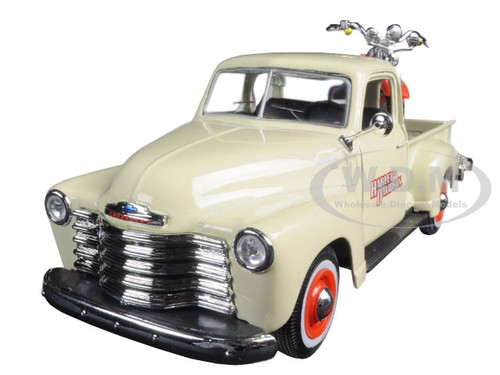
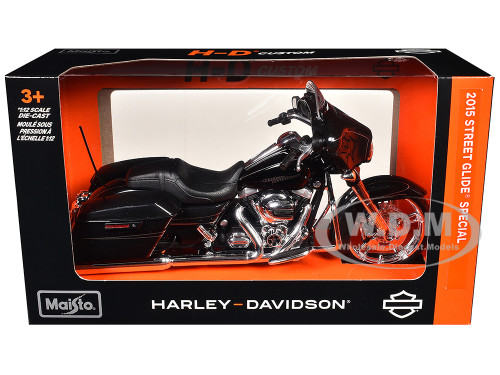
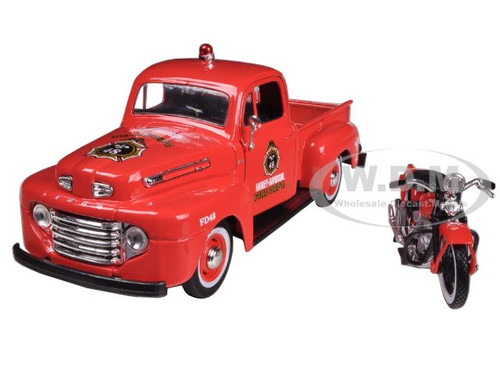
Harley-Davidson diecast models bring one of the most recognizable names in American motorcycle history into scale form. Known for distinctive V-twin motorcycles, long-distance touring machines, cruisers, performance bikes, and a strong custom-motorcycle culture, Harley-Davidson offers collectors a wide range of subjects to explore.
The Harley-Davidson category at DiecastModelsWholesale.com is designed for motorcycle collectors, Harley enthusiasts, and diecast hobbyists looking for detailed scale models of classic and modern Harley-Davidson motorcycles. Depending on the available selection, shoppers may find models representing iconic families such as Sportster, Softail, Touring, Electra Glide, Dyna, Fat Boy, Road King, Street Glide, and other notable Harley-Davidson motorcycles.
Whether you are building a dedicated Harley-Davidson collection or adding an American motorcycle to a broader Motorcycle display, scale models provide an opportunity to preserve the styling and character of these influential machines in a compact format.
The History of Harley-Davidson
Harley-Davidson's story began in Milwaukee, Wisconsin, where William S. Harley and Arthur Davidson developed their first motorcycles at the beginning of the 20th century. After experimenting with an engine-powered bicycle, the pair developed a more substantial motorcycle with a dedicated frame and larger engine. Walter Davidson later joined the project, bringing valuable mechanical and manufacturing experience. The first motorcycle was sold in 1903, and Harley-Davidson was formally incorporated in 1907.
The company's early growth was closely connected to engineering development, dealer expansion, endurance riding, and competition. Harley-Davidson's first production facilities grew rapidly from the original backyard workshop, while its motorcycles began reaching customers throughout the United States and eventually international markets. Racing and endurance events also helped demonstrate the performance and durability of the young company's motorcycles.
Over the following decades, Harley-Davidson developed a motorcycle identity strongly associated with American road riding. Large-displacement engines, substantial chassis designs, distinctive fuel tanks, chrome components, and increasingly sophisticated touring equipment became important elements of the brand's visual language.
For diecast collectors, this long history is particularly interesting because Harley-Davidson motorcycles have changed considerably over the years while retaining recognizable design characteristics. A vintage motorcycle, a classic Sportster, a touring Electra Glide, and a modern performance-oriented model can look dramatically different while still belonging to the same legendary marque.
Iconic Harley-Davidson Motorcycle Families
Sportster
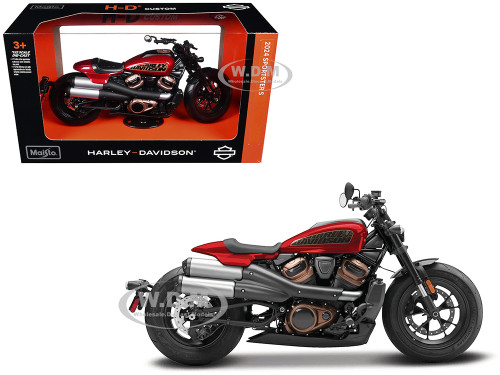
The Sportster is one of the most important Harley-Davidson families for collectors. Introduced in 1957 as the XL Sportster, it evolved from the earlier K-model platform and quickly established a reputation for combining Harley-Davidson character with a comparatively compact and sporty format. Early motorcycles with iron cylinder heads became known as "Ironhead" Sportsters.
The Sportster also developed a significant racing and customization legacy. Sportster-based motorcycles competed in enduro, dirt-track, drag racing, and other forms of competition. The XR-750, introduced in 1970, became especially important in American dirt-track racing. The Sportster platform also became a favorite among custom builders, contributing to the development of bobber, café racer, chopper, and scrambler-inspired motorcycles.
Sportster diecast models can therefore appeal to both traditional Harley collectors and enthusiasts interested in American motorcycle customization.
Electra Glide and Touring
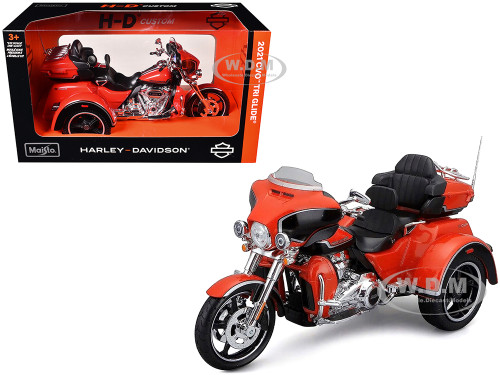
Harley-Davidson's touring motorcycles represent another major part of the company's history. The Electra Glide debuted in 1965 and introduced an electric starter to a major Harley touring model, helping establish the direction of the company's modern touring motorcycles. Hard saddlebags, windshields, and later fairings became important features of the touring design.
The famous "Batwing" fairing became associated with Harley-Davidson touring motorcycles after its introduction as an accessory for the Electra Glide and later became a defining visual feature of models such as the Street Glide. Road King, Street Glide, Ultra Limited, and related touring motorcycles continue this lineage.
For collectors, touring models can be particularly attractive because they include numerous recognizable details: large fairings, saddlebags, windscreens, touring seats, exhaust systems, and luggage. These components also make larger-scale Harley-Davidson diecast models visually interesting.
Softail
The Softail family is closely associated with the classic custom-cruiser appearance of Harley-Davidson motorcycles. Its design combines traditional-looking hardtail styling with a rear suspension system concealed within the frame.
Softail models have included a wide variety of Harley-Davidson designs, from relatively traditional cruisers to highly customized factory motorcycles. Models such as the Fat Boy became especially recognizable, with substantial wheels, muscular proportions, and broad fenders.
A Softail diecast model can make an excellent centerpiece for a Harley-Davidson display because the combination of frame design, engine, exhaust, wheels, and bodywork provides plenty of visual detail.
Dyna
The Dyna family occupies an important position in Harley-Davidson history and is particularly interesting to collectors who appreciate classic American motorcycle styling with a more performance-oriented character.
Dyna motorcycles have been offered in several configurations over the years, including models associated with both traditional cruiser styling and sportier riding. Their recognizable frames and exposed mechanical components make them attractive subjects for scale models.
Fat Boy and Other Iconic Models
Certain Harley-Davidson motorcycles have become recognizable far beyond the motorcycle industry. The Fat Boy, for example, is known for its substantial proportions and distinctive wheel and fender design.
Other collectible Harley-Davidson subjects can include Road King, Street Glide, Heritage Softail, V-Rod, Nightster, Low Rider, and other models representing different eras and design philosophies.
For collectors, choosing models from different families can be a good way to show the evolution of Harley-Davidson rather than concentrating exclusively on one type of motorcycle.
Harley-Davidson Racing Heritage
Although Harley-Davidson is often associated with cruising and touring, competition has been part of the company's story since its earliest years. Walter Davidson was an accomplished competition rider, and early endurance events helped establish confidence in the company's motorcycles. Harley-Davidson subsequently developed factory-supported racing efforts and became an important participant in American motorcycle competition.
The Sportster family provides one of the clearest examples of this connection. Its predecessors and derivatives competed in dirt-track and other forms of racing, while the XR-750 became one of the most successful motorcycles in American dirt-track competition. Sportster-based machines also appeared in record-setting and drag-racing projects.
This racing history gives collectors another way to approach Harley-Davidson diecast models. Instead of viewing the motorcycles solely as cruisers, enthusiasts can use different models to represent the company's competition, engineering, and performance heritage.
What to Look for in Harley-Davidson Diecast Models
Harley-Davidson motorcycles contain many details that translate well into scale models. When comparing different models, collectors may want to consider:
- Motorcycle family: Sportster, Softail, Touring, Dyna, Road King, Street Glide, Fat Boy, or another model.
- Era: Early vintage Harley-Davidson, mid-century motorcycle, classic model, or modern production motorcycle.
- Scale: Larger models generally provide more room for mechanical and body details.
- Engine: V-twin engine design, cylinder heads, cooling components, and surrounding hardware.
- Frame: Look closely at frame construction and suspension details.
- Exhaust: Pipes are an important part of Harley-Davidson styling and can vary significantly between motorcycle families.
- Wheels and tires: Wheel design, tire profile, brake components, and fender proportions contribute significantly to realism.
- Accessories: Saddlebags, fairings, windshields, luggage, seats, and other equipment can identify a particular touring or cruiser configuration.
- Paint and graphics: Factory colors, tank badges, logos, and special-edition graphics can make certain models especially desirable to collectors.
- Rider figures: Some motorcycle models may include a rider, adding another dimension to a display or diorama.
Choosing a Harley-Davidson Model by Scale
Scale is an important consideration when building a motorcycle collection. Larger models generally allow manufacturers to reproduce more mechanical components and surface details, while smaller models are easier to display in larger numbers.
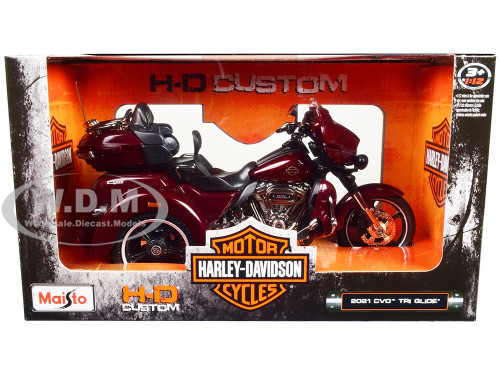
1/12 scale Harley-Davidson models are especially suitable for collectors who want a substantial display motorcycle. At this size, details such as engine components, suspension, handlebars, wheels, exhaust pipes, and bodywork can be particularly prominent.
1/18 and 1/24 scale motorcycles offer a practical compromise between display size and detail. These scales work well for collectors who want to display several Harley-Davidson motorcycles together.
1/32 and 1/43 scale models can be useful for compact displays or collections that combine motorcycles with cars, trucks, and other vehicles.
1/64 scale motorcycles take up relatively little space and can be especially useful for collectors building larger vehicle scenes or dioramas.
Because manufacturers may produce the same motorcycle family in different scales, it is worth checking the listed scale and dimensions before purchasing. Keeping models at a consistent scale can create a more cohesive display, while intentionally mixing scales can work well for broader collections.
Building a Harley-Davidson Diecast Collection
There are several ways to build a Harley-Davidson motorcycle collection. One approach is to collect the major model families, choosing a Sportster, Softail, Touring motorcycle, and other significant designs to represent different periods of Harley-Davidson development.
Another approach is to focus on a particular era. A collector might build a display around vintage Harley-Davidson motorcycles, classic American cruisers, modern touring machines, or contemporary performance-oriented models.
Collectors interested in motorcycle culture can also combine Harley-Davidson models with related vehicles and accessories. A motorcycle displayed alongside a pickup, transporter, trailer, garage scene, or other road vehicle can create a convincing scale environment.
For a broader motorcycle collection, Harley-Davidson models provide an opportunity to compare American motorcycle design with European, Japanese, and other manufacturers. Their large V-twin engines, cruiser proportions, touring equipment, and distinctive styling make them immediately recognizable within a mixed motorcycle display.
Displaying Harley-Davidson Diecast Models
Harley-Davidson models tend to work particularly well in displays where the motorcycle itself is the focus. Larger-scale models can be positioned individually, allowing room around the motorcycle to appreciate details such as the engine, exhaust, wheels, and frame.
Smaller models can be grouped into themed displays. For example, a collector could create separate sections for vintage motorcycles, Sportsters, touring models, custom-inspired motorcycles, and modern Harley-Davidson designs.
Another effective approach is to build a chronological display. Beginning with early motorcycles and progressing through classic models and modern designs can illustrate how Harley-Davidson styling and engineering evolved over more than a century.
The company's extensive history also makes Harley-Davidson diecast models suitable for collectors who value historical storytelling. Each motorcycle can represent a particular era, design philosophy, or chapter in the development of American motorcycling.
Why Collect Harley-Davidson Diecast Models?
Harley-Davidson offers an unusually broad collecting subject because its motorcycles encompass more than a century of American manufacturing and motorcycle culture. The brand's history includes early endurance machines, classic V-twins, Sportsters, racing motorcycles, cruisers, touring bikes, and modern performance-oriented designs.
For collectors, this means a Harley-Davidson display can continue to grow without becoming visually repetitive. Different model families offer substantially different shapes and equipment, while special editions, racing versions, vintage designs, and modern motorcycles add further variety.
Whether you are a lifelong Harley-Davidson enthusiast, a motorcycle collector, or simply appreciate the design and history of American motorcycles, a scale Harley-Davidson model can be a meaningful addition to a diecast collection.
Browse the Harley-Davidson diecast models at DiecastModelsWholesale.com to explore the available scale motorcycles and find a Harley-Davidson model that fits your collection, display, or motorcycle-themed diorama.






 $17.99Was $21.99Save 18%