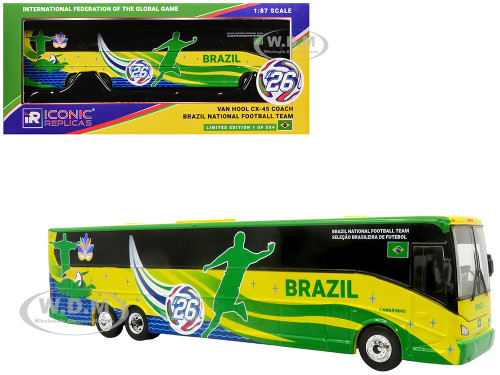
Van Hool is a Belgian manufacturer known for designing and building buses, coaches, and other passenger transport vehicles. Its products are used in a variety of transportation settings, from intercity and long-distance coach services to public transit and specialized passenger operations. For bus enthusiasts and diecast vehicle collectors, Van Hool models represent an important part of the international bus industry.
The Van Hool category at DiecastModelsWholesale.com is intended for shoppers interested in collectible miniature buses and coaches associated with the manufacturer. Depending on current availability, models may represent distinctive coach designs, passenger transport vehicles, and liveries inspired by operators or transport services.
Unlike miniature passenger cars, bus models appeal to collectors who appreciate large-vehicle design, commercial transportation, and the visual identity of bus operators. Their long bodies, expansive windows, detailed front ends, and varied paint schemes make them especially interesting for display collections.
Whether you collect buses by manufacturer, vehicle type, operator livery, or scale, Van Hool offers a subject connected to both European vehicle engineering and the broader world of public and private passenger transport.
The History and Background of Van Hool
Van Hool was established in Belgium in 1947 by Bernard Van Hool. The company developed into a major manufacturer of buses and coaches, building a reputation for passenger vehicles designed for different transportation needs. Its Belgian origins remain an important part of the brand's identity, particularly among collectors interested in European commercial vehicles.
Over the years, Van Hool produced a broad range of bus and coach designs. These included vehicles intended for scheduled public transport, touring, intercity journeys, and other passenger services. Different models were developed to meet the requirements of transport operators, including passenger capacity, luggage storage, comfort, accessibility, and operating conditions.
Van Hool vehicles are particularly recognizable for their coach designs, which often feature long, streamlined bodies, large passenger windows, and carefully integrated exterior details. Depending on the model and generation, styling can range from traditional touring coaches to more contemporary designs with modern lighting and aerodynamic bodywork.
For diecast collectors, this variety provides opportunities to explore how passenger transport vehicles have evolved. A miniature coach can represent a particular period in transportation design, while differences in body shape, window arrangement, roof equipment, and operator livery help distinguish one model from another.
Types of Van Hool Buses and Coaches
Van Hool's real-world vehicle range includes several categories of passenger transport. Understanding these categories can help collectors identify the types of vehicles represented by miniature replicas.
Touring and Long-Distance Coaches
Touring coaches are designed for comfortable travel over longer distances. They commonly feature forward-facing passenger seating, substantial luggage compartments, large windows, and interiors configured for extended journeys.
Van Hool has produced coach families intended for touring and intercity operations. These vehicles can be particularly appealing as diecast models because their elongated bodywork provides room for detailed exterior features and distinctive operator graphics.
Collectors may be drawn to touring coach models for their proportions, windshield design, mirrors, wheel arrangements, and paint schemes. Operator liveries can be especially significant because they connect the vehicle to a real transport company, travel route, or regional service.
Public Transit Buses
Public transit buses serve urban and regional transportation networks. Compared with touring coaches, they are generally designed around frequent passenger boarding and exiting, with features such as multiple doors and layouts suited to regular stops.
Van Hool has manufactured buses for different transit applications. For collectors, transit bus replicas provide a different perspective on commercial vehicle design, emphasizing passenger access, visibility, and the practical requirements of daily service.
A city bus model can also complement a collection of emergency vehicles, commercial trucks, and other transport-related miniatures. Its livery may represent a municipal transit system or private operator, depending on the specific product.
Articulated Buses
Articulated buses use connected body sections that allow the vehicle to negotiate turns while accommodating more passengers than many conventional single-body buses. They are commonly associated with busy urban routes and high-demand transit corridors.
The articulated configuration creates a distinctive profile, with a flexible joint connecting the sections. In a miniature model, this arrangement makes the vehicle stand out from standard buses and coaches.
Collectors interested in modern public transportation may appreciate articulated bus replicas for their unusual proportions and their representation of the engineering used to move large numbers of passengers through urban environments.
Double-Decker and Specialized Passenger Vehicles
Bus manufacturers may also develop vehicles for specific markets or operating requirements. Double-decker buses, specialized transit vehicles, and coaches configured for particular services illustrate the variety found across the passenger transportation industry.
When browsing Van Hool models, use the individual product description to identify the specific vehicle type and configuration. Not every bus style or product family is necessarily represented in the current category.
Notable Van Hool Model Families
Several Van Hool model families are significant in the history of bus and coach design. These names can be useful reference points for enthusiasts researching the full-size vehicles represented by collectible replicas.
Van Hool T8
The T8 coach family, introduced in the late 1970s, became an important part of Van Hool's touring coach history. Its design reflected the growing demand for comfortable long-distance passenger transportation and helped establish the manufacturer's reputation in the coach market.
Van Hool T9
The T9 family followed the T8 and continued the development of Van Hool's touring coaches. For collectors interested in the evolution of European coaches, it represents a later stage in the development of the company's long-distance passenger vehicles.
Van Hool TX
The TX family is associated with modern touring coach design. Its vehicles combine a distinctive coach profile with styling intended for contemporary passenger transport. Depending on the specific model and generation, exterior details and proportions can differ, giving collectors useful points of comparison.
Van Hool A-Series Buses
Van Hool's A-series includes urban bus designs developed for public transportation. Models such as the A120 and A300 are part of the company's history of city bus development. These vehicles are relevant to collectors who prefer transit buses over touring coaches and want to explore the variety of designs used in everyday passenger service.
These are examples of notable full-size Van Hool vehicles, not a confirmation that replicas of each model are currently available at DiecastModelsWholesale.com. Refer to the product listings for the models actually offered.
What Makes Van Hool Bus Models Collectible?
Distinctive European Vehicle Design
Van Hool coaches have a recognizable place in European passenger transport. Their long bodies, broad windshields, large windows, and carefully shaped front ends give them a different character from many North American school buses, city buses, or commercial vehicles.
A miniature replica can preserve the details that distinguish one coach generation from another. Collectors may compare window arrangements, headlights, mirrors, wheel designs, roof profiles, and exterior trim when choosing models.
Operator Liveries and Transportation History
A bus's paint scheme can be as important to collectors as its underlying vehicle design. Real-world buses and coaches often display the branding, colors, and graphics of the transportation companies that operate them.
Models representing particular operators can connect a miniature vehicle to a region, country, route, or period in transportation history. Collectors who specialize in public transit or coach operators may therefore prioritize the livery and vehicle configuration over the manufacturer alone.
Always check the individual listing to confirm which operator, color scheme, and vehicle version a particular replica represents.
A Different Perspective on Diecast Collecting
Cars and trucks are familiar subjects in the diecast hobby, but bus models offer a different way to explore vehicle design. Their larger body proportions and extensive glazing provide a distinctive appearance in a display cabinet, while their transport role connects them with the history of public mobility and tourism.
Van Hool models can complement collections of European commercial vehicles, public transportation models, touring coaches, and other passenger vehicles. They may also be suitable for collectors building miniature streetscapes, transport terminals, or model city scenes.
Choosing a Van Hool Diecast Model
When browsing Van Hool diecast bus models, consider the following details before making a purchase:
-
Vehicle type: Decide whether you prefer a touring coach, city bus, articulated bus, or another passenger transport design.
-
Model family and generation: Compare the full-size vehicle represented by each replica, as styling and configurations can differ between generations.
-
Operator and livery: Look for a particular transportation company, regional service, or paint scheme if these details matter to your collection.
-
Scale and dimensions: Check the stated scale and model measurements to ensure the bus fits your display and works alongside other miniatures.
-
Construction and detail: Review the product description for confirmed materials, exterior features, interior detail, mirrors, wheels, and any movable parts.
-
Packaging and display: Consider whether you plan to display the model in its packaging, on a shelf, or as part of a miniature transportation scene.
Product features vary from one model to another. Use the individual listing to confirm the exact vehicle, scale, manufacturer information, and included accessories rather than assuming that every replica shares the same specifications.
Understanding Bus Model Scales
Scale determines the size of a miniature relative to the full-size vehicle. For example, a 1:43 scale bus is smaller than a 1:24 scale replica of the same bus.
Bus and coach miniatures are produced in a range of scales, with 1:43 and 1:87 among the formats encountered in the wider collecting hobby. Availability depends on the particular manufacturer and model, so check the scale shown in each product listing.
Smaller scales can make it easier to build a collection featuring several operators or vehicle types without requiring extensive shelf space. Larger replicas may offer a more substantial presence and allow more room for visible exterior and interior features.
If you are adding a Van Hool coach to an existing collection, compare its scale with your other buses before ordering. Two models of the same nominal scale can still have different overall dimensions because the real vehicles differ in length, height, and configuration.
Van Hool Models for Collectors and Gifts
Van Hool diecast models can appeal to bus enthusiasts, public transportation fans, commercial vehicle collectors, and people interested in European automotive design. They can also make thoughtful gifts for someone who follows the bus industry or collects miniature passenger vehicles.
For a gift, consider whether the recipient prefers modern touring coaches, classic buses, city transportation, or models featuring a particular operator's livery. If you are buying for an established collector, matching the preferred scale or adding a vehicle from a different period can help make the selection more suitable.
For new collectors, a Van Hool model offers an introduction to a manufacturer whose vehicles have served many different passenger transportation needs. For experienced enthusiasts, it can add variety to a display centered on European buses and coaches.
Explore the available Van Hool diecast bus models at DiecastModelsWholesale.com to find a miniature that fits your interests, complements your collection, or makes a distinctive gift for a bus and transportation enthusiast.