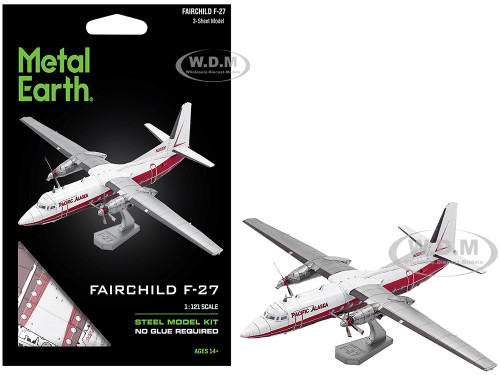
1/121 scale diecast models are collectible vehicles and transportation models produced at one one-hundred-twenty-first the size of their real-world counterparts. This is an uncommon scale, making it particularly relevant to collectors looking for specialized models or trying to maintain a specific scale within an existing collection.
At 1/121 scale, every 121 inches, feet, or other units of measurement on the original subject are represented by one unit on the model. The finished dimensions therefore depend on the size of the real vehicle. A large aircraft will produce a substantially larger model than a compact automobile even though both are manufactured to 1/121 scale.
Because 1/121 is a specialized scale, available subjects can vary considerably by manufacturer and production run. Collectors shopping this category should pay close attention to the individual product specifications, including model dimensions, subject type, materials, markings, and included display equipment.
What Does 1/121 Scale Mean?
Scale is a proportional relationship between a model and the full-size subject. A 1/121 model is approximately 1/121 the linear dimensions of the original.
For example, a real aircraft measuring 48 feet long would have a model length of approximately 4.76 inches at 1/121 scale. An aircraft with a 60-foot wingspan would have a model wingspan of approximately 5.95 inches.
This relatively compact format can be useful for larger transportation subjects. Instead of requiring the shelf space associated with a much larger model, a 1/121 collectible can represent the same subject in a more manageable footprint.
It is important to distinguish scale from physical size. Two 1/121 models can have very different dimensions because their original vehicles are different sizes.
What Can You Expect to Find?
The 1/121 scale category represents a specialized area of diecast collecting. Selection depends on current availability, but potential subjects can include transportation, aviation, military, automotive, commercial, and other specialty vehicles.
Collectors may encounter models representing:
- Aircraft and aviation subjects
- Military vehicles and equipment
- Cars and passenger vehicles
- Trucks and commercial vehicles
- Transportation subjects
- Specialty and historically significant vehicles
Aircraft can be particularly practical in compact scales because full-size airplanes have large dimensions. A 1/121 aircraft can therefore retain a useful physical presence while remaining relatively easy to display.
For any specific model, check the product listing for its exact subject, dimensions, manufacturer, construction, and other specifications.
Why Collect 1/121 Scale Diecast Models?
A Compact Alternative
One of the main advantages of 1/121 scale is its compact format. Collectors who want to represent larger vehicles without dedicating substantial shelf space may find this scale appealing.
A compact model can also make it easier to build a collection around a broad subject rather than concentrating on only a few large pieces.
Specialized Scale Collecting
Some collectors deliberately seek uncommon scales because they are building a collection around a particular manufacturer, subject, historical period, or display requirement.
A 1/121 model can fill a specific place within such a collection, particularly when maintaining a consistent scale is more important than choosing the most common format.
Historical and Subject-Based Collections
Scale collecting can work particularly well when the models are organized around a theme. A collector might focus on military history, aviation development, transportation, commercial vehicles, or a particular type of machinery.
The compact size of 1/121 can allow several related subjects to be displayed together without the footprint associated with larger scales.
1/121 Scale Aircraft and Aviation Models
Aviation is an especially interesting application for compact diecast scales. Real aircraft range from small utility airplanes to very large military and commercial aircraft, so the scale selected can have a significant effect on display requirements.
At 1/121 scale, a large aircraft can still produce a model with enough physical presence to be recognizable while remaining substantially smaller than an equivalent 1/72 or 1/48 model.
Depending on availability, aviation collectors may use compact models to represent different aircraft types, historical periods, operators, or military services. A collection could focus on a particular era or create a broader timeline showing how aircraft design changed over time.
When purchasing an aircraft model, compare the listed length and wingspan with the available display space. Wingspan is especially important because it can determine the required shelf width even when the model's nose-to-tail measurement appears relatively small.
1/121 Compared With Nearby Scales
Collectors often compare an uncommon scale with nearby established scales when deciding what will work best for their collection.
- 1/100 — Larger than 1/121, so an equivalent subject will have approximately 21% greater linear dimensions.
- 1/120 — Extremely close to 1/121. An equivalent 1/120 model is only about 0.8% larger linearly, making the physical difference very small.
- 1/121 — A specialized compact scale that can be useful for collectors seeking a particular model or scale format.
- 1/144 — Smaller than 1/121, producing a more compact equivalent model.
- 1/200 — Considerably smaller and useful when minimizing display space is a priority.
- 1/400 — Much smaller, particularly suitable for collectors displaying numerous aircraft in a limited area.
The difference between 1/120 and 1/121 is worth noting. Mathematically, they are extremely close, but a model should still be treated according to the scale specified by its manufacturer rather than assuming that nearby scales are interchangeable.
Choosing a 1/121 Diecast Model
Because 1/121 is uncommon, shoppers should evaluate each individual product rather than relying solely on the scale designation.
Check the Subject
First confirm that the model represents the exact vehicle, aircraft, variant, or configuration you want. Similar-looking subjects can have different dimensions, equipment, and markings.
Check the Dimensions
Look at the listed model length, width, and height when available. This is especially important for aircraft and other large real-world subjects.
Consider Display Space
Think about where the model will be displayed before purchasing. For aircraft, allow sufficient room for the wingspan as well as the fuselage length.
Verify Construction and Features
Product descriptions can provide information about materials, moving components, landing gear, stands, interiors, paint schemes, markings, and other features. These details can vary substantially between models.
Match Your Existing Collection
If you are adding a 1/121 model to an existing display, consider whether the surrounding models are also 1/121. Nearby scales can look similar at first glance, but differences become more noticeable when models of the same real-world subject are displayed together.
Building a 1/121 Scale Collection
An uncommon scale does not have to limit the creativity of a collection. Instead, it can become part of the collection's identity.
A subject-based collection might concentrate on one type of vehicle, while a historical collection can follow a particular period or development of transportation. Aviation enthusiasts can organize models by aircraft type, era, operator, or military service.
Collectors can also use 1/121 models as compact representations of subjects that would otherwise require considerably more display space in larger scales.
When expanding a specialized collection, keeping track of the exact scale, manufacturer, subject, and model dimensions can be helpful. This makes it easier to maintain consistency as the collection grows.
Displaying 1/121 Scale Models
The compact nature of 1/121 models provides flexibility when planning a display.
Aircraft can be arranged by historical period, aircraft type, or operator. Ground vehicles can be grouped into civilian, commercial, military, emergency, or specialty themes depending on the models available.
A clean display with sufficient spacing allows the shape, proportions, paintwork, markings, and other details of each model to remain visible. For aircraft, stands or other manufacturer-supplied display equipment can also make it possible to present models in an in-flight configuration when applicable.
If models of different scales are displayed together, grouping similar scales and subjects can create a more visually consistent arrangement.
The Appeal of Uncommon Diecast Scales
Collecting does not have to be limited to the most familiar scales. Uncommon scales such as 1/121 can be appealing because they provide access to specialized subjects and offer another way to manage display space.
For some collectors, the attraction is finding a particular vehicle in an unusual format. For others, the scale is important because it fits an existing display or complements a specialized collection.
The key is to evaluate each model on its own specifications. Scale tells you the proportional relationship to the original subject, while the actual dimensions, construction, features, and presentation determine how the finished collectible will work within your collection.
Find 1/121 Scale Diecast Models
Whether you are searching for a specialized aviation model, expanding an uncommon-scale collection, or looking for a compact representation of a favorite vehicle, 1/121 scale offers an interesting format for diecast enthusiasts.
Browse the 1/121 scale diecast models available at DiecastModelsWholesale.com and explore the current selection to find a model that fits your interests, display space, and collection.