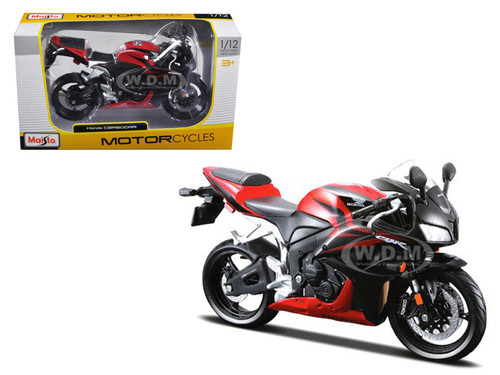
Honda diecast models bring the history, engineering, racing heritage, and distinctive design of one of the world's most influential motorcycle manufacturers into collectible scale. From the practical Super Cub and classic CB series to high-performance CBR sport bikes, Gold Wing touring motorcycles, Africa Twin adventure machines, and Honda racing motorcycles, the brand offers an unusually broad range of subjects for collectors.
The Honda category at DiecastModelsWholesale.com is for motorcycle enthusiasts, diecast collectors, and shoppers looking for scale models representing Honda motorcycles from different eras and riding disciplines. Depending on the available selection, collectors may find Honda models representing sport bikes, cruisers, touring motorcycles, adventure bikes, off-road motorcycles, scooters, classic machines, and racing motorcycles.
Whether you are building a dedicated Honda collection or adding Japanese motorcycles to a larger Motorcycle display, Honda scale models provide an opportunity to explore more than seven decades of motorcycle design and development.
The History of Honda Motorcycles
Honda Motor Co., Ltd. was founded in Japan in 1948, and motorcycle production became the foundation of the company's early growth. In 1949, Honda introduced the Dream D-Type, its first full-fledged production motorcycle. The company quickly expanded its motorcycle range and began developing manufacturing operations outside Japan as it entered markets around the world.
One of Honda's most important milestones came in 1958 with the introduction of the Super Cub C100. Its practical design, accessible operation, and efficient four-stroke engine helped make the Super Cub one of the most recognizable motorcycles in history. The Super Cub family eventually became one of the most significant motorcycle product lines ever produced, making early Super Cub models particularly interesting subjects for collectors.
Honda also established an international reputation through motorcycle racing. The company entered the Isle of Man TT in the late 1950s, achieved its first TT victory in 1961, and continued developing increasingly sophisticated racing motorcycles. Honda's competition experience would later influence both its production motorcycles and its reputation as a technology-focused manufacturer.
By the 1960s, Honda was expanding rapidly outside Japan. Motorcycle production began in Belgium in 1963, its first overseas motorcycle production operation, followed by additional production facilities in other countries. This international manufacturing strategy became a defining part of Honda's motorcycle business.
The Honda CB750 and the Superbike Era
Few Honda motorcycles are more important to collectors than the Honda CB750 Four. Introduced in 1969, the CB750 combined a 736cc four-cylinder engine with features that helped establish a new standard for high-performance production motorcycles. Honda's own historical material identifies the CB750 Four as a major milestone in its motorcycle development.
The transverse inline-four engine, four exhaust pipes, relatively large displacement, and sophisticated overall package gave the CB750 an instantly recognizable appearance. It also became an important reference point for the development of later Japanese superbikes.
For diecast collectors, the CB750 is particularly appealing because its design is visually distinctive. The four-cylinder engine, four separate exhaust headers, round headlight, classic fuel tank, and exposed mechanical components provide numerous details for a scale model to reproduce.
A collection featuring an early CB750 alongside later Honda sport bikes can also illustrate how motorcycle design evolved from traditional standards into modern high-performance machines.
Honda Motorcycle Families to Collect
Honda's extensive motorcycle history gives collectors many different directions to explore.
Honda Super Cub
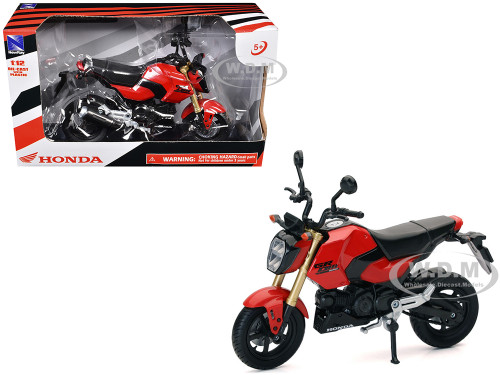
The Super Cub is one of Honda's most historically significant motorcycles. Introduced as the C100 in 1958, the series emphasized usability, reliability, and everyday transportation rather than outright performance. Its step-through design and practical configuration made it accessible to a very broad audience.
A Super Cub scale model can add historical variety to a Honda collection because its design is very different from the company's sport bikes and large touring motorcycles.
Honda CB Series
The CB family encompasses numerous Honda street motorcycles, from smaller displacement models to larger four-cylinder machines. Classic CB models are especially popular with collectors interested in the evolution of Japanese motorcycle design.
The CB750 Four is an obvious centerpiece, but later CB models provide additional opportunities to represent different generations and engineering approaches.
Honda CBR Sport Bikes
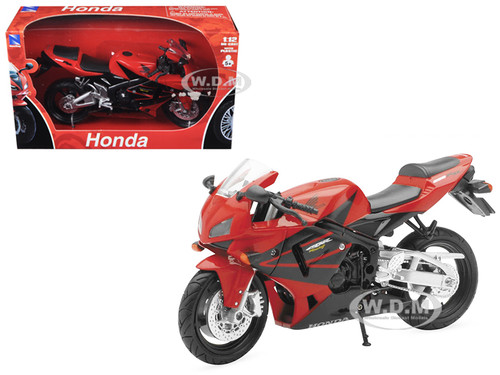
The CBR family represents Honda's performance-oriented sport motorcycle tradition. CBR models have ranged from compact, accessible sport bikes to high-performance liter-class machines.
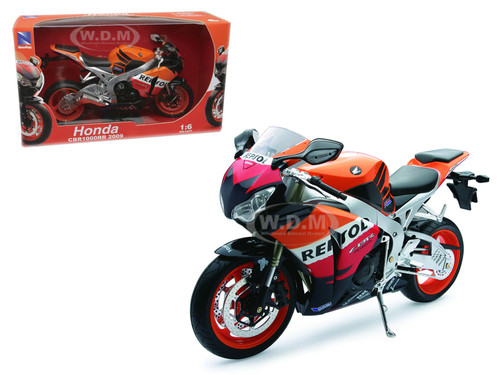
The CBR1000RR Fireblade is particularly important in modern Honda sport-bike history. Its design emphasizes lightweight performance, aerodynamic bodywork, sophisticated suspension, and high-performance four-cylinder engineering.
For collectors, CBR models offer a dramatic contrast with classic Honda motorcycles. Full fairings, racing-inspired graphics, disc brakes, aerodynamic bodywork, and modern wheels make these motorcycles immediately recognizable in a display.
Honda Gold Wing
The Gold Wing represents another major branch of Honda motorcycle history. Originally introduced as the GL1000 in the 1970s, the Gold Wing evolved into a large touring motorcycle with increasing levels of comfort, luggage capacity, weather protection, and touring equipment. Honda launched the GL1000 in the United States in 1975.
The Gold Wing's size and extensive equipment make it an especially interesting subject for scale models. Depending on the generation, details can include large fairings, windscreens, saddlebags, top cases, passenger seats, exhaust systems, and touring accessories.
Honda Africa Twin
The Africa Twin represents Honda's adventure-motorcycle heritage. Developed around the demands of long-distance off-road and rally-style riding, the Africa Twin combines substantial suspension travel, upright ergonomics, protective bodywork, and long-distance capability.
Adventure motorcycles also provide collectors with a different visual style from both sport bikes and cruisers. A Honda Africa Twin model can complement a collection focused on motorcycles designed for exploration and difficult terrain.
Honda CR and Off-Road Motorcycles
Honda has a long history of off-road competition and production dirt bikes. CR-series motorcycles and other Honda off-road models are recognizable for their lightweight construction, knobby tires, long-travel suspension, and competition-oriented bodywork.
These models can be particularly effective in motorsport or off-road dioramas, especially when displayed alongside transporters, trailers, or other racing equipment.
Honda Racing Heritage
Racing has been central to Honda's engineering development almost from the beginning. The company announced its intention to compete in the Isle of Man TT in 1954, made its first TT appearance in 1959, and earned its first victory there in 1961. Racing subsequently became a major part of Honda's international identity.
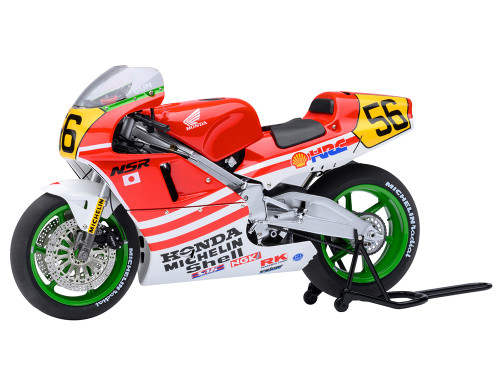
Honda's racing history includes Grand Prix motorcycles, motocross, endurance racing, road racing, and other forms of competition. The company's racing motorcycles have included legendary machines such as the NSR500, while the four-stroke era of MotoGP produced machines such as the RC211V and RC213V.
Honda's own historical displays have featured the RC142, which competed in the 1959 Isle of Man TT, the NSR500, which won the 1985 World Championship, and the RC211V, which won the 2006 MotoGP championship.
This racing heritage makes Honda particularly appealing to diecast collectors. A collection can include both production motorcycles and competition machines, showing how technologies and styling moved between the racetrack and road.
What to Look for in Honda Diecast Models
When comparing Honda motorcycle models, collectors should consider more than the motorcycle's name. Details such as generation, body style, racing livery, and scale can make two models of seemingly similar motorcycles quite different.
Important details to consider include:
- Motorcycle family: CB, CBR, CR, Gold Wing, Africa Twin, Super Cub, or another Honda line.
- Model generation: Styling and mechanical details can change substantially between generations.
- Motorcycle type: Sport, touring, adventure, cruiser, standard, scooter, off-road, or racing.
- Engine detail: Cylinder arrangement, cooling components, exhaust system, and engine cases are important visual features.
- Frame and suspension: Look for realistic frame construction, forks, swingarms, shocks, and suspension components.
- Wheels and tires: Spokes, cast wheels, brake discs, hubs, and tire tread contribute significantly to realism.
- Bodywork: Sport-bike fairings and adventure body panels can be particularly detailed.
- Racing graphics: Competition models may feature rider numbers and period-specific racing colors and graphics.
- Touring equipment: Gold Wing and other touring motorcycles may include saddlebags, fairings, luggage, windscreens, and passenger equipment.
- Rider figures: Some motorcycle models may include a rider, while others are intended to stand alone.
Choosing the Right Honda Model Scale
Scale is an important part of collecting motorcycle diecast models. Larger models generally provide more room for manufacturers to reproduce mechanical components and small details, while smaller scales allow collectors to build larger displays in less space.
1/12 scale is a popular choice for collectors who want a prominent Honda motorcycle display. At this size, features such as engine components, controls, suspension, wheels, and exhaust systems can be particularly noticeable.
1/18 and 1/24 scale models provide a useful balance between size and detail. These scales are well suited to collectors who want multiple Honda motorcycles from different eras.
1/32 and 1/43 scale models are convenient for compact displays and can be combined with other vehicle types without requiring a large display area.
1/64 scale motorcycles are particularly useful for collectors who want to build larger groups of motorcycles or incorporate Honda motorcycles into broader vehicle dioramas.
The available scales can vary by motorcycle and manufacturer, so collectors should always check the listed scale and dimensions of an individual model before purchasing.
Building a Honda Motorcycle Collection
Honda's enormous range makes it possible to build a collection around a specific theme or across the company's entire history.
A Honda history collection could begin with a classic Dream or Super Cub, progress through the CB750 and other classic CB models, and then continue to modern CBR, Gold Wing, and adventure motorcycles.
A Honda racing collection could focus on Grand Prix, superbike, motocross, or other competition motorcycles. Racing versions can also be displayed with other motorsport diecast models to create a dedicated competition scene.
Collectors who prefer production motorcycles could concentrate on specific families such as CBR sport bikes, Gold Wing touring motorcycles, CB street bikes, or Africa Twin adventure models.
Another option is to collect Honda motorcycles alongside models from other manufacturers in the broader Motorcycle category. This makes it possible to compare Japanese motorcycle design with American and European manufacturers and create a diverse international motorcycle display.
Display Ideas for Honda Diecast Models
Honda motorcycles can be displayed individually or grouped by era, model family, or purpose.
A chronological arrangement can show the progression from early Honda motorcycles to modern machines. A sport-bike display can combine different CBR generations, while a touring display can focus on Gold Wing models and other long-distance motorcycles.
Adventure and off-road Honda models can be incorporated into outdoor-themed dioramas with appropriate vehicles and equipment. Smaller motorcycles can also be displayed alongside scale cars and trucks to create realistic road, garage, dealership, or motorsport scenes.
For collectors who enjoy mechanical details, larger-scale Honda models are particularly suitable for close-up display. The engine, frame, exhaust, suspension, wheels, and controls can all become important visual elements.
Why Collect Honda Diecast Models?
Honda provides one of the broadest and most historically varied subjects in motorcycle collecting. Its story includes practical commuter motorcycles, landmark superbikes, racing machines, touring motorcycles, adventure bikes, off-road motorcycles, and modern performance models.
That variety means a Honda diecast collection can tell a genuine story about motorcycle development. The compact Super Cub represents a very different approach from the four-cylinder CB750, while a modern CBR or Africa Twin demonstrates how far motorcycle engineering and design have evolved.
Honda's global production history also adds another dimension to collecting. The company reached 500 million cumulative motorcycle units in 2025, 76 years after beginning motorcycle mass production with the Dream D-Type in 1949.
For collectors, that extraordinary production history translates into an equally broad selection of motorcycles worth representing in scale. Classic Hondas, modern sport bikes, racing machines, touring motorcycles, and adventure bikes can each occupy a different place in a collection.
Browse the Honda diecast models at DiecastModelsWholesale.com to explore the available scale motorcycles and find a Honda model that fits your collection, whether your interest is classic Japanese motorcycles, racing history, modern performance bikes, touring machines, or Honda's broader motorcycle heritage.



 $44.99Was $51.99Save 13%
 $29.99Was $30.99Save 3%
 $64.99Was $71.99Save 9%
 $14.95Was $19.99Save 25%
 $14.95Was $19.99Save 25%


 $16.49Was $19.99Save 17%
 $16.49Was $19.99Save 17%