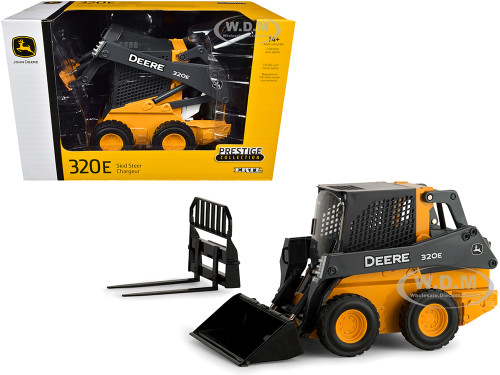
Forklift diecast models bring one of the most recognizable machines in warehouses, factories, distribution centers, construction sites, ports, and industrial facilities into miniature form. Designed to lift, move, stack, and position palletized or heavy loads, forklifts are compact industrial vehicles with a distinctive mast, carriage, forks, counterweight, and operator compartment. Their practical design also makes them interesting subjects for diecast collectors who enjoy construction equipment, commercial vehicles, and detailed working machinery.
At DiecastModelsWholesale.com, the Forklift category is part of the broader Vehicle Type collection. Depending on the individual model, collectors may find replicas representing warehouse lift trucks, industrial forklifts, rough-terrain machines, vintage lift trucks, and other material-handling equipment.
What Is a Forklift?
A forklift, also called a lift truck or fork lift truck, is a powered industrial vehicle designed to pick up and transport loads using two horizontal forks. The forks are mounted to a carriage that travels vertically along a mast, allowing the operator to raise loads to different heights for transportation or storage.
A conventional counterbalance forklift carries its load in front of the vehicle while using the mass of the rear section as a counterweight. This arrangement allows the machine to lift substantial loads while remaining relatively compact and maneuverable.
For collectors, the basic forklift design creates several highly recognizable details:
- Vertical lifting mast and rails
- Fork carriage and lifting forks
- Hydraulic cylinders or lifting mechanisms
- Counterweight at the rear
- Operator seat and overhead guard
- Steering axle and compact chassis
- Industrial tires or pneumatic tires
- Engine compartment or battery housing
- Manufacturer badges, decals, and warning markings
These details can make a forklift model particularly interesting when displayed alongside trucks, construction equipment, warehouse scenes, or other commercial vehicles.
A Brief History of Forklifts
The development of the modern forklift is closely connected to the growth of industrial material handling during the early 20th century. Before powered lift trucks became common, warehouses and factories relied heavily on manual labor, carts, hoists, conveyors, and other equipment to move materials.
CLARK's history traces an important early development to 1917, when employees built a simple powered shop vehicle to move materials between buildings. The concept evolved into the Tructractor and subsequently the Truclift, an internal-combustion-powered lift truck introduced in 1920. CLARK later introduced the Tructier in 1928, described by the company as its first production forklift with hydraulic lifting.
Electric lift equipment also developed early. Yale & Towne introduced an electric forklift in 1920, an important milestone in the history of electric material-handling equipment.
The technology continued to evolve through the 20th century. Hydraulic lifting, improved masts, pneumatic tires, electric power, improved transmissions, and increasingly specialized designs expanded the situations in which forklifts could be used. During World War II, forklifts and tow tractors became particularly important to military logistics, airfields, manufacturing, and supply operations. CLARK reports that its wartime production supplied a substantial portion of Allied material-handling requirements.
By the postwar period, forklifts had become a familiar part of industrial transportation and warehousing. Their importance grew further as palletized freight and modern distribution systems expanded.
Types of Forklift Models
Forklifts are not limited to one configuration. Their designs vary according to the environment, load, operating surface, and lifting requirements they are intended to handle.
Counterbalance Forklifts
Counterbalance forklifts are among the most recognizable lift trucks. They use a heavy rear counterweight to balance the load carried on the forks at the front. This familiar configuration appears frequently in industrial and warehouse settings and is also a popular subject for scale replicas.
Electric Forklifts
Electric forklifts use battery power rather than an internal-combustion engine. Early electric lift trucks appeared during the 1920s, and electric equipment has continued to evolve alongside warehouse and industrial applications.
In diecast collecting, electric forklifts can be recognizable by their compact rear bodywork and the absence of the conventional engine configuration found on gasoline, diesel, or LPG-powered machines.
Rough-Terrain Forklifts
Rough-terrain forklifts are designed for applications where uneven outdoor surfaces require greater ground clearance and more rugged running gear. They can be associated with construction sites, agricultural operations, lumber yards, and other outdoor material-handling environments.
Warehouse and Industrial Lift Trucks
Compact warehouse forklifts are designed for maneuverability in relatively confined spaces. Their small turning radius, vertical mast, and compact dimensions make them visually distinct from larger construction machinery.
Specialized Lift Trucks
The broader lift-truck family also includes reach trucks, pallet stackers, pallet trucks, tow tractors, and other material-handling equipment. Not every specialized machine is technically the same as a conventional counterbalance forklift, but they share the broader purpose of moving or positioning materials. Modern manufacturers offer a wide range of configurations for warehouses, distribution centers, manufacturing, retail, and other supply-chain environments.
Forklift Diecast Models for Collectors
A forklift model can add an industrial dimension to a diecast collection that might otherwise focus primarily on cars and trucks. Because forklifts have a distinctive silhouette and specialized equipment, they can also work well as complementary pieces in larger displays.
Collectors may choose models based on:
- Scale: Match the forklift to other construction or commercial models in the collection.
- Era: Compare vintage industrial lift trucks with modern designs.
- Manufacturer: Look for recognizable names such as CLARK, Yale, Hyster, Caterpillar, Toyota, Komatsu, or other manufacturers, depending on the model available.
- Configuration: Choose conventional counterbalance, warehouse, electric, or rough-terrain designs.
- Livery: Company colors, logos, warning decals, and industrial markings can add character to a replica.
- Application: Build a warehouse, construction site, factory, shipping, agricultural, or logistics-themed display.
The smallest details can be especially important on forklift replicas. A correctly shaped mast, functional-looking forks, overhead guard, operator seat, tires, counterweight, and hydraulic components can make a relatively small model immediately recognizable as a lift truck.
Forklift Scale Models
Forklift diecast models can be produced in several scales, depending on the manufacturer and specific subject. Common diecast and industrial equipment scales may include 1/18, 1/24, 1/32, 1/43, 1/50, and 1/64.
Scale is important when building a scene or combining a forklift with other models. A 1/50 construction equipment collection, for example, can provide a natural setting for a similarly scaled industrial forklift, while a smaller 1/64 display can accommodate warehouses, trucks, cars, and other miniature vehicles in a compact space.
When comparing models, it is worth checking the stated scale rather than judging size from photographs alone. The physical dimensions of the real forklift can also vary considerably between compact warehouse machines, heavy-duty industrial trucks, and rough-terrain models.
Forklifts in Industrial and Construction Displays
Forklifts are especially useful additions to dioramas and themed displays because they represent an important part of the logistics process that happens between transportation and final storage or delivery.
A forklift can be displayed alongside:
- Semi-trucks and trailers
- Delivery trucks
- Construction equipment
- Warehouse buildings
- Shipping containers
- Pallets and cargo
- Factory or industrial scenes
- Agricultural equipment
- Port and logistics equipment
For collectors interested in larger machinery, the Forklift category can also complement other Construction diecast models and commercial vehicle subjects.
What to Look for in a Forklift Replica
When selecting a forklift diecast model, consider both the subject and the level of detail. The mast and fork assembly are usually the first features to examine because they define the machine's purpose and appearance. The rear counterweight, tire style, operator compartment, overhead guard, and body shape can then help identify the particular type or era.
For collectors building a manufacturer-focused collection, logos and body styling can be just as important as mechanical details. For those creating dioramas, scale compatibility and overall dimensions may be more important than the specific manufacturer.
Because forklift models are often substantially smaller than passenger cars at the same scale, comparing dimensions and scale information can help ensure that a new addition fits naturally with the rest of a collection.
Explore Forklift Diecast Models
From classic industrial lift trucks to modern material-handling equipment, forklift diecast models offer a different perspective on the vehicles that keep warehouses, factories, construction sites, and distribution operations moving. Whether you collect industrial machinery, build detailed dioramas, or simply enjoy unusual and highly recognizable scale vehicles, explore the Forklift category at DiecastModelsWholesale.com to find models that fit your collection.