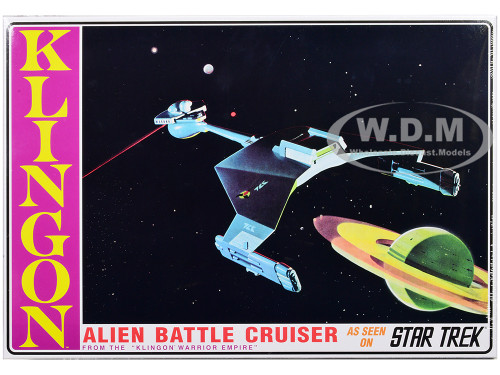
1/650 scale is an uncommon compact scale for miniature models, with each model representing its full-size subject at 1/650 of the original linear dimensions. This specialized scale sits between familiar compact scales such as 1/600 and 1/700, making it useful for collectors interested in unusual scale models and space-efficient displays.
At 1/650 scale, large real-world subjects can be represented in a relatively small format. This can be especially useful for large ships, transportation subjects, aircraft, military equipment, and other specialized models when available. Because 1/650 is not one of the most common diecast scales, the selection tends to be more specialized than categories such as 1/64, 1/43, 1/24, or 1/18.
What Does 1/650 Scale Mean?
The 1/650 scale ratio means that one unit on the model represents 650 of the same units on the actual subject.
For example:
- A 650-foot prototype would be approximately 12 inches long at 1/650 scale.
- A 325-foot prototype would be approximately 6 inches long.
- A 200-foot prototype would be approximately 3.69 inches long.
- A 100-foot prototype would be approximately 1.85 inches long.
- A 50-foot prototype would be approximately 0.92 inches long.
The actual finished size depends on the dimensions of the prototype. A large ship, for example, can still produce a substantial model at 1/650, while a smaller vehicle may remain extremely compact.
This is why checking both the scale and the listed model dimensions is useful when shopping for an uncommon scale.
A Specialized Scale for Compact Displays
One of the primary advantages of 1/650 scale is its relatively small footprint. Collectors can represent large subjects without requiring the display space that would be needed for equivalent models in larger scales.
Depending on current product availability, 1/650 scale models may appeal to collectors interested in:
- Ships and maritime subjects
- Naval and military models
- Aircraft and aviation subjects
- Transportation models
- Historical subjects
- Large prototype vehicles
- Specialty miniature models
- Diorama and display projects
The exact product selection can vary considerably because 1/650 is a specialized scale. Individual product listings should be checked for the prototype, manufacturer, materials, dimensions, and construction method.
1/650 Scale and Large Subjects
Large prototypes are particularly interesting at 1/650 because the scale keeps their models manageable.
For example, a 900-foot ship would measure approximately 16.6 inches at 1/650. A 1,000-foot vessel would be approximately 18.5 inches long. That is substantially easier to accommodate than the same vessels modeled at a much larger scale.
This makes 1/650 potentially attractive for collectors who want to represent large ships or other substantial prototypes while maintaining a manageable display.
The scale can also provide a useful middle ground for collectors who find larger ship scales too space-intensive but want something larger than extremely small miniature formats.
Comparing 1/650 With Nearby Scales
Understanding nearby scales can help shoppers decide whether 1/650 is appropriate for an existing collection.
1/600 Scale
1/600 is slightly larger than 1/650. An equivalent 1/600 model is approximately 8.3% larger linearly than a 1/650 model.
The difference may be relatively subtle when comparing individual models, but it becomes more noticeable across a collection or when comparing the finished dimensions of large prototypes.
1/700 Scale
1/700 is smaller than 1/650. An equivalent 1/650 model is approximately 7.7% larger linearly than a 1/700 model.
Because these scales are relatively close, they can look similar at a glance. However, they are not identical scales, so collectors building a strict scale-specific collection should keep the distinction in mind.
1/500 Scale
1/500 is noticeably larger. An equivalent 1/500 model is approximately 30% larger linearly than a 1/650 model.
For large ships or other substantial prototypes, this difference can translate into a considerably larger model and greater display-space requirements.
1/400 Scale
The difference becomes even more substantial with 1/400. An equivalent 1/400 model is approximately 62.5% larger linearly than a 1/650 model.
For collectors with limited shelf or cabinet space, moving from 1/400 to 1/650 can therefore make a meaningful difference in the physical size of large subjects.
1/650 Scale Ship and Maritime Models
Maritime subjects are a natural area for compact scales because full-size ships can be hundreds or even thousands of feet long.
At 1/650 scale, a large vessel can be represented with enough physical presence to remain recognizable while still fitting comfortably into many display environments.
Depending on the specific model, collectors may encounter subjects such as:
- Naval vessels
- Historic ships
- Passenger ships
- Commercial vessels
- Aircraft carriers
- Battleships
- Cruisers
- Destroyers
- Submarines
- Support and auxiliary vessels
Not every type will necessarily be available in 1/650 at a given time, so the individual product listing remains the best reference for the exact subject.
For collectors assembling a maritime display, 1/650 can also provide an interesting alternative to more established ship-modeling scales. However, mixing scales should be done deliberately because two vessels with the same real-world size will not occupy the same physical dimensions if their models are produced at different scales.
1/650 Scale Aircraft and Transportation Models
Aircraft and other transportation subjects can also benefit from compact scaling when the prototype is large enough to produce a useful display model.
A 200-foot aircraft, for example, would measure approximately 3.69 inches at 1/650. A 150-foot aircraft would be approximately 2.77 inches.
For aviation collectors, this makes 1/650 potentially useful when display space is limited or when the goal is to represent many different aircraft within a relatively small area.
The same principle applies to transportation and military subjects. A large real-world vehicle can be reduced to a miniature footprint while retaining its overall proportions and recognizable design.
What to Look For When Shopping
Because 1/650 scale models are less common than many mainstream scales, shoppers should pay close attention to product specifications.
Verify the Exact Scale
Make sure the product is specifically listed as 1/650 rather than simply being described as a "small scale" model. Nearby scales such as 1/600 and 1/700 can look very similar but are not the same ratio.
Check the Prototype
Look at the exact vehicle, aircraft, ship, or other subject represented by the model. This is particularly important for historical collections where different versions of the same basic design can have different dimensions or configurations.
Check Finished Dimensions
Scale alone does not determine the final size. A 1/650 model of a 1,000-foot vessel will be much longer than a 1/650 model of a 100-foot aircraft.
Checking the product dimensions before ordering helps ensure that the model will fit your intended shelf, cabinet, display case, or diorama.
Check Materials and Construction
The term "diecast model" can cover products with different combinations of materials. Depending on the particular item, a model may include diecast metal, plastic, etched components, or other materials. Product listings should also indicate whether the model is ready to display or requires assembly.
Collecting and Displaying 1/650 Models
The compact nature of 1/650 scale makes it suitable for collectors who want to build a broad subject collection without dedicating an entire room to display.
A 1/650 collection can be organized around a particular theme, such as:
- Naval history
- Commercial aviation
- Maritime transportation
- Military history
- Historic transportation
- Specific manufacturers
- A particular country or region
- A historical period
For a consistent display, collectors should consider maintaining the same scale wherever practical. If multiple scales are being combined, grouping similar scales together can make the overall presentation easier to understand.
A display case with adjustable shelves can be particularly useful because it allows the collector to accommodate models of different prototype sizes while keeping the collection protected and organized.
Why Choose an Uncommon Scale?
Collecting does not have to be limited to the most widely produced scales. Uncommon scales such as 1/650 can be appealing precisely because they offer a different combination of size, subject availability, and display possibilities.
For collectors who already own models in 1/600, 1/700, 1/500, or other compact scales, a 1/650 model can also provide an opportunity to explore subjects that may not be available in their preferred scale.
The key is to consider the individual model rather than assuming that every product in a particular scale will have the same construction, subject type, or dimensions.
Shop 1/650 Scale Diecast Models
Whether you are building a compact transportation collection, looking for a specialized maritime model, or simply exploring uncommon diecast scales, 1/650 scale models offer an interesting combination of small display dimensions and large-prototype representation.
Browse the available 1/650 scale models at DiecastModelsWholesale.com, review the individual product details and dimensions, and find a compact collectible that fits your collection and display plans.