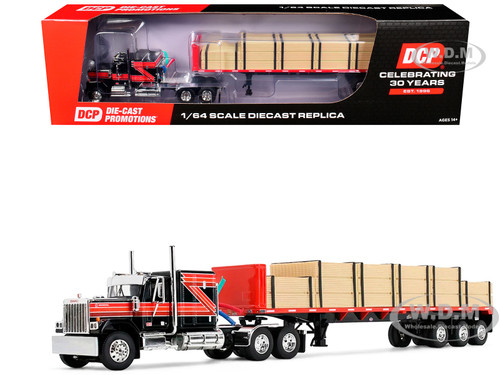
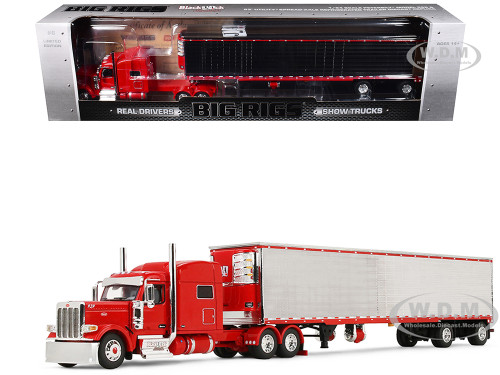
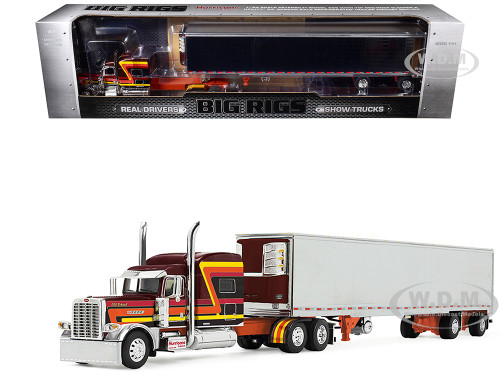
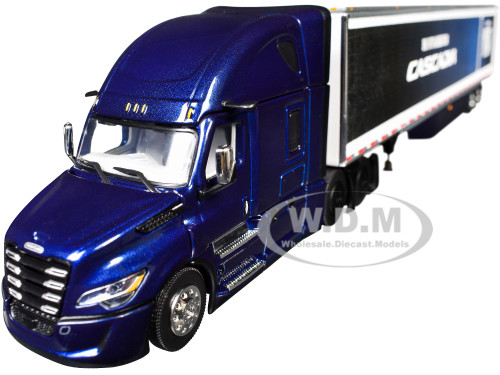
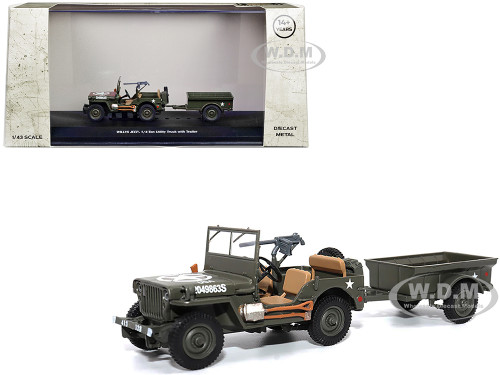
Utility trailers are versatile, unpowered trailers designed to transport equipment, materials, recreational gear, vehicles, and other loads that do not require a specialized enclosed or commercial trailer. Their relatively simple construction makes them one of the most recognizable and widely useful trailer types, ranging from compact single-axle trailers to heavier-duty tandem-axle designs.
For diecast collectors, utility trailer models are especially useful because they can be paired with a wide variety of tow vehicles. A small utility trailer behind a pickup can represent a landscaping, construction, or home-improvement scene, while a trailer loaded with recreational equipment can create a boating, camping, or outdoor recreation display. Their straightforward designs also make them a natural addition to collections focused on trucks, pickups, construction equipment, and everyday working vehicles.
What Is a Utility Trailer?
A utility trailer is a general-purpose trailer with an open or partially enclosed cargo area intended to make hauling easier. Unlike a specialized trailer designed for one particular type of cargo, a utility trailer can accommodate many different loads.
Typical utility trailers feature an open deck or bed, side rails or panels, one or more axles, wheels and tires, a tongue, hitch connection, safety equipment, and a support jack. Depending on the design, they may also have ramps, removable sides, stake pockets, tie-down points, fenders, or mesh flooring.
Common uses include transporting:
- Landscaping equipment
- Lawn mowers and other outdoor equipment
- Construction tools and materials
- Building supplies
- Small machinery
- Firewood and yard debris
- Motorcycles and recreational equipment
- Furniture and household items
- Maintenance and service equipment
- General cargo
The broad purpose of a utility trailer is reflected in its name: it is intended to provide practical hauling capability without the specialized body configuration found on trailers such as refrigerated vans, tank trailers, lowboys, or livestock trailers.
Utility Trailer Diecast Models
Utility trailer diecast models are appealing because they can be incorporated into many different types of vehicle displays. Unlike a highly specialized trailer that requires a particular setting, a utility trailer can fit naturally into a residential, commercial, agricultural, construction, or recreational scene.
Collectors may find models representing different trailer proportions and configurations. Some are compact trailers suitable for passenger vehicles or pickups, while larger examples can be paired with heavy-duty trucks.
When examining a scale utility trailer, look for details such as:
- Open cargo deck
- Side rails or removable panels
- Trailer tongue and hitch
- Axles and suspension
- Wheels and tires
- Fenders
- Loading ramps
- Support jack
- Tie-down points
- Mesh or textured flooring
- Toolboxes or storage compartments
- Exterior markings and graphics
Even relatively simple utility trailers can have substantial visual interest when these functional details are accurately reproduced.
A Versatile Trailer for Working Vehicles
Utility trailers are closely associated with pickup trucks and other practical vehicles. A pickup equipped with a utility trailer can represent a contractor transporting tools, a landscaper carrying equipment, or a homeowner hauling supplies.
This makes utility trailer models particularly useful for collectors who already have a selection of pickup trucks. A trailer can turn an individual vehicle into a more complete working scene.
Explore the Pickup and Truck categories to find tow vehicles that can complement a utility trailer display.
Utility trailers can also be paired with heavier commercial vehicles when the scale and trailer configuration are appropriate. A larger tandem-axle trailer may look more natural behind a heavy-duty pickup or work truck than behind a compact passenger car.
Utility Trailers in Construction and Landscaping
Construction and landscaping are two of the most recognizable applications for utility trailers. Contractors can use open trailers to transport tools, generators, compressors, ladders, building materials, compact equipment, and other supplies.
Landscaping trailers commonly carry lawn mowers, trimmers, blowers, wheelbarrows, and other outdoor maintenance equipment. Their open design provides convenient access to equipment and makes loading and unloading practical.
For diecast collectors, this creates numerous possibilities for realistic work scenes. A utility trailer loaded with miniature equipment can be displayed beside a pickup at a construction site, residential property, landscaping project, or workshop.
Collectors interested in construction-related subjects can also explore the Construction category for additional equipment and vehicles.
Utility Trailers for Recreation
Utility trailers are not limited to commercial work. They are also widely associated with recreational activities.
Depending on their size and configuration, utility trailers can be used to carry motorcycles, ATVs, bicycles, camping equipment, small boats, and other recreational gear. This makes them useful for creating outdoor and weekend-adventure scenes.
A utility trailer carrying recreational equipment behind a pickup or SUV can create a natural road-trip or campsite display. Collectors who prefer automotive scenes can also use utility trailers to represent transportation of project cars, motorcycles, or other hobby equipment.
For dedicated boat trailers, see the Boat Trailer category.
Open Utility Trailers vs. Specialized Trailers
One of the most important characteristics of a utility trailer is its general-purpose design. It is useful to understand how it differs from other trailer categories when selecting a model.
Utility Trailer vs. Flatbed Trailer
Both types can have open cargo areas, but a flatbed is generally designed around a larger, unobstructed deck for transporting commercial freight, machinery, or oversized loads. Utility trailers are often smaller and more adaptable for everyday hauling.
Collectors looking for larger open-deck freight trailers can explore Flatbed Trailers.
Utility Trailer vs. Open Car Trailer
An open car trailer is specifically configured to transport automobiles. It normally incorporates loading ramps, a suitable deck arrangement, and tie-down provisions for securing a vehicle.
A utility trailer may carry many different types of cargo and is not necessarily designed around automobile transport. For dedicated vehicle-hauling models, see the Open Car category.
Utility Trailer vs. Enclosed Trailer
An enclosed trailer provides a roof and walls to protect its contents from weather and improve security. Utility trailers generally use an open design that provides easier loading and unloading.
An enclosed trailer can therefore be more appropriate for valuable equipment, cargo that needs weather protection, or specialized transport, while a utility trailer emphasizes accessibility and versatility.
Utility Trailer vs. Lowboy
A lowboy is a specialized heavy-haul trailer with a lowered deck intended to transport tall and heavy machinery. It is substantially different from a general-purpose utility trailer.
Collectors interested in heavy equipment transport can browse Lowboy Trailers for specialized heavy-haul models.
A Brief History of Utility Trailers
The concept behind the utility trailer is closely connected to the development of practical transportation. Long before modern motor vehicles, carts and wagons provided a separate load-carrying platform that could be pulled by animals.
As automobiles and trucks became widespread during the early 20th century, trailers provided a practical way to increase carrying capacity without requiring a larger powered vehicle. Simple open trailers could be built for farms, businesses, contractors, and individual owners.
Trailer designs gradually became more standardized as road transportation expanded. Improvements in tires, axles, suspension, brakes, hitch systems, and materials made trailers more capable and reliable. At the same time, manufacturers developed specialized trailers for particular industries while the basic utility trailer remained a flexible general-purpose option.
Today, utility trailers continue to occupy an important place in transportation because their simple open configuration makes them adaptable to a wide range of jobs.
Collecting Utility Trailer Models
When collecting scale utility trailers, consider both the trailer itself and the scene you want to create.
Match the Scale
Utility trailers can appear in several scales depending on the manufacturer and subject. Common diecast scales include 1/64, 1/50, 1/43, 1/32, 1/24, and larger scales for selected models.
Matching the trailer's scale to your existing vehicles is usually the best way to create a convincing display. Pay attention not only to the stated scale but also to the actual proportions of the trailer and tow vehicle.
Look at the Working Details
Because utility trailers have relatively simple shapes, small functional details can make a noticeable difference. Collectors may want to compare hitch assemblies, ramps, side rails, wheel designs, fenders, axles, and cargo areas.
A trailer that includes realistic loading equipment or removable components can also provide additional possibilities for display.
Create a Complete Scene
A utility trailer can serve as a connecting element between several types of diecast models. For example, a display might feature:
- A pickup and utility trailer carrying landscaping equipment
- A work truck hauling construction supplies
- A classic pickup towing a period-appropriate trailer
- An SUV with recreational equipment
- A contractor's truck and job-site trailer
- A trailer carrying motorcycles or outdoor equipment
This versatility makes utility trailers particularly valuable for collectors who enjoy dioramas and realistic everyday scenes.
Why Collect Utility Trailer Models?
Utility trailers may not have the distinctive specialized shapes of a tanker, reefer, or lowboy, but that simplicity is part of their appeal. They represent the everyday hauling work that takes place behind countless pickups and work vehicles.
For collectors, they provide an easy way to expand an existing vehicle collection and create more complete scenes. A single utility trailer can work with multiple tow vehicles and can be displayed with different types of cargo depending on the story you want the diorama to tell.
Whether you are building a construction scene, landscaping display, recreational setting, workshop environment, or everyday road scene, a utility trailer diecast model can add useful realism and context.
Browse the Utility trailer collection at DiecastModelsWholesale.com to find a scale trailer that complements your vehicles and brings your next diecast display or diorama to life.