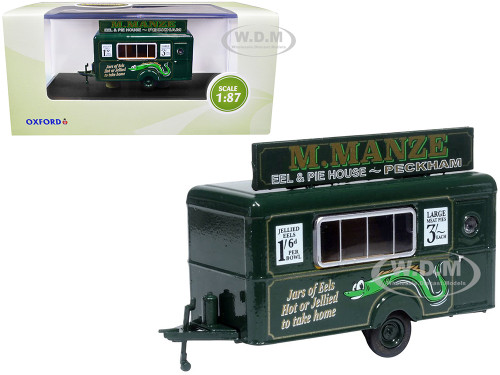
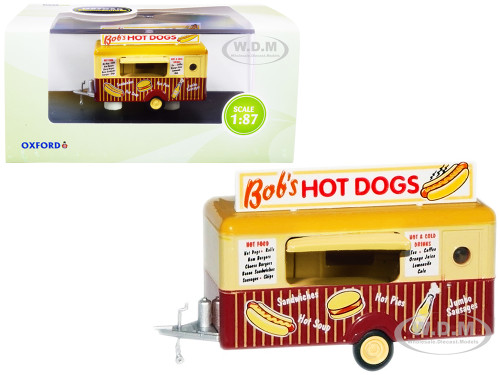
Mobile food trailers are specialized food-service trailers designed to prepare, serve, and sell food away from a permanent restaurant location. They bring a compact commercial kitchen and serving area to events, markets, festivals, parking lots, private gatherings, and other locations where customers can be served directly.
For diecast collectors, Mobile Food trailer models offer something different from conventional freight and agricultural trailers. Instead of transporting cargo or equipment, these models represent a complete mobile business, often combining a compact trailer body with serving windows, counters, cooking equipment, signage, graphics, and other details associated with street food and mobile catering.
At DiecastModelsWholesale.com, this category is suited to collectors looking for scale models of food-service trailers and mobile culinary businesses. Their distinctive designs and colorful exterior graphics can make them especially effective additions to vehicle collections, miniature city scenes, event dioramas, and commercial displays.
What Is a Mobile Food Trailer?
A mobile food trailer is a towable unit equipped to prepare and serve food. Unlike a simple utility or cargo trailer, its interior is configured around food preparation and customer service.
A typical mobile food trailer may include:
- A serving window
- Exterior service counter
- Food-preparation area
- Cooking equipment
- Refrigeration or storage
- Ventilation equipment
- Water and sanitation systems
- Electrical or power systems
- Exterior menu boards or graphics
- Customer-facing signage
- Tow hitch and running gear
The exact arrangement depends on the type of food being served and the design of the individual trailer.
Some mobile food trailers are compact units intended for a limited menu, while larger trailers can provide a much more complete commercial kitchen. Specialized examples may focus on barbecue, pizza, coffee, desserts, tacos, sandwiches, beverages, or other food concepts.
For collectors, the variety of body styles and exterior designs makes mobile food diecast models an interesting category to explore.
Mobile Food Trailers vs. Food Trucks
Mobile food businesses can operate from either trucks or trailers, but the two formats are not identical.
A food truck integrates the food-service body with a powered vehicle. The engine, cab, chassis, and kitchen are all part of one vehicle.
A mobile food trailer is unpowered and must be towed by another vehicle. This means the trailer can be separated from its tow vehicle and positioned at a suitable location while the towing vehicle is used elsewhere.
That distinction is important when selecting a diecast model. A mobile food trailer can be paired with a scale pickup, commercial truck, or other towing vehicle to create a complete mobile-business scene.
The Evolution of Mobile Food Service
The concept of selling prepared food from mobile locations has a long history. Portable food vendors existed in various forms before the modern food truck and trailer industry, with carts, wagons, and other movable food stands allowing vendors to serve customers where they gathered.
The growth of cities, transportation networks, public events, and outdoor entertainment created additional opportunities for mobile food businesses. Over time, improvements in refrigeration, cooking equipment, compact commercial appliances, electrical systems, and trailer manufacturing made it possible to operate increasingly capable kitchens in towable units.
Modern mobile food trailers can be highly specialized. Their layouts are designed around workflow, storage, food preparation, cooking, customer service, and transportation. Exterior graphics and branding are also important because the trailer itself functions as a highly visible part of the business.
This combination of transportation and commercial design is reflected in many scale models.
Details to Look for in Mobile Food Diecast Models
Mobile food trailers can contain an impressive amount of visual detail despite their relatively compact size.
Depending on the particular model, collectors may find:
Serving Windows
The serving window is one of the defining characteristics of many food trailers. It may include a fold-up awning, counter, window frame, or miniature service equipment.
Exterior Graphics
Food trailers often rely on bold graphics, logos, illustrations, colors, and menu-related designs to establish their identity. On a diecast model, these graphics can be among the most noticeable details.
Cooking and Service Equipment
Some models may reproduce exterior equipment or interior components visible through openings. Ovens, grills, counters, sinks, refrigerators, and other equipment help communicate the trailer's intended purpose.
Trailer Running Gear
Hitches, wheels, tires, fenders, axles, landing supports, and chassis details connect the food-service body to its role as a towable trailer.
Awnings and Accessories
Fold-out awnings, counters, signs, and other exterior elements can give a model a more authentic mobile-vending appearance.
Different Types of Mobile Food Trailers
Mobile food trailers can be customized for almost any food-service concept. Consequently, collectors may encounter many different themes and designs.
Food and Meal Trailers
General food trailers can be configured to prepare complete meals and may include extensive cooking and preparation equipment.
Coffee and Beverage Trailers
Coffee and beverage trailers typically emphasize service counters, beverage equipment, refrigeration, and customer-facing windows. Their compact size can make them especially suitable for events and temporary locations.
Dessert Trailers
Dessert trailers may specialize in ice cream, baked goods, pastries, shaved ice, or other treats. Their exterior graphics are often particularly distinctive.
Specialty Food Trailers
Other trailers may be designed around a specific cuisine or menu. These can include barbecue, pizza, tacos, sandwiches, seafood, and many other concepts.
For collectors, this variety means that mobile food models can complement many different types of miniature scenes.
Mobile Food Trailers as Diecast Collectibles
The appeal of a mobile food trailer goes beyond its function as a trailer. It represents a complete commercial concept in miniature.
Collectors can appreciate the combination of:
- Vehicle design
- Trailer engineering
- Commercial branding
- Food-service equipment
- Graphic design
- Scale detailing
- Real-world business themes
Unlike a plain cargo trailer, a mobile food trailer has a strong visual identity. A serving window, awning, menu graphics, or specialized body can make it immediately recognizable in a display.
These characteristics also make mobile food trailers useful for collectors who enjoy models representing everyday commercial life rather than only transportation fleets.
Creating a Mobile Food Diecast Display
A mobile food trailer can become the centerpiece of a small urban or event-themed diorama.
Place the trailer in a miniature parking area, street market, festival, fair, outdoor concert, or community gathering. Add a tow vehicle nearby to show how the trailer arrived at the location.
The trailer can also be combined with other commercial vehicles and accessories to create a broader city scene. A pickup, delivery vehicle, pedestrians, tables, signs, and other miniature details can transform a simple model into a recognizable food-service environment.
For collectors interested in transportation, a mobile food trailer can also demonstrate the relationship between a tow vehicle and its unpowered trailer. The towing vehicle may be displayed separately, with the food trailer positioned as though it is ready for service.
Choosing the Right Scale
Scale is an important consideration when adding a mobile food trailer to an existing diecast collection. The appropriate scale depends on the manufacturer, product, and intended display.
Common scales for commercial and vehicle models include 1/18, 1/24, 1/32, 1/43, 1/50, and 1/64, although mobile food trailers can appear in other scales as well.
1/18 and 1/24 Scale
Larger scales provide more room for visible exterior graphics and structural details. They are particularly useful for collectors who prefer individual display pieces or detailed scenes.
1/32 and 1/43 Scale
These scales offer a middle ground between display size and detail. They can work well when the trailer is being displayed with other commercial vehicles.
1/50 and 1/64 Scale
Smaller scales make it easier to build larger scenes containing multiple vehicles, buildings, trailers, and accessories. A 1/64 mobile food trailer can fit naturally into a miniature city, street, or event display.
Always check the individual product specifications before purchasing, since the available scale and dimensions vary by model.
Mobile Food Trailers in a Broader Trailer Collection
Mobile food trailers provide an interesting contrast with the other specialized trailer types found in a commercial vehicle collection.
A Cargo trailer is designed around transporting goods. A Dry Cargo Van protects general freight inside an enclosed body. A Livestock trailer is designed around transporting animals. A mobile food trailer instead transforms the trailer itself into a place of business.
This makes the category particularly useful for collectors who want to represent different ways trailers are used in everyday commerce.
What Collectors Should Consider
When selecting a mobile food trailer model, consider both the appearance of the trailer and how it will fit into the rest of your collection.
Exterior Design
Look for graphics, signage, serving windows, awnings, and other features that give the trailer its character.
Trailer Proportions
Compact concession trailers and larger commercial food trailers can have very different proportions. Consider the available display space and the size of your other models.
Towing Vehicle
If you want to create a complete combination, consider what type of vehicle would realistically tow the trailer. A pickup or commercial truck can provide an appropriate companion depending on the trailer's size and configuration.
Display Theme
Think about whether the model will be part of a city scene, event display, food-market diorama, commercial collection, or general trailer collection.
A Unique Addition to a Diecast Collection
Mobile food trailers occupy a distinctive place in the world of scale models. They combine the engineering of a towable trailer with the recognizable appearance of a small commercial business.
For collectors, they offer opportunities to build scenes that go beyond traditional automotive, construction, and freight displays. A single model can represent transportation, commerce, food service, and community activity all at once.
Whether you collect commercial vehicles, trailers, miniature businesses, or simply enjoy unusual diecast subjects, a mobile food trailer model can add a memorable point of interest to your display.
Browse the Mobile Food category at DiecastModelsWholesale.com to explore available scale food-service trailers and find a distinctive model to add to your collection or create your next miniature commercial scene.