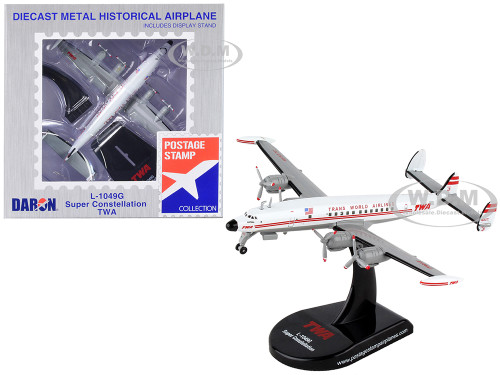
Celebrate the legacy of Trans World Airlines with TWA diecast airplane models, collectible replicas representing one of the most recognizable names in American commercial aviation. Known for its distinctive liveries, international route network, and role in the development of passenger air travel, TWA holds a special place in aviation history. Its aircraft remain popular subjects for collectors interested in classic American airlines, vintage jetliners, and the golden age of commercial aviation.
TWA models can bring together several aspects of airline collecting: historic aircraft designs, memorable paint schemes, and the story of an airline that connected major American cities with destinations around the world. From early propeller-driven airliners to the jet aircraft that helped transform long-distance travel, TWA's history offers a wide range of subjects for aviation enthusiasts.
The Trans World Airlines category at DiecastModelsWholesale.com is intended for collectors and shoppers looking for miniature aircraft associated with this historic carrier. Available models, aircraft types, scales, manufacturers, and finishes depend on current inventory. Check each product listing for the specific aircraft and details represented.
The History of Trans World Airlines
Trans World Airlines, commonly known as TWA, developed from the early American airline industry and became a major name in domestic and international passenger travel. Its history began in 1930, when Transcontinental & Western Air was formed through the consolidation of several aviation operations. The company adopted the name Trans World Airlines in 1950, reflecting its ambitions and expanding international identity.
During the twentieth century, TWA helped shape the public image of commercial aviation. It operated routes connecting important American cities and later expanded its international network, including services across the Atlantic. For generations of travelers, the airline became associated with long-distance journeys, airport terminals, and the growing accessibility of air travel.
TWA's development paralleled major changes in aircraft technology. The airline operated propeller-driven airliners before introducing jet aircraft that offered faster travel and transformed expectations for passenger service. Its fleet history provides a useful timeline for collectors interested in the transition from piston-powered aircraft to the jet age and the evolution of airline design.
The airline also became known for its branding and visual identity. Different generations of TWA aircraft carried liveries that reflected changing design styles and corporate eras. These markings make the airline especially interesting to model-aircraft collectors, who may seek particular aircraft types, registrations, or paint schemes to represent a specific period in its history.
In 2001, TWA was acquired by American Airlines, bringing its independent operations to an end. Although the airline no longer operates under the TWA name, its legacy continues through aviation history, historic aircraft, memorabilia, and collectible model airplanes.
Notable TWA Aircraft and Fleet Eras
TWA operated a wide range of aircraft during its history. Different types represent distinct stages in the development of passenger aviation, giving collectors several ways to build a historically focused TWA model collection.
Lockheed Constellation
The Lockheed Constellation is among the most recognizable classic airliners associated with TWA. Its distinctive triple-tail design, curved fuselage, and elegant profile made it one of the standout aircraft of the propeller era.
The Constellation played an important role in postwar long-distance air travel. For TWA, it is closely connected with the airline's growth during a period when commercial aviation was becoming increasingly sophisticated and internationally oriented.
A TWA Lockheed Constellation model can be an appealing centerpiece for a collection of historic passenger aircraft. Its silhouette differs markedly from modern jetliners, making it particularly suitable for displays comparing several generations of commercial aviation.
Boeing 707
The Boeing 707 represented a major shift in passenger travel as airlines moved into the jet age. With its swept wings and four jet engines, it helped establish the appearance and performance expectations of long-range commercial jet aircraft.
TWA operated the Boeing 707 during the expansion of jet-powered domestic and international services. Its role in the airline's history makes it an important subject for collectors interested in the transition from propeller-driven aircraft to jetliners.
A TWA Boeing 707 replica can complement a Constellation model in a historical display, illustrating the dramatic change in aircraft design that occurred during the mid-twentieth century.
Boeing 727
The Boeing 727 became a familiar aircraft in American airline service, designed for routes that required a three-engine jet with strong operational flexibility. Its distinctive rear-mounted engines and T-tail make it easy to recognize.
TWA operated the Boeing 727 on domestic routes, and the aircraft represents an important part of the airline's later twentieth-century fleet. For collectors, its configuration provides a contrast with the four-engine Boeing 707 and the twin-engine aircraft that became more common in later years.
Boeing 747
The Boeing 747 changed the scale of commercial passenger travel with its wide fuselage, four engines, and distinctive upper-deck profile. It became an icon of long-haul aviation and a recognizable feature of major international airline fleets.
TWA operated Boeing 747 aircraft on long-distance routes. A TWA 747 model can be especially attractive to collectors who favor large wide-body aircraft or want to represent the airline's international operations.
Because the 747 is considerably larger than many narrow-body passenger jets, scale is an important consideration when planning a display. Even a small-scale model can have a substantial wingspan and require extra shelf space.
Convair 880 and Convair 990
TWA also operated Convair jetliners, including the Convair 880. Designed for high-speed passenger service, the Convair 880 had a slim fuselage and four engines mounted beneath its wings. It represents a less common subject compared with the Boeing aircraft that dominated many later airline fleets.
The Convair 990 Coronado, developed from the Convair 880, was another distinctive jetliner of the era. Although the two aircraft shared a family resemblance, the 990 featured a longer fuselage and recognizable aerodynamic modifications.
For collectors, TWA Convair models can add variety to a display of classic jet aircraft. They are particularly interesting for enthusiasts who want to represent aircraft beyond the best-known Boeing and Lockheed designs.
Lockheed L-1011 TriStar
The Lockheed L-1011 TriStar was a wide-body, three-engine passenger jet developed for medium- and long-distance routes. Its rear-mounted center engine and distinctive air intake gave it a recognizable appearance.
TWA operated the TriStar during the wide-body era, when airlines introduced larger aircraft to serve growing passenger demand. A TWA L-1011 model can complement Boeing 747 and other wide-body replicas in a collection focused on the airline's later decades.
McDonnell Douglas DC-9
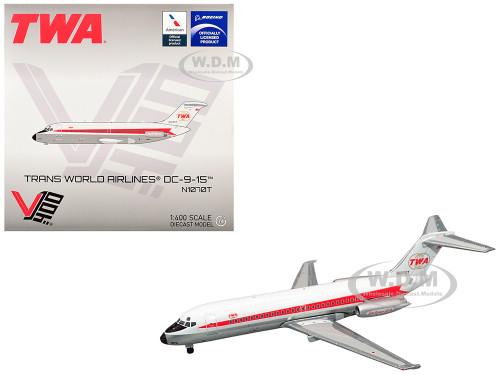
The McDonnell Douglas DC-9 was a twin-engine jet designed primarily for short- and medium-haul routes. Its rear-mounted engines and T-tail distinguish it from aircraft with engines beneath the wings.
TWA operated DC-9 aircraft on domestic services, making the type a useful representation of the airline's shorter-route operations. For collectors, a DC-9 model offers a smaller counterpart to the wide-body aircraft associated with TWA's international network.
Boeing 767
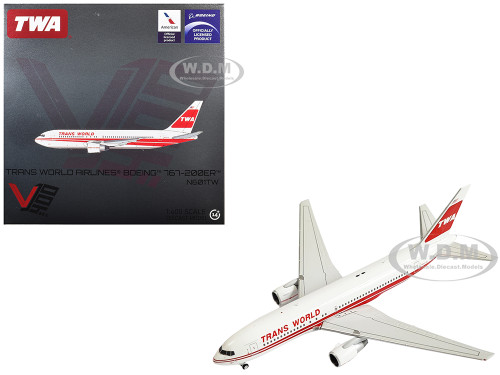
The Boeing 767 introduced a twin-engine wide-body design that became widely used on domestic and international routes. Compared with earlier four-engine long-haul aircraft, its two-engine configuration represents an important shift in commercial airline fleet planning.
TWA operated Boeing 767 aircraft during its later years. A model of this type can help represent the airline's transition toward newer-generation wide-body jets before its acquisition by American Airlines.
These aircraft are examples from TWA's history, not a guarantee of current product availability. If you are searching for a specific type or livery, confirm that the exact model appears in the available category selection.
TWA's Iconic Airline Liveries
TWA's changing visual identity is an important part of its collecting appeal. The airline used different liveries over the decades, and each can evoke a particular era of its operations.
Classic TWA Markings
Historic TWA liveries are associated with the airline's early growth and the development of American commercial aviation. Depending on the aircraft and period represented, models may feature classic lettering and design elements that differ from the airline's later jet-age branding.
These versions appeal to collectors who want to recreate a period-specific airline fleet or display historic aircraft in the markings they wore during service.
The Red-and-White Identity
TWA became strongly associated with a red-and-white visual identity. Its recognizable lettering and bold use of color made its aircraft easy to identify on airport ramps and in photographs.
For model collectors, the airline's markings are often as important as the aircraft type. The same basic aircraft design can look quite different depending on the livery, period, and registration represented.
The TWA Globe Era
TWA also used a distinctive globe-inspired logo as part of its corporate identity. This branding is particularly associated with the airline's later history and its international image.
Models carrying this style of TWA livery can be useful for collectors assembling a timeline of the airline's changing appearance. Comparing different markings on aircraft from the same family can also reveal how airline branding evolved alongside changes in fleet technology.
When evaluating a model, check the product photographs and description for the specific livery and aircraft variant. A historically accurate combination can be particularly important to collectors who focus on a certain decade or aircraft registration.
Why Collect TWA Diecast Airplane Models?
TWA models appeal to several types of aviation enthusiasts, from collectors of historic American airlines to modelers interested in classic aircraft design.
-
American airline history: Represent an influential carrier that helped shape domestic and international passenger travel.
-
Classic aircraft design: Explore aircraft such as the Lockheed Constellation, Boeing 707, Convair 880, and Lockheed L-1011.
-
The jet age: Build a collection illustrating the transition from propeller-driven airliners to early jetliners and wide-body aircraft.
-
Livery collecting: Compare TWA's different branding styles and the eras they represent.
-
Aircraft manufacturer collections: Add historic TWA aircraft to collections organized around Boeing, Lockheed, Convair, or McDonnell Douglas.
-
Aviation memorabilia: Choose a miniature aircraft that recalls the history of an airline that is no longer operating independently.
A TWA model can also make a thoughtful gift for someone with an interest in aviation history, vintage airliners, or classic American airline brands. If the recipient already collects aircraft, matching the model's scale and historical era to their existing display can make the gift more meaningful.
Choosing the Right Scale and Model Features
Aircraft models are produced in different scales, and the best choice depends on your display space, collecting habits, and preferred level of detail.
Common Aircraft Model Scales
1:200 scale models are relatively large and can make aircraft markings and exterior features easier to appreciate. They are suitable for individual display stands or cabinets with sufficient room for the wingspan.
1:400 scale models are smaller and can be practical for collectors who want to represent many airlines or aircraft types in a limited area. They can also work well in airport-themed displays.
These are common scales in the aircraft-model market, but not every TWA aircraft is necessarily available in both. Check the individual product listing to confirm its actual scale and dimensions.
Details to Check Before Purchasing
When selecting a TWA diecast airplane model, consider the following:
-
Aircraft type and variant: Confirm the model represents the aircraft you want, such as a Boeing 707, 747, or Lockheed Constellation.
-
Livery and era: Check whether the markings match the historical period you are collecting.
-
Registration details: Where provided, aircraft registration can help identify the specific plane depicted.
-
Construction and finish: Review the listing for information about materials, exterior finish, and printed markings.
-
Landing gear and display stand: Check which accessories are included rather than assuming all models have the same configuration.
-
Dimensions: Compare the model's length and wingspan with the space available in your display.
The term diecast describes a type of metal construction commonly used for collectible models, but product materials and features can vary. Always refer to the specifications of the individual item for accurate details.
Displaying and Caring for TWA Models
A TWA collection can be arranged chronologically to show how commercial aviation developed over several decades. Beginning with a classic propeller aircraft and progressing through early jets, three-engine airliners, and wide-body aircraft creates a visual timeline of the airline's history.
Another option is to organize models by manufacturer or aircraft family. A Boeing-focused display might include a 707, 727, 747, and 767, while a broader historic collection could combine Lockheed, Convair, and McDonnell Douglas designs.
Consider the size of each model when planning a shelf or cabinet. Larger aircraft need more room for their wingspan, and delicate components should be protected from accidental contact. Use a stable display surface and handle models carefully, particularly around landing gear, antennas, and other small details.
To preserve a model's finish, keep it away from direct sunlight and excessive heat. Remove dust gently with a soft brush or another method appropriate for the model's materials. Following any manufacturer-provided care instructions can help keep collectible aircraft in good condition.
Whether your interest is the elegance of the Lockheed Constellation, the arrival of the jet age, or TWA's memorable red-and-white branding, these aircraft offer a lasting connection to American airline history. Browse the available Trans World Airlines diecast airplane models at DiecastModelsWholesale.com to find a collectible that complements your display or celebrates the legacy of this historic carrier.

 $49.99
 $54.99
 $69.99