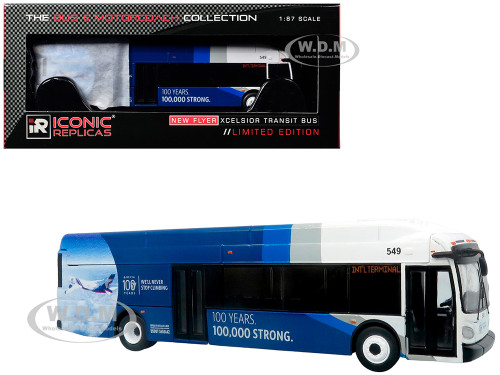
Discover New Flyer diecast bus models inspired by one of North America's best-known manufacturers of public transit buses. From classic low-floor city buses to modern articulated and zero-emission transit vehicles, New Flyer has played an important role in the development of urban public transportation in the United States and Canada.
The New Flyer category at Diecast Models Wholesale is for transit bus enthusiasts, public transportation fans, model vehicle collectors, and hobbyists looking for miniature replicas of New Flyer buses. Depending on current product availability, models may represent familiar transit bus families such as the D40LF, D60LF, C40LF, and modern Xcelsior series, including buses operated by municipal transit agencies and regional transportation systems.
One of the most interesting aspects of collecting New Flyer bus models is the variety of real-world vehicle configurations and operator liveries. Two miniature buses based on the same model can look quite different when they represent different cities, transit authorities, route branding, or special fleet designs.
Whether you collect city buses from your hometown, miniature transit fleets, classic low-floor buses, or modern electric public transportation vehicles, New Flyer diecast models offer a way to celebrate the vehicles that keep communities moving.
The History of New Flyer
New Flyer's history began in Winnipeg, Manitoba, Canada, in 1930, when John Coval established Western Auto and Truck Body Works. The company initially focused on vehicle body construction before developing a stronger presence in bus manufacturing.
In 1941, the company introduced the Western Flyer, an important early bus design. The business subsequently became Western Flyer Coach and continued developing vehicles for passenger transportation.
During the 1960s, the company expanded its involvement in urban transit buses. In 1971, it became Flyer Industries Ltd., reflecting a new chapter in its corporate history. The company was acquired by Jan den Oudsten in 1986 and adopted the New Flyer Industries name.
Over time, New Flyer became increasingly associated with heavy-duty transit buses designed for daily use on busy urban routes. Its products served transportation agencies that needed vehicles capable of carrying large numbers of passengers while meeting requirements for accessibility, reliability, and efficient operation.
The company also became involved in several important developments in public transportation technology. In 1990, it introduced a low-floor bus in North America, helping advance a design approach that made boarding easier for passengers. Later developments included hybrid-electric buses and battery-electric transit vehicles.
Today, New Flyer is part of NFI Group and produces buses for public transportation systems across North America. Its modern lineup includes conventional transit buses and articulated vehicles with a variety of propulsion systems.
For collectors, this history provides a way to explore several generations of urban transportation, from earlier transit bus designs to the modern vehicles increasingly seen on city streets.
New Flyer Low-Floor Transit Bus Models
Low-floor buses are an important part of modern public transportation. Unlike traditional high-floor buses that require passengers to climb steps at the entrance, low-floor designs reduce the height between the sidewalk and the passenger area, supporting easier boarding.
New Flyer helped advance this approach in the North American transit market. Its low-floor vehicles became familiar sights in many cities, particularly as transit agencies updated fleets to improve accessibility and passenger convenience.
For collectors, low-floor New Flyer diecast buses represent a recognizable generation of urban transportation. Their large windows, broad passenger doors, flat rooflines, and city-specific paint schemes distinguish them from school buses, highway coaches, and older transit vehicles.
New Flyer D40LF
The D40LF is a 40-foot low-floor transit bus that became familiar in numerous North American cities. Its design reflects the transition toward more accessible city buses during the 1990s and 2000s.
The D40LF typically features a long rectangular body, large side windows, multiple passenger doors depending on configuration, and an interior arranged for urban transit service. Its proportions make it an immediately recognizable example of the low-floor city bus design used by many transportation agencies.
For diecast collectors, D40LF replicas can be particularly interesting because the same basic bus design has appeared in different transit agency liveries. A miniature representing one city may feature a distinctive local color scheme, agency lettering, and fleet identification, while another version of the same model may look entirely different.
When collecting a D40LF, consider the transit operator represented, the bus's exterior graphics, and the specific configuration shown in the product description.
New Flyer D60LF Articulated Bus
The D60LF is a 60-foot articulated transit bus designed to carry more passengers than a conventional 40-foot bus. Its articulated center section allows the vehicle to negotiate turns while providing an extended passenger compartment.
Articulated buses are often used on busy urban routes where passenger demand is high. Their longer bodies and additional passenger space make them visually distinctive compared with standard transit buses.
A New Flyer D60LF diecast model adds variety to a collection of city buses. Its longer proportions and flexible center section create a different display profile from a conventional low-floor bus.
Collectors should check whether the miniature represents an articulated configuration and review the listed dimensions to ensure that it fits the available display space.
New Flyer C40LF
The C40LF is a low-floor transit bus designed to operate on compressed natural gas (CNG). While it shares aspects of its general body design with other low-floor buses, its propulsion system distinguishes it from conventional diesel versions.
CNG buses have been used by transit agencies seeking alternatives to traditional diesel fuel. As a result, CNG-powered transit buses have become part of the operational history of public transportation in several North American cities.
For collectors, C40LF models can complement conventional diesel bus replicas and illustrate the range of propulsion systems adopted by public transit fleets.
As with other New Flyer models, the exact vehicle details and operator markings depend on the specific product.
New Flyer Xcelsior Bus Models
The Xcelsior family, introduced in 2010, represents a major step in New Flyer's modern transit bus development. The platform was designed to accommodate different vehicle lengths, propulsion systems, and transit agency requirements.
Xcelsior buses can be seen in a variety of urban environments, from major metropolitan transit systems to regional public transportation networks. Their contemporary styling, large passenger windows, broad doors, and streamlined exterior details distinguish them from earlier New Flyer designs.
Depending on the specific model and operator, Xcelsior buses may feature different front-end designs, destination signs, exterior branding, and fleet configurations.
New Flyer XN40
The XN40 is a 40-foot Xcelsior bus powered by compressed natural gas. It represents an important modern transit bus configuration for agencies operating CNG-powered fleets.
Its recognizable body design and city-specific liveries make the XN40 an appealing subject for collectors who specialize in modern public transportation.
A miniature XN40 can represent a specific transit agency and its approach to urban service. Differences in paint schemes, route signage, logos, and fleet numbers can make individual replicas particularly meaningful to collectors familiar with the represented city.
New Flyer XN60 Articulated Bus
The XN60 is a 60-foot articulated member of the Xcelsior family. Designed for higher-capacity transit service, it combines the modern Xcelsior exterior with an extended passenger compartment and articulated center section.
For collectors, an XN60 model provides a striking contrast with standard-length city buses. Its longer body, additional passenger space, and articulated configuration make it one of the more visually distinctive types of transit bus replicas.
These vehicles are particularly interesting for collections representing major metropolitan transportation systems, where articulated buses often serve high-demand routes.
New Flyer Xcelsior Diesel and Hybrid Buses
The Xcelsior family includes buses with conventional diesel and hybrid-electric propulsion systems. Hybrid buses combine an internal combustion engine with electric-drive technology to support their operation.
For collectors, these configurations illustrate how transit agencies have developed different approaches to fleet operation. A diesel bus and a hybrid-electric bus may share a familiar exterior design while representing different powertrain technologies.
The specific propulsion type should be confirmed in the individual product listing, since model designations and exterior details may differ.
New Flyer Xcelsior Electric Buses
Battery-electric buses are an increasingly visible part of contemporary public transportation. New Flyer's Xcelsior CHARGE NG family represents its battery-electric transit bus offering, designed for zero-emission operation at the vehicle itself.
New Flyer also offers hydrogen fuel-cell-electric and trolley-bus solutions within its broader Xcelsior product family. These approaches have different operating requirements but share the goal of providing alternatives to conventional diesel propulsion.
For diecast collectors, electric buses can be particularly relevant to modern urban fleet collections. Their liveries often include distinctive graphics identifying electric operation, sustainability initiatives, or particular transit agency programs.
Some replicas may represent battery-electric buses, while others may depict conventional or hybrid versions. Check the vehicle designation and product description rather than assuming that every Xcelsior miniature represents an electric bus.
Transit Agency Liveries and Fleet Collecting
One of the most rewarding aspects of collecting New Flyer diecast buses is the variety of transit agency liveries.
Public transportation agencies use their own colors, logos, route branding, fleet numbers, and destination displays. This means a single bus model can represent many different cities and transportation systems.
For collectors, agency-specific replicas provide a way to recreate familiar streetscapes or build a miniature representation of a local transit network.
Some enthusiasts focus on buses from one city, while others collect different operators across the United States and Canada. Another approach is to collect multiple bus models from the same agency to illustrate changes in vehicle design over time.
When comparing transit bus replicas, look for:
-
Transit agency: Confirm the transportation authority or private operator represented.
-
Bus model: Check whether the miniature depicts a D40LF, D60LF, C40LF, XN40, XN60, or another designation.
-
Fleet number: If shown, the fleet number helps distinguish individual vehicles.
-
Destination display: Route numbers and destination signs may reflect particular routes or operating periods.
-
Livery and graphics: Colors, logos, advertising, and special paint schemes can make a model distinctive.
-
Vehicle configuration: Length, articulated sections, doors, and propulsion type can differ between models.
These details are especially important for collectors who seek replicas of buses associated with a specific city or period.
New Flyer Bus Models for Transit Enthusiasts
New Flyer models appeal to more than conventional diecast collectors. They can also interest public transportation enthusiasts, former transit employees, bus photographers, transportation professionals, and people with strong connections to a particular city.
For some collectors, the appeal comes from recognizing a bus that operated on familiar streets. Others enjoy studying the changes in bus design over several decades, from earlier low-floor vehicles to modern Xcelsior models.
New Flyer models can also complement collections of other North American transit buses. Displaying different manufacturers and generations together highlights the ways public transportation vehicles have changed in appearance, passenger capacity, accessibility, and propulsion technology.
A miniature city bus can also make a thoughtful gift for someone who works in public transportation or appreciates urban transit history. Selecting a replica with a familiar agency livery can make the gift more personal.
Choosing the Right New Flyer Diecast Bus
Identify the Bus Model
Start by confirming the New Flyer bus designation. A D40LF, D60LF, C40LF, and XN40 may share certain design characteristics, but they represent different configurations, capacities, or propulsion systems.
Understanding the exact model can help you choose the correct miniature for your collection.
Consider Scale and Dimensions
Transit bus replicas are often produced in scales such as 1:87 and 1:43, depending on the manufacturer and product.
-
1:87 scale: A compact size commonly associated with HO-scale model railroading and urban miniature layouts. It makes it easier to display many buses or incorporate them into a city scene.
-
1:43 scale: A larger format that provides a more substantial display presence and can make exterior details easier to appreciate.
These are general examples rather than a guarantee that every New Flyer bus is available in both scales. Always review the individual listing for the actual scale and dimensions.
Review Construction and Display Details
Materials, paint finish, wheel details, windows, destination displays, and included accessories vary by model. Some miniatures are designed primarily as display replicas, while others may include moving components or additional features.
Check product photographs and descriptions to confirm the construction and packaging details that matter to your collection.
Explore New Flyer Diecast Bus Models
From classic D40LF low-floor buses and articulated D60LF vehicles to modern Xcelsior and electric transit bus designs, New Flyer represents an important part of North American public transportation.
Browse the New Flyer category at Diecast Models Wholesale to explore available miniature buses, compare transit agency liveries and model designations, and find a distinctive addition to your diecast bus collection.